Ace Combat: Distant Thunder is a-
<< Hard enemy radar spike. >>
Oh, alright, just let me dodge that. Ace Comb-
<< Mobius 1, missile! Missile! >>
Really not letting me finish my intro I see. Ace-
<< Yellow Squadron inbound. >>
Game will you give me a goddamn break to actually finish speaking?!
<< Incoming from Stonehenge on radar. All aircraft drop below 2000ft. >>
…I guess not.
Introduction
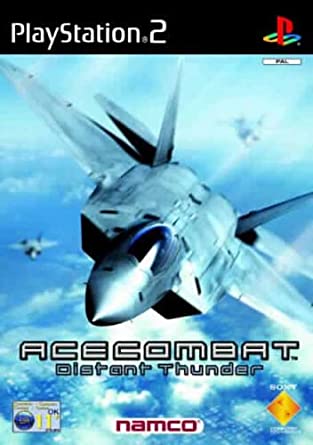
Ace Combat: Distant Thunder (known as Ace Combat 04: Shattered Skies everywhere else except Europe) is a combat-oriented flight simulator game developed by Namco released in 2001 and was the first game in the franchise to release on the PS2.
Being honest, these sort of games never appeared on my radar (heh) up until very recently. My friend Clara is currently developing her own flight simulator game as a love letter to the Ace Combat franchise, and as part of my assistance on it; it was considered “research” to play through an Ace Combat game. I played a few missions on AC7: Skies Unknown before borrowing her copy of Distant Thunder.
And well, it is an understatement to say I’m hooked right now, the tense arcade-style gameplay, the tight flight controls and the downright epic soundtrack all combined into a heart-pumping, blood-pressure-raising, bandit-tailing experience.
Plot
The lead up to the game’s main story is an asteroid colliding with Earth causing massive damage. The nations on the fictional continent of Usea had developed a defence platform called “Stonehenge”, an array of anti-asteroid railguns to destroy fragments of falling asteroid but it was not enough to stop Erusea, one of the largest nations on Usea, to suffer massive economic damage.
This was highlighted when Erusea refused to accept their quota of civilian refugees from the disaster, leading to a boycott of Erusean exports from other nations, further damaging the economy.
And when you have a struggling economy, you go the route of the US government, and go to war to solve your problems!
Erusea launches a surprise invasion of the neutral town of San Salvacion and then worked to modify Stonehenge from “anti-asteroid defence system” to “what happens if you put AA guns on unreasonable amounts of steroids”. War broke out between Erusea and the other nations, the latter forming the Independent State Allied Forces (ISAF) to work collaboratively against the Erusean threat.
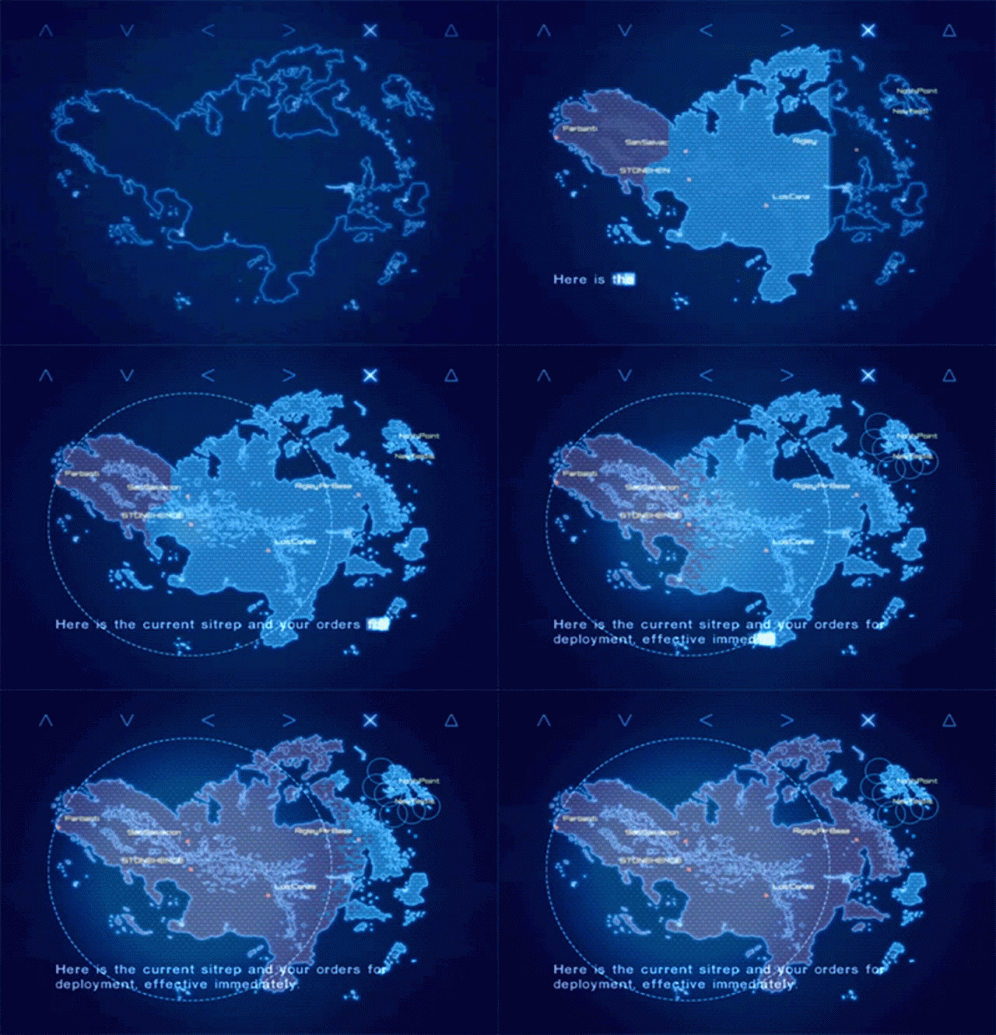
However, the modifications to Stonehenge proved to be a deadly asset against ISAF, because anti-air guns with a range of 1200km (or, as shown in the picture, most of the Usean mainland) tend to provide a certain measure of air superiority.
Where the game begins is almost a first-and-last line of defence from ISAF who have retreated to the island of North Point to co-ordinate the counter offensive against the nigh-unstoppable Erusean campaign. You are placed into the cockpit of Mobius 1, who in addition to your fellow pilots, work to repel attacks on the base and then work to turn the tide of the war.
Story is presented in one of three ways:
- Mission briefing screens which explain the scenario and what resistance is expected, along with showing a map of the continent which updates each mission with how the war is going
- Mid-mission radio chatter and events, which can range from bombers incoming to your location or Stonehenge getting a lock on your position
- Cutscenes told through watercolour painted scenes, following a young boy in the town of San Salvacion as he interacts with the Erusean occupiers
What I particularly enjoy about the plot in Distant Thunder is how it invoked various emotions which could change on a per mission basis, and sometimes even changing the tone and atmosphere of a mission with just a simple update.
One of the best early examples of this, and what forms a great prologue to one of the most intense missions of the game, is Mission 7: “Deep Strike”.
The initial objective is a straightforward mission type that the player will have already seen a few times before, taking out a set of targets with additional optional targets to up your score for a better rank. Then, you hear the ominous “bleeps” of mission update, two missions after the game had trained you to respond to this sound with “oh no” due to the incoming Yellow Squadron.
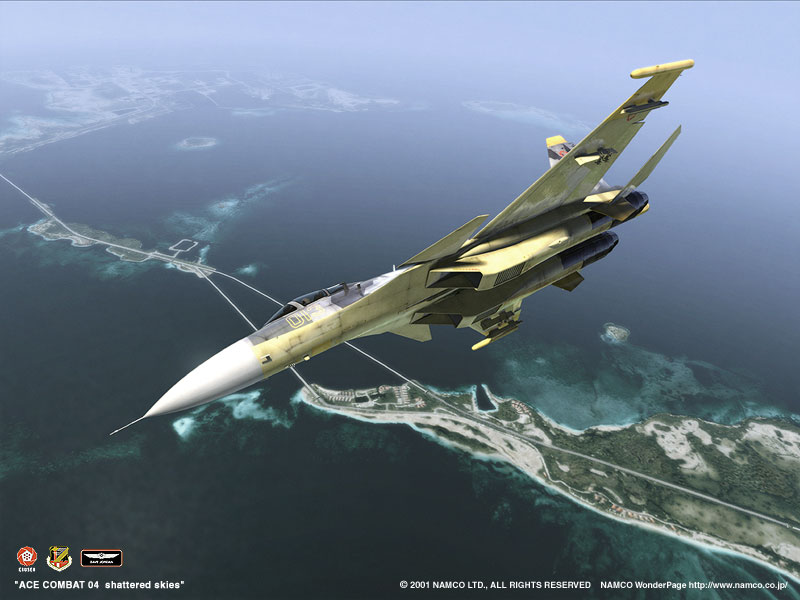
As a quick informer, Yellow Squadron form your sort of rivals through some missions. The first mission they turn up you are told not to engage because it would be too dangerous, and as the game progresses onwards, you slowly become more able to engage with the Squadron until finally taking on over ten fighters in a single mission.
With the bleeps in Deep Strike though, the game wrenches the “oh no” meter up to eleven with the information that Stonehenge is now targeting your location, and you need to get the hell out of there ASAP. The rest of the mission is accompanied by tense escape music as AWACS tells you to drop into the ravine to avoid getting hit.
And as someone who got hit by a railgun round on their escape, the game does not pull any punches. Going above 2000ft in altitude when a Stonehenge impact is incoming is a death sentence as it will instantly destroy your plane, forcing a mission restart.
Afterwards, comes Mission 8: Shattered Skies. And I will just let the background music for that stage set the scene.
Comona Bay is the first full-scale dogfight of the game, with the main objective being to destroy as many enemies as possible and is also the first time the player can engage with Yellow Squadron in the game. Loadout is key here as standard issue missiles usually will not be fast enough to nail a Yellow even with the most perfect of alignments (and I am bad at aiming, it took until Mission 12 to finally nail a Yellow).
Gameplay
Distant Thunder presents you with a campaign of eighteen missions to play through with a variety of objectives to make your way through. Quite a few missions of the game take the form of a open area with the objective of “Destroy as much as possible within the time limit”, ranging from destroying grounded aircraft on the runway so they can’t launch an attack on your base, to sinking a “unsinkable” fleet whilst it rests at harbour.
A few missions will mix things up with special objectives or special conditions to consider whilst playing through. This can include having to work without radar either temporarily or throughout the entire mission, having a civilian flight to escort or being the lone fighter to take down quick moving cruise missiles.
During each mission, usually to the south of the player’s position, there is a dotted line on the map referred to as the “Return Line”. Turning back and flying towards this line allows you to return to an airbase/carrier to refuel, repair, and restock your weapon loadout. Sometimes a tactical retreat can be beneficial to ensure victory in battle.
The game offers four difficultly levels initially: Very Easy, Easy, Normal, and Hard, with a fifth option of “Expert” being unlocked on completion of a Hard campaign, and a sixth option of “Ace” being unlocked on completion of an Expert campaign. I initially started my playthrough on Easy due to being a newcomer to the series, but after a few missions I felt comfortable enough to be able make a new save on Normal and play from there.
Your plane has three main armaments:
- A rapid-fire main cannon with high ammunition, useful for strafing low durability targets and softening up enemy bandits if you get a good angle
- A set of locking, homing missiles that are predominantly used for taking out bandits in two hits or demolishing high value ground targets
- A special weapon, with each plane having a selection of specials to choose from depending on their role
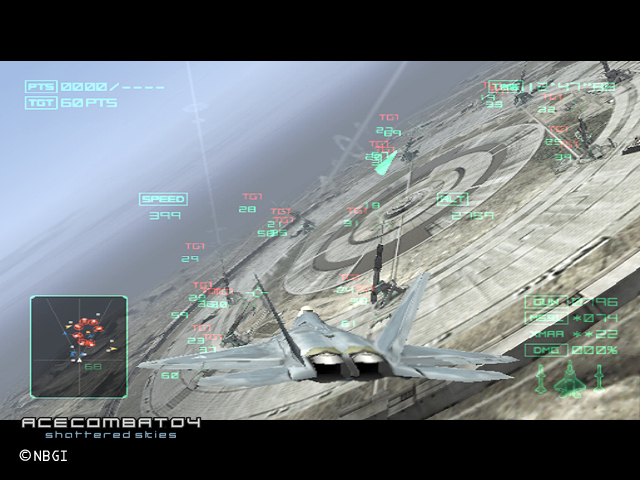
Special weapons are useful for determining your strategy during a mission, as they will either work on only ground or air targets. They range from (but are not limited to) unguided bombs of multiple variants (cluster and napalm included), multi-locking sets of missiles useful for “fire and forget” tactics or longer range missiles useful for taking out potential AA threats from a safe distance.
In the beginning of the game though, you only have one plane and one special weapon unlocked, an F-4 with a set of unguided bombs. As you play through missions and earn credits you can add new aircraft to your arsenal along with acquiring new armaments for them. Personal favourites of mine for each include the following:
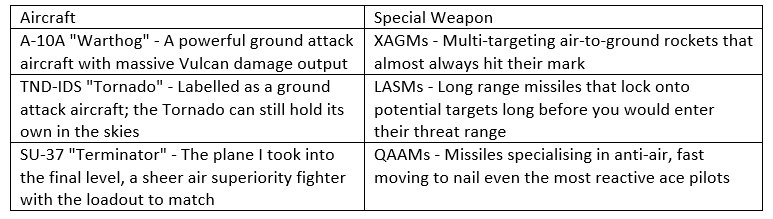
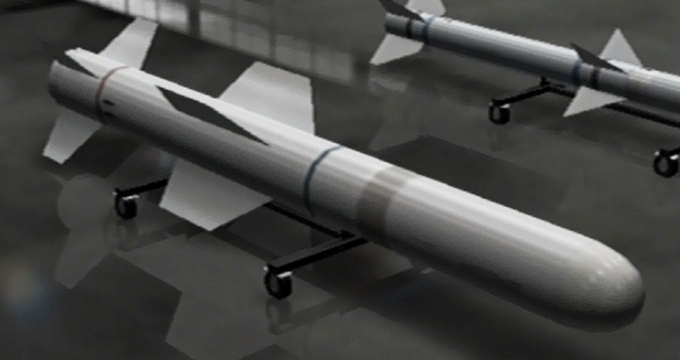
LASM 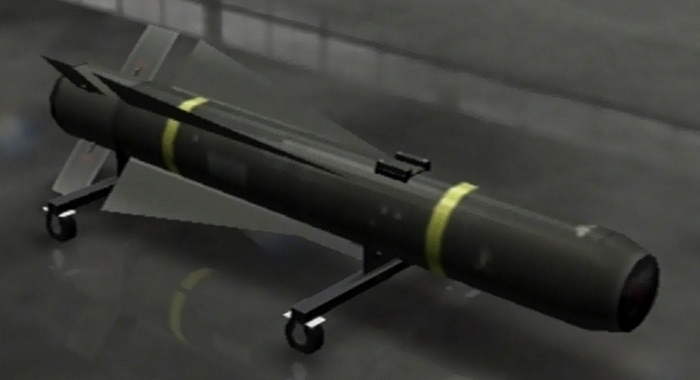
XAGM
Throughout the game you can sell aircraft or weapons you have obtained to be able to afford new ones, and this can be a tactically sound decision if it offers you a distinct advantage in upcoming missions. It is impossible to purchase all aircraft and weapons on a first run through, even with destroying all potential targets and getting S-ranks on missions.
This is where the New Game Plus feature comes into play, allowing you to return to the first mission of the game with your credits, aircraft and special weapons all carrying over. As you start a carried-over save you gain the ability to adjust the difficulty, so if you want the challenge of harder difficulties with some cushioning from having your top-of-the-range gear, the option is there.
It is also an incredibly cathartic feeling to go through the early missions of the game with your endgame loadouts. Smashing through the early mission dogfights with superior firepower is a power trip and a half and I love it.
Controls
As the focus of the game is being a flight simulator, the controls are set up accordingly. You can turn using L2 and R2 but due to these being yaw movements; they are not exactly idea for turning quickly and instead should be used for minor course correction.
To get true freedom of movement in the skies, your best bet is to pitch and roll across the clouds, as mastering these manoeuvres on the left analog stick will allow for all sorts of advanced moves such as quick turning to quickly pursue enemy aircraft or being able to expertly evade incoming missiles.
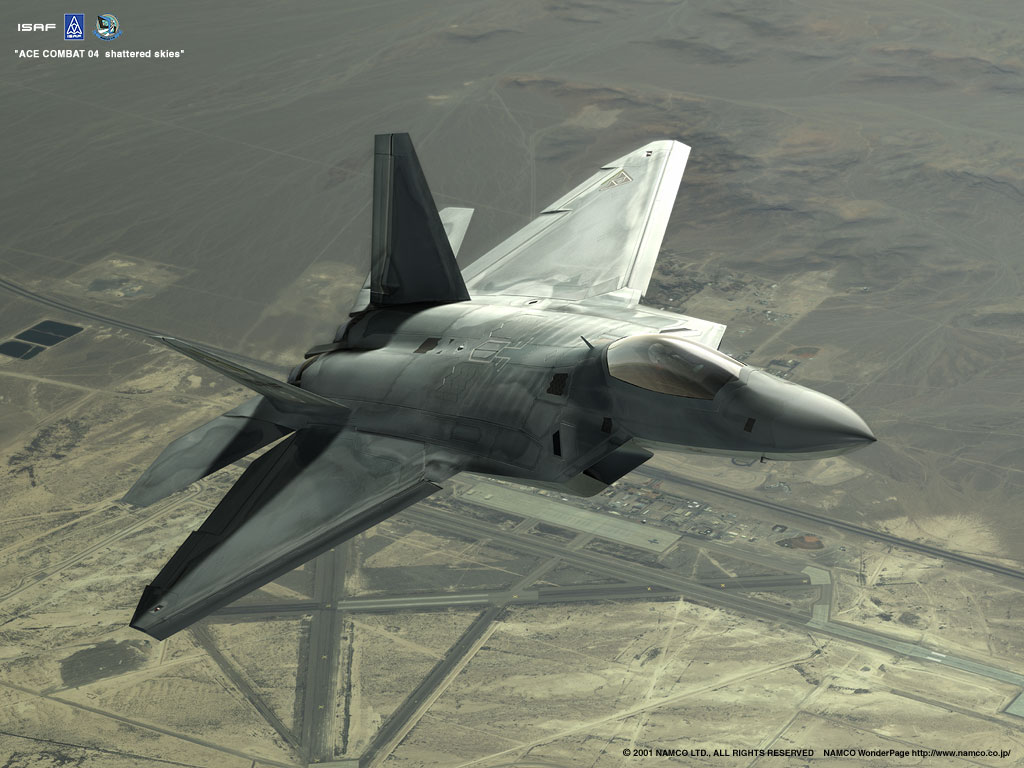
R1 and L1 control your throttle and brake, respectively. Knowing how and when to use your brake is a massive boon to getting the plane to move in the direction you want it to, as it is easier to turn in the air when you’re slowing you. There are some missions as well when braking will stop you from crashing into the scenery when flying through tight corridors.
Once you have control over the plane refined though, there is not a massive amount of complexity in the game’s control scheme. Press X to fire your main cannon, Circle to fire either your missiles or special weapon, Triangle to change current target (essential for locking onto targets in quick succession) and Square to change how much your minimap is showing.
Select allows you to swap between missiles or special weapons, and the right analog stick rotates the camera around so you can evaluate your surrounding to determine your next move or look below you to see when you need to drop your bombs.
Finally, with down on the D-Pad, you can switch from a first-person perspective in the cockpit to playing in third-person. I admittedly never played a mission in first-person mode, instead preferring the freedom and special awareness that comes with knowing your surroundings. Though I suspect once Clara has her way with showing me Ace Combat VR, I will probably gain a finer appreciation for this viewpoint.
Music
(Foreword: I have to give a shout out to Zaptroxix here. They’re a Youtuber who posts extended versions of the Ace Combat soundtracks, which you are enjoying here. Give his channel a look for other songs and for Ace Combat gameplay.)
Alright, going to say this now, from the start of this section onwards until you see a large image of some Labrador Retriever puppies, there is a spoiler warning in effect as I will be reviewing later sections of the game as my talking points here.
Spoilers now in effect
Still with me? Awesome.
This allows me to gush about how this is now one of my favourite video game soundtracks ever and is contention for being my favourite soundtrack of the PS2.
Being a Namco game there is no surprise that the soundtrack would not be out of place in a JRPG, combining:
- Orchestral scores
- Hard rock guitars
- Synthesiser beats
- And even Latin choral chanting
Background tracks in levels are perfectly matched to the scenario that is going on at the time, accentuating the existing atmosphere perfectly. I have already shown off the high energy of the high stakes Comona Bay dogfight but a lot of my favourite tracks (unsurprisingly) are found past the halfway point of the game.
“Stonehenge” is the theme of the eponymous superweapon, what was once an asteroid defence platform has now been repurposed into an anti-air platform without rival. Your first proper introduction to this weapon is at the end of mission 7, where this theme kicks in and perfectly conveys the fact that if you do not get the hell out of there, you are going to die.
Close to the end of the game you conduct a night raid on the town of San Salvacion, the one that was occupied by Erusean forces in the beginning of the game, accompanied by a song which shares the name of the mission: “Emancipation”. Whilst there are many songs of the soundtrack that evoke the feeling of “cautious triumph” in me, this is the song that does it the most for me.
As you fly above the city, tearing into Erusean forces as your comms pick up a radio broadcast from the city detailing the battle raging ahead, the music perfectly compliments the feeling of victory being marred by the fact that this is you truly taking the fight to the enemy by reclaiming both a tactical and symbolic area of importance.
Finally, it’d be remiss to discuss an Ace Combat game without talking about the song that every player will hear, and the majority will remember for a long time, just waiting to awaken the nostalgia neurons when it is heard for the first time in a long time… the briefing music.
A funky synthesised beat accompanying the screen outlining what is required of you for the next mission which continues to play as you organise your aircraft and weapons ready for your sortie.
And being completely honest; it was incredibly difficult picking just these tracks to highlight and focus on. There is so many I want to discuss that in all likelihood there is going to be an “Ace Combat: Distant Thunder Soundtrack Review” article on this website at some point in the future.
However, I have one track left that I want to discuss, but its magnitude deserves its own segment.
Megalith
Close to the end of the game, ISAF receives information about a new superweapon being developed by the Eruseans under the codename of “Megalith”, and up until the final mission of the game where you actually go to fight it, there is no hints about what it may be, you’re kept in the dark entirely until the cutscene introducing it at the start of the mission plays.
The track that plays throughout this mission is called “Megalith -Agnus Dei-“ (Lamb of God). It is a sweeping orchestral piece accompanied by Latin chanting that signals that this is the final mission, both the last stand of a now eradicated Erusean military and the chance for Mobius 1 to cement his name in history forever.
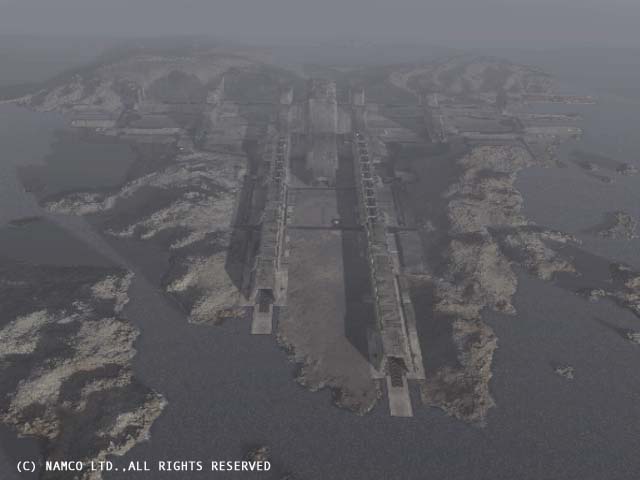
Megalith is a massive bunker built into a small island, the facility itself encompassing several hundred square kilometres of the land mass, ICBM silos lining access tunnels to the insides of the facility as red targeting lasers painted asteroid fragments to be shot down.
These fragments help make for an almost apocalyptic backdrop to the mission as they rain down through the dark clouds as Mobius Squadron works to take down the last gasp of what Yellow Squadron has to offer.
Before, all your targets were clearly visible, with only minor difficulties in reaching them. In these final moments however, all your skill and nerve is required as you must fly through Megalith’s access tunnels to be able to destroy the generators that power the facility, giving ISAF ground forces enough time to open one of Megalith’s main doors to allow Mobius 1 to fly into the facility and destroy the largest ICBM it has to offer, pulling up through the silo hatch as explosions wreck what remains of the superweapon.
This is easily the mission I struggled on the most, I died a few times to getting flustered at Yellow Squadron, I died a few times struggling to get my flight paths into the access tunnels. But the setting of the level was immaculate, and I felt a burning drive in my heart to see this fight through to the end.
It was worth it, because I can now comfortably say that Megalith is quite possibly my favourite final boss on the PS2.
Spoilers Ended – Have some puppies!

Conclusion
Through one playthrough alone, I am now hooked on Ace Combat 4 and am incredibly enthusiastic to continue playing other entries in the franchise. The fast-paced gameplay gave me chills and feelings that have only ever surfaced whilst playing the most intense of roguelike games, with my drive to improve my skills not dying down yet.
If you have a PS2 knocking around, I seriously recommend picking this game up, you can probably find a copy online cheap. And then you will get to experience the sheer panic, exhilaration, and relief of going through this experience.
Clara, thank you again for showing me this franchise and letting me borrow the game. It has honestly been kind of life changing.
 Rosalia Rambles
Leave a comment