“Did you know… there are three kinds of aces? Those who seek strength. Those who live for pride. And those who can read the tide of battle. Those are the three. And him… He was a true ace.”
Larry “Solo Wing Pixy” Foulke, Ace Combat Zero, 2006
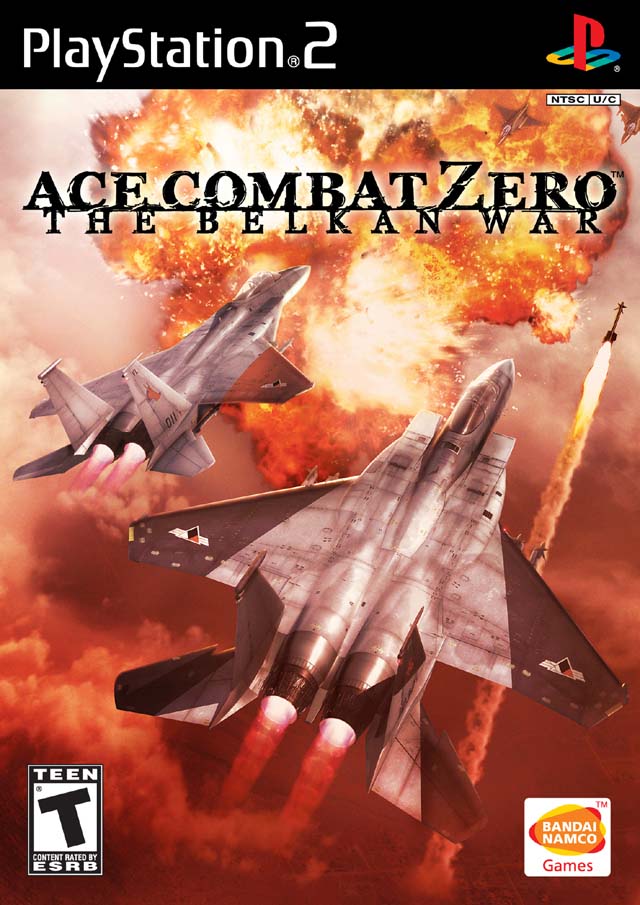
Ace Combat Zero: The Belkan War (released sans Zero in PAL regions) released in 2006 and was developed by the Project Aces division of Bandai Namco. Helmed by first-time creative director Naoto Maeda; can this change in leadership live up to the opening slogan of “New Blood. New Battles”?
Gameplay – Those who seek strength
Being the third and final entry into the PS2 holy trinity the core gameplay continues to be top-notch. Pre-existing issues surrounding the analogue controls of the Dualshock 2 are still present, leading to potential discomfort when needing to consistently hold down the brake or throttle. Everything else remains as tight and responsive as ever.
The cumbersome system of aircraft having a single special weapon is reverted to the tried and true formula of multiple specials on each plane, allowing for greater customisation when deciding both player and wingman loadouts. Wingman plane selection has also been scrapped in favour of having an F-15C at first and later an F-16C. Whilst I did enjoy the customisation aspect of wingman configuration; having such a powerful plane to back you up early game is a massive boon.
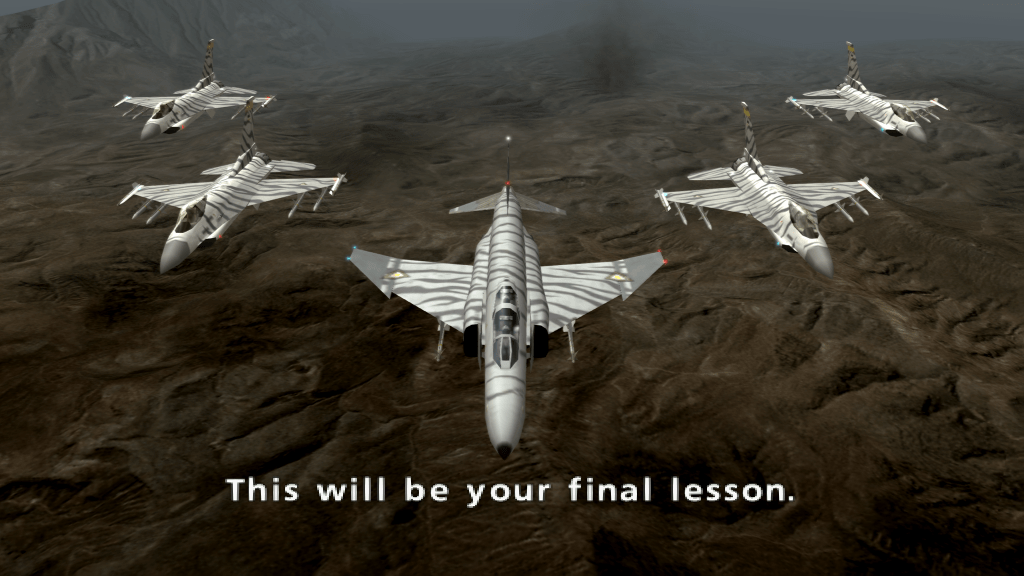
Wingman and enemy AI has been improved massively since the last entry. They can reliably target what his current command is, sometimes leaving players quite surprised at how efficiently the battlefield can be cleaned up. Enemy improvements lead to the pinnacle of dogfighting for the PS2 trilogy, with battles against rival Belkan aces being heart-pounding spectacles in the sky.
One of the major gameplay changes in Zero is the introduction of the “Ace Style” gauge. This gauge reacts to a player’s actions during a mission, specifically how they interact with new “Yellow” targets:
- Spare and destroy roughly equal numbers of yellows? You are a Soldier, feared for your efficiency and skill in battle
- Refuse to target yellows? You are a Knight, famous amongst your rivals for strict adherence to the rules of engagement
- Destroy yellows with reckless abandon? You are a Mercenary, reviled for your bloodthristy nature… whilst also being loaded to buy new planes
Whilst the game allows players to select a difficulty that will determine enemy behaviours, and if a plane will explode because of a stiff breeze, Ace Style can also influence difficulty by introducing more targets the further players slide into Mercenary and will change up the rival Ace squadrons encountered during certain missions.
Sound Design – Those who live for pride
Surprising no one, the sound design found in previous entries remains in this game. Engines firing up their afterburners on the runway sound as guttural as ever and the satisfying kaboom of a missile impacting into an enemy plane remains extremely cathartic.
The signature Ace Combat sound is included with the addition of flamenco guitars providing a welcome mix up. This new instrument features heavily in duels against rival aces, increasing the tension as fighters try to tail one another. There is healthy fan debate on whether this game contains long-time composer Keiki Kobayashi’s magnum opus (most significant work), a track appropriately titled “Zero”.
Plot – Those who can read the tide of battle
Rather than the events of the war fifteen years ago being recapped, now it is the player’s turn to actually live those events in the pilot seat of Galm 1, callsign “Cipher”. Cipher is not permanently affiliated with any air force in game, instead the viewing battle through the eyes of a mercenary and how various pilots perceive mercenaries.
Belka is a small principality on the Osean continent, with analogues to 20th century Germany in being an economically struggling country embarking on a rapid expansion campaign leading up to the events of the war. From the early days of liberating occupied territory, to the lighting offensives against key strategic territory, all the way to the worst man-made disaster in Strangereal history (“Strangereal” is the fan-originated term for the alternative reality the numbered Ace Combat games take place in).
Radio chatter continues to be a vital source of information, and will give an insight to your wingman’s perspective on things, with Solo Wing Pixy either offering his insight on a terrible situation or making a snarky comment about having enough experience flying home with one wing.
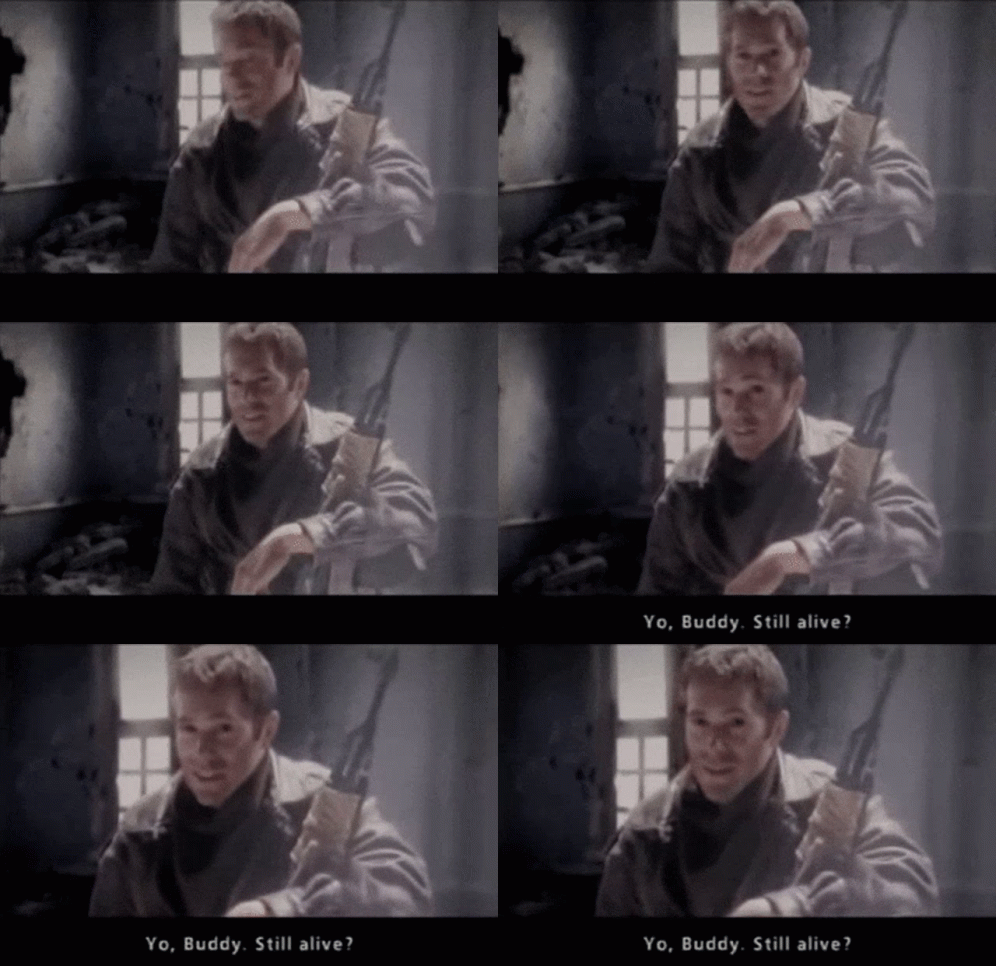
Between-mission cutscenes now take the angle of a documentary for an Osean news channel, with the reporter conducting interviews with important people who had encountered Cipher. Primarily these are the Belkan aces fought during the game, and therefore cutscenes can change depending on what Ace Style certain missions are tackled with. A large change in these cutscenes are their live-action nature, leaving behind both the watercolour paintings of AC4 and the CGI sequences of AC5
Debriefing – He was a true ace
Improving massively upon the sins of its predecessor Ace Combat Zero takes the arcade style game of the franchise and ramps it up massively with AI improvements for enemy fighters, the Ace Style gauge influencing what planes are unlocked providing massive replayability without feeling forced. Whilst control issues persist, they are not enough to dampen the absolutely awe-inspiring sequences that transpire within game.
 Rosalia Rambles
Leave a comment