Good morning rudders and canards, welcome to a big catchup post covering Day 114 to 117 of Rosalia Rambles Redundancy Review.
So on top of my period destroying my body entirely, this week was also one where my day job decided to massively ramp up for various deliverables, which obviously takes priority that day over my unpaid writing practice.
Usually, I write the Redundancy Review during my lunch or working on it whilst I wait for apps to upload or process, with the final touches coming after I finish – such as getting the piece into WordPress and adding in the images before publishing & uploading to BlueSky.
But given the intense stress of this week, I reprioritised my evenings into focusing on rest, even reducing the amount of complex cooking I was doing during the week and instead put my energy into making meals that did not require much effort.
And even now when trying to write this out, I feel exhausted. Both mentally and physically, I am still trying to catch up with what happened this week to try get myself back into the mindset of writing every day to keep myself sharp.
There are a lot of topics I still want to cover in my style, and I still have a lot of stories to tell, but for now, I think resting is the priority.
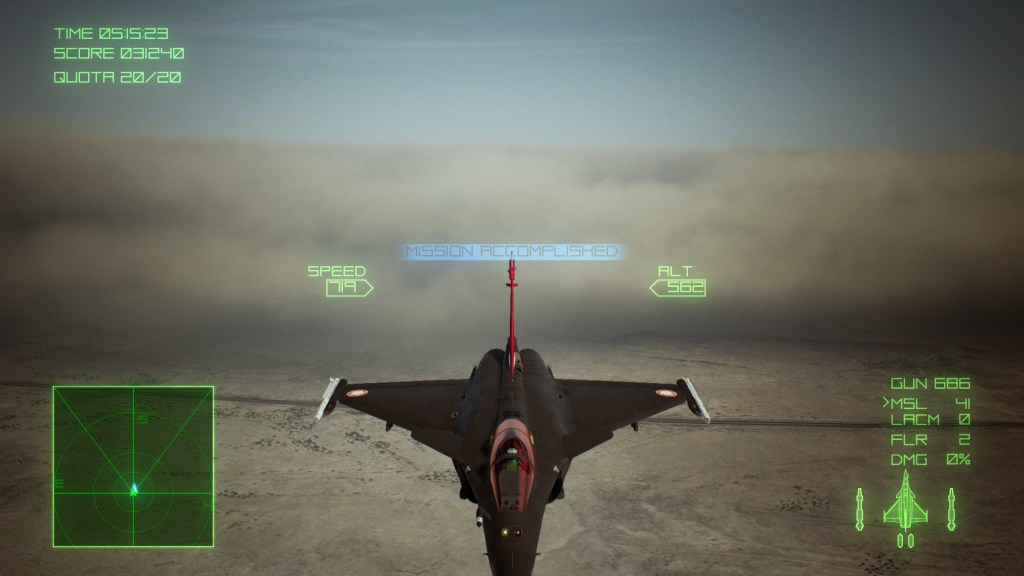
Hence why today’s review is going to be a bit ramshackle due to the fact I will be pulling screenshots off of my hard drive from ages ago to help make my points.
In the dark recesses of Rosalia Rambles history, there exists a review of Ace Combat 7, you can read it here if you so wish, but considering it is nearly five years old at this point, I think it is time I do it justice in my new style and with less of a critical stance & more of my ‘review’ stance.
When it comes to niche Japanese franchises, Ace Combat is definitely up there for me. I got introduced to it by an old friend back during my uni days and, despite being very skeptical that I would enjoy the game, it instead became one of my favourite series of all time.
Wherever you are, old friend, I hope you are doing well in life, and that you are happy. It really was all I wanted for you, even if I could not provide it.
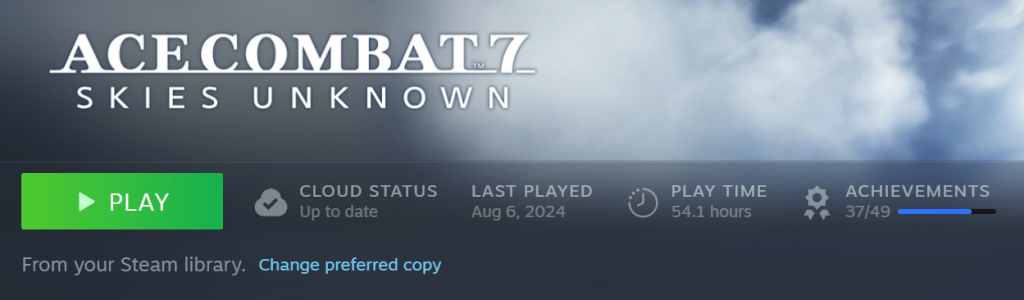
Ace Combat 7 is the most recent entry in the franchise, coming out in 2019, and whilst I have a very respectable playtime on PC; my first experience with the game came on PS4, which I think goes to show how much I enjoyed the game that I decided to rebuy it on a different platform and play through it all again.
The goal of the game is good, clean, arcade-style flight simulator fun. There are twenty campaign missions ranging from your standard “take down bombers and escorts attacking your base” to “destroy the required amount of enemy assets in time”.
Though, I do want to highlight the story of the game along with re-emphasising the year it came out. For coming out in 2019, there is a heavy focus on the usage of drones in war, including the inciting incident of the game being an autonomous drone attack being carried out in the “protagonist” nation using drones hidden in shipping containers.
Considering that exact scenario has played out in the Ukraine/Russia conflict with the former side using that exact tactic on the latter, it feels almost spooky to revisit some of the themes in this game.
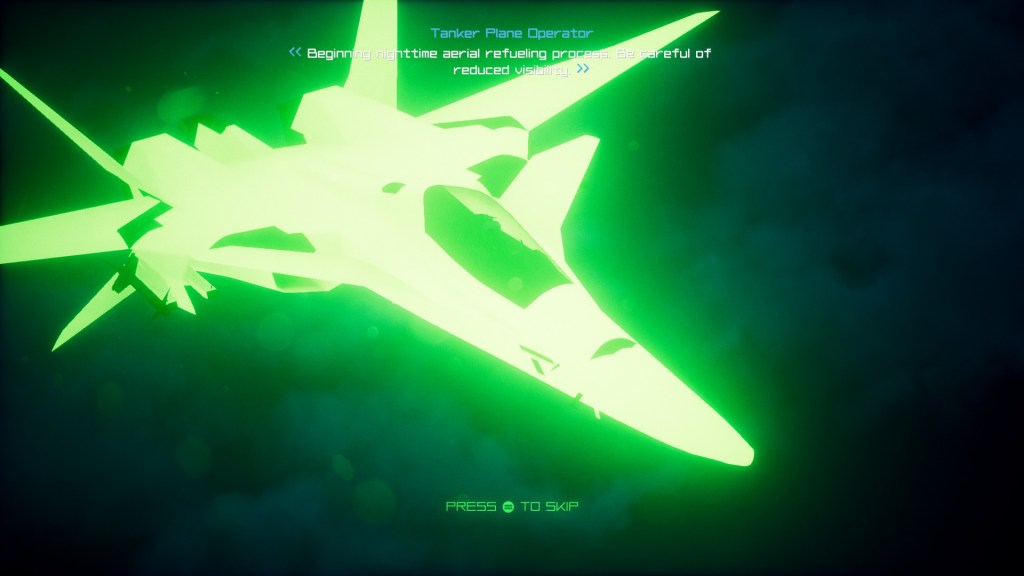
If you care about spoilers, here is your small-scale spoiler warning for Ace Combat 7, skip ahead until you see an image of a glowing fighter jet, where I will change topic.
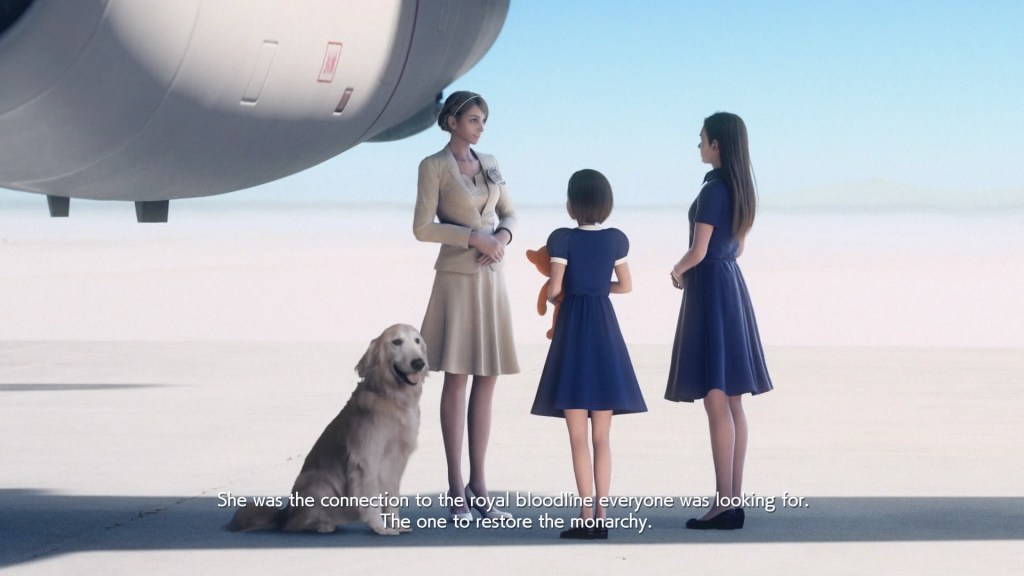
During the game you see cutscenes of your rival ace, Mihaly, taking part in experiments that are providing training data to the drones. Once you get to the final mission, two advanced drones are revealed that are carrying Mihaly’s data, with the objective of uploading that data to drone factories around the world to mass-produce these AI-powered war machines.
Again, this game came out in 2019, and to me having a plotline like this in a game about fighter jets feels ominously prophetic, bordering on Metal Gear Solid 2 levels of a plot being way ahead of its time.
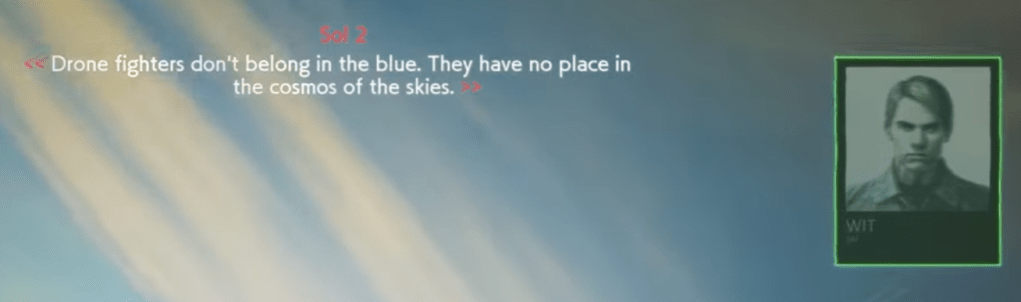
Simultaneously, there is writing that echoes the anti-AI sentiment of today through the message of drones versus human pilots:
Like with most games with a modern military setting, there needs to be a level of media literacy to both appreciate the themes whilst recognising that the game is acting as propaganda for various companies like Lockheed Martin and Boeing, this is often why when I talk about these games my general mantra for discussing them is:
“War bad, planes rad”
(thank you to Oboe Shoes Games on Youtube for that brilliant phrase)
Even in the mission where the above sentence is spoken, you as the “protagonist” are in the midst of committing a war crime by attacking a site of historical slash cultural significance to pillage their supplies, so, the ahead of its time message is balanced out by the horrors.
Anyway, that is enough story discussion, time to put up the signal that people can come back.
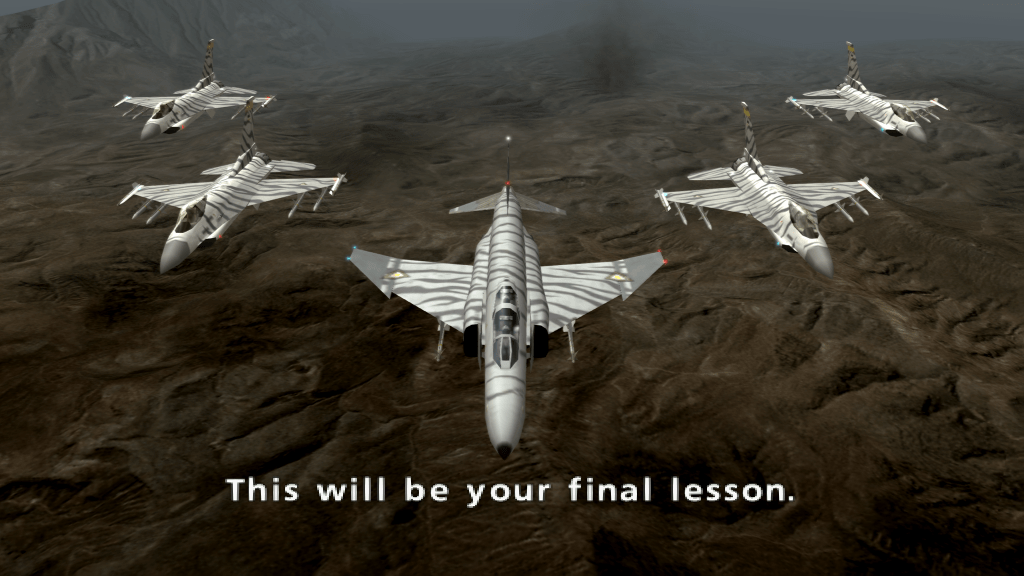
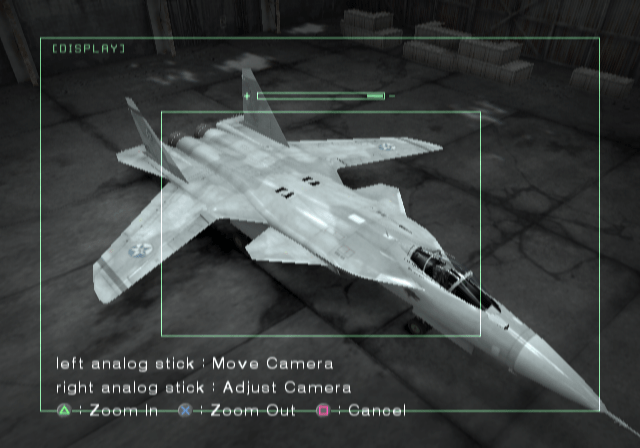
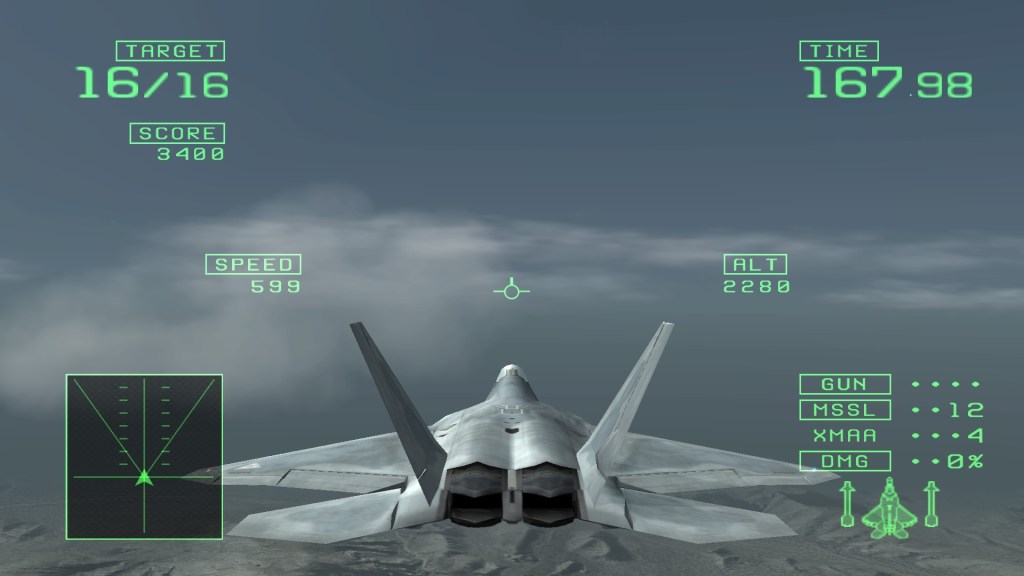
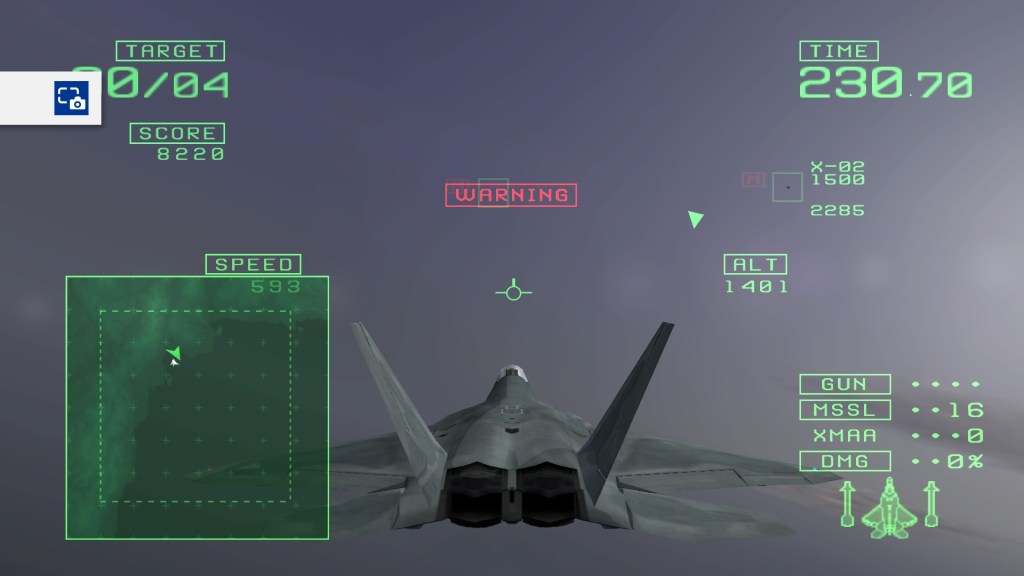
Ahh, glowing X-02S Wyvern, you are one of my favourite stupid additions to the game in the form of DLC.
Once again I show I am not immune to propaganda, but that does not minimise my love for this game. Planes are indeed rad, and getting to fly them in video games is one of the most exhilarating experiences I have ever had the pleasure of partaking in. Ace Combat 7 pushed me to my limits as I tried 100%ing the main campaign, doing all the side objectives, hidden aces, and in-game medals.
I still need to properly immerse myself into the multiplayer to bring up my Steam achievement count to the top, but I have proven myself in the way I want to, and that satisfies me.
Ended writing way more than I anticipated about a plane game, but I think this has done what I wanted it to in getting the juices flowing again. Thank you so much for reading today’s edition of the Redundancy Review, wherever you are I hope you are able to make the most of a relaxing Sunday before the Monday blues come back at you.
Ace Combat 7 is available on Steam, Xbox, Playstation, and Switch, so if my review has made you at all curious, give it a go!
After a period of time, sometimes it is best to go back to the core of what made a game great in the first place.
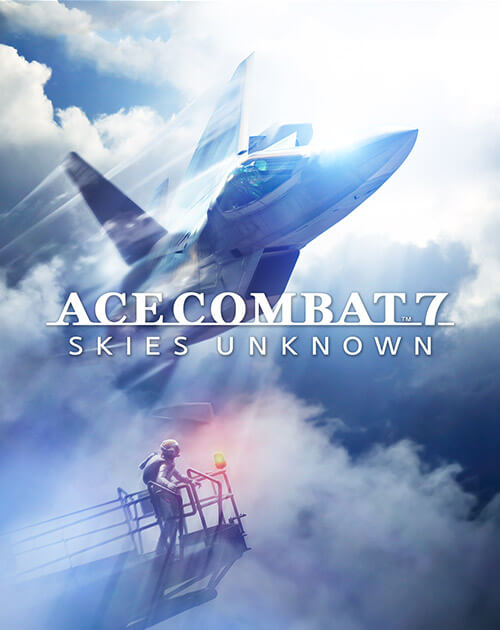
Ace Combat 7: Skies Unknown is an arcade flight combat game and was released in 2019. Developed by the Project Aces division of Bandai Namco could the team capture what made their previous works great, and provide a gameplay experience as a generation of consoles entered their twilight years?
Gameplay
The no-frills core gameplay of previous Ace Combat games is intact, with every plane feeling both tight and responsive to player input while also including enough distinction in how a plane rolls, pitches, and yaws. Adding onto this gameplay are three major control tweaks to give players plenty to master:
Flares, allowing players to deflect imminent missile hits that they may not want to manoeuvre to dodge
High-G Turns, quick responsive turning to conquer obstacles easier and to bleed speed in a dogfight
Post-Stall Manoeuvres (PSMs), advanced mobility techniques on certain planes, allowing for unbelievable manoeuvrability at low speeds
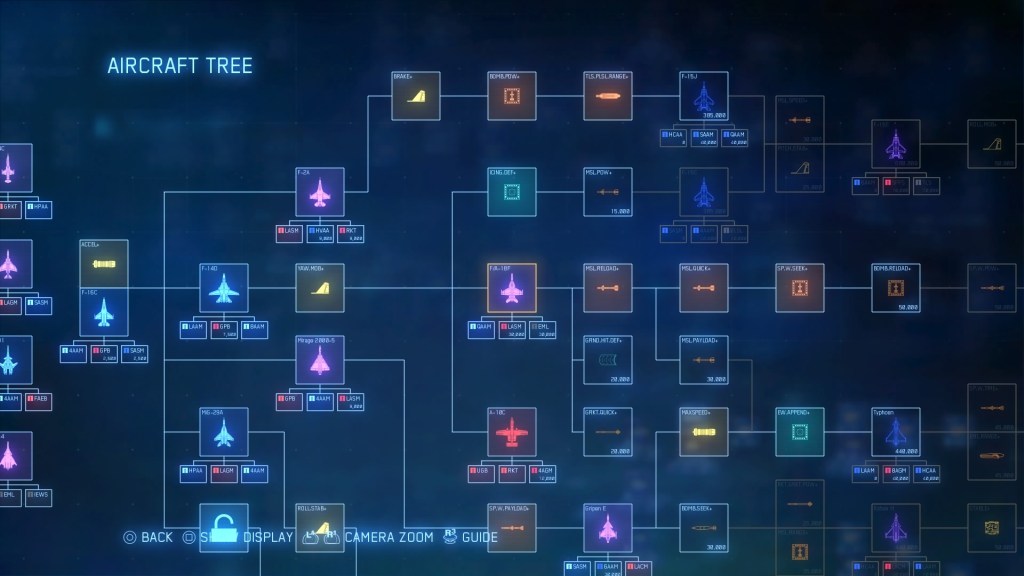
Rather than aircraft being available to unlock after certain milestones, the game now utilises a system called the “Aircraft Tree”. Points are earned after each mission which can be used to buy planes or parts (upgrades to improve mobility, weapons, or provide passive buffs). Unlike previous AC games, planes are unable to be sold to buy new ones, but the addition of Free Mission not requiring campaign completion allows players who wish to push themselves to one particular plane or weapon to earn points by playing the game.
Missions are diverse and well-designed, with the majority of them being built as “easy to clear, hard to master”, giving plenty of replay value for both new and old players alike. Level gimmicks are (mostly) introduced safely to players to allow them to adjust to what is required, and then ramps up their integration as time goes on. None overstay their welcome and can provide needed relief after more intense sequences. The much needed addition of checkpoints also punish players less for making mistakes in the endgame of a mission.
There is online multiplayer in this game. And whilst it is a little disheartening to see that there are no co-operative ground based missions, this fact can easily be overlooked by how powerful multiplayer can make a player feel. Work with up to three other pilots in team deathmatch, coordinating a response against an enemy ace to knock someone down a peg. Stand your ground in an all-out air battle royale, fighting to be the top pilot, all the while missiles are whizzing past in all directions.
Presentation and Sound Design
Built on Unreal Engine 4 the developers put great effort into making sure everything looked spectacular as the previous generation came to a close. Even on a standard PS4 the game looks absolutely beautiful in areas, with advanced lighting providing a fitting mood to each mission. Special mention goes to Simul’s trueSKY plugin, handling clouds, lightning, and god rays coming through said clouds.
Years worth of experience provide an unrivaled level of authenticity to the sound design. Engines, guns, and missiles all have the raw feelings of power that comes from piloting a fighter jet, allowing for full immersion during dogfights. One particular sound design of note I wish to highlight is the Electromagnetic Launcher (EML). The sound of the gun discharging, the whoosh of the high-speed projectile, and the loud bang it creates on impact all work together to provide cathartic feedback to firing a railgun.
And of course, the signature music of Ace Combat remains as fantastic as ever with Keiki Kobayashi acting as lead composer once more. Whilst Kobayashi most certainly carries his weight with some of his best work yet, the track I wish to highlight here is “444” by the wonderfully talented Mitsuhiro Kitadani. To me, this is a perfect amalgam of modern Ace Combat, classic Ace Combat, and fits the mission at hand beautifully.
Again, my thanks and admiration goes out to Zaptroxix. You do amazing work my dude, keep it up.
Plot
Taking place once more in the world of Strangereal (the term for the Ace Combat alternate reality) the game begins with the Kingdom of Erusea declaring war on the Osean Federation, with the former seizing a valuable land asset on their continent, the International Space Elevator. In doing so they also seized control of two superweapons called the “Arsenal Birds”, sweeping airborne aircraft carriers armed to the teeth with advanced weaponry.
Whilst some may claim that it is difficult to understand the story of Skies Unknown without playing previous Ace Combat games, the themes are written well enough to convey their intent to all audiences.
Osea can quickly be deduced as an analogue to the USA, being a large federal nation that has a hand in peacekeeping operations around the world. The Erusean’s declaration of war on Osea being justified by the Space Elevator infringing on the sovereignty of Erusea brings further analogues to countries resenting the heavy hand the USA can have in international matters.
Between mission cutscenes, pre-mission briefings, and mid-mission radio chatter all helps towards world building. Providing alternative insight on events just witnessed by players, giving indirect updates on how the war effort is going and what players are doing to impact it, and how your other squadron members view different situations, providing everything from snarky banter to near-speechless horror.
Debriefing
Ace Combat 7: Skies Unknown has everything for anyone who may be interested. Whilst some minor flaws hold the game back from true perfection, there is enough content for new players to ease themselves in and for veteran players to be welcomed back with open arms.
It is easily my favourite game in the franchise at this current point in time, and I intend to revisit for years to come.
“Did you know… there are three kinds of aces? Those who seek strength. Those who live for pride. And those who can read the tide of battle. Those are the three. And him… He was a true ace.”
Larry “Solo Wing Pixy” Foulke, Ace Combat Zero, 2006
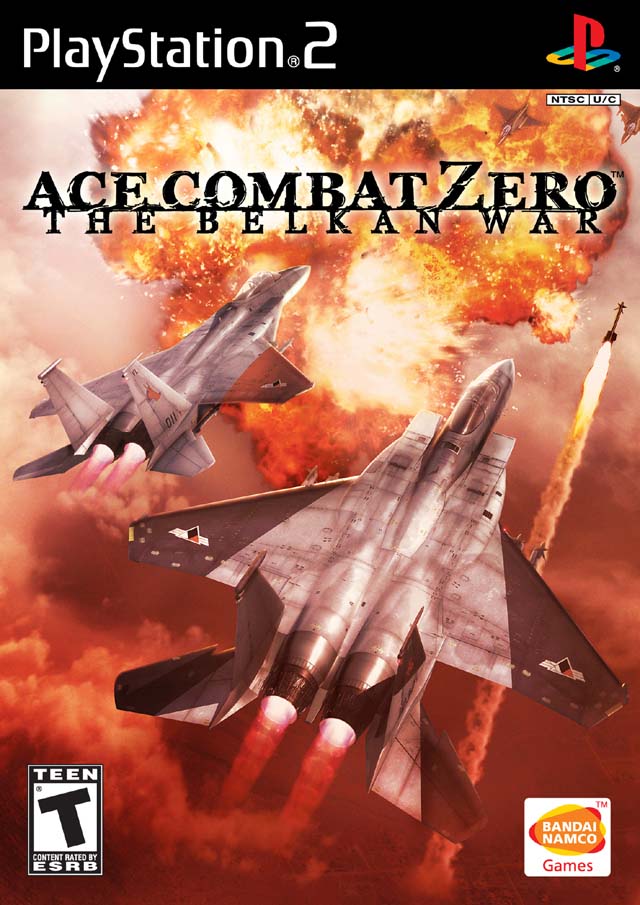
Ace Combat Zero: The Belkan War (released sans Zero in PAL regions) released in 2006 and was developed by the Project Aces division of Bandai Namco. Helmed by first-time creative director Naoto Maeda; can this change in leadership live up to the opening slogan of “New Blood. New Battles”?
Gameplay – Those who seek strength
Being the third and final entry into the PS2 holy trinity the core gameplay continues to be top-notch. Pre-existing issues surrounding the analogue controls of the Dualshock 2 are still present, leading to potential discomfort when needing to consistently hold down the brake or throttle. Everything else remains as tight and responsive as ever.
The cumbersome system of aircraft having a single special weapon is reverted to the tried and true formula of multiple specials on each plane, allowing for greater customisation when deciding both player and wingman loadouts. Wingman plane selection has also been scrapped in favour of having an F-15C at first and later an F-16C. Whilst I did enjoy the customisation aspect of wingman configuration; having such a powerful plane to back you up early game is a massive boon.
Wingman and enemy AI has been improved massively since the last entry. They can reliably target what his current command is, sometimes leaving players quite surprised at how efficiently the battlefield can be cleaned up. Enemy improvements lead to the pinnacle of dogfighting for the PS2 trilogy, with battles against rival Belkan aces being heart-pounding spectacles in the sky.
One of the major gameplay changes in Zero is the introduction of the “Ace Style” gauge. This gauge reacts to a player’s actions during a mission, specifically how they interact with new “Yellow” targets:
Spare and destroy roughly equal numbers of yellows? You are a Soldier, feared for your efficiency and skill in battle
Refuse to target yellows? You are a Knight, famous amongst your rivals for strict adherence to the rules of engagement
Destroy yellows with reckless abandon? You are a Mercenary, reviled for your bloodthristy nature… whilst also being loaded to buy new planes
Whilst the game allows players to select a difficulty that will determine enemy behaviours, and if a plane will explode because of a stiff breeze, Ace Style can also influence difficulty by introducing more targets the further players slide into Mercenary and will change up the rival Ace squadrons encountered during certain missions.
Sound Design – Those who live for pride
Surprising no one, the sound design found in previous entries remains in this game. Engines firing up their afterburners on the runway sound as guttural as ever and the satisfying kaboom of a missile impacting into an enemy plane remains extremely cathartic.
The signature Ace Combat sound is included with the addition of flamenco guitars providing a welcome mix up. This new instrument features heavily in duels against rival aces, increasing the tension as fighters try to tail one another. There is healthy fan debate on whether this game contains long-time composer Keiki Kobayashi’s magnum opus (most significant work), a track appropriately titled “Zero”.
Plot – Those who can read the tide of battle
Rather than the events of the war fifteen years ago being recapped, now it is the player’s turn to actually live those events in the pilot seat of Galm 1, callsign “Cipher”. Cipher is not permanently affiliated with any air force in game, instead the viewing battle through the eyes of a mercenary and how various pilots perceive mercenaries.
Belka is a small principality on the Osean continent, with analogues to 20th century Germany in being an economically struggling country embarking on a rapid expansion campaign leading up to the events of the war. From the early days of liberating occupied territory, to the lighting offensives against key strategic territory, all the way to the worst man-made disaster in Strangereal history (“Strangereal” is the fan-originated term for the alternative reality the numbered Ace Combat games take place in).
Radio chatter continues to be a vital source of information, and will give an insight to your wingman’s perspective on things, with Solo Wing Pixy either offering his insight on a terrible situation or making a snarky comment about having enough experience flying home with one wing.
Between-mission cutscenes now take the angle of a documentary for an Osean news channel, with the reporter conducting interviews with important people who had encountered Cipher. Primarily these are the Belkan aces fought during the game, and therefore cutscenes can change depending on what Ace Style certain missions are tackled with. A large change in these cutscenes are their live-action nature, leaving behind both the watercolour paintings of AC4 and the CGI sequences of AC5
Debriefing – He was a true ace
Improving massively upon the sins of its predecessor Ace Combat Zero takes the arcade style game of the franchise and ramps it up massively with AI improvements for enemy fighters, the Ace Style gauge influencing what planes are unlocked providing massive replayability without feeling forced. Whilst control issues persist, they are not enough to dampen the absolutely awe-inspiring sequences that transpire within game.
Ace Combat 5: The Unsung War (released with the much more inferior subtitle of “Squadron Leader” in PAL regions) is an arcade flight combat simulator developed by the Project Aces division of Namco. After making a huge splash in the PS2’s release year with Shattered Skies in 2001; could the team replicate such success three years later in 2004?
Having been a complete newcomer to this series back in August it still surprises me how much love and praise I have for this franchise, even when there are some rough edges in this particular entry.
On a distant continent, in a faraway land
Starting on the Osean continent in the year 2010, The Unsung War starts solemnly by recapping the events of a war fifteen years ago. During a conflict known as the “Belkan War”, the eponymous Belkans set off seven nuclear detonations on their soil, killing thousands and shocking the world into a ceasefire and eventual peace treaty.
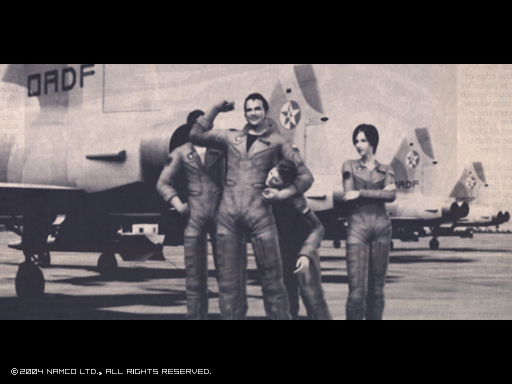
After this, players are directly thrown into the action with a cutscene depicting a sudden encounter and the rookie “nugget” pilots of Sand Island Base needing to engage numerous unidentified bogies. Out of everyone who took off; only the flight instructor, Captain “Heartbreak One” Bartlett , and three nuggets, Blaze (mute, faceless player character), Kei “Edge” Nagase, and Alvin “Chopper” H. Davenport returned alive.
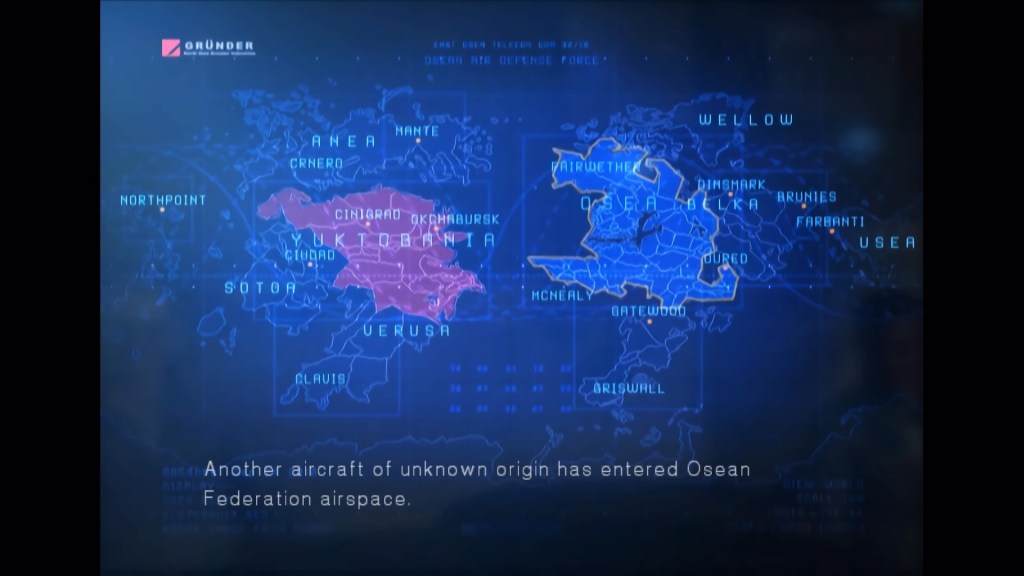
Routine operations resume after this incident. All remaining pilots are assigned to the Wardog Squadron and undertake straightforward missions, such as trying to escort a spy plane to a landing and destroying reconnaissance drones. During each mission though, Wardog is engaged by more unidentified bogies, the only hint to their origin being an airbase across the sea, in the country of Yuktobania.
These are not harmless incidents though, because as soon as Wardog completes only their second sortie Yuktobania declares war on Osea, beginning a lightning offensive.
Key themes to the plot in The Unsung War are mistrust and how rapidly the tide of battle can turn. Whereas the previous entry would frequently present scenarios where victory seems incredibly distant; this game prefers to drip-feed victories before violently taking it away and resetting any meaningful progress.
Mistrust develops from these incidents as both Wardog and players suddenly become unsure of who to trust. From the mysterious 8492nd Squadron, ghosts in the wind around major incidents, to the base commander and other military personnel around Sand Island. Throughout the entire progression of the war, doubts start to manifest, even to the point of wondering why this war began and who is perpetuating it.
A motormouth, an action girl, and a hopeful mechanic
The key characters players will be spending time with throughout the game are their three wingmen. Whilst they serve a gameplay purpose which will be elaborated on later; their characters and personalities are more fleshed out than in Ace Combat 4.
Instead of cut-and-paste mission dialogue talking about how one of them is going to earn their ace wings today, or telling you about their radio failure over their radio, each wingman has their own distinct personality that will come across during missions and between-mission cutscenes.
Chopper is notorious for being a non-stop chatterbox, to the point different commanding officers and AWACS Thunderhead have often asked him to kindly shut up. He even chose his callsign based on having a tendency of “shooting his mouth off” over comms.
Using this gift of speech; he is the loudest anti-war voice of the squadron. Whilst he follows through with the mission, Chopper often questions the nature of war, specifically when following orders would endanger the lives of soldiers and other pilots.
Nagase offers a similar perspective, but she does so in a more restrained way. Whilst Chopper strikes hard into the issue of modern warfare; Nagase simply wishes to enjoy the feeling of flying with equally skilled pilots, lamenting what it would have been like to fly alongside enemy pilots during peacetime.
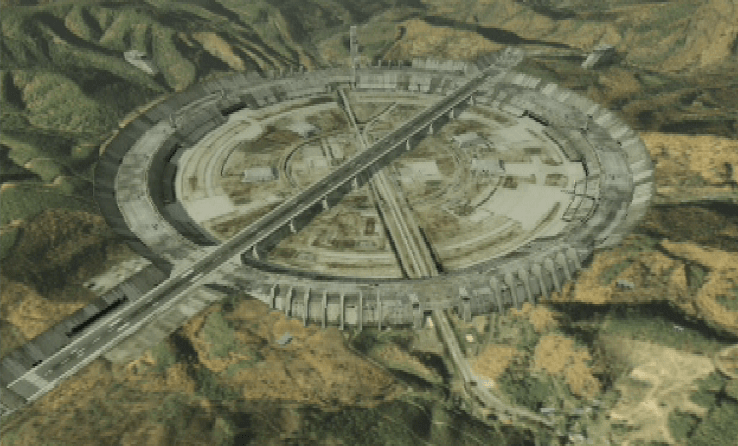
This wish extends to other parts of her personality. She lodges her objections to the Arkbird, a large white spacefaring vessel initially designed for removing Ulysses asteroid fragments from orbit, being used for wartime purposes instead. These feelings can almost amount to disillusionment as she interrogates the Osean president on why the “beautiful white bird” had to be used for war.
Finally, comes Hans “Archer” Grimm, the replacement as your fourth wingman once Captain Bartlett is no longer in the picture. When he joins, Grimm is not even a fully trained pilot yet, simply a mechanic wishing to stop the destruction of their home base and quickly making up for his lack of formal training in the skies.
Whilst he shares the anti-war opinions of the other wingmen; it is presented in a more subtle way. Grimm instead is shown as an almost ideal soldier, they will follow their orders if legal, and they will want to minimise casualties on both sides in doing so. This detail is expanded upon further through mid-mission radio chatter where Grimm reveals he has a brother on the ground, perhaps worrying about the possibility of never seeing him again.
To cap off characters, talking about the narrator seems like a good idea. As opposed to being a nameless child in an occupied town, the game offers us Albert Genette, a young freelance journalist/photographer. (Fun fact: Genette is one of the first credited roles for all-round badass Matt Mercer.)
Genette fulfils the role of an outside witness to the game’s events, taking photographs of key moments throughout the story, and acting as the catalyst for the reputation of the main characters through his piece “The Four Wings of Sand Island”, written after one of the major opening events of the war.
Planes! You want them, we got 53 of them this time!
Yes, that’s right. Ace Combat 5 has 53 unlockable planes for players. This is a massive upgrade when compared to the total in the previous entry being 21. However, with this many planes there is almost certainly going to be a catch, and in this case it is the progression system being woefully unsatisfying in areas.
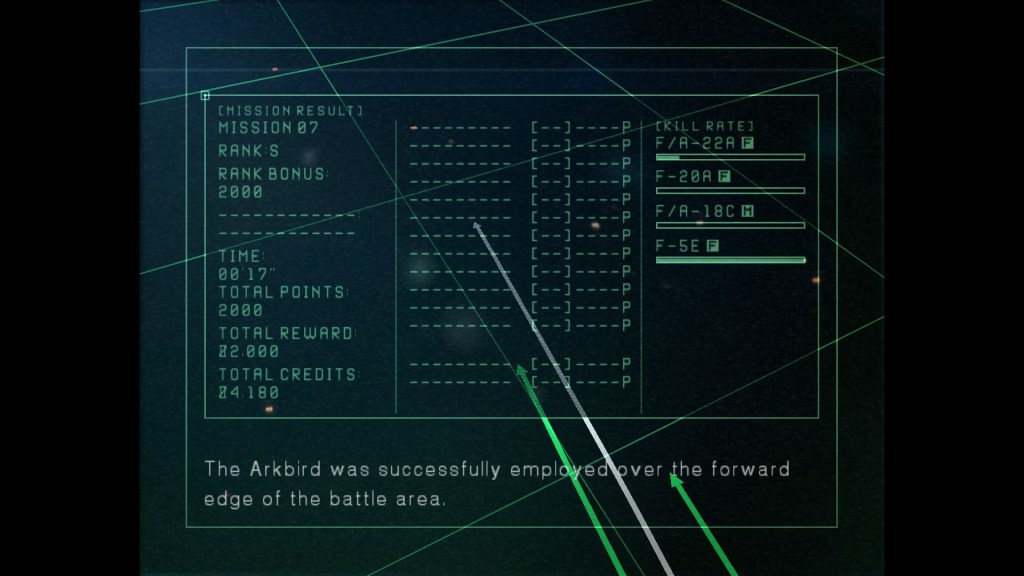
Whilst the system is still in place for players to unlock new planes after specific missions; certain planes now carry a varying number of “branches” leading off from the base plane you can buy, said base plane having an empty gauge beneath it. This gauge is the “kill rate” of that plane and fills up with kills and minigame completion. When full, the next plane on the branch is unlocked.
In theory, this system is a good idea. Rewarding players with better tech for just using the planes in missions is a great boon to replayability, but in the end it comes off as feeling grindy and unfulfilling.
A prime example: why commit to the F/A-18 when the F-35 is right there?
Throughout my initial playthrough I found it incredibly difficult to reliably commit to filling up the kill gauge on most planes. Usually because as I came close to unlocking the next branch on one; a better aircraft would have already unlocked and it becomes more worthwhile to invest in that rather than stick to what was already in use.
This feeling of grinding is amplified by what is, in my opinion, the worst part of Ace Combat 5: there are no special weapon options on the planes.
When considering buying a plane, players not only have to take into account the statistics of that plane; they also need to wonder if they will get good usage out of its singular special weapon. This can provide some interesting decisions when deciding wingmen loadout but ultimately it restricts the potential of some amazing in-game planes.
Much like a WSO, gameplay is taking the back seat
In a prime example of quantity over quality, Ace Combat 5 has the most missions out of the PS2 trilogy, but a lot of these missions are bland, unsatisfying, and in some cases poorly designed.
The majority of missions carry very little gameplay weight, ultimately becoming formulaic in the worst possible way. Complex missions from the previous game have been traded in for focusing more on wingmen character development mid-mission, supplying intermittently entertaining dialogue at the cost of feeling engaged with the task at hand.
Instead of leaving players exclaiming, “oh my god! What could happen next?”; quite often they will find themselves asking aloud, “is anything going to happen, or is this it?”.
When a mission is done well, the impact it leaves is noticeable. A handful of ground attack missions (12A and 26 of particular note) stand out beautifully as both intense and being the perfect length, whilst full-scale dogfight missions (17 and 18+) make their mark despite the dogfighting in this game leaving players wanting.
It is honestly a damn shame that the AI in this game can lead to aerial battles feeling sedentary. Unless you specifically lead them on enemy planes will rarely try to get behind players, and when they do acquire a radar lock there is a very high chance that they will just not fire a missile, allowing plenty of time to manoeuvre behind them and quickly pop them with two/three missiles.
That last bit is of note, as some enemy planes are more resilient than others. Now, this makes sense on some attackers/bombers that can be encountered throughout the game… but there is honestly very little reason why Tornados and MiG-31s should have more resilience than Su-47s. The rival ace squadron, in advanced Russian fighter jets, are easier to shoot down than a small European multirole developed in the 70s. This should not be possible.
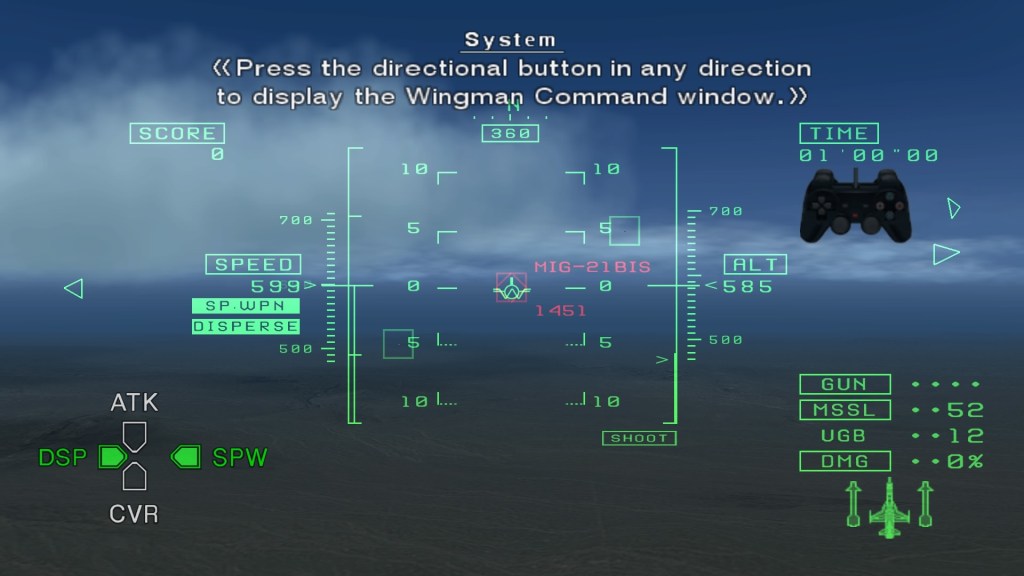
One of the main selling points for Ace Combat 5 is the wingman command system. Using the D-Pad players are able to issue three tactical orders, and decide whether special weapons are free or safe. The tactical orders are:
Cover. The default order that players start the mission on. Wingmen will stay close to the lead plane and attempt to shoot down anything that attempts to tail them.
Attack. Useful for missions involving large resilient targets or clusters of escaping fighters. Wingmen will target whatever the lead plane is currently looking at.
Disperse. My personal most-used command. Wingmen will spread out from the lead plane and attack targets on their own volition.
Wingman commands are somewhat divisive within the Ace Combat community, and players are split whether they are a gimmick serving no gameplay purpose, or that they add a layer of tactical depth to missions. Personally, despite defaulting to the disperse command, I find myself in agreement with the latter category, enjoying having to make decisions on the fly whether to adjust my command or not.
The D-Pad is also used to answer yes/no questions posed by the wingmen and other NPCs. For the most part these have no impact on gameplay and are mainly used to further build characters throughout missions, though in some cases answering a question about splitting up or focusing firepower will result in wingman tactics automatically changing.
There is also a case where answering yes or no will change what mission is tackled next, and there is no indication this is going to be the case and is honestly a bit stupid.
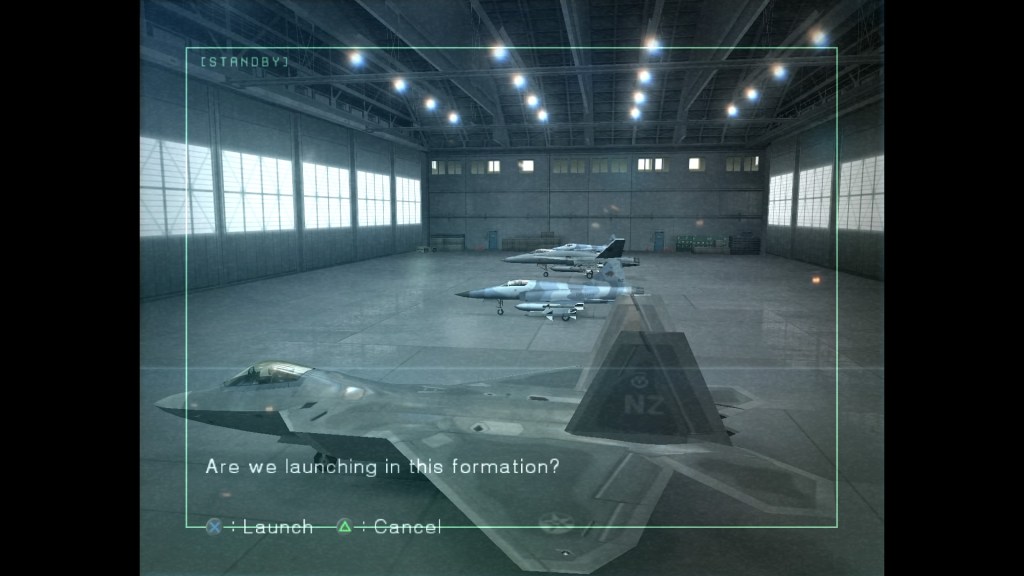
Before each mission players are able to choose both their plane, and what planes their wingmen will be flying in. A box in the bottom right will inform whether or not the formation is suitable for both the air enemies and ground enemies expected to appear, and a wingman will comment if a formation is not up to snuff.
This is genuinely quite a fun system, as it allows players to determine how they want to play the game and use wingmen loadouts to help cover whatever weaker areas may remain. Want to fly escort for a flight of attackers? You can do that. Fly in a badass formation of jet black Rafales? Go right ahead. Make your wingmen defend you as you use a Warthog for everything? It is your God-given right to do so.
Under pressure (sensitive controls)
So… bit of a confession to preface this segment, when I initially played Ace Combat 4, I actually did it with a Dualshock 1 controller, as opposed to a Dualshock 2. This means my control analysis of the game was a little bit off due to how the pressure sensitivity works on the DS2. I hope to rectify this now.
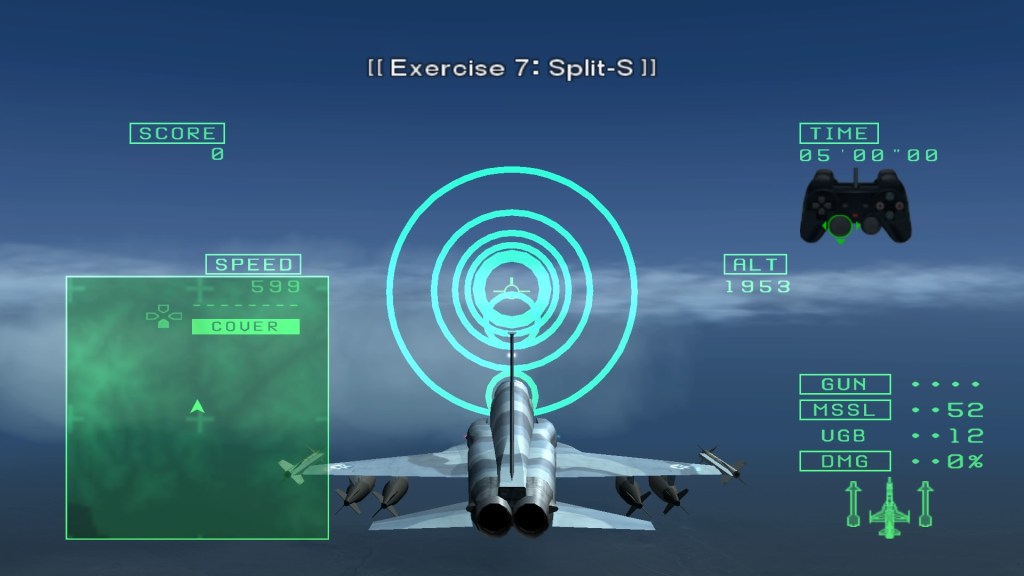
The pressure sensitive controls for the bumpers do work to bring a level of realism to the game. Lightly holding down L1 will slow the plane gently without deploying the airbrake whilst a firm press down will enable rapid deceleration with said airbrake, and acceleration can be precisely controlled from gradual acceleration to full afterburners.
(NB: the following points are made from personal experiences/controller handling issues)
However, I do wish there was an option to turn this setting off. Quite often I found myself holding the controller in an awkward way to enable flying at full speed with afterburners consistently, leading to mild-to-moderate hand pain. This is not helped by a history of grip issues with controllers, and whilst the DS designs are fairly ergonomic; it is a struggle to balance comfort against efficient gameplay.
Similar issues were found with how extending the radar range worked. The level of pressure on the Square button would determine how far the radar would show, and unfortunately for me I really struggled to get a hold of this system. I would never know if I was applying too much pressure on the controller itself whilst trying to get the radar open, often leading to quick presses to determine where to hit next.
These issues are resolved for me in the digital remaster for the PS4. The superior trigger design of the DS4 controller along with the controls no longer being pressure-sensitive provide an overall better gameplay experience.
(personal experiences points end)
Outside of these issues though, everything else is absolutely spot on. Analogue stick movements control the plane to the letter of the player’s intention, swapping between regular missiles and special weapons is extremely responsive, and changing between third-person, first-person, and cockpit view is handled simply through a quick click of R3.
One minor change that feels a bit illogical is the removal of the satisfying plink plink plink sound that played whenever machine guns were used against enemy planes in AC4. It provided audible feedback that shots were actually hitting the plane players were firing at, but instead this game handles it with standard “Hit” indicators which struggle to consistently indicate if the guns are finding their mark.
The man who can never retire
A major new addition in this game is “Arcade Mode”, a short series of levels with limited ammo, fast-paced objectives, and a choice of progression paths for an easier or harder time. The average playthrough time will be about thirty minutes depending on how many restarts are needed on later missions.
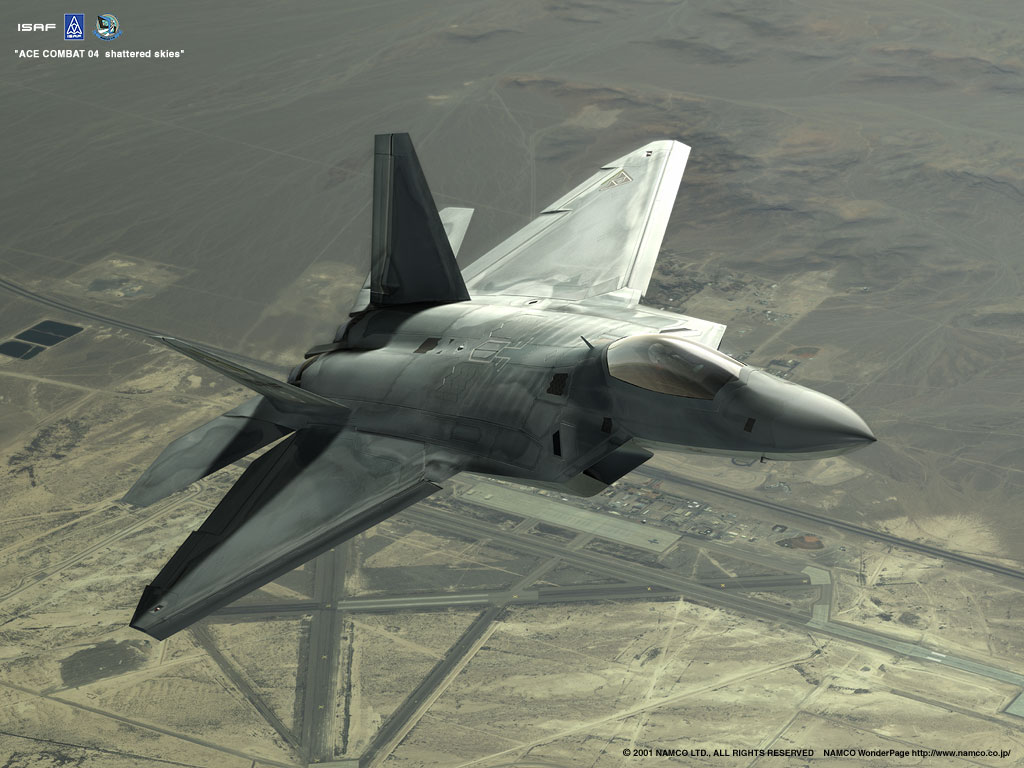
There is also only one plane available for this mode; the F-22 Raptor. This is because players are once again assuming the role of the legendary ace from the previous game, Mobius 1, and nothing else would suffice.
The story is brief, those Young Erusean Officers(TM) have refused to acknowledge the surrender to the Independent State Allied Forces (ISAF) and have reformed under the banner of “Free Erusea”. And the task is for Mobius 1 to go in alone to diffuse this risk to peace.
Yes, alone. Because as the briefing officer says, analysis has proven that Mobius 1, with the assistance of AWACS Sky Eye, has the same operating strength as an entire ISAF squadron. And the high-octane action of this mode definitely proves that.
Whilst the problems with dogfighting will lead to some missions feeling a bit unsatisfying; it almost feels appropriate here. Cleaving through targets with ease fits the legend of the Ribbon Fighter, especially in the first mission where upon seeing Mobius 1 you can see fighters turning around on the radar to run away from him.
The mini-campaign culminates the same way regardless of which route is chosen by players. Assault the port facility Free Erusea are operating out of, after which Mobius 1 is ambushed by unmanned X-02 fighters, the superplane from the previous game. Is it disappointing to have such a dogfight be in this game’s mechanics? Yes. Is it nonetheless fun and cathartic? Also yes.
It also serves a purpose to the campaign mode as finishing an Arcade run will unlock the F-22 for purchase as early as Mission 5, a whole twelve missions before it should unlock, along with making the ISAF livery available for New Game+.
Use this knowledge, and power, with discretion.
A sweeping score for an unsung war
This should come as no surprise. Ace Combat 5 has a fantastic soundtrack, and whilst the quality of missions vary; the music backing them up remains absolutely beautiful and in contention for being the best soundtrack of the PS2 trilogy.
(Again, my thanks to Zaptroxix for making these extended OST videos. You are doing valuable work every day.)
Rendezvous falls into the category of “early game Ace Combat mission with music greater than it has any right to be”, think Blockade in AC4. The track starts off tense, with fast-paced strings playing with brass sounding off every so often, giving the impression that despite the mission starting off at the “end” of an operation; something is about to go down.
Percussion kicks in as the strings increase in intensity, all building towards a crescendo for the chorus to present itself as a perfect accompaniment to an early game furball against enemy fighters and bombers looking to destroy the carriers you were tasked to protect.
Tetsukazu Nakanishi, I bow to your ability to make sonar pings fit perfectly within a song.
Both Scinfaxi and Hrimfaxi (the superweapon subs in the game) share leitmotifs and composition structure in their themes, so why does Hrimfaxi win out here?
Scinfaxi projects an aura of unease, unsure as to what the true capabilities of the sub might be. It starts out slow, with string scales and the aforementioned sonar pings before transitioning into a brass section that will fade in and out as the song progresses, everything soon cutting out as all that remains are synths and sonar, anticipating what the sub may do next.
Hrimfaxi throws all pretence and preamble aside, instead choosing to open with the signature sonar ping before launching into a distorted electric guitar with the string scales taking a back seat. Whereas Scinfaxi wanted to create tension; Hrimfaxi is creating despair. Wardog are not enjoying the same tactical support they had in the last encounter, and if Hrimfaxi cannot support the Yuke frontline they will do everything in their power to go down fighting.
Admittedly though, this guitar is also probably in contention with the solo from Comona (AC4) in how hard it goes throughout the song. It very rarely breaks off aside from the shared synth and sonar section from Scinfaxi, acting as amazing boss battle music as planes strafe the large sub.
Spoilers in the next section
The war is over. With the threat of nuclear annihilation abated, the Ghosts of Razgriz can finally rest.
Or they would, if the orbital cannon carrying said nuke was not on a collision course with the Osean capital city of Oured.
As their final sortie, the heroes take off from city highways to fly out towards the SOLG. Dispatching elite Belkan air force aces on the way and eventually reaching the massive structure as it descends to a vulnerable altitude. And then the music kicks in.
The Unsung War conveys multiple emotions. Sadness that no one will know the true story of the Ghosts until they have long since faded from memory, a sense of duty in carrying out this one last mission despite the struggles faced previously, triumph knowing a new dawn will come as they end this war for good on New Year’s Eve.
The way the song progresses reflects how a player might be feeling throughout this mission. Four pilots, officially listed as killed in action weeks ago, take on a task they can never be recognised for. A single male voice comes in, singing the legend of the Razgriz, reflecting how alone these pilots may be in their task.
But before long, a female voice joins in, and over time there are more voices added to the choir with the singing growing in intensity. The Ghosts are not alone. Everyone who has looked up to the sky and saw the black shadows zooming by are with them. They cannot be there in person, but they can add their spirit to wish them victory.
“After a period of slumber, Razgriz returns. This time, a hero.”
My only criticism? It does not have a fitting mission to go alongside it. Destroying the SOLG is impactful, but it has the structural integrity of a toilet paper loincloth and after the Belkan fighters are eliminated; there are no threats to players aside from accidentally flying into the SOLG.
…and despite my tendency to fly into slow moving objects in this game I somehow managed not to do that.
Debriefing
Ace Combat 5: The Unsung War is an amazing game and a worthy entry into the Ace Combat franchise. Whilst unnecessary mechanics and potential control issues do have some impact on the core game itself; there is still infinite replayability to be had and hours of fun awaiting players. It is definitely the weakest entry in the PS2 holy trinity by a wide margin, but when it hits its stride there is the signature Project Aces love and dedication to their craft.
If you have a PS2, it is usually quite easy to find a secondhand copy online or at trade-in shops. If you have a UK registered PSN account, buying a Digital Deluxe edition of Ace Combat 7: Skies Unknown will bag you a digital copy of AC5, which comes with enhanced resolution, better controls, and trophy support.
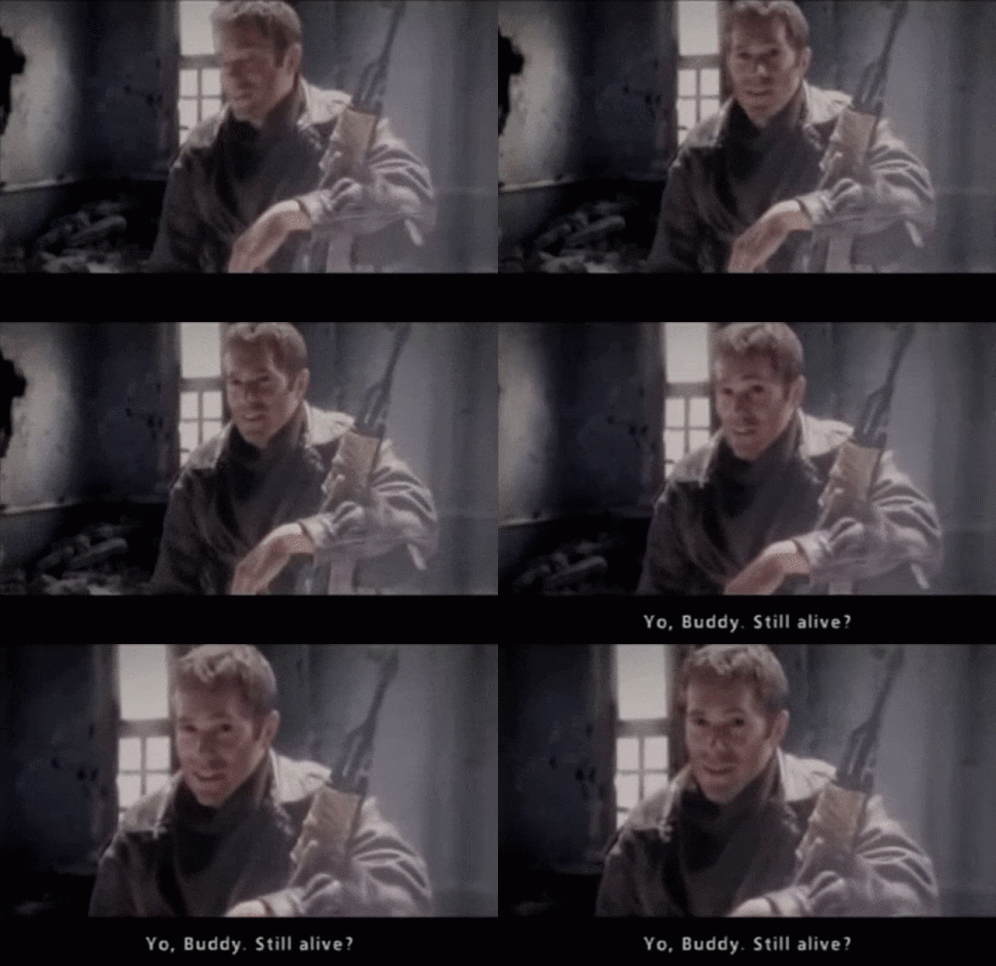
And believe me, when the time is right, I will be tackling the absolute beast that is Ace Combat 7. But before that, someone needs to go check if their buddy is still alive.
Personal note
Hey everyone. I’ve tried out some new techniques with this review. Rather than the usual “Plot, Gameplay, Controls” heading I’ve tried to make them a bit more entertaining and engaging whilst also relating to the content I wanted to discuss in various sections. I’ve also limited my usage of addressing the reader directly to try give this review a bit more objectivity and provide a more neutral sort of vibe.
If you have any feedback on how these things feel to you, I’d love to hear it, as coming up with different section headings was pretty fun.
And, again, I want to express thanks to my friend Clara. Without her I wouldn’t be playing Ace Combat today and would have missed out on so many amazing games. I appreciate you massively. (Follow her at @ClaraDotH on Twitter for progress on her own arcade flight game.)
Welcome to the first of what will hopefully be a series on this site, Rosie’s Music Room. In these articles I am going to be looking at songs from all kinds of different media, from video games to film to TV, to potentially just doing an album review every so often.
For this inaugural edition, it is going to be an extension of my Ace Combat 4 review where picking three songs to fit into the Music section left me with a lot that I wanted to cover in much greater detail, though because of this, I will also be going into detail on some later missions so there is going to be a spoiler warning in effect for the entire article so if you don’t want to be spoiled, click away now.
If you are still with me, let us dive right into a track I mentioned during the review, but never went into detail on.
Comona
The mission which this track plays, “Shattered Skies”, was described to me by my friend Clara as one of the best missions in the game, and in her opinion, when the game really starts to pick up the pace. Comona Bay is solely a dogfight mission, no ground targets to worry about, just high stakes aerial action as you defend a crucial rocket launch facility from Erusean fighters and later, B2 stealth bombers coming to destroy the base.
And the song provides plenty of energy to keep you going throughout the mission, even a slightly subdued intro keeps pace with synth layered over an electric guitar jamming out an incredibly memorable riff. The mission itself is not that long so the backing music needed to make an impact and it certainly turns any tense tailing moments into euphoric victory when “DESTROYED” pops up on your screen.
Farbanti
Mission 17, “Siege of Farbanti” is the penultimate mission of the game which acts as a last stand for your enemy, as the war is now at their capital city with defences and tanks placed all throughout the streets with the remnants of the air force taking to the skies. One of the things I love about the Ace Combat soundtrack is that it can perfectly capture the atmosphere of a mission within a song.
And Farbanti is no exception, whilst previous ground assault missions will get your heart pumping with an aura of caution about yourself, the sweeping orchestra paired with Ace Combat’s signature guitar playing alongside it exudes the feeling of this being the final major battle of this war (bar one after this) and that ISAF is going to win, no matter what.
This is further exemplified when the mission update comes in, with AWACS telling you that five aircraft have been spotted on radar, the remaining true members of Yellow Squadron. Rather than the music changing to show that the scary Yellows have arrived, the triumphant tones of Farbanti keep playing as you engage your game-long rivals in aerial combat, proving once and for all why Erusean troops fear the ribbon in the sky.
Breaking Arrows (#1)
One of the less conventional missions in the game is called “Breaking Arrows” and the first piece of background music that plays during this level matches the atmosphere perfectly. Mobius 1 is alone in pursuing long range cruise missiles that are incoming to ISAF troop landings, performing this mission in the pitch black of night across a monolithic glacier, the only light coming from the stars and the aurora above the terrain.
With the plucking of a violin, the mission begins, and those few notes alone are able to instil fear into even the most experienced of AC veterans. Whilst AWACS told you what was coming from the darkness, the music still has the potential to create a feeling of unease about what else the Eruseans may be about to throw at you.
The second part of this mission still has good music, but that part of the track is more about giving the impression that failing to stop the final escorted cruise missile incoming would spell certain doom for the ISAF offensive.
Megalith Agnus Dei
I discussed Megalith at length during my review, but whilst I gave the name of the backing track to the level, I never explained what I like about it.
During the mission to destroy Megalith, the radio chatter that fills the top of the screen is supplied in part by a ground infiltration team who are waiting on Mobius 1 to destroy the generators powering the superweapon, and will sweep in during the ensuing blackout to open the central heat vent.
As you destroy each generator, the radio chatter becomes more dire as the team are unable to hold their position against the remaining Erusean officers, the ominous chanting of the music fully nailing it into the player that this mission is going to have a high casualty rate, but in completion, the war shall be over.
Part way through the song the instrumental lowers in volume to give way to the chorus taking centre stage, adding the ideal amount of solemnity to the situation at hand. Whilst you now lead the newly formed Mobius Squadron to victory, none of this would need to be happening if the rogue Erusean officers had surrendered along with the rest of the military.
There is honestly so much more I could say about this mission; everything about it combines to form a moving finale, the JRPG-esque final boss music only serving to propel it further into greatness.
Invincible Fleet
Mission 6, “Unsinkable Fleet”, features your first major ground assault against Erusean Forces, taking on the Aegir Fleet which boasts the mission name as its primary quality. Your job is to show them how much that claim holds up to reality.
Despite this, the mission is not presented as a glorious show of force against the Erusean navy, and the music reflects this wonderfully. Whilst you are strafing by fuel tanks and AA guns, taking out named destroyers and battleships with your LASMs, the backing track crafts an atmosphere of something about to go very wrong with deep, bass-heavy synths underlaying very light percussion.
Even when the string section kicks in there are no exuberant leitmotifs to be found, to the point where I reckon this music could have been used in an escape sequence and still fit perfectly.
Speaking of which…
Aquila
This track plays when things go very wrong at the end of Mission 5, where for the first time Mobius 1 is introduced to their main aerial rivals for the game: Yellow Squadron. Almost immediately AWACS tells you to not engage and return to base as fast as you can hold down the throttle.
It starts off quiet, with the first 15 seconds or so being comprised of bass synths and ominous bongos (Rosalia’s note: this is probably the most unintentionally funny thing I’ve written), after which harsh strings come in to properly tell you that if you do not make it back to the return line before Yellow Squadron catch up to you, you are almost certainly getting taken out of the sky.
The reason this has impact is the fact that up until now, Mission Update has not been used for anything terrifying. Its first usage is to tell you about the existence of the return line and how to return to base; in this instance it puts your knowledge of this mechanic to the test as you are faced with something you are very clearly outclassed by.
End of show
Thanks for reading. It has been incredibly fun to talk about some of the songs I didn’t get a chance to and to put my writing skills to the test by reviewing something completely out of my comfort zone, and hopefully I’ll get better at it over time.
Once again, credit and my thanks to Zaptroxix for these extended OST videos, they both helped me properly formulate my opinions on the tracks and listen out for the finer details in them.
Game will you give me a goddamn break to actually finish speaking?!
<< Incoming from Stonehenge on radar. All aircraft drop below 2000ft. >>
…I guess not.
Introduction
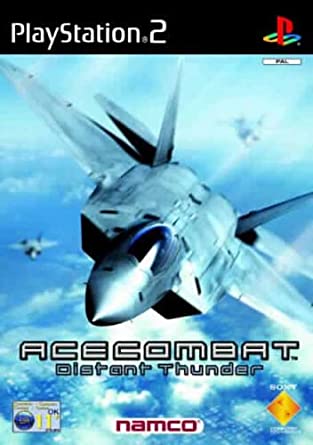
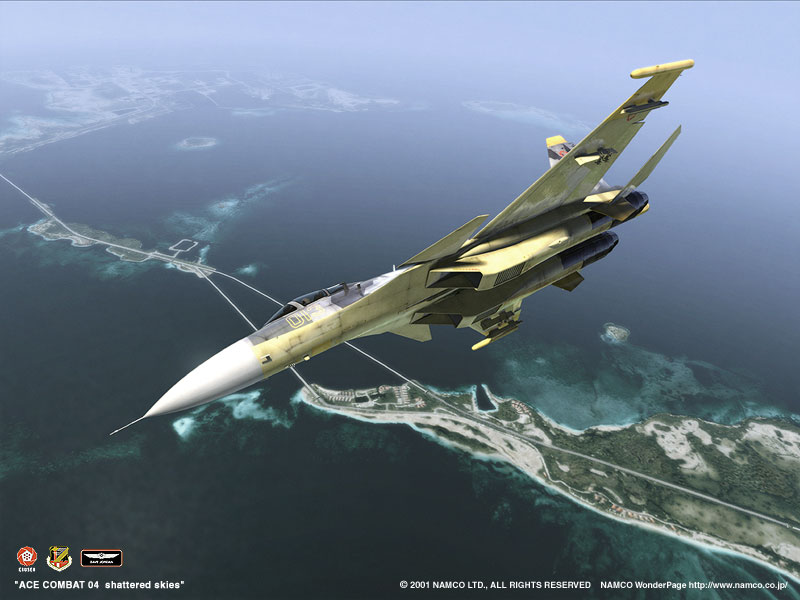
Ace Combat: Distant Thunder (known as Ace Combat 04: Shattered Skies everywhere else except Europe) is a combat-oriented flight simulator game developed by Namco released in 2001 and was the first game in the franchise to release on the PS2.
Being honest, these sort of games never appeared on my radar (heh) up until very recently. My friend Clara is currently developing her own flight simulator game as a love letter to the Ace Combat franchise, and as part of my assistance on it; it was considered “research” to play through an Ace Combat game. I played a few missions on AC7: Skies Unknown before borrowing her copy of Distant Thunder.
And well, it is an understatement to say I’m hooked right now, the tense arcade-style gameplay, the tight flight controls and the downright epic soundtrack all combined into a heart-pumping, blood-pressure-raising, bandit-tailing experience.
Plot
The lead up to the game’s main story is an asteroid colliding with Earth causing massive damage. The nations on the fictional continent of Usea had developed a defence platform called “Stonehenge”, an array of anti-asteroid railguns to destroy fragments of falling asteroid but it was not enough to stop Erusea, one of the largest nations on Usea, to suffer massive economic damage.
This was highlighted when Erusea refused to accept their quota of civilian refugees from the disaster, leading to a boycott of Erusean exports from other nations, further damaging the economy.
And when you have a struggling economy, you go the route of the US government, and go to war to solve your problems!
Erusea launches a surprise invasion of the neutral town of San Salvacion and then worked to modify Stonehenge from “anti-asteroid defence system” to “what happens if you put AA guns on unreasonable amounts of steroids”. War broke out between Erusea and the other nations, the latter forming the Independent State Allied Forces (ISAF) to work collaboratively against the Erusean threat.
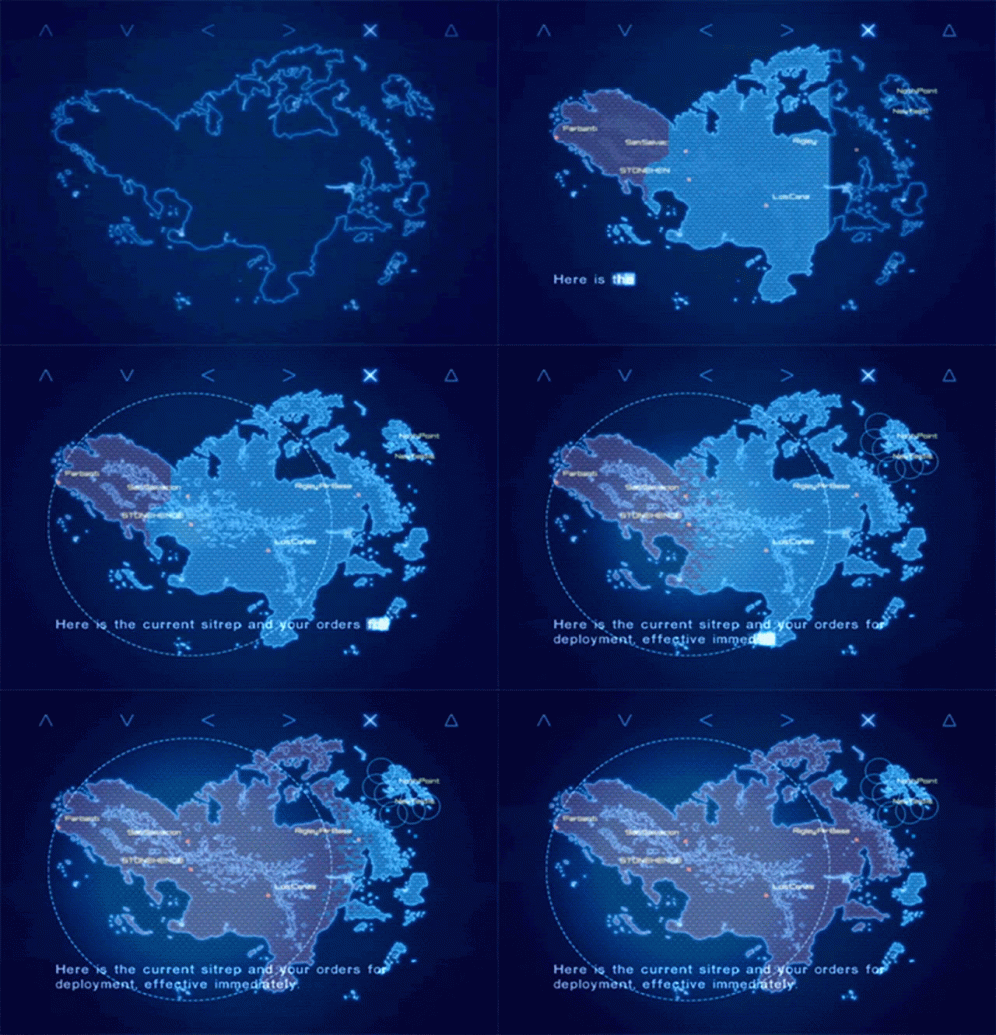
For some real numbers, Stonehenge has a range of approximately 1.3 UKs
However, the modifications to Stonehenge proved to be a deadly asset against ISAF, because anti-air guns with a range of 1200km (or, as shown in the picture, most of the Usean mainland) tend to provide a certain measure of air superiority.
Where the game begins is almost a first-and-last line of defence from ISAF who have retreated to the island of North Point to co-ordinate the counter offensive against the nigh-unstoppable Erusean campaign. You are placed into the cockpit of Mobius 1, who in addition to your fellow pilots, work to repel attacks on the base and then work to turn the tide of the war.
Story is presented in one of three ways:
Mission briefing screens which explain the scenario and what resistance is expected, along with showing a map of the continent which updates each mission with how the war is going
Mid-mission radio chatter and events, which can range from bombers incoming to your location or Stonehenge getting a lock on your position
Cutscenes told through watercolour painted scenes, following a young boy in the town of San Salvacion as he interacts with the Erusean occupiers
What I particularly enjoy about the plot in Distant Thunder is how it invoked various emotions which could change on a per mission basis, and sometimes even changing the tone and atmosphere of a mission with just a simple update.
One of the best early examples of this, and what forms a great prologue to one of the most intense missions of the game, is Mission 7: “Deep Strike”.
The initial objective is a straightforward mission type that the player will have already seen a few times before, taking out a set of targets with additional optional targets to up your score for a better rank. Then, you hear the ominous “bleeps” of mission update, two missions after the game had trained you to respond to this sound with “oh no” due to the incoming Yellow Squadron.
As a quick informer, Yellow Squadron form your sort of rivals through some missions. The first mission they turn up you are told not to engage because it would be too dangerous, and as the game progresses onwards, you slowly become more able to engage with the Squadron until finally taking on over ten fighters in a single mission.
With the bleeps in Deep Strike though, the game wrenches the “oh no” meter up to eleven with the information that Stonehenge is now targeting your location, and you need to get the hell out of there ASAP. The rest of the mission is accompanied by tense escape music as AWACS tells you to drop into the ravine to avoid getting hit.
And as someone who got hit by a railgun round on their escape, the game does not pull any punches. Going above 2000ft in altitude when a Stonehenge impact is incoming is a death sentence as it will instantly destroy your plane, forcing a mission restart.
Afterwards, comes Mission 8: Shattered Skies. And I will just let the background music for that stage set the scene.
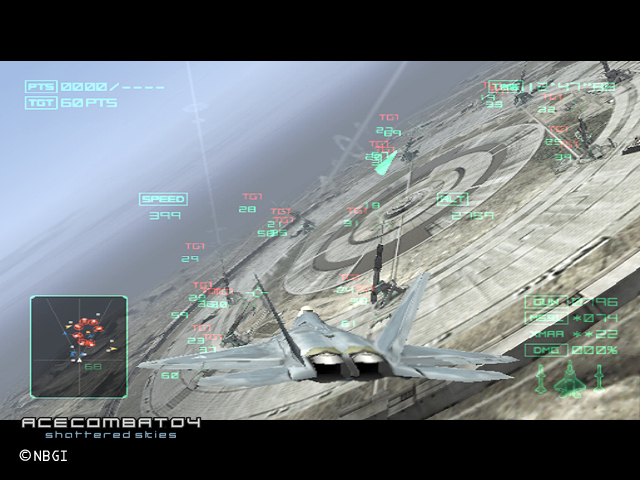
Comona Bay is the first full-scale dogfight of the game, with the main objective being to destroy as many enemies as possible and is also the first time the player can engage with Yellow Squadron in the game. Loadout is key here as standard issue missiles usually will not be fast enough to nail a Yellow even with the most perfect of alignments (and I am bad at aiming, it took until Mission 12 to finally nail a Yellow).
Gameplay
Distant Thunder presents you with a campaign of eighteen missions to play through with a variety of objectives to make your way through. Quite a few missions of the game take the form of a open area with the objective of “Destroy as much as possible within the time limit”, ranging from destroying grounded aircraft on the runway so they can’t launch an attack on your base, to sinking a “unsinkable” fleet whilst it rests at harbour.
A few missions will mix things up with special objectives or special conditions to consider whilst playing through. This can include having to work without radar either temporarily or throughout the entire mission, having a civilian flight to escort or being the lone fighter to take down quick moving cruise missiles.
During each mission, usually to the south of the player’s position, there is a dotted line on the map referred to as the “Return Line”. Turning back and flying towards this line allows you to return to an airbase/carrier to refuel, repair, and restock your weapon loadout. Sometimes a tactical retreat can be beneficial to ensure victory in battle.
The game offers four difficultly levels initially: Very Easy, Easy, Normal, and Hard, with a fifth option of “Expert” being unlocked on completion of a Hard campaign, and a sixth option of “Ace” being unlocked on completion of an Expert campaign. I initially started my playthrough on Easy due to being a newcomer to the series, but after a few missions I felt comfortable enough to be able make a new save on Normal and play from there.
Your plane has three main armaments:
A rapid-fire main cannon with high ammunition, useful for strafing low durability targets and softening up enemy bandits if you get a good angle
A set of locking, homing missiles that are predominantly used for taking out bandits in two hits or demolishing high value ground targets
A special weapon, with each plane having a selection of specials to choose from depending on their role
Special weapons are useful for determining your strategy during a mission, as they will either work on only ground or air targets. They range from (but are not limited to) unguided bombs of multiple variants (cluster and napalm included), multi-locking sets of missiles useful for “fire and forget” tactics or longer range missiles useful for taking out potential AA threats from a safe distance.
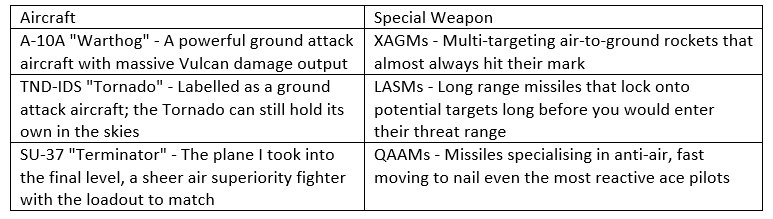
In the beginning of the game though, you only have one plane and one special weapon unlocked, an F-4 with a set of unguided bombs. As you play through missions and earn credits you can add new aircraft to your arsenal along with acquiring new armaments for them. Personal favourites of mine for each include the following:
Why is this a screenshot from Word? Blame the table block.
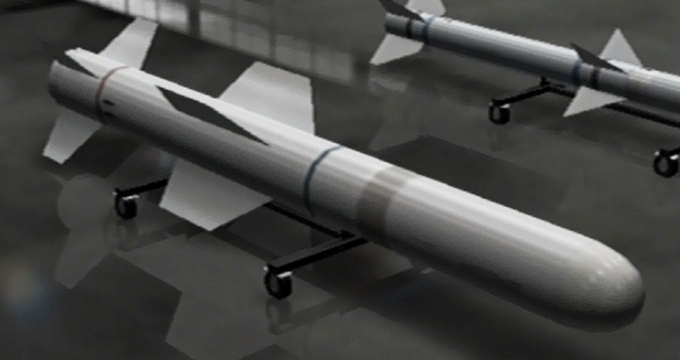
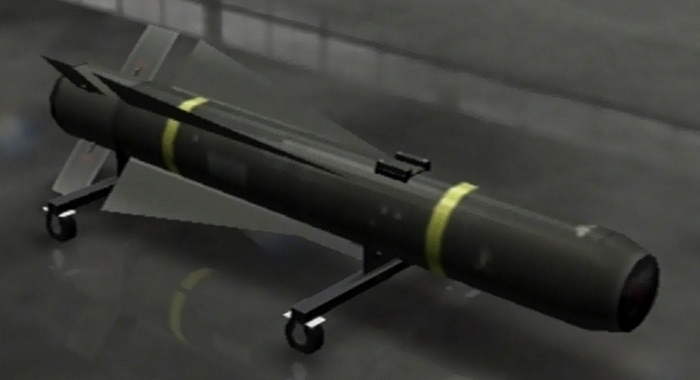
LASM
XAGM
Throughout the game you can sell aircraft or weapons you have obtained to be able to afford new ones, and this can be a tactically sound decision if it offers you a distinct advantage in upcoming missions. It is impossible to purchase all aircraft and weapons on a first run through, even with destroying all potential targets and getting S-ranks on missions.
This is where the New Game Plus feature comes into play, allowing you to return to the first mission of the game with your credits, aircraft and special weapons all carrying over. As you start a carried-over save you gain the ability to adjust the difficulty, so if you want the challenge of harder difficulties with some cushioning from having your top-of-the-range gear, the option is there.
It is also an incredibly cathartic feeling to go through the early missions of the game with your endgame loadouts. Smashing through the early mission dogfights with superior firepower is a power trip and a half and I love it.
Controls
As the focus of the game is being a flight simulator, the controls are set up accordingly. You can turn using L2 and R2 but due to these being yaw movements; they are not exactly idea for turning quickly and instead should be used for minor course correction.
To get true freedom of movement in the skies, your best bet is to pitch and roll across the clouds, as mastering these manoeuvres on the left analog stick will allow for all sorts of advanced moves such as quick turning to quickly pursue enemy aircraft or being able to expertly evade incoming missiles.
R1 and L1 control your throttle and brake, respectively. Knowing how and when to use your brake is a massive boon to getting the plane to move in the direction you want it to, as it is easier to turn in the air when you’re slowing you. There are some missions as well when braking will stop you from crashing into the scenery when flying through tight corridors.
Once you have control over the plane refined though, there is not a massive amount of complexity in the game’s control scheme. Press X to fire your main cannon, Circle to fire either your missiles or special weapon, Triangle to change current target (essential for locking onto targets in quick succession) and Square to change how much your minimap is showing.
Select allows you to swap between missiles or special weapons, and the right analog stick rotates the camera around so you can evaluate your surrounding to determine your next move or look below you to see when you need to drop your bombs.
Finally, with down on the D-Pad, you can switch from a first-person perspective in the cockpit to playing in third-person. I admittedly never played a mission in first-person mode, instead preferring the freedom and special awareness that comes with knowing your surroundings. Though I suspect once Clara has her way with showing me Ace Combat VR, I will probably gain a finer appreciation for this viewpoint.
Music
(Foreword: I have to give a shout out to Zaptroxix here. They’re a Youtuber who posts extended versions of the Ace Combat soundtracks, which you are enjoying here. Give his channel a look for other songs and for Ace Combat gameplay.)
Alright, going to say this now, from the start of this section onwards until you see a large image of some Labrador Retriever puppies, there is a spoiler warning in effect as I will be reviewing later sections of the game as my talking points here.
Spoilers now in effect
Still with me? Awesome.
This allows me to gush about how this is now one of my favourite video game soundtracks ever and is contention for being my favourite soundtrack of the PS2.
Being a Namco game there is no surprise that the soundtrack would not be out of place in a JRPG, combining:
Orchestral scores
Hard rock guitars
Synthesiser beats
And even Latin choral chanting
Background tracks in levels are perfectly matched to the scenario that is going on at the time, accentuating the existing atmosphere perfectly. I have already shown off the high energy of the high stakes Comona Bay dogfight but a lot of my favourite tracks (unsurprisingly) are found past the halfway point of the game.
“Stonehenge” is the theme of the eponymous superweapon, what was once an asteroid defence platform has now been repurposed into an anti-air platform without rival. Your first proper introduction to this weapon is at the end of mission 7, where this theme kicks in and perfectly conveys the fact that if you do not get the hell out of there, you are going to die.
Close to the end of the game you conduct a night raid on the town of San Salvacion, the one that was occupied by Erusean forces in the beginning of the game, accompanied by a song which shares the name of the mission: “Emancipation”. Whilst there are many songs of the soundtrack that evoke the feeling of “cautious triumph” in me, this is the song that does it the most for me.
As you fly above the city, tearing into Erusean forces as your comms pick up a radio broadcast from the city detailing the battle raging ahead, the music perfectly compliments the feeling of victory being marred by the fact that this is you truly taking the fight to the enemy by reclaiming both a tactical and symbolic area of importance.
Finally, it’d be remiss to discuss an Ace Combat game without talking about the song that every player will hear, and the majority will remember for a long time, just waiting to awaken the nostalgia neurons when it is heard for the first time in a long time… the briefing music.
A funky synthesised beat accompanying the screen outlining what is required of you for the next mission which continues to play as you organise your aircraft and weapons ready for your sortie.
And being completely honest; it was incredibly difficult picking just these tracks to highlight and focus on. There is so many I want to discuss that in all likelihood there is going to be an “Ace Combat: Distant Thunder Soundtrack Review” article on this website at some point in the future.
However, I have one track left that I want to discuss, but its magnitude deserves its own segment.
Megalith
Close to the end of the game, ISAF receives information about a new superweapon being developed by the Eruseans under the codename of “Megalith”, and up until the final mission of the game where you actually go to fight it, there is no hints about what it may be, you’re kept in the dark entirely until the cutscene introducing it at the start of the mission plays.
The track that plays throughout this mission is called “Megalith -Agnus Dei-“ (Lamb of God). It is a sweeping orchestral piece accompanied by Latin chanting that signals that this is the final mission, both the last stand of a now eradicated Erusean military and the chance for Mobius 1 to cement his name in history forever.
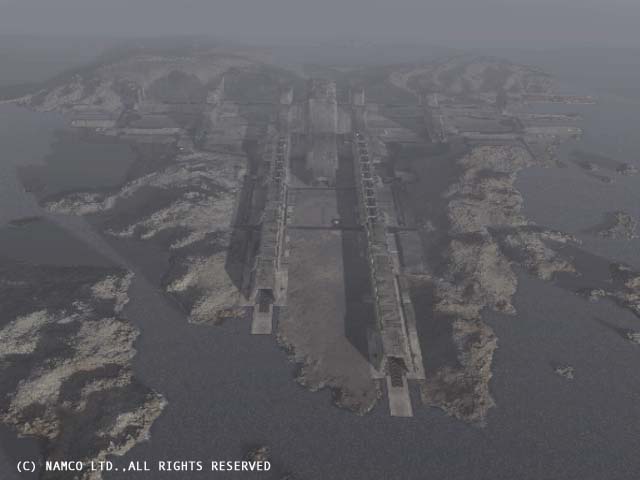
Megalith is a massive bunker built into a small island, the facility itself encompassing several hundred square kilometres of the land mass, ICBM silos lining access tunnels to the insides of the facility as red targeting lasers painted asteroid fragments to be shot down.
These fragments help make for an almost apocalyptic backdrop to the mission as they rain down through the dark clouds as Mobius Squadron works to take down the last gasp of what Yellow Squadron has to offer.
Before, all your targets were clearly visible, with only minor difficulties in reaching them. In these final moments however, all your skill and nerve is required as you must fly through Megalith’s access tunnels to be able to destroy the generators that power the facility, giving ISAF ground forces enough time to open one of Megalith’s main doors to allow Mobius 1 to fly into the facility and destroy the largest ICBM it has to offer, pulling up through the silo hatch as explosions wreck what remains of the superweapon.
This is easily the mission I struggled on the most, I died a few times to getting flustered at Yellow Squadron, I died a few times struggling to get my flight paths into the access tunnels. But the setting of the level was immaculate, and I felt a burning drive in my heart to see this fight through to the end.
It was worth it, because I can now comfortably say that Megalith is quite possibly my favourite final boss on the PS2.
Spoilers Ended – Have some puppies!
Photo by Chevanon Photography, pexels.com
Conclusion
Through one playthrough alone, I am now hooked on Ace Combat 4 and am incredibly enthusiastic to continue playing other entries in the franchise. The fast-paced gameplay gave me chills and feelings that have only ever surfaced whilst playing the most intense of roguelike games, with my drive to improve my skills not dying down yet.
If you have a PS2 knocking around, I seriously recommend picking this game up, you can probably find a copy online cheap. And then you will get to experience the sheer panic, exhilaration, and relief of going through this experience.
Clara, thank you again for showing me this franchise and letting me borrow the game. It has honestly been kind of life changing.




 Rosalia Rambles