Good morning snoozers and sleepers, welcome to Day 24 of Rosalia Rambles Redundancy Review.
Being rejected by Poncle yesterday hurt.
A lot.
So much so it threw me off my mojo for basically the entire day once I had got the review out of the way in the morning. I know it is okay to have days like that, especially when I am still dealing with the emotional fallout of the whole catalyst for why I am writing today.
But it does not stop me feeling the hurt, and I am someone who feels emotions very intensely because of my estrogen treatments. I always got told by doctors in the leadup to starting that my “emotion range would open up” and “you might find it easier to cry”.
I was not anticipating how much both of those would happen – even three years past the start I still get caught by surprise on how much I can feel and how much I can cry.
Even before estrogen though, I have always been a bit of a crybaby, being able to cry very easily. Nowadays though it does not take much to set me off, sometimes I have even just looked at a picture of an axolotl and that is enough to make me want to cry a bit.
That said, I do not consider my emotions or my ease of crying a weakness by any stretch of the imagination. They might be vulnerabilities for me, but I can utilise them as a strength as well, usually within my writing work. In general I hope that is the vibe that comes across with the Redundancy Review thus far, weaponising my vulnerability in the wake of disaster to try make something positive come out of it.
And as much as I do feel doubt creeping in some days, I will always be here. Rain or shine, happy or sad, awake or asleep – I have my rhythm, and I have a job to do.
Promoted this website on my LinkedIn yesterday, as part of a general headline update which included a very professional way of advertising my anti-AI sentiment. On a platform dominated by AI content from GPT-speak copy to obviously incorrect images, promoting myself as a “human-focused creative” definitely makes me stand out a bit more in the opposite direction.
If you would like a healthy dose of human-focused creativity, I would love to work on your writing projects! Do not settle for the myth of AI-generated copy being “good enough”, whilst it can convey a message it does not convey any emotion, especially when you are trying to market something. Find a human who can get excited about your product and pay them to write about it! (bonus points if I am that human)
Speaking of getting excited about things, today’s review topic is one that has been considered long overdue by my partner, and a game I followed the development of for a long time before taking the plunge myself.
Plus, with the big announcement yesterday that Helldivers 2 is coming to Xbox Series platforms in August, now seems like a good time to talk about it – it will be admittedly hard to cover the heights this game has reached over the last year and a half, but I will try my best.
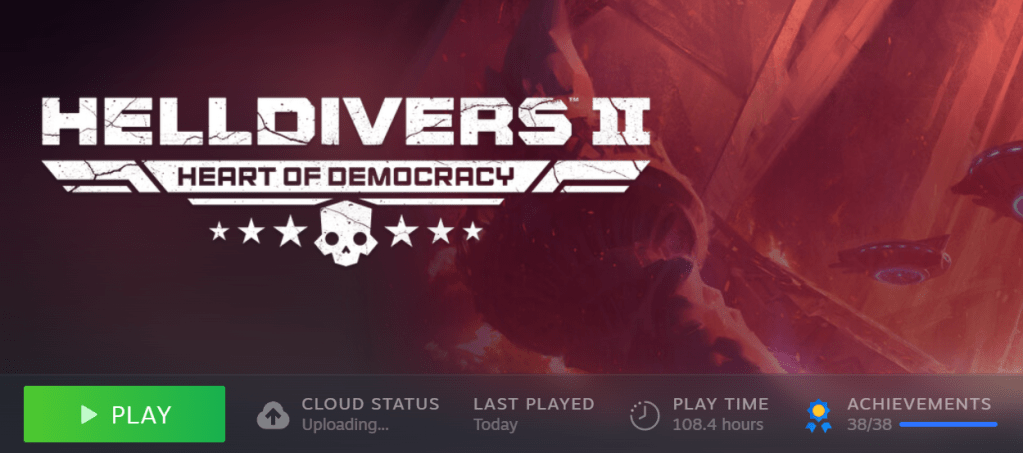
Helldivers 2 is a third-person shooter online cooperative shooter developed by Arrowhead Games released in 2024. The main objective of the game is to fight back against the three factions vying to destroy Super Earth:
The Terminid Swarm (standard sci-fi bugs)
The Socialist Automatons (standard sci-fi robots)
The Illusive Illuminate (standard sci-fi aliens)
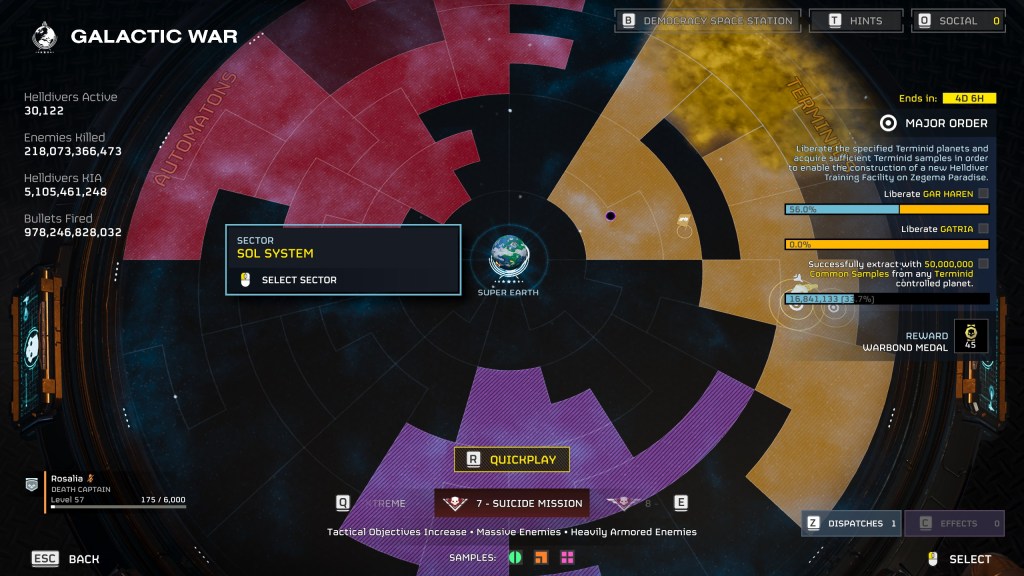
The main way this fight is driven forward is through the regular deployment of “Major Orders” (MO), community-wide objectives that need to be completed or fulfilled within the time given, sometimes within a couple of days or over the span of a week. Players are free to engage with the MO or they can fight whichever faction they prefer.
I personally love the Major Order system as an example of live service done right, especially when Arrowhead have let players decide what new content they want by offering it as an incentive for doing the MO a certain way… even if it did result in it taking four MOs to unlock Anti-Tank Mines.
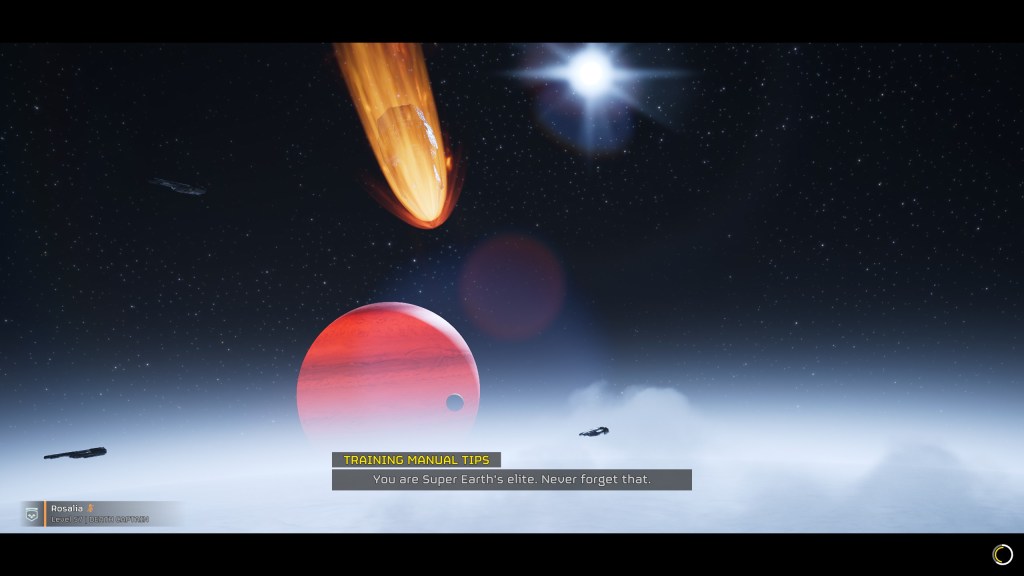
The gameplay loop is fairly straightforward, dive onto a planet.
With the coolest loading screen ever.
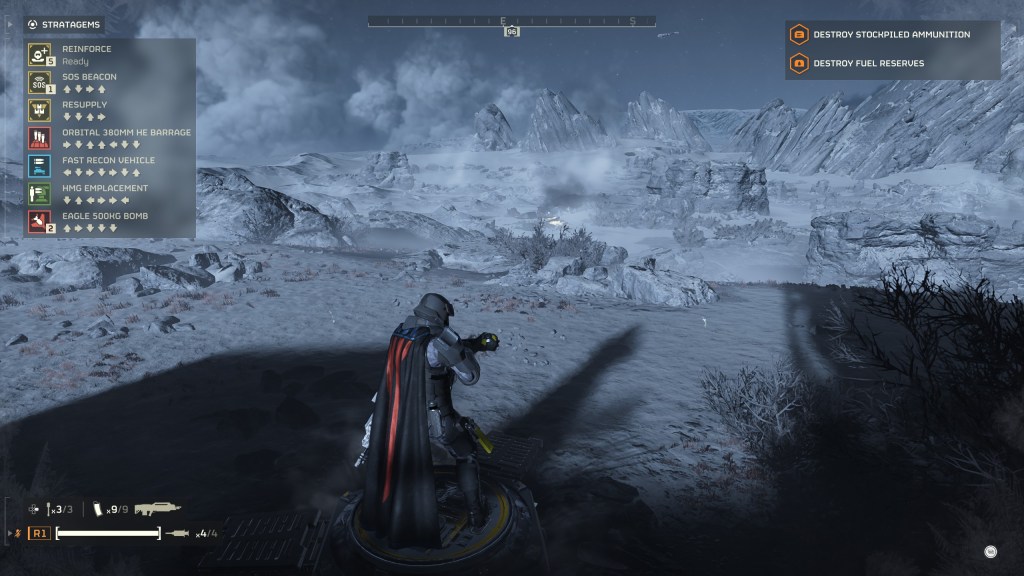
After which you are presented with your objective, which can range from collecting geological samples, destroying enemy supply lines, to the most important task of them all: raising the flag of Super Earth to bring democracy to all.
One of the most potent tools in the Helldiver arsenal are stratagems, powerful pieces of equipment that are activated by inputting the correct arrow code. These include but are not limited to:
Orbital barrages
Vehicles and mech suits
Jet fighters carrying ordnance
Defensive turrets and sentries
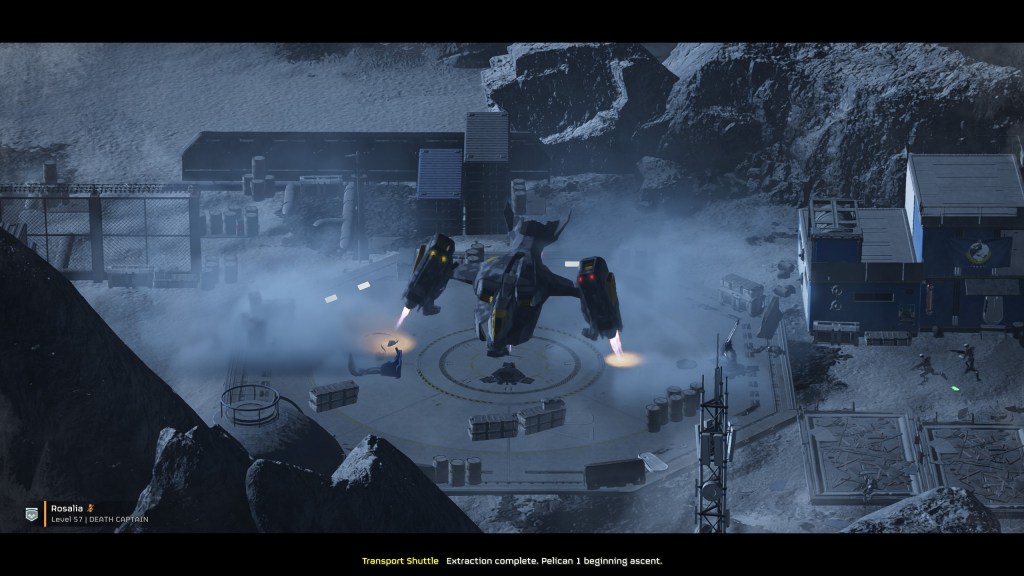
After completing your objective, it is time to go to the extraction point, with it taking some time for the shuttle to reach you – this is where shit will really hit the fan, especially on harder difficulties.
Enemies will lay siege to your extraction with relentless fury, calling in more reinforcements as time goes on, making you rely on all the stratagems at your disposal to get you out of there alive. These moments are where a lot of Helldivers get their most intense stories, and it is no surprise to see why.
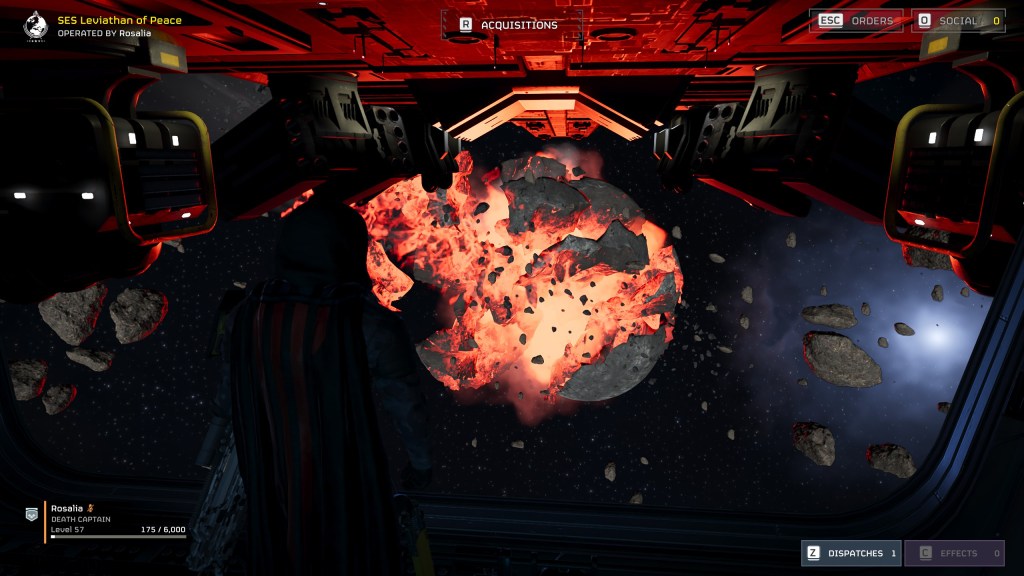
Upon returning to your ship, you get your experience points and any currency collected which can be used to unlock new stratagems, upgrade your ship to access potent passive buffs, or spend on the “Warbond” system, a set of premium, non-expiring, battlepass-style collections of equipment and customisation options.
That said, Helldivers 2 does not mandate the spending of additional money on top of the price of access. The premium currency of Super Credits is able to be earned entirely in game through missions, so whilst it will be a bit grindy premium content is accessible without spending more money.
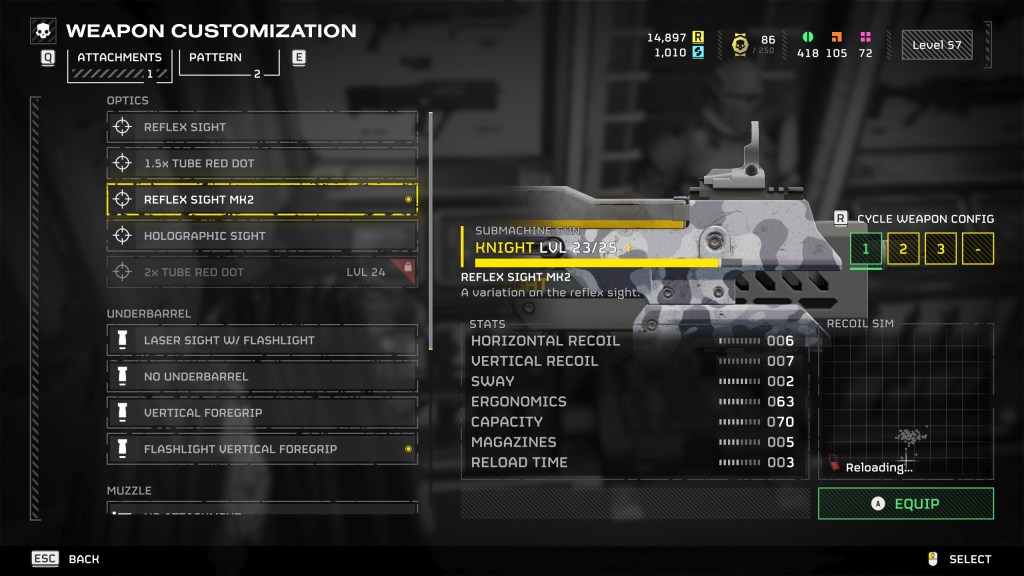
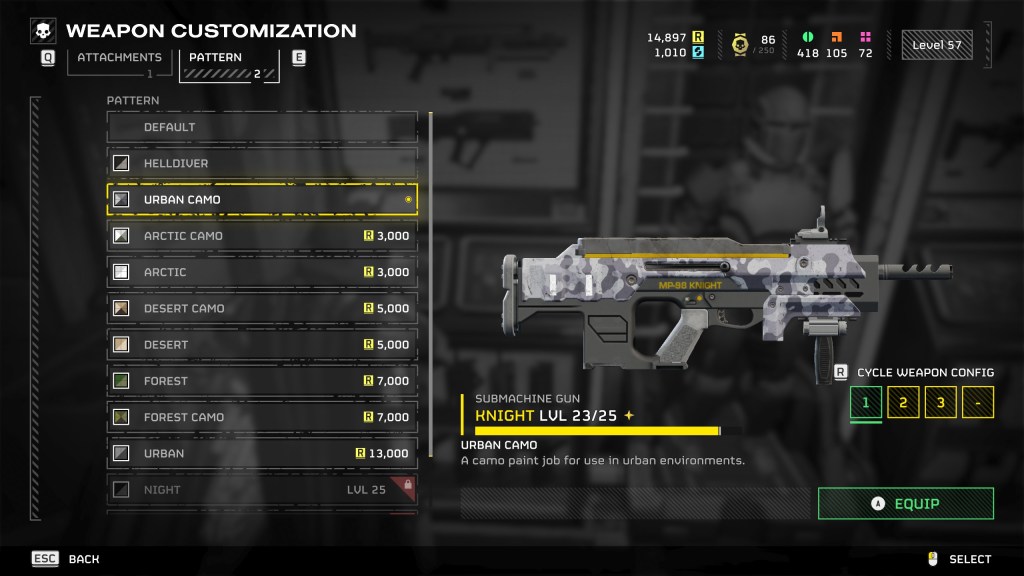
Additionally, upon reaching Level 10, you gain access to weapon customisation. A recently added feature as part of the game’s massive “Heart of Democracy” update that allows players to change how their favourite weapon handles via changing the scope, muzzle, or even the magazine size.
Whilst this is a very cool feature, there is one major issue currently in-game at time of writing: when going to customise your weapon’s pattern, it is entirely possible for the game to crash to desktop, which leads into one of my main criticisms of Helldivers 2 – it is a technical debt nightmare sometimes.
For context, the game is built on Autodesk Stingray, an engine that had support discontinued for it in 2018. This means that Helldivers 2 is working on very outdated tech, which can lead to a lot of bugs, crashes, and performance issues depending on your hardware. Quite often bugs that have been quashed in previous updates will reappear at random, sometimes with disastrous consequences.
It can be a reason not to buy the game, but personally coming from a QA background I recognise how hard it must be to keep a game of this scale working on a regular basis, so whilst I criticise, I can not in good conscious condemn the team knowing full well the patches I have suffered through.
And with everything the game has accomplished with real, permanent changes to its world as part of the ongoing storyline, I am more than happy to accept some game-breaking bugs along the way.
I said I wanted to talk about something that excites me, and nearly two whole pages of content before adding in images is definitely that. Thank you for reading today. I hope you can have a relaxing weekend wherever you are. Take it easy, it has been a long week for some and you deserve some time to unplug.
Helldivers 2 is currently available on PS5 and Steam, with it coming to Xbox Series platforms August 26th.
Good morning leviathans and wyverns, welcome to Day 22 of Rosalia Rambles Redundancy Review.
I have my own domain now!
No longer carrying the “.wordpress” part, I have a simple .com domain that will look a lot more professional on my CV and be a lot easier to say to people who might want to look up my work.
It is part of a greater upgrade plan I am looking at to take my work to the next level, with the next steps including getting a professional logo for the site and looking at upgrading my phone to make any photography I need to do look even better…
…and considering I smashed the screen up a while back along with the battery being on its way out, it makes practical sense as well.
This is being enabled by the fact I have got almost all of the money I am entitled to out of my redundancy, the only thing I am missing now is my lack of notice pay which I hope to resolve today after my Jobcentre meeting.
Which, yeah, is not something I am looking forward to today. I have a very dim outlook on the unemployment system in the UK, seeing it as a necessary evil for myself currently but having little to no optimism in how they can help me beyond monetary assistance.
I will be receptive to their input and if they can find me a holdover job that holds some relevance to my areas of interest I will be thankful, but having been through the system once before and having those close to me go through it multiple times my confidence in what they can do for me is low.
To be frank, there is a little bit of arrogance in my outlook. The Jobcentre is primarily focused on getting those who have been out of work for a while into a job with a secondary focus on helping people acquire basic skills that they might have missed out on due to life circumstances – right now I fall into neither category.
I have a plan in mind, I know what steps I need to take, and I really do not need a digital skills course that teaches me how to open Microsoft Word when I have been working at the apex of a heavily specialised technological industry for the last three years.
A little bit of frustration this morning, but getting it out every so often feels good.
In honour of the Jobcentre meeting though, I am going to do a variation on my call to action today. Whilst I am looking to start getting into paid writing work, it is more of a desire to pivot than where my career specialty actually lies. So what have I done every day since 2021?
I break things.
For the last four years, I have been working as a Quality Assurance Engineer/Analyst/Specialist, whatever you want to call me the core foundation of my career has been the ability to find bugs in all sorts of software projects – I am even credited on two EA Sports games (F1 2021 and F1 22).
Finding bugs is not just a career for me, it is a way of life. Even when playing games on my own time I am able to find bugs as easy as I breathe, my brain switching into QA mode once I do and seeing if I can replicate it.
I am good at what I do, and I know it. Any software project I get my hands on will be tested thoroughly with a can-do attitude and a tenacity to see it through right to the end.
With that done, it is time to review something from a game today, but considering it is a very recent addition, I will put a spoiler warning.
If you have not played Monster Hunter Wilds Title Update 2 content, please click away now. If you do click away now, thank you for reading today and I hope you have a great day!
With that done, I can get into it, and I am excited because I love Monster Hunter.
I really like Monster Hunter.
I really like Monster Hunter.
From being a complete newbie to the franchise back in 2022 to becoming way too obsessed today, Monster Hunter has wormed its way into my heart for its combat system, ecology design, and “fashion hunting”, the term for making layered armour sets out of different monster parts.
And with Wilds Title Update 2, a fan favourite monster finally returns to the franchise properly.
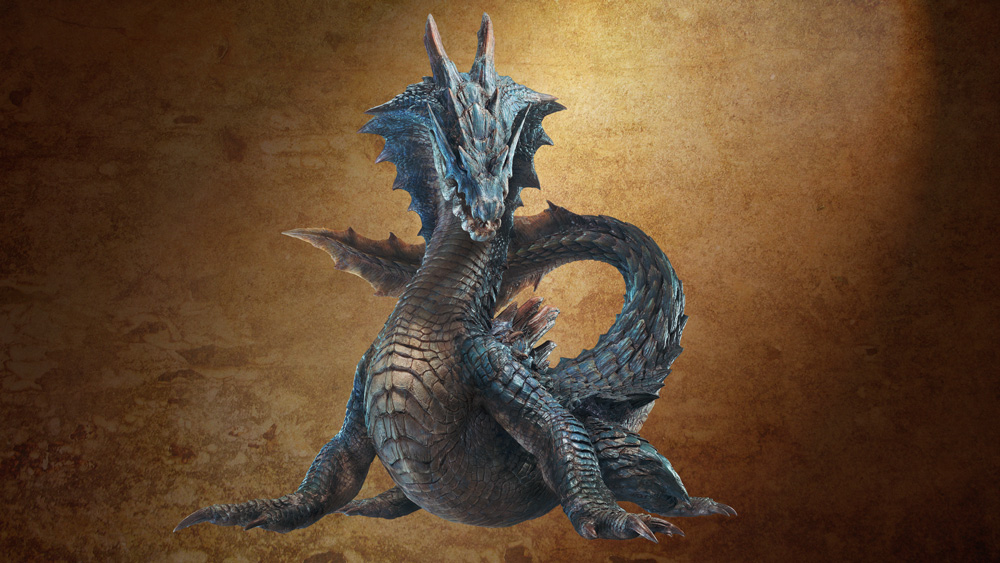
Lagiacrus was first introduced in Monster Hunter Tri as the flagship monster, releasing in 2009, with their inclusion in Wilds being their first representation in almost a decade, leading to many experienced fans being excited for their return.
For me though, I had no prior attachment to Lagiacrus but I was still excited to fight them for the first time, especially with the inclusion of a form of underwater combat as part of their fight mechanics.
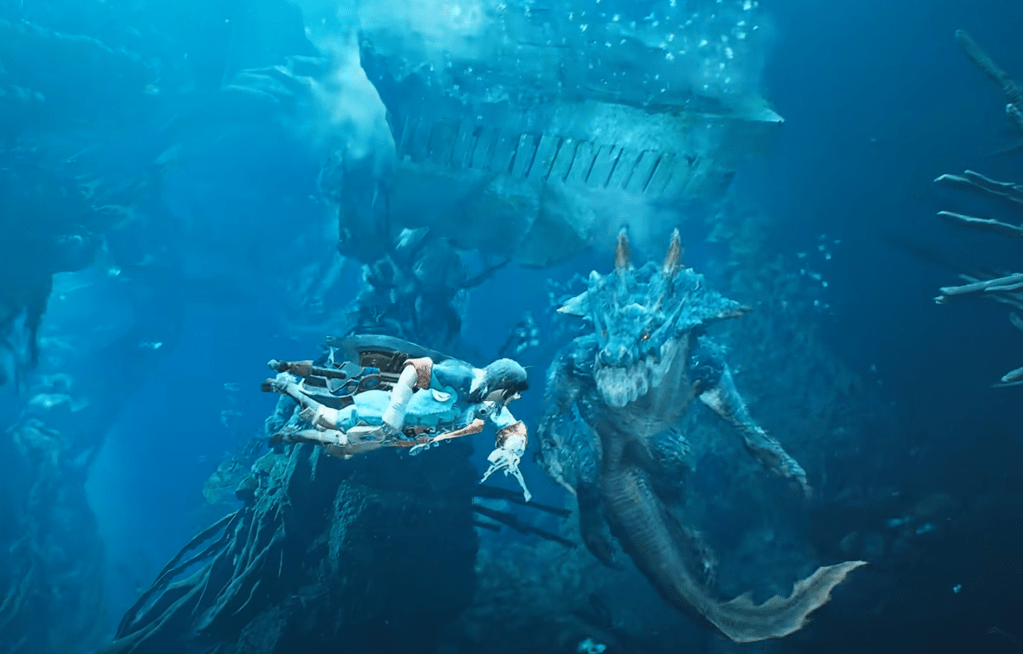
Screenshot taken from the Title Update Trailer – I had taken footage but it seems to have corrupted
Underwater combat was a headline mechanic back in Monster Hunter Tri, being essential to Lagiacrus’s fight back in that game. Whilst the dev team for Wilds did not fully include a full combat system underwater, they did incorporate it into this new iteration.
After Lagiacrus retreats to its nest, it will dive underwater, giving hunters the opportunity to follow. During this fight you will need to use slinger ammo and collapsible underwater structures to stagger Lagiacrus to open a window to attack with your weapons, finalising with a cinematic finishing move once enough damage is done.
The introduction mission to Lagiacrus was extremely fun, not only serving to teach these mechanics to players, but also elaborating on one of the other characters in the Forbidden Lands with very thoughtful writing.
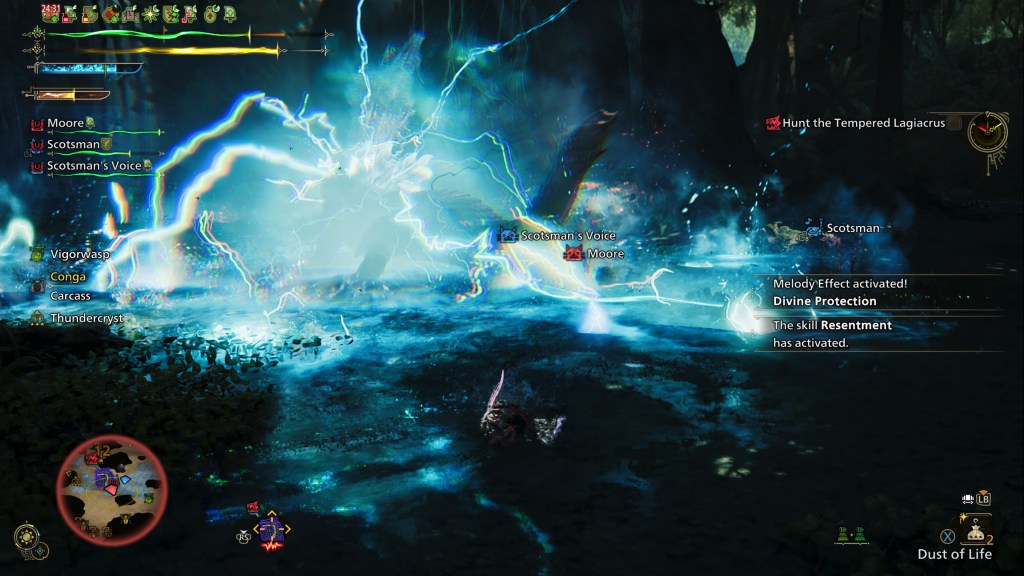
However, that is only one half of Lagiacrus being introduced, as after completing that mission they are now able to spawn in the world regularly, including being able to appear as a “Tempered” variant with stronger attacks and more health.
Tempered Lagiacrus is fucking terrifying.
Myself and my partner only fought a three-star version, supposedly on the weaker end of the scale.
It took us twenty minutes of consistent attacks and effort – longer than some base game tempered monsters, which included my partner fainting twice from the relentless onslaught of attacks.
Which, y’know, people had been asking for more challenge in the game.
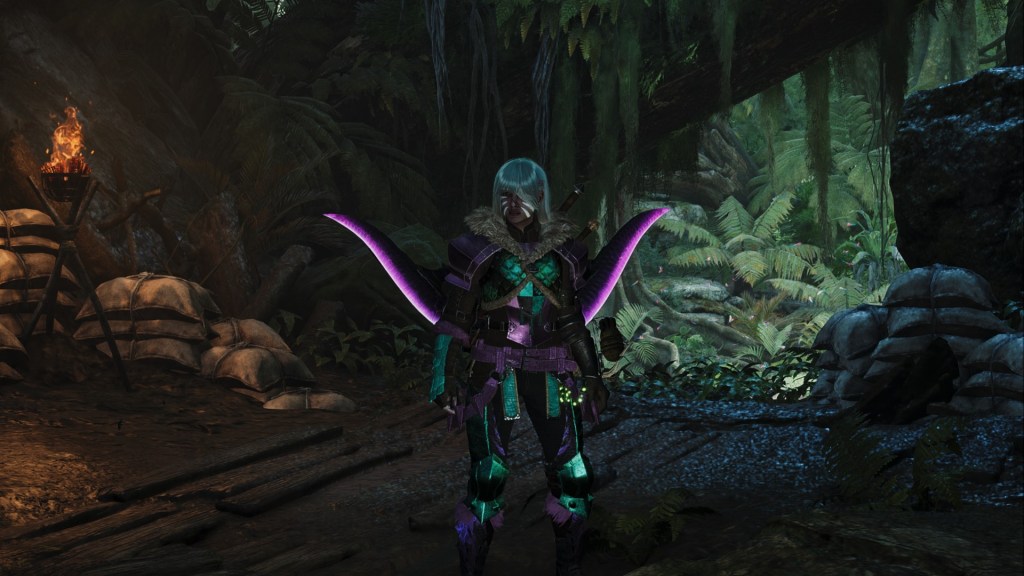
And to get a non-spoilery thumbnail for the article, have one of my favourite fashion hunter sets from Wilds.
That does it for today, and that is possibly the most recent topic I have reviewed yet. Thank you for reading all the way if you did, I hope you have a relaxing day whatever you do.
Monster Hunter Wilds is available on Xbox Series, PS5, and PC.
Good morning robots and androids, welcome to Day 16 of Rosalia Rambles Redundancy Review.
I am extremely tired this morning, primarily because of guest-starring in a friend’s D&D game last night. He had included a former character of mine as backup for the party and initially wanted me to weigh in on what they had been up to in the proceeding time.
Discussions took form, eventually leading to me inquiring if he would be okay with me dropping in to reprise my role. I had retired from doing evening D&D games a long time ago, wanting to spend more time with my partner who I was long distance with at the time and just not having the social energy to keep a game going into the late hours of the night.
Was reprising the character fun? Extremely.
Blaze is my main character who is not like me in some way, shape, or form. They are an unhinged bucket of bolts whose main motive in helping the party was to take advantage of the situation to incite a war between two factions in this world, and why?
“It’d be really funny to see!”
Especially given the events going on in my life right now, playing a character who is completely off the wall insane was a lot of fun, more so when it came to improvising his motives and talking about collateral.
Am I still not capable of evening D&D games? Oh yes.
I have started writing this review later than I usually do because of how long it took me to even begin shaking the sleep off to get my laptop out and start writing – even on nights where I have gamed longer than I intended to I do not wake up like this, and it is definitely a social energy problem on my side.
One I am not… entirely hankering to fix, if just because “unable to socialise long past 9pm” is not really a priority issue for myself right now.
What is priority is the fact I have now received my unpaid wages for my time at my old company after shit hit the fan, which means today will be spent budgeting on various different topics, including:
What to contribute to the bills account to keep myself afloat for a while
Investing in some things around the flat to make summer easier and bring the place more to completion
Putting money into savings to help pay for VExpo (vtuber convention) later this year
Potentially going to a restaurant and having an actual date night out with my partner
I am still due money as well, in the form of statutory redundancy payments and whatever I can get from my lack of notice pay, but what I have got has gone a decent way to making me whole again – especially as the job search has hit a demoralising point.
Returning to full time work is somehow existing as a superposition in my mind right now. I am craving the return to routine enforced by someone else, but also enjoying the recovery that comes from not being in that situation anymore. Whilst the lack of a routine is definitely affecting me, there is also a certain amount of peace I am feeling from existing in my own rhythm once more.
Would I appreciate being back in full time work? Yes, especially as it gives me the resources to pursue the lifestyle I enjoy, but am I also considering what other paths might exist for me? Definitely.
If you would like to consider helping me explore one of these paths, please get in touch about hiring me for your projects. The life of a freelancer might not be one I have had a taste of yet, but the idea of jumping from client to client, project to project has an odd appeal to me right now. I would love to work for whoever is reading this!
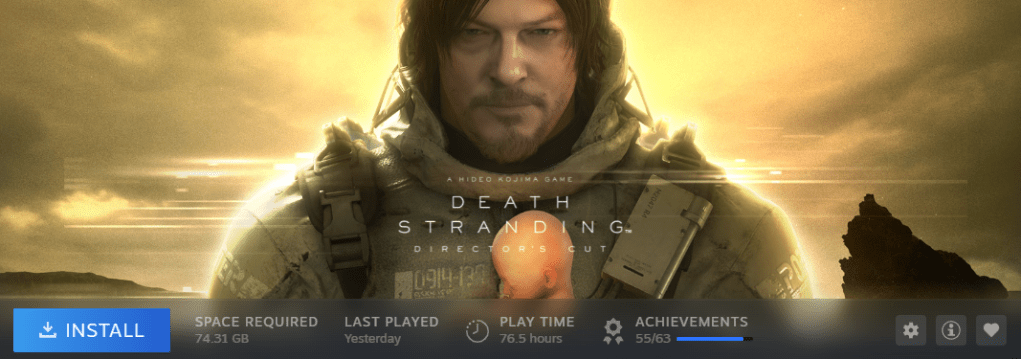
So, one of the things I did after getting the news of my redundancy was start a game I had in my Steam library for the longest time after getting it in a Humble Choice bundle.
Yeah… I have been playing it a bit too much lately, but I did finish the story yesterday so I feel I can convey some thoughts at least, at least in a somewhat short form.
The core gameplay loop of Death Stranding is delivering packages. Playing as Sam Porter Bridges (portrayed by Norman Reedus), you go all throughout a post-apocalyptic America to deliver all sorts of goods to a colourful cast of characters.
Several hazards present themselves during these journeys, in the form of supernatural “Beached Things” (BTs), MULE and terrorist encampments looking to take your cargo or life respectively, and the ever-present threat of “Timefall” – rain that induces accelerating aging upon whatever it touches, which includes corroding your cargo’s protective containers.
You do not have to do your job entirely on the ground though, as the game provides several tools for making your life easier. Various structures can be constructed, ranging from humble ladders that can help you traverse rock and river, to giving you the ability to make a zip-line network later in the game, allowing you to complete deliveries door-to-door without encountering any threats whatsoever.
Your hands are not the only ones that can build structures though, as the unique selling point of Death Stranding is the integrated online aspect of the game. Whilst it is a singleplayer game and can be played offline; the game becomes significantly more populated when playing online, as the structures that others have built can appear in your world, helping you out when you might need it most.
Hideo Kojima is both the game director and sole writer of Death Stranding, the latter of which I was extremely excited for going into the game. Metal Gear Solid is one of my favourite video game series for its impactful writing, so I was excited to see what Kojima could cook up when fully in control.
The core theme of the game is “connection”, going through a broken continent to connect cities, distribution centres, and shelters into the “chiral network”, hoping to make a new America in the form of the United Cities of America (UCA). Every character you meet is extremely well written, with frequent twists and turns in what you learn about them, never leaving you bored in terms of story content.
That said, I definitely did have some issues with the pacing of the story, and not just because I am a glutton for side content in this game. Specifically from the end of Episode 8 onwards, the game accelerates in such a way that completely shifts the gameplay loop out of sync with what you were doing before.
Whilst it is still possible to do deliveries, and there are one or two required story deliveries still, the game shifts focus into action-mode, with greater dangers appearing as you head back east to the starting zone. These make it difficult to do “standard orders”, which are the bulk of the game’s side content, as the routes become fraught with danger and the Timefall is near constant.
Despite the pacing being an issue, I actually have no issues with the actual story content of the last act of the game. Almost all narrative threads have a payoff, even ones set up as far back as the game’s prologue will yield results, and those that do not are still satisfying enough that you are left wanting more in a good way. Even with the rapid pace of episodes in the endgame, there were still plenty of moments that left me shouting “WHAT?!” at my TV.
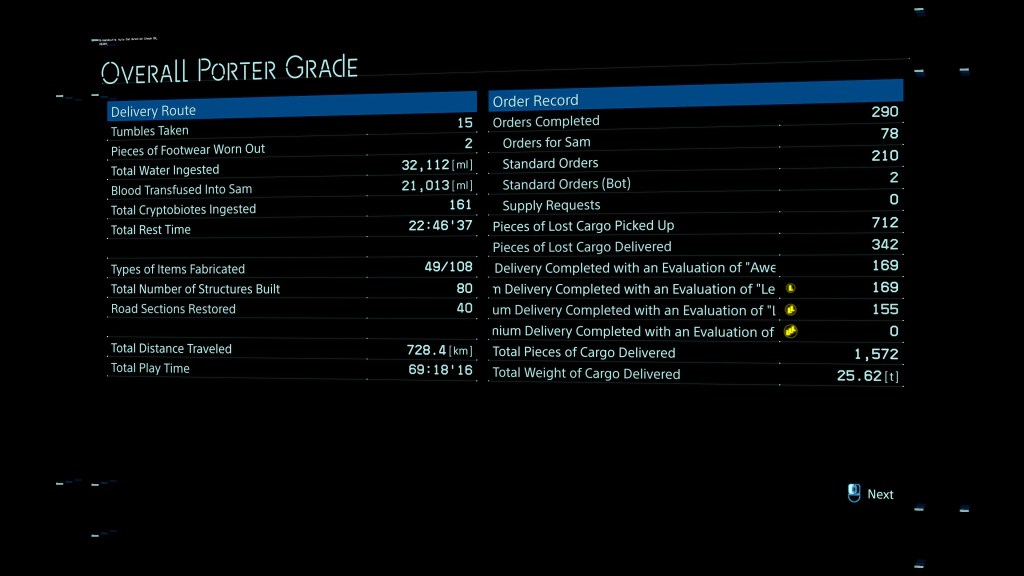
My playtime to go through the game landed me at just over 69 hours (nice). This included doing lots of side content between episodes but every minute of playtime was worth it for me – I recommend playing Death Stranding without hesitation. For people who enjoy great stories, and for those who just want a game to enter zen mode with, there is something for everyone.
I am not done talking about the game either, as there are several things I still want to write about it, but hopefully this short review gives enough information on the game to make you consider purchasing it.
Thank you for reading today, writing these Redundancy Reviews honestly keeps me going in a way that is extremely beneficial to my psyche, and with the small audience I am cultivating right now, I am very happy with the direction of my website.
Good morning climbers and divers, welcome to Day 10 of Rosalia Rambles Redundancy Review.
Might be a shorter one today as I have just come back from shopping at Asda to get supplies before a massive heatwave today and tomorrow. Plenty of drinks, snacks, and ice cream to get through a rough time – did involve walking up a very steep hill in quite humid weather all the same.
Despite the heat though, I have been managing to keep busy domestically. It was a tough struggle but yesterday I managed to finally give the master bedroom a deep clean, picking up the floordrobe that had developed and giving the carpet a well deserved vacuuming. Being able to see the floor again and not have to walk around on eggshells is such a relieving feeling.
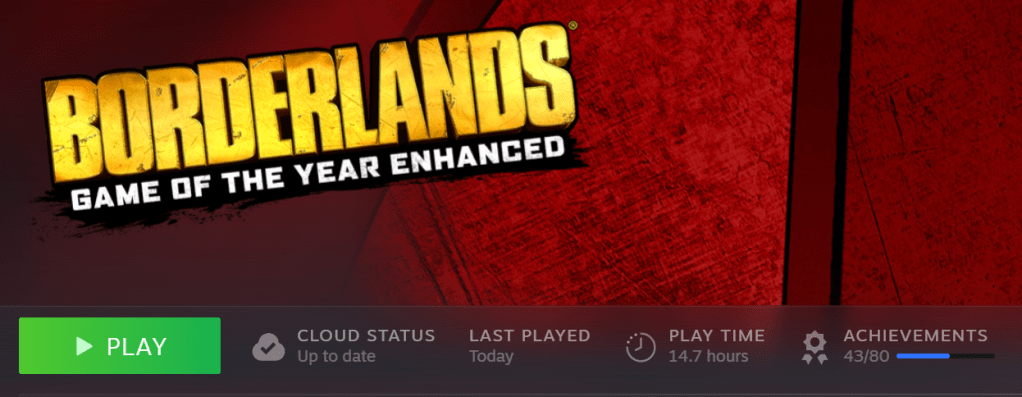
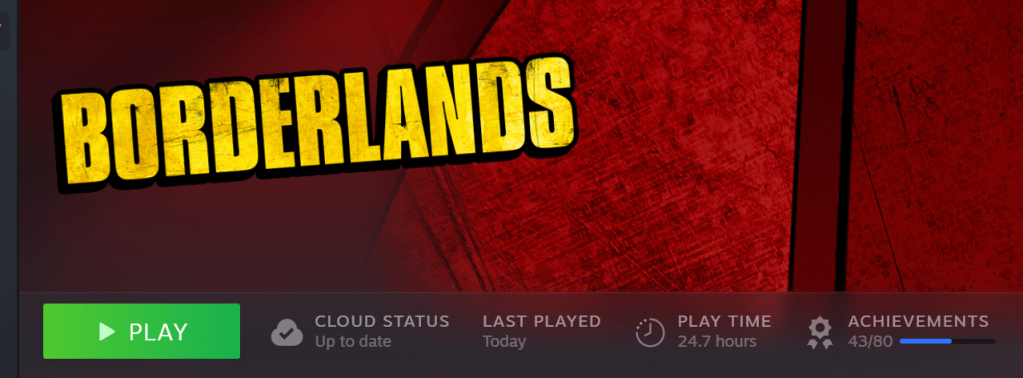
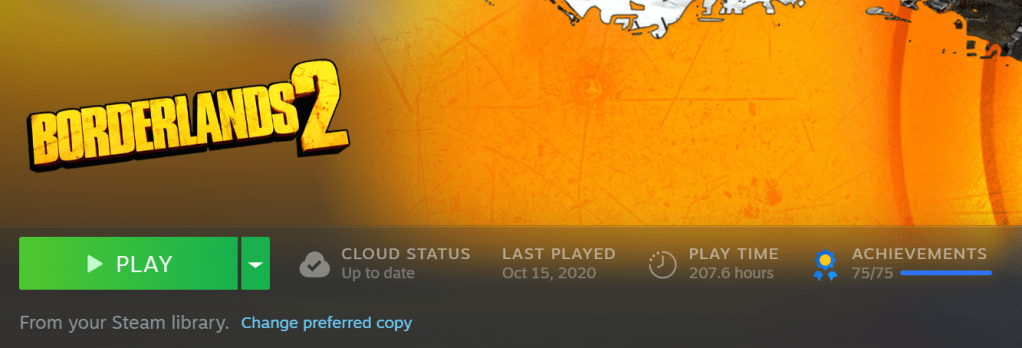
I reconnected with an old friend yesterday as well. In the past we had helped each other get the multiplayer achievements on Borderlands 2 and he messaged me a few days back asking if I wanted help getting the ones on the original game as well (not the “Enhanced Edition” – quotation marks used quite literally there). He is in a similar situation to myself in terms of jobs so it was nice to shoot the shit for a bit about life.
The job search continues, albeit very slowly right now. Got an official rejection from Jagex for the producer role I had applied for, which whilst it sucks to be rejected, I do appreciate them sending a proper rejection email. It says something that actually receiving one is a rare courtesy these days.
Still waiting to hear back from Poncle, which is definitely the main cause of my waiting room syndrome right now. I think getting an answer one way or another from them would help me move on to applying at a great speed.
If you want to help me out in the interim, I am available for writing work as always. Doing these redundancy reviews have really helped me out in staying in the routine and always thinking how to improve my own work, being able to tell my story no matter what also helps. I have always liked to think of myself as a storyteller above all else and maintaining a public journal of sorts helps me feel like I am making myself a better one.
So, initially I was going to cop out today and review one of my favourite Magic: the Gathering cards for today, but me emphasising the quotation marks on the Borderlands “Enhanced Edition” makes me want to cover that, especially with playing the original yesterday.
Borderlands is a first-person looter shooter initially released in 2009, with the Enhanced Edition coming out in…
…well that does not link up. Wikipedia is telling me the Enhanced Edition released in 2019 whilst the Steam Store page is saying 2023…
Oh well, moving on.
For my thoughts on Borderlands across both versions, I can summarise it simply as “very successful tech demo”. Borderlands was the first game to bring the looter shooter genre into the public spotlight, previous attempts had been made but this game made it mainstream. That said, outside of the loot system I do not think the original has much going for it in today’s market.
Especially when compared against the vastly superior Borderlands 2 released in 2012, which I personally think is where the franchise peaked and has been struggling to live up to it ever since, but that is a different story.
The driving mechanics are passable, but feels more like a way to get from point A to point B quicker than anything else – especially prevalent in the third DLC which puts a heavy emphasis on needing to drive everywhere.
Whilst there are some funny moments with characters in the base game a lot of the humour is told in flavour text rather than character dialogue. This is rectified in the DLC, where the comedy and writing style of the sequel starts to take shape with each passing addition.
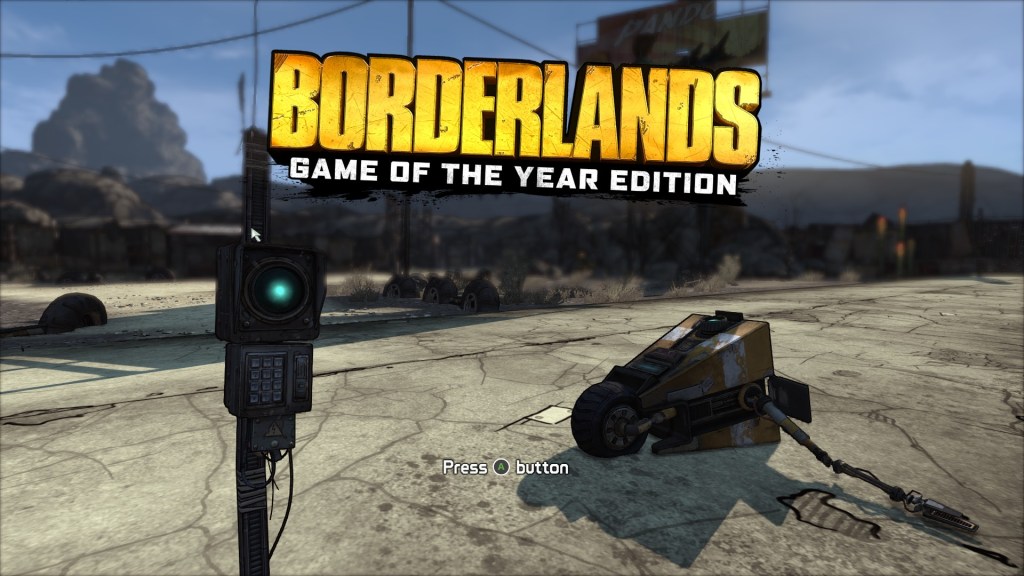
In terms of thoughts on the Enhanced Edition… I do not want to be kind to it. The graphical improvements and expansion of graphical options is a very needed addition, as the original game does not have VSync or a Field-Of-View slider – noticeable omissions especially when playing that version at 4K
But outside of that I have encountered a lot of issues in my playtime, including numerous crashes and issues with the minimap being retroactively added into the game. Its inclusion does help with navigating the world better compared to the pure compass system of the original, but in multiplayer I have seen several issues with waypoints not working for me as the joining player.
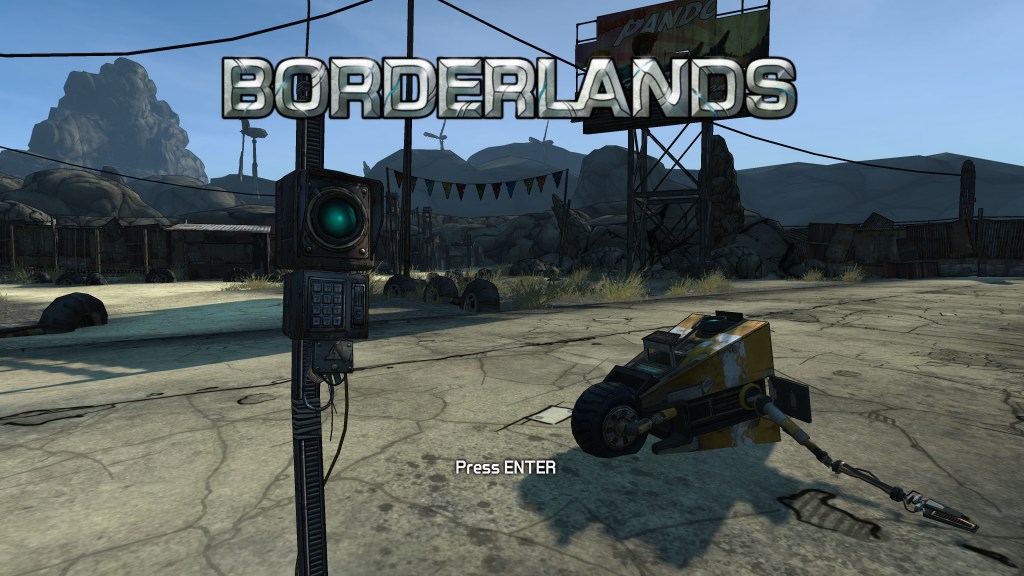
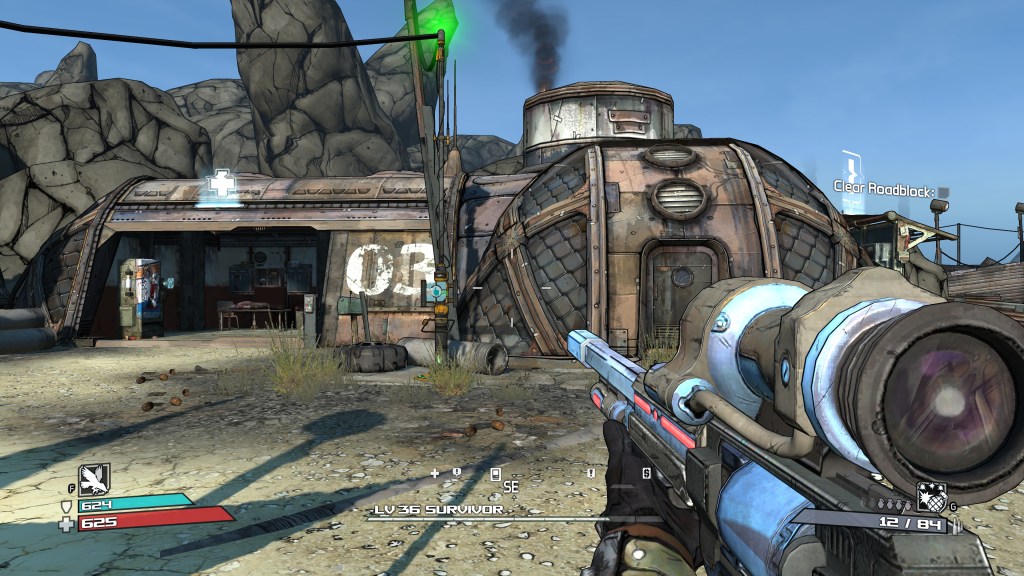
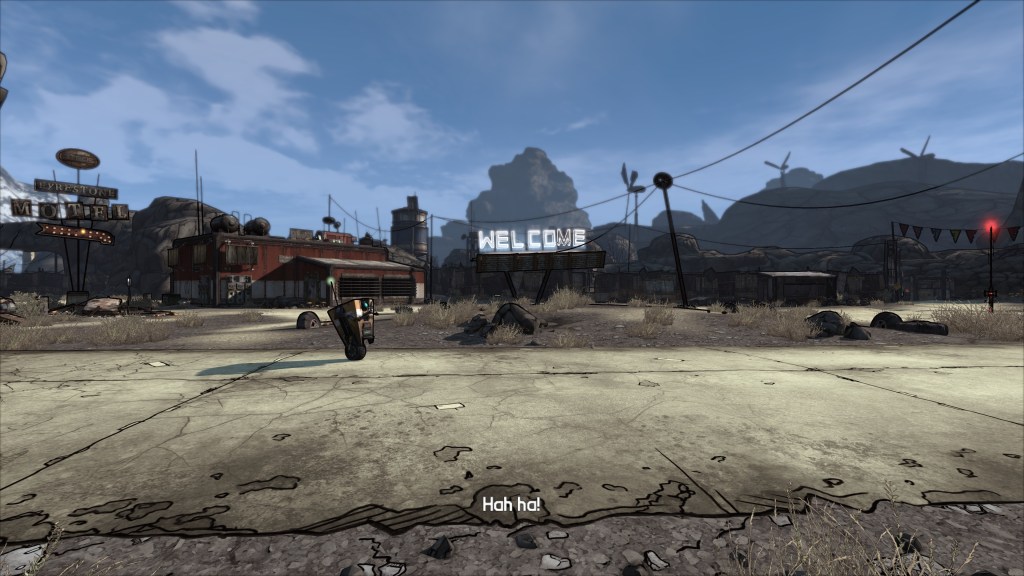
Borderlands 1 Title ScreenBorderlands 1 in FyrestoneBorderlands Enhanced Title ScreenBorderlands Enhanced Outside Fyrestone
When looking at texture quality as well, I think the visuals of the original look better. Both games have the cel-shaded look but the original has sharper lines, a more defined style, one that especially shines considering the era of brown modern military shooters it came out in. The lighting in the enhanced edition is better on a technical standpoint, but I feel it loses some of the edge the original had.
I will end on a positive note, and highlight one thing that always brings a smile to my face whenever I have revisited the original: Mordecai.
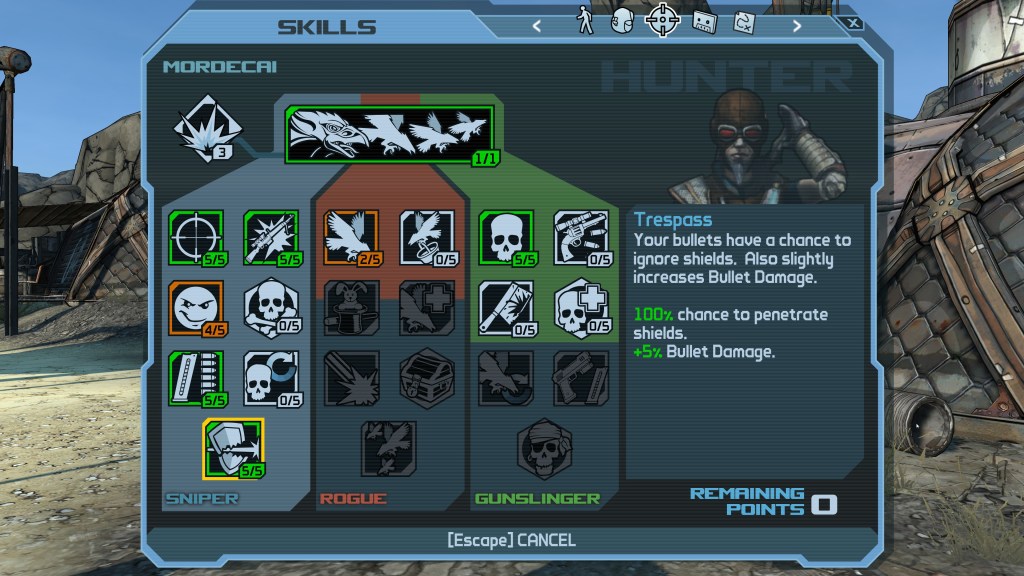
Mordecai is the “Hunter” class of the game, with skill trees focusing on his pet Bloodwing, the usage of pistols, and my preferred tree of choice: Sniping. Whilst the trees are much smaller compared to later entries; Mordecai’s sniping tree is beautifully simple in its execution, boosting damage, ammo capacity, and ending off on a capstone of bypassing shields once fully levelled up.
Trespass is a hilariously broken skill in this game, especially considering the endgame Eridian Guardian enemies are all shields and no health. What is supposed to be a tough enemy to break through their defenses while they bombard you with attacks becomes trivial fodder that dies to a single headshot, only rarely needing a follow up shot to finish the job.
Playing as Mordy was so fun that my initial playthrough of Borderlands 2 was done using Zer0 and trying to do a similar thing, but he could just not reach the expectations I had – though this was not a bad thing, as I then switched to Salvador who is stupid amounts of fun to play as.
But rambling about the sequel needs to be another day, especially as I uh…
…liked that game a lot more.
That does it for today, what I initially thought was going to be a shorter review turned into an over three page rant. Thank you for reading if you made it this far, please stay cool wherever you are and remember to hydrate regularly throughout the day.
Well, that is a question I have been asking myself for a fair few days after getting the initial news that the company I worked at was in trouble. Even if I saw it coming to some degree it was still a shocking thing to process, but weirdly enough now that I know the outcome I am… relaxed in a way?
Obviously there is a tonne of stress still to come, from finding a new job to managing finances during this time, though the former is partially why I am writing this.
One of the things I knew I needed after the axe dropped was a sense of routine, something to keep me getting up in the morning and not just rotting in bed as I would be so inclined to instead.
That gave birth to this idea: “The Redundancy Review”…
…I really do like alliteration with R words huh. Anyway, back on track.
This blog of mine has been dormant for a while, partially because I was busy advancing my primary career of working in production and directing all of my writing energy towards proposals, scripts, and all other sorts of professional copy. Now it is time for me to make a comeback!
I still have aspirations of being able to work as a copywriter in any industry, so I will be using this blog to build up a new portfolio of work alongside my job search.
The Redundancy Review will be a daily article series, written each morning as I eat breakfast and drink a delicious mocha, with the following structure:
A brief emotional check-in, talking about how I feel in regards to my situation and any stumbles I have encounter
Job search update, any fun roles I have applied for or any opportunities I think are cool
Finally, the real “review” part of the article, where I talk about something I enjoy at varying lengths
I will also be including a call to action in each article, emphasising that I am available for all sorts of work. If you like what you are reading and want to inform me of an opportunity or offer me paid writing work, I would absolutely love to hear from you.
With the introduction to the series out of the way, let me inaugurate it with the first Redundant Review of something I have been loving to play recently…
Oh yeah, we are starting strong with this one.
Beat Saber is a Virtual Reality (VR) rhythm game developed by Beat Games and released in 2019 for Playstation VR and PCVR platforms, and standalone mode for Meta Quest platforms.
The main objective of the game is to smash blocks with various directional arrows (or dots for hitting them in any direction) in time with a song whilst walls and bombs fly by you, needing to keep your head and sabers away from them respectively.
I got into it recently as a way of exercising within my home in a way that is more mentally stimulating to me – and it is certainly a workout.
Your centre of gravity gets time in by needing to lean your body side-to-side to avoid any walls, whilst your knees get their activity by needing to duck under the same obstacle. Specifically in my case as well, once I really get into a song I can feel my hips swaying and my feet bouncing, dancing along with my lower body whilst my upper body is twisting and turning to hit the blocks.
My reaction time has also definitely improved from when I started out. Initially I would struggle to keep a good combo going on some “Normal” difficulty songs, even failing a handful of the custom levels I had installed – but now I am able to competently clear a good majority of “Hard” songs and even pushing myself towards “Expert” for some.
As mentioned above, Beat Saber supports custom levels. These maps are designed by community members and uploaded on various sites, with my site of choice being BeatSaver – Home. My choice primarily includes original songs by Hololive talents and the RWBY OST, with a few mainstream songs in there as well.
That said, custom levels are not needed to enjoy Beat Saber. Built into the base game is a wide array of original songs, including an entry by legendary power metal band Dragonforce, “Power of the Saber Blade”, one of my personal favourites to play due to its high-intensity note patterns and upbeat energy of the song.
And even beyond what is already available, as of time of writing, there are 245 DLC songs across a massive range of artists and genres, including:
A full Linkin Park pack
A full Imagine Dragons pack
A full Lady Gaga pack
Various iconic internet culture songs, such as Sandstorm by Darude, and Free Bird by Lynyrd Skynyrd
There is something for everyone in Beat Saber, and with how easy it is to add custom levels on PC I can guarantee if my review has made you interested, something will be out there for you.
Well, that’s Day 1 of the Redundancy Review in the bag. I hope you have enjoyed reading this today, and whatever you get up to today, I hope you have a good day. You definitely deserve it.
You can purchase Beat Saber from the following locations:
…partially because I don’t really post my work to Twitter anymore for a variety of different reasons, including but not limited to:
Melon Husk turning it into a hellsite
Wanting other voices to shine on Twitter given the current climate
And I don’t honestly post enough currently to make a deal of posting new stories there
So, what’s this for? Well, a year end ramble has become a tradition, and unlike stories which take a fair amount of energy, this is just me vomiting what is on my mind into the WordPress reader as a summary of my year, which has been… full.
A lot of what I normally write about has changed and shifted around due to developments in my personal life, and whilst a lot of the trauma themes can remain (and let’s face it, trans allegory will always find its way into my writing regardless of what I do), I don’t want to make them the focus of my work anymore.
Outside of that, I’ve just been fully experiencing transitioning whilst keeping up a healthy social life where possible, which has made writing difficult to discipline myself into when a lot of the time I want to enjoy myself with people creating stories that way rather than writing what’s in my head.
Not to say I don’t have a lot of the usual WIPs and ideas kicking about on my G-Drive, but a lot of what I want to write are somewhat sweeping epic stories that rival some of my higher word counts which take more effort to finish, about four times as much effort to editing cause goddamnit I hate editing my own work sometimes, and when I go for long periods I end up just blanking out on where to go next.
The WIPs at least have “Rosa Notes” now, which is my way of telling Future Rosa where the story is prompted next… yeah that probably explains a lot about my chaotic creative process that for the longest time I did not actually plan or write notes, I mainly let the spirit of writing possess me and go from there.
A friend of mine did say that my writing style would lend itself to some completely original work, rather than being based off my current D&D characters, so that might be an area for exploration next year – or perhaps even revisiting my style of non-fiction writing for different topics.
Or I could still struggle to write regularly and have a similar vibe to the end of next year’s ramble.
Oh well, we raise a toast to my writing career nonetheless! To the fact you haven’t needed to support me yet because my current tech career is stable!
Feats are one of my personal favourite mechanics in Dungeons and Dragons. Whilst the humble Ability Score Improvement is the most practical way to enhance a character, they can often feel boring in comparison to the diverse character building opportunities that feats bring. This is especially true when considering how versatile a feat can be when applied to different character concepts, with some of my favourite versatile feats being described below.
Skill Expert/Practiced Expert
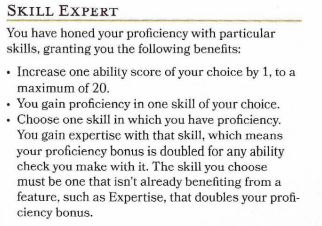
Recently added in Tasha’s Cauldron of Everything, Skill Expert can be an option for those who wish to improve their proficiencies without wanting to commit to the three skills/tools offered by the Skilled feat.
Skill Expert allows a one point increase in any stat, which gives players greater choice over which modifier they may want to upgrade with this feat. They can also gain proficiency in one skill of their choice, which does not have to be specific to the ability score they increased, giving more flexibility over a feat like Resilient.
Finally, the feat allows players to gain expertise (double proficiency bonus) in one skill with which they are already proficient and not already receiving the benefit of expertise, which can be a massive boon in many ways. Those wishing to grapple more in combat can gain a huge advantage by gaining expertise in their Athletics checks, the front of the marching order will always know what is going on with expertise in Perception, or that one player who finds themselves needing to lie the most can protect their sorry behind with expertise in Deception.
A note about the Unearted Arcana feat “Practiced Expert”. It is essentially the same as Skill Expert but instead of being restricted to just skills, you can also choose tools to gain proficiency/expertise in. This does offer more flexibility, but can be quite campaign/character specific depending on what kind of artisans tools characters may be used. And as always with UA, ask your DM first if it is okay to use it.
Resilient
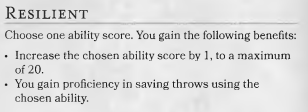
Mentioned previously, Resilient is a very straightforward feat. You pick an ability score to increase by one, and you subsequently gain proficiency in that score’s saving throw.
The limitation of the proficiency being tied to the ability score increase does reduce some of the potential versatility in this feat, gaining proficiency in a saving throw is not to be underestimated.
Casters can have the safety net of improved Constitution saving throws when it comes to rolls made to maintain concentration, frontline characters can strengthen their mental defenses by becoming proficient in Wisdom, Intelligence, or Charisma saving throws.
And of course, the Wizard who is somehow spending a worrying amount of time needing to roll Dexterity saving throws in regard to avoiding their own Fireballs can reduce the amount of damage they take (but not reduce the amount of exasperated sighs from around the table).
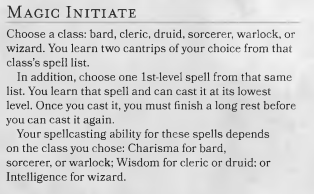
Magic Initiate
One of my personal favourite feats and the entire reason I got inspired to write this article. Magic Initiate offers a multitude of ways to upgrade any character due to the lack of prerequisite required, no need to already be a caster or to have a minimum casting stat of the class you wish to steal from.
The 1st-level spell is pretty good though the restriction of only being able to cast it once per long rest does reduce some of the potential in this feat. However that does not mean that thought should not go into which spell is chosen:
Shield of Faith can be a great opening move to a combat or an emergency buff, with the concentration aspect being negligible due to the increased difficulty in getting hit
Magic Missile is good damage in a pinch, either to get a guaranteed kill or to disrupt an enemy’s concentration
Faerie Fire provides a great deal of utility in combat, making any creatures easier to hit with other attacks and giving Rogues more flexibility in how their Sneak Attack is used
Cantrips however are where this feat excels in my opinion. Choosing from the Wizard spell list can give Eldritch Knights and Arcane Tricksters a wider range of cantrips to work from in either offensive or utility contexts, the Ranger can choose from Druid or Cleric cantrip lists without needing to sacrifice their fighting style slot to Druidic Warrior, and most importantly, the Paladin can choose from Sorcerer spell lists to gain access to ranged attacks which are not repeatedly throwing weapons in the hope of hitting something.
Or if you are really feeling adventurous, choose this feat on a Paladin and pick from the Bard spell list. Why? Because using Vicious Mockery and shouting “DEUS VULT” at someone so hard their brain hurts is a wonderful sight.
Conclusion
Feats are awesome, and all of the listed feats above can bring additional interest and development to any D&D character. As always ask your DM if feats are allowed in your game and do not worry if feats do not feel right for you, as mentioned Ability Score Improvements are usually more practical for character progression, but next time you want to do a +1/+1 increase to two stats, go through a list of feats and see if you are willing to sacrifice that second increase for something potentially awesome.
After a period of time, sometimes it is best to go back to the core of what made a game great in the first place.
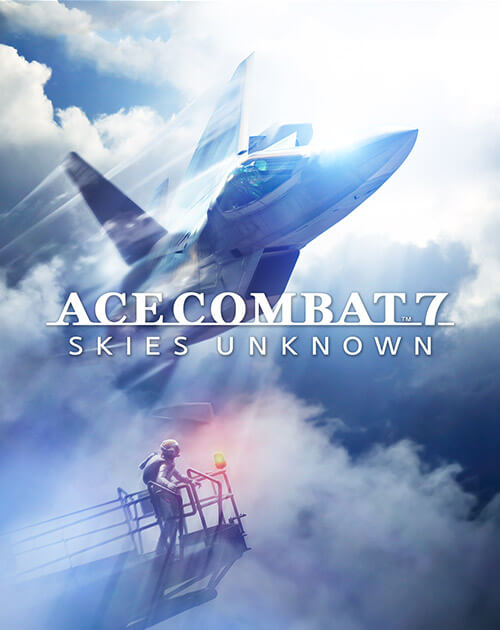
Ace Combat 7: Skies Unknown is an arcade flight combat game and was released in 2019. Developed by the Project Aces division of Bandai Namco could the team capture what made their previous works great, and provide a gameplay experience as a generation of consoles entered their twilight years?
Gameplay
The no-frills core gameplay of previous Ace Combat games is intact, with every plane feeling both tight and responsive to player input while also including enough distinction in how a plane rolls, pitches, and yaws. Adding onto this gameplay are three major control tweaks to give players plenty to master:
Flares, allowing players to deflect imminent missile hits that they may not want to manoeuvre to dodge
High-G Turns, quick responsive turning to conquer obstacles easier and to bleed speed in a dogfight
Post-Stall Manoeuvres (PSMs), advanced mobility techniques on certain planes, allowing for unbelievable manoeuvrability at low speeds
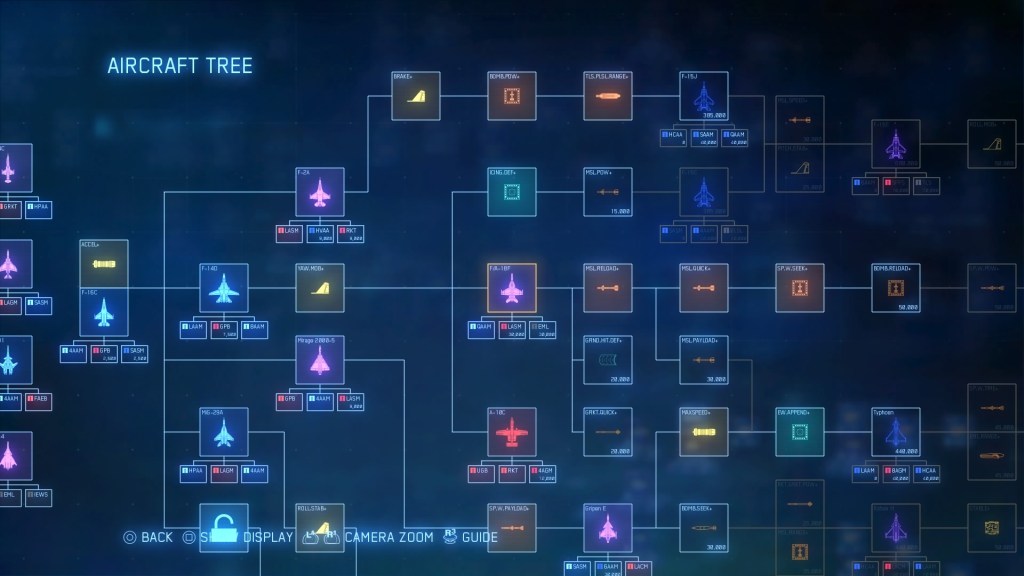
Rather than aircraft being available to unlock after certain milestones, the game now utilises a system called the “Aircraft Tree”. Points are earned after each mission which can be used to buy planes or parts (upgrades to improve mobility, weapons, or provide passive buffs). Unlike previous AC games, planes are unable to be sold to buy new ones, but the addition of Free Mission not requiring campaign completion allows players who wish to push themselves to one particular plane or weapon to earn points by playing the game.
Missions are diverse and well-designed, with the majority of them being built as “easy to clear, hard to master”, giving plenty of replay value for both new and old players alike. Level gimmicks are (mostly) introduced safely to players to allow them to adjust to what is required, and then ramps up their integration as time goes on. None overstay their welcome and can provide needed relief after more intense sequences. The much needed addition of checkpoints also punish players less for making mistakes in the endgame of a mission.
There is online multiplayer in this game. And whilst it is a little disheartening to see that there are no co-operative ground based missions, this fact can easily be overlooked by how powerful multiplayer can make a player feel. Work with up to three other pilots in team deathmatch, coordinating a response against an enemy ace to knock someone down a peg. Stand your ground in an all-out air battle royale, fighting to be the top pilot, all the while missiles are whizzing past in all directions.
Presentation and Sound Design
Built on Unreal Engine 4 the developers put great effort into making sure everything looked spectacular as the previous generation came to a close. Even on a standard PS4 the game looks absolutely beautiful in areas, with advanced lighting providing a fitting mood to each mission. Special mention goes to Simul’s trueSKY plugin, handling clouds, lightning, and god rays coming through said clouds.
Years worth of experience provide an unrivaled level of authenticity to the sound design. Engines, guns, and missiles all have the raw feelings of power that comes from piloting a fighter jet, allowing for full immersion during dogfights. One particular sound design of note I wish to highlight is the Electromagnetic Launcher (EML). The sound of the gun discharging, the whoosh of the high-speed projectile, and the loud bang it creates on impact all work together to provide cathartic feedback to firing a railgun.
And of course, the signature music of Ace Combat remains as fantastic as ever with Keiki Kobayashi acting as lead composer once more. Whilst Kobayashi most certainly carries his weight with some of his best work yet, the track I wish to highlight here is “444” by the wonderfully talented Mitsuhiro Kitadani. To me, this is a perfect amalgam of modern Ace Combat, classic Ace Combat, and fits the mission at hand beautifully.
Again, my thanks and admiration goes out to Zaptroxix. You do amazing work my dude, keep it up.
Plot
Taking place once more in the world of Strangereal (the term for the Ace Combat alternate reality) the game begins with the Kingdom of Erusea declaring war on the Osean Federation, with the former seizing a valuable land asset on their continent, the International Space Elevator. In doing so they also seized control of two superweapons called the “Arsenal Birds”, sweeping airborne aircraft carriers armed to the teeth with advanced weaponry.
Whilst some may claim that it is difficult to understand the story of Skies Unknown without playing previous Ace Combat games, the themes are written well enough to convey their intent to all audiences.
Osea can quickly be deduced as an analogue to the USA, being a large federal nation that has a hand in peacekeeping operations around the world. The Erusean’s declaration of war on Osea being justified by the Space Elevator infringing on the sovereignty of Erusea brings further analogues to countries resenting the heavy hand the USA can have in international matters.
Between mission cutscenes, pre-mission briefings, and mid-mission radio chatter all helps towards world building. Providing alternative insight on events just witnessed by players, giving indirect updates on how the war effort is going and what players are doing to impact it, and how your other squadron members view different situations, providing everything from snarky banter to near-speechless horror.
Debriefing
Ace Combat 7: Skies Unknown has everything for anyone who may be interested. Whilst some minor flaws hold the game back from true perfection, there is enough content for new players to ease themselves in and for veteran players to be welcomed back with open arms.
It is easily my favourite game in the franchise at this current point in time, and I intend to revisit for years to come.
“Did you know… there are three kinds of aces? Those who seek strength. Those who live for pride. And those who can read the tide of battle. Those are the three. And him… He was a true ace.”
Larry “Solo Wing Pixy” Foulke, Ace Combat Zero, 2006
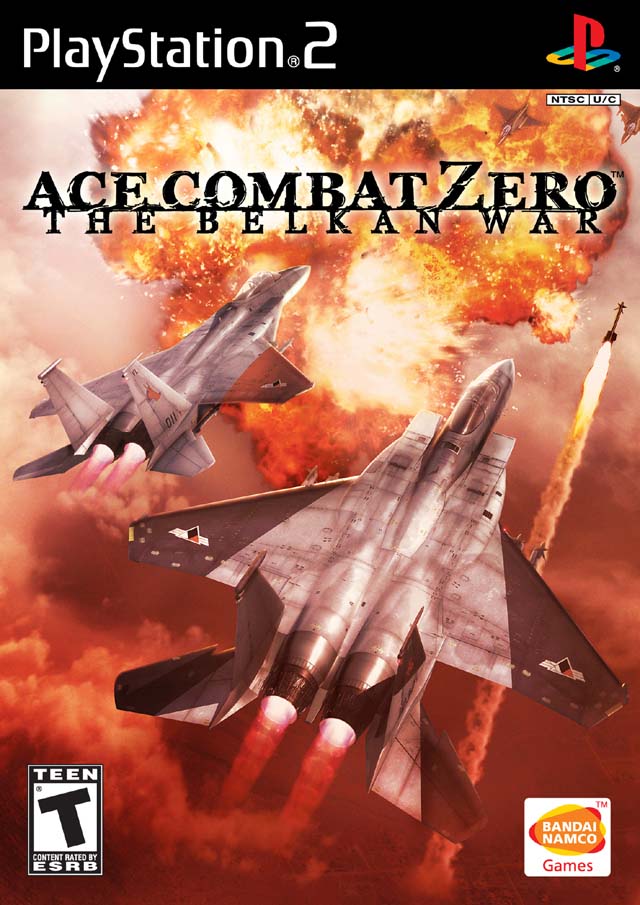
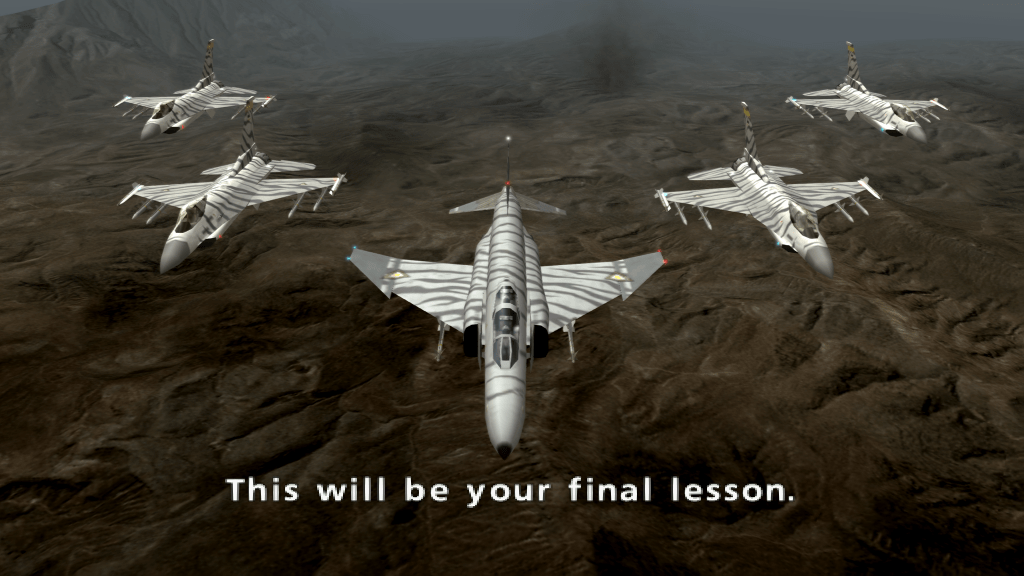
Ace Combat Zero: The Belkan War (released sans Zero in PAL regions) released in 2006 and was developed by the Project Aces division of Bandai Namco. Helmed by first-time creative director Naoto Maeda; can this change in leadership live up to the opening slogan of “New Blood. New Battles”?
Gameplay – Those who seek strength
Being the third and final entry into the PS2 holy trinity the core gameplay continues to be top-notch. Pre-existing issues surrounding the analogue controls of the Dualshock 2 are still present, leading to potential discomfort when needing to consistently hold down the brake or throttle. Everything else remains as tight and responsive as ever.
The cumbersome system of aircraft having a single special weapon is reverted to the tried and true formula of multiple specials on each plane, allowing for greater customisation when deciding both player and wingman loadouts. Wingman plane selection has also been scrapped in favour of having an F-15C at first and later an F-16C. Whilst I did enjoy the customisation aspect of wingman configuration; having such a powerful plane to back you up early game is a massive boon.
Wingman and enemy AI has been improved massively since the last entry. They can reliably target what his current command is, sometimes leaving players quite surprised at how efficiently the battlefield can be cleaned up. Enemy improvements lead to the pinnacle of dogfighting for the PS2 trilogy, with battles against rival Belkan aces being heart-pounding spectacles in the sky.
One of the major gameplay changes in Zero is the introduction of the “Ace Style” gauge. This gauge reacts to a player’s actions during a mission, specifically how they interact with new “Yellow” targets:
Spare and destroy roughly equal numbers of yellows? You are a Soldier, feared for your efficiency and skill in battle
Refuse to target yellows? You are a Knight, famous amongst your rivals for strict adherence to the rules of engagement
Destroy yellows with reckless abandon? You are a Mercenary, reviled for your bloodthristy nature… whilst also being loaded to buy new planes
Whilst the game allows players to select a difficulty that will determine enemy behaviours, and if a plane will explode because of a stiff breeze, Ace Style can also influence difficulty by introducing more targets the further players slide into Mercenary and will change up the rival Ace squadrons encountered during certain missions.
Sound Design – Those who live for pride
Surprising no one, the sound design found in previous entries remains in this game. Engines firing up their afterburners on the runway sound as guttural as ever and the satisfying kaboom of a missile impacting into an enemy plane remains extremely cathartic.
The signature Ace Combat sound is included with the addition of flamenco guitars providing a welcome mix up. This new instrument features heavily in duels against rival aces, increasing the tension as fighters try to tail one another. There is healthy fan debate on whether this game contains long-time composer Keiki Kobayashi’s magnum opus (most significant work), a track appropriately titled “Zero”.
Plot – Those who can read the tide of battle
Rather than the events of the war fifteen years ago being recapped, now it is the player’s turn to actually live those events in the pilot seat of Galm 1, callsign “Cipher”. Cipher is not permanently affiliated with any air force in game, instead the viewing battle through the eyes of a mercenary and how various pilots perceive mercenaries.
Belka is a small principality on the Osean continent, with analogues to 20th century Germany in being an economically struggling country embarking on a rapid expansion campaign leading up to the events of the war. From the early days of liberating occupied territory, to the lighting offensives against key strategic territory, all the way to the worst man-made disaster in Strangereal history (“Strangereal” is the fan-originated term for the alternative reality the numbered Ace Combat games take place in).
Radio chatter continues to be a vital source of information, and will give an insight to your wingman’s perspective on things, with Solo Wing Pixy either offering his insight on a terrible situation or making a snarky comment about having enough experience flying home with one wing.
Between-mission cutscenes now take the angle of a documentary for an Osean news channel, with the reporter conducting interviews with important people who had encountered Cipher. Primarily these are the Belkan aces fought during the game, and therefore cutscenes can change depending on what Ace Style certain missions are tackled with. A large change in these cutscenes are their live-action nature, leaving behind both the watercolour paintings of AC4 and the CGI sequences of AC5
Debriefing – He was a true ace
Improving massively upon the sins of its predecessor Ace Combat Zero takes the arcade style game of the franchise and ramps it up massively with AI improvements for enemy fighters, the Ace Style gauge influencing what planes are unlocked providing massive replayability without feeling forced. Whilst control issues persist, they are not enough to dampen the absolutely awe-inspiring sequences that transpire within game.
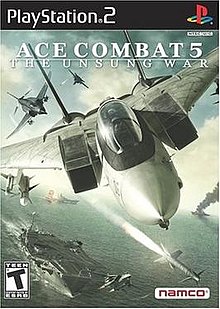
Ace Combat 5: The Unsung War (released with the much more inferior subtitle of “Squadron Leader” in PAL regions) is an arcade flight combat simulator developed by the Project Aces division of Namco. After making a huge splash in the PS2’s release year with Shattered Skies in 2001; could the team replicate such success three years later in 2004?
Having been a complete newcomer to this series back in August it still surprises me how much love and praise I have for this franchise, even when there are some rough edges in this particular entry.
On a distant continent, in a faraway land
Starting on the Osean continent in the year 2010, The Unsung War starts solemnly by recapping the events of a war fifteen years ago. During a conflict known as the “Belkan War”, the eponymous Belkans set off seven nuclear detonations on their soil, killing thousands and shocking the world into a ceasefire and eventual peace treaty.
After this, players are directly thrown into the action with a cutscene depicting a sudden encounter and the rookie “nugget” pilots of Sand Island Base needing to engage numerous unidentified bogies. Out of everyone who took off; only the flight instructor, Captain “Heartbreak One” Bartlett , and three nuggets, Blaze (mute, faceless player character), Kei “Edge” Nagase, and Alvin “Chopper” H. Davenport returned alive.
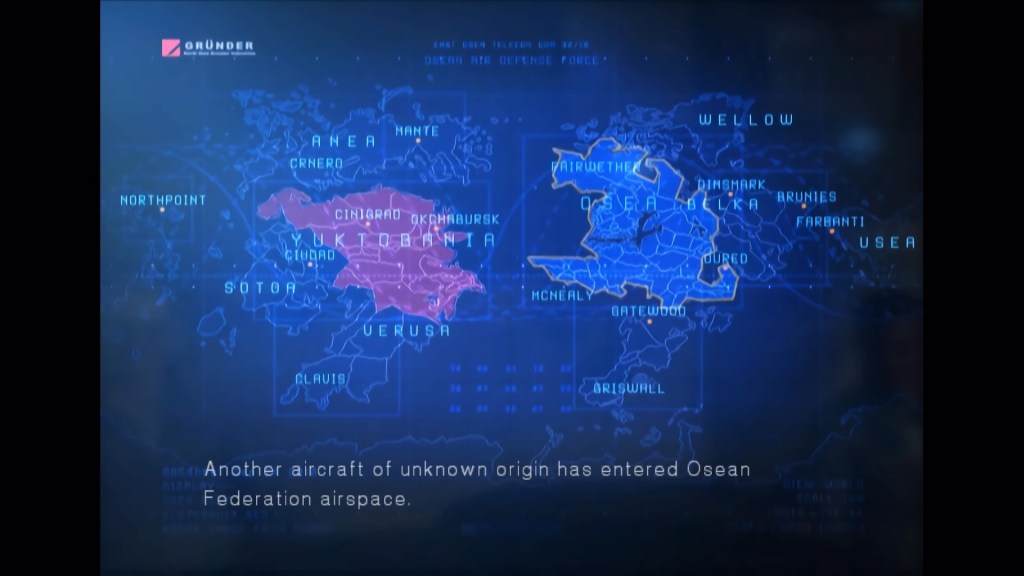
Routine operations resume after this incident. All remaining pilots are assigned to the Wardog Squadron and undertake straightforward missions, such as trying to escort a spy plane to a landing and destroying reconnaissance drones. During each mission though, Wardog is engaged by more unidentified bogies, the only hint to their origin being an airbase across the sea, in the country of Yuktobania.
These are not harmless incidents though, because as soon as Wardog completes only their second sortie Yuktobania declares war on Osea, beginning a lightning offensive.
Key themes to the plot in The Unsung War are mistrust and how rapidly the tide of battle can turn. Whereas the previous entry would frequently present scenarios where victory seems incredibly distant; this game prefers to drip-feed victories before violently taking it away and resetting any meaningful progress.
Mistrust develops from these incidents as both Wardog and players suddenly become unsure of who to trust. From the mysterious 8492nd Squadron, ghosts in the wind around major incidents, to the base commander and other military personnel around Sand Island. Throughout the entire progression of the war, doubts start to manifest, even to the point of wondering why this war began and who is perpetuating it.
A motormouth, an action girl, and a hopeful mechanic
The key characters players will be spending time with throughout the game are their three wingmen. Whilst they serve a gameplay purpose which will be elaborated on later; their characters and personalities are more fleshed out than in Ace Combat 4.
Instead of cut-and-paste mission dialogue talking about how one of them is going to earn their ace wings today, or telling you about their radio failure over their radio, each wingman has their own distinct personality that will come across during missions and between-mission cutscenes.
Chopper is notorious for being a non-stop chatterbox, to the point different commanding officers and AWACS Thunderhead have often asked him to kindly shut up. He even chose his callsign based on having a tendency of “shooting his mouth off” over comms.
Using this gift of speech; he is the loudest anti-war voice of the squadron. Whilst he follows through with the mission, Chopper often questions the nature of war, specifically when following orders would endanger the lives of soldiers and other pilots.
Nagase offers a similar perspective, but she does so in a more restrained way. Whilst Chopper strikes hard into the issue of modern warfare; Nagase simply wishes to enjoy the feeling of flying with equally skilled pilots, lamenting what it would have been like to fly alongside enemy pilots during peacetime.
This wish extends to other parts of her personality. She lodges her objections to the Arkbird, a large white spacefaring vessel initially designed for removing Ulysses asteroid fragments from orbit, being used for wartime purposes instead. These feelings can almost amount to disillusionment as she interrogates the Osean president on why the “beautiful white bird” had to be used for war.
Finally, comes Hans “Archer” Grimm, the replacement as your fourth wingman once Captain Bartlett is no longer in the picture. When he joins, Grimm is not even a fully trained pilot yet, simply a mechanic wishing to stop the destruction of their home base and quickly making up for his lack of formal training in the skies.
Whilst he shares the anti-war opinions of the other wingmen; it is presented in a more subtle way. Grimm instead is shown as an almost ideal soldier, they will follow their orders if legal, and they will want to minimise casualties on both sides in doing so. This detail is expanded upon further through mid-mission radio chatter where Grimm reveals he has a brother on the ground, perhaps worrying about the possibility of never seeing him again.
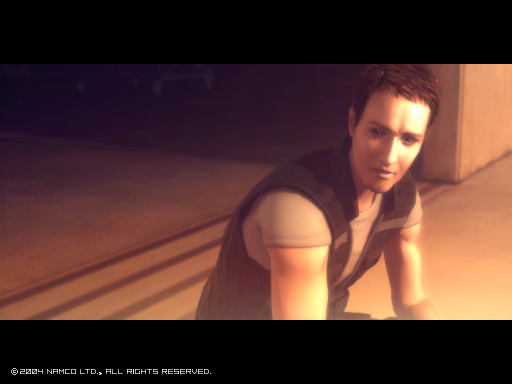
To cap off characters, talking about the narrator seems like a good idea. As opposed to being a nameless child in an occupied town, the game offers us Albert Genette, a young freelance journalist/photographer. (Fun fact: Genette is one of the first credited roles for all-round badass Matt Mercer.)
Genette fulfils the role of an outside witness to the game’s events, taking photographs of key moments throughout the story, and acting as the catalyst for the reputation of the main characters through his piece “The Four Wings of Sand Island”, written after one of the major opening events of the war.
Planes! You want them, we got 53 of them this time!
Yes, that’s right. Ace Combat 5 has 53 unlockable planes for players. This is a massive upgrade when compared to the total in the previous entry being 21. However, with this many planes there is almost certainly going to be a catch, and in this case it is the progression system being woefully unsatisfying in areas.
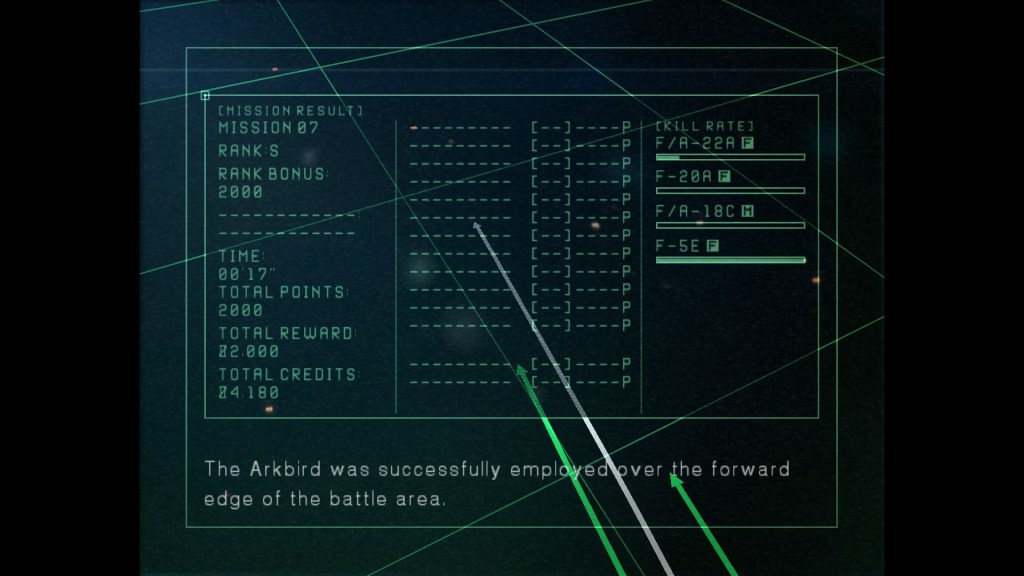
Whilst the system is still in place for players to unlock new planes after specific missions; certain planes now carry a varying number of “branches” leading off from the base plane you can buy, said base plane having an empty gauge beneath it. This gauge is the “kill rate” of that plane and fills up with kills and minigame completion. When full, the next plane on the branch is unlocked.
In theory, this system is a good idea. Rewarding players with better tech for just using the planes in missions is a great boon to replayability, but in the end it comes off as feeling grindy and unfulfilling.
A prime example: why commit to the F/A-18 when the F-35 is right there?
Throughout my initial playthrough I found it incredibly difficult to reliably commit to filling up the kill gauge on most planes. Usually because as I came close to unlocking the next branch on one; a better aircraft would have already unlocked and it becomes more worthwhile to invest in that rather than stick to what was already in use.
This feeling of grinding is amplified by what is, in my opinion, the worst part of Ace Combat 5: there are no special weapon options on the planes.
When considering buying a plane, players not only have to take into account the statistics of that plane; they also need to wonder if they will get good usage out of its singular special weapon. This can provide some interesting decisions when deciding wingmen loadout but ultimately it restricts the potential of some amazing in-game planes.
Much like a WSO, gameplay is taking the back seat
In a prime example of quantity over quality, Ace Combat 5 has the most missions out of the PS2 trilogy, but a lot of these missions are bland, unsatisfying, and in some cases poorly designed.
The majority of missions carry very little gameplay weight, ultimately becoming formulaic in the worst possible way. Complex missions from the previous game have been traded in for focusing more on wingmen character development mid-mission, supplying intermittently entertaining dialogue at the cost of feeling engaged with the task at hand.
Instead of leaving players exclaiming, “oh my god! What could happen next?”; quite often they will find themselves asking aloud, “is anything going to happen, or is this it?”.
When a mission is done well, the impact it leaves is noticeable. A handful of ground attack missions (12A and 26 of particular note) stand out beautifully as both intense and being the perfect length, whilst full-scale dogfight missions (17 and 18+) make their mark despite the dogfighting in this game leaving players wanting.
It is honestly a damn shame that the AI in this game can lead to aerial battles feeling sedentary. Unless you specifically lead them on enemy planes will rarely try to get behind players, and when they do acquire a radar lock there is a very high chance that they will just not fire a missile, allowing plenty of time to manoeuvre behind them and quickly pop them with two/three missiles.
That last bit is of note, as some enemy planes are more resilient than others. Now, this makes sense on some attackers/bombers that can be encountered throughout the game… but there is honestly very little reason why Tornados and MiG-31s should have more resilience than Su-47s. The rival ace squadron, in advanced Russian fighter jets, are easier to shoot down than a small European multirole developed in the 70s. This should not be possible.
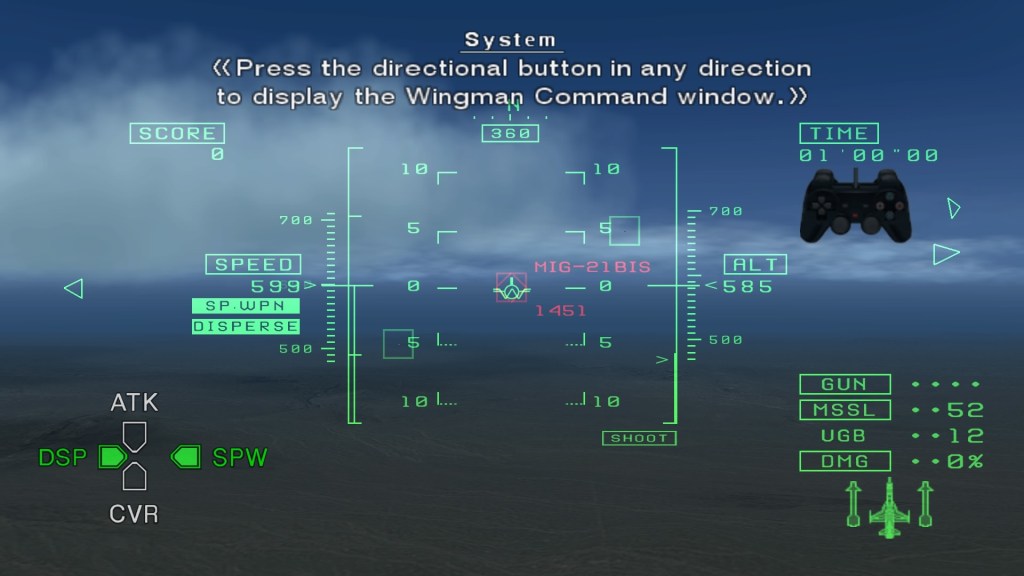
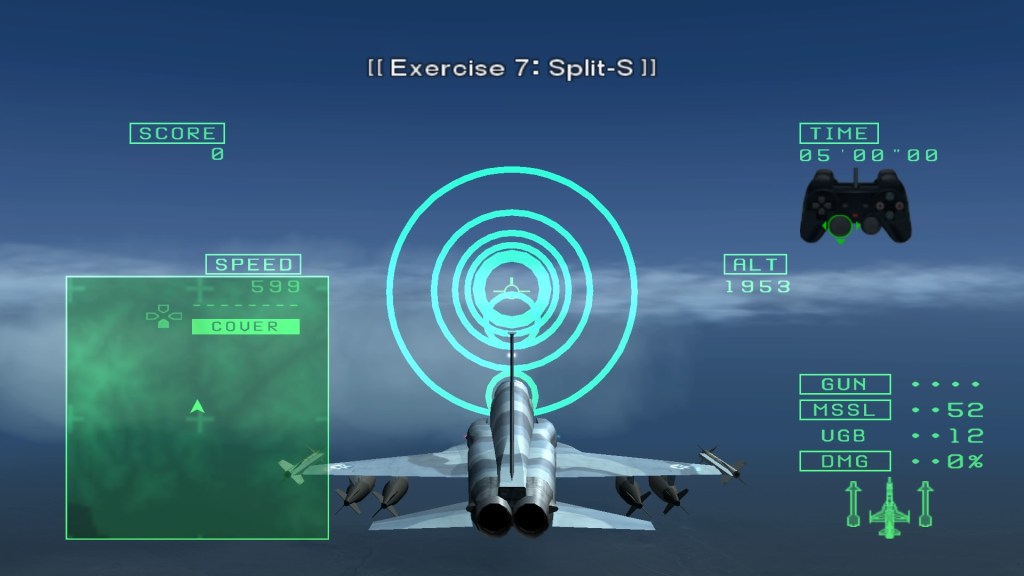
One of the main selling points for Ace Combat 5 is the wingman command system. Using the D-Pad players are able to issue three tactical orders, and decide whether special weapons are free or safe. The tactical orders are:
Cover. The default order that players start the mission on. Wingmen will stay close to the lead plane and attempt to shoot down anything that attempts to tail them.
Attack. Useful for missions involving large resilient targets or clusters of escaping fighters. Wingmen will target whatever the lead plane is currently looking at.
Disperse. My personal most-used command. Wingmen will spread out from the lead plane and attack targets on their own volition.
Wingman commands are somewhat divisive within the Ace Combat community, and players are split whether they are a gimmick serving no gameplay purpose, or that they add a layer of tactical depth to missions. Personally, despite defaulting to the disperse command, I find myself in agreement with the latter category, enjoying having to make decisions on the fly whether to adjust my command or not.
The D-Pad is also used to answer yes/no questions posed by the wingmen and other NPCs. For the most part these have no impact on gameplay and are mainly used to further build characters throughout missions, though in some cases answering a question about splitting up or focusing firepower will result in wingman tactics automatically changing.
There is also a case where answering yes or no will change what mission is tackled next, and there is no indication this is going to be the case and is honestly a bit stupid.
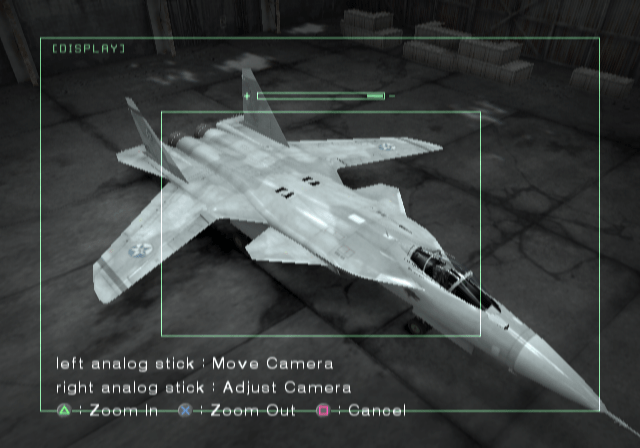
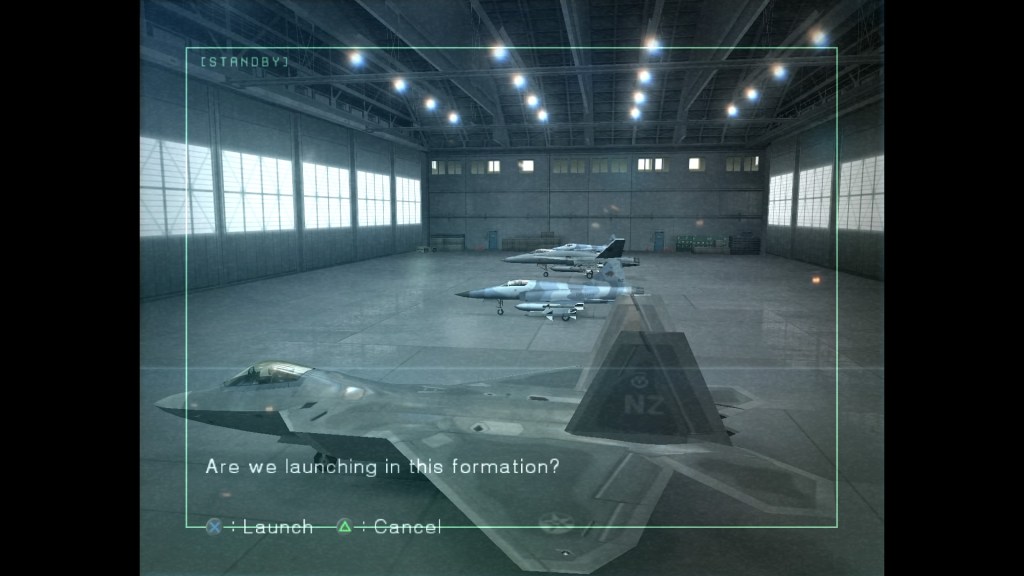
Before each mission players are able to choose both their plane, and what planes their wingmen will be flying in. A box in the bottom right will inform whether or not the formation is suitable for both the air enemies and ground enemies expected to appear, and a wingman will comment if a formation is not up to snuff.
This is genuinely quite a fun system, as it allows players to determine how they want to play the game and use wingmen loadouts to help cover whatever weaker areas may remain. Want to fly escort for a flight of attackers? You can do that. Fly in a badass formation of jet black Rafales? Go right ahead. Make your wingmen defend you as you use a Warthog for everything? It is your God-given right to do so.
Under pressure (sensitive controls)
So… bit of a confession to preface this segment, when I initially played Ace Combat 4, I actually did it with a Dualshock 1 controller, as opposed to a Dualshock 2. This means my control analysis of the game was a little bit off due to how the pressure sensitivity works on the DS2. I hope to rectify this now.
The pressure sensitive controls for the bumpers do work to bring a level of realism to the game. Lightly holding down L1 will slow the plane gently without deploying the airbrake whilst a firm press down will enable rapid deceleration with said airbrake, and acceleration can be precisely controlled from gradual acceleration to full afterburners.
(NB: the following points are made from personal experiences/controller handling issues)
However, I do wish there was an option to turn this setting off. Quite often I found myself holding the controller in an awkward way to enable flying at full speed with afterburners consistently, leading to mild-to-moderate hand pain. This is not helped by a history of grip issues with controllers, and whilst the DS designs are fairly ergonomic; it is a struggle to balance comfort against efficient gameplay.
Similar issues were found with how extending the radar range worked. The level of pressure on the Square button would determine how far the radar would show, and unfortunately for me I really struggled to get a hold of this system. I would never know if I was applying too much pressure on the controller itself whilst trying to get the radar open, often leading to quick presses to determine where to hit next.
These issues are resolved for me in the digital remaster for the PS4. The superior trigger design of the DS4 controller along with the controls no longer being pressure-sensitive provide an overall better gameplay experience.
(personal experiences points end)
Outside of these issues though, everything else is absolutely spot on. Analogue stick movements control the plane to the letter of the player’s intention, swapping between regular missiles and special weapons is extremely responsive, and changing between third-person, first-person, and cockpit view is handled simply through a quick click of R3.
One minor change that feels a bit illogical is the removal of the satisfying plink plink plink sound that played whenever machine guns were used against enemy planes in AC4. It provided audible feedback that shots were actually hitting the plane players were firing at, but instead this game handles it with standard “Hit” indicators which struggle to consistently indicate if the guns are finding their mark.
The man who can never retire
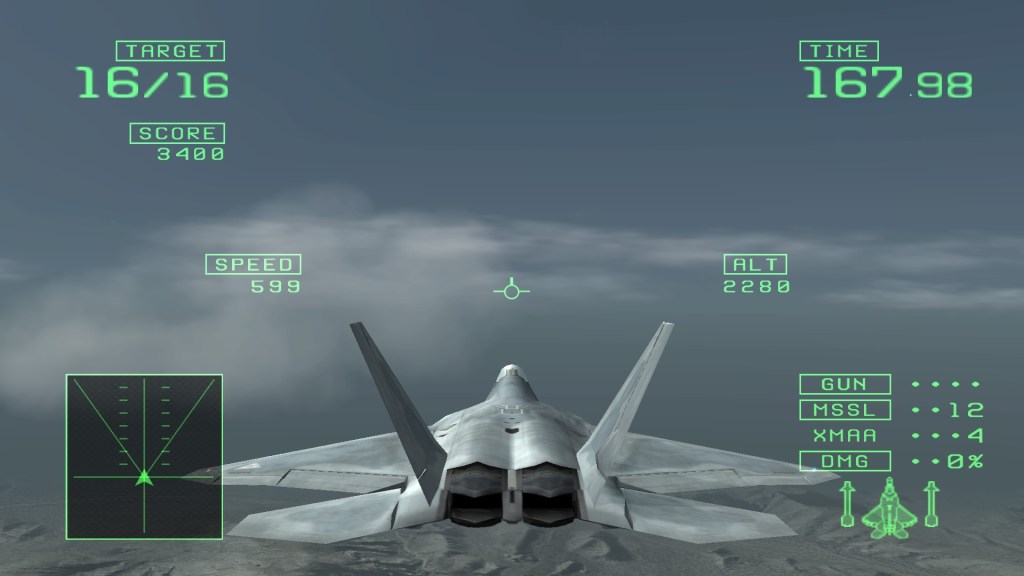
A major new addition in this game is “Arcade Mode”, a short series of levels with limited ammo, fast-paced objectives, and a choice of progression paths for an easier or harder time. The average playthrough time will be about thirty minutes depending on how many restarts are needed on later missions.
There is also only one plane available for this mode; the F-22 Raptor. This is because players are once again assuming the role of the legendary ace from the previous game, Mobius 1, and nothing else would suffice.
The story is brief, those Young Erusean Officers(TM) have refused to acknowledge the surrender to the Independent State Allied Forces (ISAF) and have reformed under the banner of “Free Erusea”. And the task is for Mobius 1 to go in alone to diffuse this risk to peace.
Yes, alone. Because as the briefing officer says, analysis has proven that Mobius 1, with the assistance of AWACS Sky Eye, has the same operating strength as an entire ISAF squadron. And the high-octane action of this mode definitely proves that.
Whilst the problems with dogfighting will lead to some missions feeling a bit unsatisfying; it almost feels appropriate here. Cleaving through targets with ease fits the legend of the Ribbon Fighter, especially in the first mission where upon seeing Mobius 1 you can see fighters turning around on the radar to run away from him.
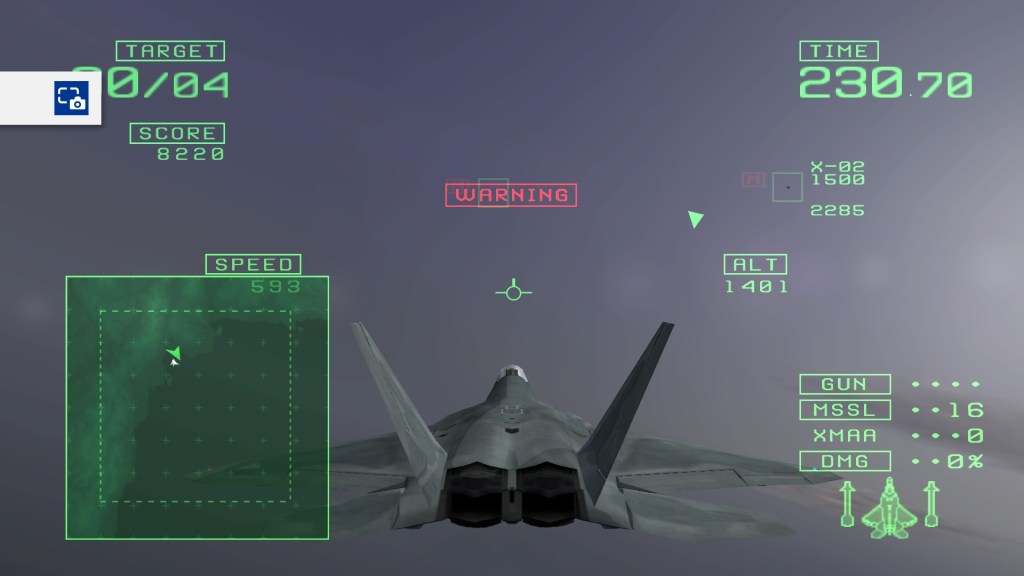
The mini-campaign culminates the same way regardless of which route is chosen by players. Assault the port facility Free Erusea are operating out of, after which Mobius 1 is ambushed by unmanned X-02 fighters, the superplane from the previous game. Is it disappointing to have such a dogfight be in this game’s mechanics? Yes. Is it nonetheless fun and cathartic? Also yes.
It also serves a purpose to the campaign mode as finishing an Arcade run will unlock the F-22 for purchase as early as Mission 5, a whole twelve missions before it should unlock, along with making the ISAF livery available for New Game+.
Use this knowledge, and power, with discretion.
A sweeping score for an unsung war
This should come as no surprise. Ace Combat 5 has a fantastic soundtrack, and whilst the quality of missions vary; the music backing them up remains absolutely beautiful and in contention for being the best soundtrack of the PS2 trilogy.
(Again, my thanks to Zaptroxix for making these extended OST videos. You are doing valuable work every day.)
Rendezvous falls into the category of “early game Ace Combat mission with music greater than it has any right to be”, think Blockade in AC4. The track starts off tense, with fast-paced strings playing with brass sounding off every so often, giving the impression that despite the mission starting off at the “end” of an operation; something is about to go down.
Percussion kicks in as the strings increase in intensity, all building towards a crescendo for the chorus to present itself as a perfect accompaniment to an early game furball against enemy fighters and bombers looking to destroy the carriers you were tasked to protect.
Tetsukazu Nakanishi, I bow to your ability to make sonar pings fit perfectly within a song.
Both Scinfaxi and Hrimfaxi (the superweapon subs in the game) share leitmotifs and composition structure in their themes, so why does Hrimfaxi win out here?
Scinfaxi projects an aura of unease, unsure as to what the true capabilities of the sub might be. It starts out slow, with string scales and the aforementioned sonar pings before transitioning into a brass section that will fade in and out as the song progresses, everything soon cutting out as all that remains are synths and sonar, anticipating what the sub may do next.
Hrimfaxi throws all pretence and preamble aside, instead choosing to open with the signature sonar ping before launching into a distorted electric guitar with the string scales taking a back seat. Whereas Scinfaxi wanted to create tension; Hrimfaxi is creating despair. Wardog are not enjoying the same tactical support they had in the last encounter, and if Hrimfaxi cannot support the Yuke frontline they will do everything in their power to go down fighting.
Admittedly though, this guitar is also probably in contention with the solo from Comona (AC4) in how hard it goes throughout the song. It very rarely breaks off aside from the shared synth and sonar section from Scinfaxi, acting as amazing boss battle music as planes strafe the large sub.
Spoilers in the next section
The war is over. With the threat of nuclear annihilation abated, the Ghosts of Razgriz can finally rest.
Or they would, if the orbital cannon carrying said nuke was not on a collision course with the Osean capital city of Oured.
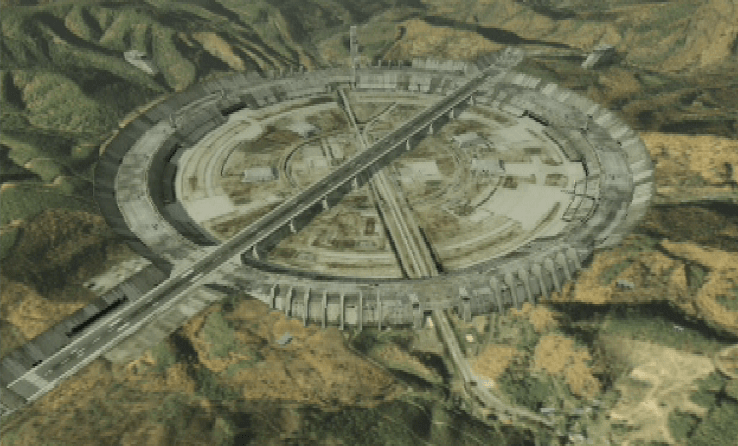
As their final sortie, the heroes take off from city highways to fly out towards the SOLG. Dispatching elite Belkan air force aces on the way and eventually reaching the massive structure as it descends to a vulnerable altitude. And then the music kicks in.
The Unsung War conveys multiple emotions. Sadness that no one will know the true story of the Ghosts until they have long since faded from memory, a sense of duty in carrying out this one last mission despite the struggles faced previously, triumph knowing a new dawn will come as they end this war for good on New Year’s Eve.
The way the song progresses reflects how a player might be feeling throughout this mission. Four pilots, officially listed as killed in action weeks ago, take on a task they can never be recognised for. A single male voice comes in, singing the legend of the Razgriz, reflecting how alone these pilots may be in their task.
But before long, a female voice joins in, and over time there are more voices added to the choir with the singing growing in intensity. The Ghosts are not alone. Everyone who has looked up to the sky and saw the black shadows zooming by are with them. They cannot be there in person, but they can add their spirit to wish them victory.
“After a period of slumber, Razgriz returns. This time, a hero.”
My only criticism? It does not have a fitting mission to go alongside it. Destroying the SOLG is impactful, but it has the structural integrity of a toilet paper loincloth and after the Belkan fighters are eliminated; there are no threats to players aside from accidentally flying into the SOLG.
…and despite my tendency to fly into slow moving objects in this game I somehow managed not to do that.
Debriefing
Ace Combat 5: The Unsung War is an amazing game and a worthy entry into the Ace Combat franchise. Whilst unnecessary mechanics and potential control issues do have some impact on the core game itself; there is still infinite replayability to be had and hours of fun awaiting players. It is definitely the weakest entry in the PS2 holy trinity by a wide margin, but when it hits its stride there is the signature Project Aces love and dedication to their craft.
If you have a PS2, it is usually quite easy to find a secondhand copy online or at trade-in shops. If you have a UK registered PSN account, buying a Digital Deluxe edition of Ace Combat 7: Skies Unknown will bag you a digital copy of AC5, which comes with enhanced resolution, better controls, and trophy support.
And believe me, when the time is right, I will be tackling the absolute beast that is Ace Combat 7. But before that, someone needs to go check if their buddy is still alive.
Personal note
Hey everyone. I’ve tried out some new techniques with this review. Rather than the usual “Plot, Gameplay, Controls” heading I’ve tried to make them a bit more entertaining and engaging whilst also relating to the content I wanted to discuss in various sections. I’ve also limited my usage of addressing the reader directly to try give this review a bit more objectivity and provide a more neutral sort of vibe.
If you have any feedback on how these things feel to you, I’d love to hear it, as coming up with different section headings was pretty fun.
And, again, I want to express thanks to my friend Clara. Without her I wouldn’t be playing Ace Combat today and would have missed out on so many amazing games. I appreciate you massively. (Follow her at @ClaraDotH on Twitter for progress on her own arcade flight game.)












 Rosalia Rambles