Welcome to the first of what will hopefully be a series on this site, Rosie’s Music Room. In these articles I am going to be looking at songs from all kinds of different media, from video games to film to TV, to potentially just doing an album review every so often.
For this inaugural edition, it is going to be an extension of my Ace Combat 4 review where picking three songs to fit into the Music section left me with a lot that I wanted to cover in much greater detail, though because of this, I will also be going into detail on some later missions so there is going to be a spoiler warning in effect for the entire article so if you don’t want to be spoiled, click away now.
If you are still with me, let us dive right into a track I mentioned during the review, but never went into detail on.
Comona
The mission which this track plays, “Shattered Skies”, was described to me by my friend Clara as one of the best missions in the game, and in her opinion, when the game really starts to pick up the pace. Comona Bay is solely a dogfight mission, no ground targets to worry about, just high stakes aerial action as you defend a crucial rocket launch facility from Erusean fighters and later, B2 stealth bombers coming to destroy the base.
And the song provides plenty of energy to keep you going throughout the mission, even a slightly subdued intro keeps pace with synth layered over an electric guitar jamming out an incredibly memorable riff. The mission itself is not that long so the backing music needed to make an impact and it certainly turns any tense tailing moments into euphoric victory when “DESTROYED” pops up on your screen.
Farbanti
Mission 17, “Siege of Farbanti” is the penultimate mission of the game which acts as a last stand for your enemy, as the war is now at their capital city with defences and tanks placed all throughout the streets with the remnants of the air force taking to the skies. One of the things I love about the Ace Combat soundtrack is that it can perfectly capture the atmosphere of a mission within a song.
And Farbanti is no exception, whilst previous ground assault missions will get your heart pumping with an aura of caution about yourself, the sweeping orchestra paired with Ace Combat’s signature guitar playing alongside it exudes the feeling of this being the final major battle of this war (bar one after this) and that ISAF is going to win, no matter what.
This is further exemplified when the mission update comes in, with AWACS telling you that five aircraft have been spotted on radar, the remaining true members of Yellow Squadron. Rather than the music changing to show that the scary Yellows have arrived, the triumphant tones of Farbanti keep playing as you engage your game-long rivals in aerial combat, proving once and for all why Erusean troops fear the ribbon in the sky.
Breaking Arrows (#1)
One of the less conventional missions in the game is called “Breaking Arrows” and the first piece of background music that plays during this level matches the atmosphere perfectly. Mobius 1 is alone in pursuing long range cruise missiles that are incoming to ISAF troop landings, performing this mission in the pitch black of night across a monolithic glacier, the only light coming from the stars and the aurora above the terrain.
With the plucking of a violin, the mission begins, and those few notes alone are able to instil fear into even the most experienced of AC veterans. Whilst AWACS told you what was coming from the darkness, the music still has the potential to create a feeling of unease about what else the Eruseans may be about to throw at you.
The second part of this mission still has good music, but that part of the track is more about giving the impression that failing to stop the final escorted cruise missile incoming would spell certain doom for the ISAF offensive.
Megalith Agnus Dei
I discussed Megalith at length during my review, but whilst I gave the name of the backing track to the level, I never explained what I like about it.
During the mission to destroy Megalith, the radio chatter that fills the top of the screen is supplied in part by a ground infiltration team who are waiting on Mobius 1 to destroy the generators powering the superweapon, and will sweep in during the ensuing blackout to open the central heat vent.
As you destroy each generator, the radio chatter becomes more dire as the team are unable to hold their position against the remaining Erusean officers, the ominous chanting of the music fully nailing it into the player that this mission is going to have a high casualty rate, but in completion, the war shall be over.
Part way through the song the instrumental lowers in volume to give way to the chorus taking centre stage, adding the ideal amount of solemnity to the situation at hand. Whilst you now lead the newly formed Mobius Squadron to victory, none of this would need to be happening if the rogue Erusean officers had surrendered along with the rest of the military.
There is honestly so much more I could say about this mission; everything about it combines to form a moving finale, the JRPG-esque final boss music only serving to propel it further into greatness.
Invincible Fleet
Mission 6, “Unsinkable Fleet”, features your first major ground assault against Erusean Forces, taking on the Aegir Fleet which boasts the mission name as its primary quality. Your job is to show them how much that claim holds up to reality.
Despite this, the mission is not presented as a glorious show of force against the Erusean navy, and the music reflects this wonderfully. Whilst you are strafing by fuel tanks and AA guns, taking out named destroyers and battleships with your LASMs, the backing track crafts an atmosphere of something about to go very wrong with deep, bass-heavy synths underlaying very light percussion.
Even when the string section kicks in there are no exuberant leitmotifs to be found, to the point where I reckon this music could have been used in an escape sequence and still fit perfectly.
Speaking of which…
Aquila
This track plays when things go very wrong at the end of Mission 5, where for the first time Mobius 1 is introduced to their main aerial rivals for the game: Yellow Squadron. Almost immediately AWACS tells you to not engage and return to base as fast as you can hold down the throttle.
It starts off quiet, with the first 15 seconds or so being comprised of bass synths and ominous bongos (Rosalia’s note: this is probably the most unintentionally funny thing I’ve written), after which harsh strings come in to properly tell you that if you do not make it back to the return line before Yellow Squadron catch up to you, you are almost certainly getting taken out of the sky.
The reason this has impact is the fact that up until now, Mission Update has not been used for anything terrifying. Its first usage is to tell you about the existence of the return line and how to return to base; in this instance it puts your knowledge of this mechanic to the test as you are faced with something you are very clearly outclassed by.
End of show
Thanks for reading. It has been incredibly fun to talk about some of the songs I didn’t get a chance to and to put my writing skills to the test by reviewing something completely out of my comfort zone, and hopefully I’ll get better at it over time.
Once again, credit and my thanks to Zaptroxix for these extended OST videos, they both helped me properly formulate my opinions on the tracks and listen out for the finer details in them.
Game will you give me a goddamn break to actually finish speaking?!
<< Incoming from Stonehenge on radar. All aircraft drop below 2000ft. >>
…I guess not.
Introduction
Ace Combat: Distant Thunder (known as Ace Combat 04: Shattered Skies everywhere else except Europe) is a combat-oriented flight simulator game developed by Namco released in 2001 and was the first game in the franchise to release on the PS2.
Being honest, these sort of games never appeared on my radar (heh) up until very recently. My friend Clara is currently developing her own flight simulator game as a love letter to the Ace Combat franchise, and as part of my assistance on it; it was considered “research” to play through an Ace Combat game. I played a few missions on AC7: Skies Unknown before borrowing her copy of Distant Thunder.
And well, it is an understatement to say I’m hooked right now, the tense arcade-style gameplay, the tight flight controls and the downright epic soundtrack all combined into a heart-pumping, blood-pressure-raising, bandit-tailing experience.
Plot
The lead up to the game’s main story is an asteroid colliding with Earth causing massive damage. The nations on the fictional continent of Usea had developed a defence platform called “Stonehenge”, an array of anti-asteroid railguns to destroy fragments of falling asteroid but it was not enough to stop Erusea, one of the largest nations on Usea, to suffer massive economic damage.
This was highlighted when Erusea refused to accept their quota of civilian refugees from the disaster, leading to a boycott of Erusean exports from other nations, further damaging the economy.
And when you have a struggling economy, you go the route of the US government, and go to war to solve your problems!
Erusea launches a surprise invasion of the neutral town of San Salvacion and then worked to modify Stonehenge from “anti-asteroid defence system” to “what happens if you put AA guns on unreasonable amounts of steroids”. War broke out between Erusea and the other nations, the latter forming the Independent State Allied Forces (ISAF) to work collaboratively against the Erusean threat.
For some real numbers, Stonehenge has a range of approximately 1.3 UKs
However, the modifications to Stonehenge proved to be a deadly asset against ISAF, because anti-air guns with a range of 1200km (or, as shown in the picture, most of the Usean mainland) tend to provide a certain measure of air superiority.
Where the game begins is almost a first-and-last line of defence from ISAF who have retreated to the island of North Point to co-ordinate the counter offensive against the nigh-unstoppable Erusean campaign. You are placed into the cockpit of Mobius 1, who in addition to your fellow pilots, work to repel attacks on the base and then work to turn the tide of the war.
Story is presented in one of three ways:
Mission briefing screens which explain the scenario and what resistance is expected, along with showing a map of the continent which updates each mission with how the war is going
Mid-mission radio chatter and events, which can range from bombers incoming to your location or Stonehenge getting a lock on your position
Cutscenes told through watercolour painted scenes, following a young boy in the town of San Salvacion as he interacts with the Erusean occupiers
What I particularly enjoy about the plot in Distant Thunder is how it invoked various emotions which could change on a per mission basis, and sometimes even changing the tone and atmosphere of a mission with just a simple update.
One of the best early examples of this, and what forms a great prologue to one of the most intense missions of the game, is Mission 7: “Deep Strike”.
The initial objective is a straightforward mission type that the player will have already seen a few times before, taking out a set of targets with additional optional targets to up your score for a better rank. Then, you hear the ominous “bleeps” of mission update, two missions after the game had trained you to respond to this sound with “oh no” due to the incoming Yellow Squadron.
As a quick informer, Yellow Squadron form your sort of rivals through some missions. The first mission they turn up you are told not to engage because it would be too dangerous, and as the game progresses onwards, you slowly become more able to engage with the Squadron until finally taking on over ten fighters in a single mission.
With the bleeps in Deep Strike though, the game wrenches the “oh no” meter up to eleven with the information that Stonehenge is now targeting your location, and you need to get the hell out of there ASAP. The rest of the mission is accompanied by tense escape music as AWACS tells you to drop into the ravine to avoid getting hit.
And as someone who got hit by a railgun round on their escape, the game does not pull any punches. Going above 2000ft in altitude when a Stonehenge impact is incoming is a death sentence as it will instantly destroy your plane, forcing a mission restart.
Afterwards, comes Mission 8: Shattered Skies. And I will just let the background music for that stage set the scene.
Comona Bay is the first full-scale dogfight of the game, with the main objective being to destroy as many enemies as possible and is also the first time the player can engage with Yellow Squadron in the game. Loadout is key here as standard issue missiles usually will not be fast enough to nail a Yellow even with the most perfect of alignments (and I am bad at aiming, it took until Mission 12 to finally nail a Yellow).
Gameplay
Distant Thunder presents you with a campaign of eighteen missions to play through with a variety of objectives to make your way through. Quite a few missions of the game take the form of a open area with the objective of “Destroy as much as possible within the time limit”, ranging from destroying grounded aircraft on the runway so they can’t launch an attack on your base, to sinking a “unsinkable” fleet whilst it rests at harbour.
A few missions will mix things up with special objectives or special conditions to consider whilst playing through. This can include having to work without radar either temporarily or throughout the entire mission, having a civilian flight to escort or being the lone fighter to take down quick moving cruise missiles.
During each mission, usually to the south of the player’s position, there is a dotted line on the map referred to as the “Return Line”. Turning back and flying towards this line allows you to return to an airbase/carrier to refuel, repair, and restock your weapon loadout. Sometimes a tactical retreat can be beneficial to ensure victory in battle.
The game offers four difficultly levels initially: Very Easy, Easy, Normal, and Hard, with a fifth option of “Expert” being unlocked on completion of a Hard campaign, and a sixth option of “Ace” being unlocked on completion of an Expert campaign. I initially started my playthrough on Easy due to being a newcomer to the series, but after a few missions I felt comfortable enough to be able make a new save on Normal and play from there.
Your plane has three main armaments:
A rapid-fire main cannon with high ammunition, useful for strafing low durability targets and softening up enemy bandits if you get a good angle
A set of locking, homing missiles that are predominantly used for taking out bandits in two hits or demolishing high value ground targets
A special weapon, with each plane having a selection of specials to choose from depending on their role
Special weapons are useful for determining your strategy during a mission, as they will either work on only ground or air targets. They range from (but are not limited to) unguided bombs of multiple variants (cluster and napalm included), multi-locking sets of missiles useful for “fire and forget” tactics or longer range missiles useful for taking out potential AA threats from a safe distance.
In the beginning of the game though, you only have one plane and one special weapon unlocked, an F-4 with a set of unguided bombs. As you play through missions and earn credits you can add new aircraft to your arsenal along with acquiring new armaments for them. Personal favourites of mine for each include the following:
Why is this a screenshot from Word? Blame the table block.
LASM
XAGM
Throughout the game you can sell aircraft or weapons you have obtained to be able to afford new ones, and this can be a tactically sound decision if it offers you a distinct advantage in upcoming missions. It is impossible to purchase all aircraft and weapons on a first run through, even with destroying all potential targets and getting S-ranks on missions.
This is where the New Game Plus feature comes into play, allowing you to return to the first mission of the game with your credits, aircraft and special weapons all carrying over. As you start a carried-over save you gain the ability to adjust the difficulty, so if you want the challenge of harder difficulties with some cushioning from having your top-of-the-range gear, the option is there.
It is also an incredibly cathartic feeling to go through the early missions of the game with your endgame loadouts. Smashing through the early mission dogfights with superior firepower is a power trip and a half and I love it.
Controls
As the focus of the game is being a flight simulator, the controls are set up accordingly. You can turn using L2 and R2 but due to these being yaw movements; they are not exactly idea for turning quickly and instead should be used for minor course correction.
To get true freedom of movement in the skies, your best bet is to pitch and roll across the clouds, as mastering these manoeuvres on the left analog stick will allow for all sorts of advanced moves such as quick turning to quickly pursue enemy aircraft or being able to expertly evade incoming missiles.
R1 and L1 control your throttle and brake, respectively. Knowing how and when to use your brake is a massive boon to getting the plane to move in the direction you want it to, as it is easier to turn in the air when you’re slowing you. There are some missions as well when braking will stop you from crashing into the scenery when flying through tight corridors.
Once you have control over the plane refined though, there is not a massive amount of complexity in the game’s control scheme. Press X to fire your main cannon, Circle to fire either your missiles or special weapon, Triangle to change current target (essential for locking onto targets in quick succession) and Square to change how much your minimap is showing.
Select allows you to swap between missiles or special weapons, and the right analog stick rotates the camera around so you can evaluate your surrounding to determine your next move or look below you to see when you need to drop your bombs.
Finally, with down on the D-Pad, you can switch from a first-person perspective in the cockpit to playing in third-person. I admittedly never played a mission in first-person mode, instead preferring the freedom and special awareness that comes with knowing your surroundings. Though I suspect once Clara has her way with showing me Ace Combat VR, I will probably gain a finer appreciation for this viewpoint.
Music
(Foreword: I have to give a shout out to Zaptroxix here. They’re a Youtuber who posts extended versions of the Ace Combat soundtracks, which you are enjoying here. Give his channel a look for other songs and for Ace Combat gameplay.)
Alright, going to say this now, from the start of this section onwards until you see a large image of some Labrador Retriever puppies, there is a spoiler warning in effect as I will be reviewing later sections of the game as my talking points here.
Spoilers now in effect
Still with me? Awesome.
This allows me to gush about how this is now one of my favourite video game soundtracks ever and is contention for being my favourite soundtrack of the PS2.
Being a Namco game there is no surprise that the soundtrack would not be out of place in a JRPG, combining:
Orchestral scores
Hard rock guitars
Synthesiser beats
And even Latin choral chanting
Background tracks in levels are perfectly matched to the scenario that is going on at the time, accentuating the existing atmosphere perfectly. I have already shown off the high energy of the high stakes Comona Bay dogfight but a lot of my favourite tracks (unsurprisingly) are found past the halfway point of the game.
“Stonehenge” is the theme of the eponymous superweapon, what was once an asteroid defence platform has now been repurposed into an anti-air platform without rival. Your first proper introduction to this weapon is at the end of mission 7, where this theme kicks in and perfectly conveys the fact that if you do not get the hell out of there, you are going to die.
Close to the end of the game you conduct a night raid on the town of San Salvacion, the one that was occupied by Erusean forces in the beginning of the game, accompanied by a song which shares the name of the mission: “Emancipation”. Whilst there are many songs of the soundtrack that evoke the feeling of “cautious triumph” in me, this is the song that does it the most for me.
As you fly above the city, tearing into Erusean forces as your comms pick up a radio broadcast from the city detailing the battle raging ahead, the music perfectly compliments the feeling of victory being marred by the fact that this is you truly taking the fight to the enemy by reclaiming both a tactical and symbolic area of importance.
Finally, it’d be remiss to discuss an Ace Combat game without talking about the song that every player will hear, and the majority will remember for a long time, just waiting to awaken the nostalgia neurons when it is heard for the first time in a long time… the briefing music.
A funky synthesised beat accompanying the screen outlining what is required of you for the next mission which continues to play as you organise your aircraft and weapons ready for your sortie.
And being completely honest; it was incredibly difficult picking just these tracks to highlight and focus on. There is so many I want to discuss that in all likelihood there is going to be an “Ace Combat: Distant Thunder Soundtrack Review” article on this website at some point in the future.
However, I have one track left that I want to discuss, but its magnitude deserves its own segment.
Megalith
Close to the end of the game, ISAF receives information about a new superweapon being developed by the Eruseans under the codename of “Megalith”, and up until the final mission of the game where you actually go to fight it, there is no hints about what it may be, you’re kept in the dark entirely until the cutscene introducing it at the start of the mission plays.
The track that plays throughout this mission is called “Megalith -Agnus Dei-“ (Lamb of God). It is a sweeping orchestral piece accompanied by Latin chanting that signals that this is the final mission, both the last stand of a now eradicated Erusean military and the chance for Mobius 1 to cement his name in history forever.
Megalith is a massive bunker built into a small island, the facility itself encompassing several hundred square kilometres of the land mass, ICBM silos lining access tunnels to the insides of the facility as red targeting lasers painted asteroid fragments to be shot down.
These fragments help make for an almost apocalyptic backdrop to the mission as they rain down through the dark clouds as Mobius Squadron works to take down the last gasp of what Yellow Squadron has to offer.
Before, all your targets were clearly visible, with only minor difficulties in reaching them. In these final moments however, all your skill and nerve is required as you must fly through Megalith’s access tunnels to be able to destroy the generators that power the facility, giving ISAF ground forces enough time to open one of Megalith’s main doors to allow Mobius 1 to fly into the facility and destroy the largest ICBM it has to offer, pulling up through the silo hatch as explosions wreck what remains of the superweapon.
This is easily the mission I struggled on the most, I died a few times to getting flustered at Yellow Squadron, I died a few times struggling to get my flight paths into the access tunnels. But the setting of the level was immaculate, and I felt a burning drive in my heart to see this fight through to the end.
It was worth it, because I can now comfortably say that Megalith is quite possibly my favourite final boss on the PS2.
Spoilers Ended – Have some puppies!
Photo by Chevanon Photography, pexels.com
Conclusion
Through one playthrough alone, I am now hooked on Ace Combat 4 and am incredibly enthusiastic to continue playing other entries in the franchise. The fast-paced gameplay gave me chills and feelings that have only ever surfaced whilst playing the most intense of roguelike games, with my drive to improve my skills not dying down yet.
If you have a PS2 knocking around, I seriously recommend picking this game up, you can probably find a copy online cheap. And then you will get to experience the sheer panic, exhilaration, and relief of going through this experience.
Clara, thank you again for showing me this franchise and letting me borrow the game. It has honestly been kind of life changing.
Throughout its 20+ year history, the Pokémon franchise has enjoyed several spinoff games with each new generation. Ranging from photography in Pokémon Snap, to Tactical RPG gameplay in Pokémon Conquest, even letting you battle Pokémon in 3D – long before the main series games made the jump – in Pokémon Stadium and Battle Revolution.
One section of their spinoff games made their mark on me: Pokémon Mystery Dungeon.
Named and inspired by the Mystery Dungeon series, the games follow a turn-based structure where player characters and enemies move on a grid, a style seen in several roguelike games throughout history. Each “Mystery Dungeon” has a set number of floors, but each of these floors will be procedurally generated for both layout and hazards, meaning multiple runs of the same dungeon won’t get stale.
The game in focus today will be the “Explorers of Sky” title for the Nintendo DS, being my favourite entry in the series for several reasons.
A brief plot synopsis follows normal series conventions, you are a human who has been mysteriously turned into a Pokémon (chosen by the nature determined by a pre-opening personality test). You’re washed up on a beach where you’re found by your soon-to-be partner Pokémon, in search of a relic which is important to them.
After finding this relic, your partner suggests joining the local explorer’s guild. This begins your journey in the Pokémon world, as you try to uncover how you came to be in this situation and soon discover a plot that could bring about the end of the world.
Gameplay basics have already been covered, and the game follows standard Pokémon conventions. You have a level, you have Hit Points (HP), you have moves with a limited number of Power Points (PP), you gain experience by defeating other Pokémon.
What differs is being able to gather and use items yourself in these dungeons, ranging from Berries to heal you and your partner Pokémon; various throwing objects to deal with enemies; “orbs” which can have potent effects for the dungeon floor you’re currently on; and food.
In one of the game’s more dividing mechanics, the player has a belly meter, and the lower the belly meter is, the less efficient your self-healing is. If it depletes completely, you start to take damage until you eat a food item. Whilst this can cause annoyance in the larger dungeons, it’s not a massive undertaking to manage, especially if you come in prepared and plan item usage.
The amount of content on offer in the game is monumental. Throughout the game you can take on side missions from a bounty board within the guildhall, these are all within dungeons you have already cleared the story section for and can include delivering an item to someone in the dungeon, rescuing a lost Pokémon, or escorting someone through the dungeon to a specific floor.
This also extends to an extremely well designed postgame. Not only do you have a substantial bit of plot to finish up; more dungeons are unlocked as you go, some of these carrying a pre-entry condition to make the experience harder.
All of these combine to form an extremely well-rounded dungeon crawling RPG, one that you can sink countless hours into on the go due to the portable nature of the DS.
However, this article is twofold, because I’ve covered what makes me so excited about the gameplay, and in my time with it, I sunk about 300 hours into the game, it really did keep me playing.
For the next section I’m going add a huge Spoilers Ahead to whatever I say, as I’m going to be covering a good section of the end of the main story…
Spoilers Ahead (you’ve had two warnings now)
Relax looking at the ocean before continuing on
Still here? Awesome.
As the plot progresses, you go through several twists and a villain change, until you discover that the way to avert an apocalyptic scenario is to replace the Time Gears (plot important items) at Temporal Tower, where the legendary Pokemon Dialga has reverted to his Primal state due to the destabilisation of time.
One companion sacrifices themselves to ensure you can complete your quest, leaving just you and your partner. As it goes with the series near the end, you, as both player and Pokemon discover that once the world is saved, you are to disappear from this world having fulfilled your purpose. The player character decides to keep this from the partner, focusing instead on the impending dungeon.
An imposing structure and a storm of unknown energy swirling above are what greets the pair. This is the point of no-return, and the dungeon music reflects this. A foreboding piece with a mix of light and heavy percussion, but with slight undertones of solemnity as the track progresses.
After several floors, you reach Temporal Pinnacle. A small shrine with carved indentations for the Time Gears await you, but lightning knocks you back as you are confronted by Primal Dialga. Enraged and beyond reasoning; he’ll only back down once you defeat him.
Following a beautifully scored fight, you rush back to the shrine and place the time gears in. It seems as if you were both too late as the storm continues to rage, knocking you unconscious.
You come to and see that your partner is safe as you are approached by Dialga, showing you images of the now-saved world with the assurance that the world will slowly return to how it was.
Leaving the now saved tower, your player character acknowledges that their body feels heavy, and realises that this is the lead up to their disappearance. As the yellow lights begin to circle, you finally open up to your partner about your fate. Knowing your time is limited, you focus on thanking them for going on adventures with you, telling them they must live their life, tell the story of what happened and that even as you disappear; you will never forget the memories forged together.
Your partner goes off, and tells the story of what happened, whenever they can. Eventually they return to the beach where they first met you, reminiscing on past adventures, to the point where the emotions become too much and they break down crying.
Such an intense sorrow is felt even by Dialga, who, as thanks for preventing the world’s demise, grants the partner one gift.
You.
Partner and player get to continue their adventures once more.
This ending hits me particularly hard, even on subsequent playthroughs. Which you’d think is strange, I know it’s coming, so why do I always shed a few tears when it arrives?
Well, there’s a lot of myself I see in the interactions between player and partner. The partner frequently says that the player makes them stronger, gives them the ability to feel brave, let’s them achieve things that they didn’t think possible.
And its bonds as strong as those that hurt the most to lose. Sometimes you don’t get a final goodbye like in the game, a lot of the time, they’ll just fade.
But the memories will remain. The good, the bad, the painful.
And you carry them with you, to nurture the bonds you have today.
Ratchet and Clank, a re-imagining of the original 2002 game, was released in 2016 coinciding with a tie-in film by Rainmaker Studios. And for the purposes of this review, yes, I am going to be specifically using the term “re-imagining” to describe this game because honestly, there is not enough of the old game intact to consider this a remake.
I definitely enjoyed my time playing through this game, it has got the staple action platformer gameplay that I’ve come to expect from the franchise, with quality platforming sections, side tasks on various planets, and hidden collectibles placed within levels.
But… there is no soul. Any of the slapstick comedy of previous entries has been removed in favour of a persistent and unfunny narrator, no interactions with characters who will be here for one world and then gone the next, and most egregiously, there is no real interpersonal conflict between any of the characters.
Whilst the original Ratchet and Clank had a story reminiscent of traditional buddy cop films, the interactions between the two characters felt real and there was a distinct arc in the development of their relationship. Ratchet may have had a bit of an abrasive personality, but this contributed to the conflicts experienced by the duo.
Story and Characters
As opposed to the premise of “individual wants to escape from planet they’ve been stuck on for years”; the re-imagining begins with Ratchet going to try outs for the Galactic Rangers, because he’s always wanted to be a hero.
The Rangers this time are not green robots with entertaining dialogue and interactions, they are instead a group of characters with minimal introduction and development throughout the game:
Cora Veralux, youngest ranger to ever be recruited and native of Novalis (that is most of her development by the way, she gets one moody scene apart from this)
Brax Lectrus, a brash ranger who prefers the all guns blazing approach as opposed to thinking out methodical plans (no development whatsoever and no missions with him as support)
Elaris, the technical support and strategist of the rangers, who aside from making one plan at the end, is never really seen, and is only heard briefly in cutscenes/mission dialogue
They are all lead by the greatest superhero the galaxy has ever known…
Captain Qwark.
And no, I am not giving him an over the top intro, because frankly this version of Qwark is a toothless parody of a character who was already supposed to be satirical. The main point of his character is that he is a superhero who likes to take credit for the work that other people do, driven by vanity and greed.
In the confused identity this game has, there is not really any clear characterisation for him and plot reveals involving him are incredibly lazy. He is jealous because Ratchet comes on the scene and starts stealing his thunder… and none of this is foreshadowed or explained up until the end of the game.
Even the villains are disappointing this time around, which is incredibly disheartening to say considering this game both has the character and original voice talent of Doctor Nefarious (Armin Shimerman). Nefarious is supposed to be over-the-top, with ridiculous lines and crazy character moments…
…and aside from a few cutscenes and some dialogue on a planet, the doctor is never heard from until the end of the game, where he suddenly fulfils the role of primary antagonist and even then, aside from a single throwaway line that gave me a chuckle, there isn’t anything redeeming about this development.
And Drek.
Chairman Drek.
The evil ultra-capitalist from the first game, with a deep, guttural, intimidating voice that made any cutscene imposing despite his short stature has been completely ruined. There is no mystery or motivation to his plans this time round, what was once an impactful reveal at the end of the original is now relegated to a brief gag in one of the first cutscenes in the game. Aside from barking orders over comms and making a few threats to his military; there is not really anything there to show a player he means business.
Finally, the dynamic duo themselves, Ratchet and Clank barely have any meaningful interactions during cutscenes. Before cutscenes involving talking to NPCs were dynamic, you could see the two emoting, having body language sell what the current scenario means to either of them, and most importantly, they’d actually look at each other and have a proper conversation about the events that just transpired. Now it boils down to a character saying, “It would be a good idea to check out Planet X!” and the other going “Yeah, fine by me.”
Like I said before, there is no interpersonal conflict, and even when the game presents the potential of conflict, it is resolved as quickly as it appears.
Weapons
Coming in with a modest 14 weapons the re-imagined game does not have the largest roster of any game, but it comes close to matching the 15 weapons found in the original game. Despite this though only two weapons from the original are updated for this game, the rest are either originals or taken from other entries into the series.
Whilst the weapons are all functioning and fun to use, it would’ve been cool to see what the Blaster as a modern-style Ratchet and Clank weapon would be like, or seen the potential of the PS4 be put to good use by re-imagining what the iconic Visibomb Gun could do.
This does not necessarily mean any of the new designs are bad per say, one of my favourite weapons throughout the game was a completely original weapon, the Proton Drum. An area-of-effect weapon that launches out a large orb in a parabolic arc that is then deployed and sends shockwaves to nearby enemies, decimating crowds and softening up larger targets for finishing blows. Its upgrade incorporates bolts of lightning that will shock specific enemies for even more damage.
The other new design in the game is a weapon known as the Pixelizer, the obligatory shotgun style weapon found in most games starting in 2 with the Blitz Gun. In this iteration enemies hit by the Pixelizer have a very amusing filter placed over their model which makes them looks incredibly low fidelity, which then causes them to shatter into cube shaped pixels upon death.
Although the concept of the weapon is fun enough, and it is certainly massively damaging in close proximity, but for me it also lacked the bite that shotgun weapons need to have, there is no loud BANG followed by a click, there are only pixelized bleeps and bloops.
It’s a bit hard to show the Buzz Blades off, just imagine all those red lines amplified
Out of all the designs to return from another game, the one I ended up enjoying the most were the Buzz Blades. Fulfilling a similar role to the Disc Blade Gun from the third game, the main purpose of this gun is fast firing ricocheting projectiles that can bounce through crowds and tear apart larger enemies with some sustained fire making it a staple weapon in my arsenal right up until the end.
However, none of these weapons compare to the sheer joy that I encountered when I got to fire this game’s iteration of the R.Y.N.O. For context, I have currently not finished any of the PS3 Ratchet games, I am currently playing Tools of Destruction when I visit a friend, but I have barely scratched the surface of that game.
This meant that when I first got the R.Y.N.O, I saw the absolutely massive initial ammo count of 1000, and wondered “Why the hell does it need that much?”
Then I held down the trigger.
And everything made sense, because this is the first time I’ve had the experience of the R.Y.N.O playing an overture for me as I fire. And it gave me happy fuzzy feels I did not think were possible after playing through the story of this game. It is also immensely powerful, making enemies and bosses crumple before the unstoppable barrage of high explosive missiles, being able to take out the final boss in just over a minute.
With the R.Y.N.O in tow, the only one they fear is you.
Gameplay
Before I move onto discussing new and returning gameplay, please join me in a moment of silence for the levels lost to this re-imagined world:
Planet Eudora, the logging site for Drek’s new planet
Planet Umbris, a fantastic gauntlet with challenging mechanics
Planet Orxon, the actual Blarg homeworld that Drek polluted
Planet Hoven, a high stakes race to destroy a planet busting bomb
Gemlik Base, the best level in the original game, atmospheric, gorgeous, and providing closure on a game long arc
Planet Oltanis, a Ratchet only challenge due to Clank being vulnerable to the raging storm around you
Planet Quartu (the good one), a two-part planet home to the origin of Giant Clank and an incredibly moving scene with Clank
Drek’s Fleet, the penultimate level which features both stealth and action segments as you jump between ships
The return to Veldin, a terrifying chase to save your homeworld
Gone, but never forgotten you beautiful level
For the levels that remain, they are mostly intact. A lot of the level design for returning planets is lifted straight from the original game, with tweaks in some areas and some getting complete overhauls like Planet Gaspar. Quartu is completely redone from the ground up to tie in with the new lore and the Deplanetizer is now its own self-contained level.
In line with the source material, Gold Bolts are a hidden collectible, scattered throughout levels in locations old and new. Unlike the source material however, these are not used for unlocking superior Golden Weapons upon completion of the game/finding the hidden area in Gemlik base.
They are instead used for unlocking things in the “Extras” menu such as screen filters, head, armour, and ship styles, concept art galleries and cheats, including Infinite Ammo and Invincibility at 27 and 28 bolts respectively. Additionally they are used to unlock more hangars in the “Insomniac Museum”, which, whilst a cute addition in the style of a museum to the franchise; it doesn’t have the same charm as the in-depth developer comments older museums had.
A new collectible to this game are the “Holocards”, collectible cards that can be dropped by enemies and found in card packs around the galaxy. Holocard sets come in threes and completing a set will reward you with a passive income bonus, a buff to your Omniwrench damage, or the ability to unlock the “Omega” versions of weapons whilst in Challenge Mode. Holocards are also the way the R.Y.N.O is obtained in this game, as you need all nine R.Y.N.O holocards to have the full plans to construct it.
The latter of these is at least enjoyable, as all the cards are either hidden in obscure locations or as reward for completing a difficult challenge, and since the last one isn’t obtainable right before the end of the game you don’t become all powerful too early on.
My one gripe with holocards is that once you have completed all the sets; there is not really any use for the duplicate cards that continue to drop and all the packs that respawn per playthrough, no way to trade them in for something else.
A similar complaint can be said for the other currency of the game, Raritanium. Found in hidden deposits throughout levels and sometimes dropped by enemies, the glowing rocks are used in a returning mechanic from the Future series, being used to upgrade your weapons. Each weapon has its own map of hex tiles that unlock a certain buff when purchased with raritanium, including “secret upgrades” that are only unlocked when all hex tiles surrounding them are bought.
What is cute is that each upgrade map when completed forms a little image relating to the weapon itself, like a flame for the Pyrocitor, a buzz blade for the Buzz Blades, and an ominous skull-and-crossbones for the R.Y.N.O. Though as mentioned, once you have completed all upgrade maps for all weapons, the utility of raritanium takes a complete nosedive, leaving you with a stockpile in the hundreds as you obtain even more from blasting enemies.
All weapons, as is franchise staple, can be upgraded through use going through 5 levels and turning into a more powerful form upon reaching that 5th level. In this game only damage/duration is upgraded upon level up, with more upgrade hexes unlocking to enhance ammo, rate of fire and additional effects to be chosen at the player’s leisure.
This next complaint is a bit more personal to me, especially as someone who made an effort to mention this in every previous Ratchet and Clank review but…
Why does this game run at 30fps? It baffles me completely, every previous game through the PS2 and PS3 ran at 60fps with dips in the only most exceptional of circumstances. I managed to make this game start to chug when just using the Pyrocitor on a crowd of enemies, I would rather see a downgrade on the fancy new graphics to get a solid, stable, 60fps. (Reference: played on an original PS4. Have not conducted framerate tests on PS4 Pro hardware)
Clank levels returned, but only in his small on foot form as the locations where Giant Clank would have been used have been cut from the game. The Gadgebot variety has been changed from the original game with no options to use them for attacking or entering gates.
Instead now Clank can take any Gadgebot and reprogram it to being one of three options:
Springbot, allowing Clank to jump to ledges he could not normally reach
Powerbot, provide electricity to machinery to open the path
Bridgebot, extend a bridge across hazardous pits
Using these bots there were quite a few clever scenarios and puzzles during these Clank segments, including one near the end of the game where I was properly stuck for a moment before figuring it out.
The time for the trophy is under 1:35…
Hard work and determination (and loud swearing) paid off in the end
Returning from the original game are the hoverboard races on Rilgar and Kaleebo III. Both planets now have three levels of race to compete in, Bronze, Silver, and Gold. The difference between these tends to be the number of explosive crates placed on the track, throughout my multiple attempts trying to attain the trophies for these tracks, I did not notice any improvements to the AI.
New to this game are that you do not need an item to perform tricks to earn boosts, this ability is unlocked right out the gate. And believe me, you will need to use this ability religiously in the time trial trophies in order to keep a good amount of boost ongoing.
Most gadgets return from the original game, minus the Sonic Summoner from winning the Rilgar hoverboard race, the Metal Detector from destroying the Blarg Warships on Batalia, and the PDA purchased on Oltanis.
The Swingshot is now unlocked from the beginning of the game, and functions in the exact same way as in all entries, allowing you to swing from and pull yourself to grapple points
The Hydrodisplacer retains its function of allowing you to fill/drain areas to proceed
The Hologuise now takes the form of Captain Qwark to infiltrate the Deplanetizer as opposed to Quartu
Magneboots and Grind Boots return for traversing ionised surfaces and grind rails respectively
And Clank can obtain all his pack upgrades, with the Power Slam from the Thruster Pack being replaced with the ability to turn heavier bolt cranks
In addition to all these, the Trespasser also makes it return in a slightly upgraded form. After reaching a certain point of progression in game you gain the ability to toggle trespasser rings on and off, a feature which is essential in some puzzles but also gives you the ability to declutter the interface and look at a puzzle in a different way.
However, unless you are bothered about getting the trophy for completing all Trespasser puzzles… the gadget is essentially moot, as now by pressing Square you can have the puzzle autocomplete itself for the penalty of not being able to earn the trophy and missing out on the bolts completing the puzzle normally would get.
New to the game is the XK-81 Jetpack obtained on Planet Gaspar. Used in a handful of specifically locations, the jetpack plays mechanically similar to the Levitator in Ratchet and Clank 2, having fuel that you use to propel yourself upwards. In any jetpack enabled level you essentially now have sandbox levels of movement around the level, best shown in the area where it is obtained with wide open spaces and distant landmarks to discover.
Controls
As much as I take issue with various points of the game, the one area I cannot really fault anything are the controls. All aspects of the game control perfectly in my opinion, Ratchet’s movement is responsive, strafing and jumping side to side during combat still feels as great all these years later, and the Hydro Pack is even unlocked from the beginning to make swimming segments easier (partially because the planet where you would normally obtain it got cut).
Aside from the previously mentioned feature of turning more difficult bolt cranks, the Heli-Pack and Thruster Pack function closer to how they work in later Ratchet and Clank games, it being closer to a personal preference than an edge during gameplay. As usual, once unlocked, I stayed with the Thruster Pack. I can never betray my roots.
Returning from the original game are a handful of ship combat levels, with each usually introducing a gimmick to add diversity to them. This can be using a magnetic grapple on your ship to launch warbots into a warship, using newly acquired rockets to damage large vessels that are immune to your machine gun, or being stuck in a tractor beam with your movement stick now controlling your reticle to shoot down homing missiles.
Aside from a few issues when it comes to turning around with the ship in tight spaces, I encountered no major issues with the controls here, and none of the gimmicks were too high of a difficulty spike, introducing the right amount of additional challenge into each encounter.
Music
This is a section I haven’t really covered in any of my previous Ratchet and Clank reviews, but as this game is specifically being based off a game with an absolutely banging and iconic soundtrack, I need to use the opportunity presented to me to say the music in this re-imagined version is not only considerably worse than the source material, it is bland in isolation.
Iconic tracks such as Metropolis and Blackwater City have been dropped in favour of generic orchestral scores, sometimes overlaid with harsh electronic beats during more intense combat segments. There is no identity or impact to the music, and that is honestly a bit sad, considering the potential for remixes or remastered music to set the nostalgia neurons throbbing.
Conclusion
Ratchet and Clank (PS4) is a solid action platformer, with great weapons, fast-paced gameplay, and an overall enjoyable experience in isolation. However, when compared to what came before it, it is a hollow shell trying to find an identity in between being a re-imagining of the first game, trying to tie into a film, and trying to make you care about the characters within the game without any of the development that went into previous entries.
In all honesty the film is probably what lead to this identity crisis the game seems to have, in place of cutscenes sometimes there are direct sequences ripped straight from the film, except that these scenes sometimes don’t have the context of what happened previously in the film, so events and actions can sometimes come out of the blue completely.
It would have been awesome to see what Insomniac could’ve done if the brief was just “remake the first game for PS4, add in content that may have been cut, expand on old weapons in the new upgradeable style”. Instead what we got almost reeks of a soulless, corporate cash-in for a film that barely got off the ground (which, yes, I will be discussing at some point).
This review was honestly painful to write in some segments, because for all my criticisms and gripes, I genuinely enjoyed playing through this game. And if it were not for a slightly annoying trophy I am still trying to get, I have got the Platinum trophy for this game, I did everything on offer.
Because it is a Ratchet and Clank game, a franchise incredibly dear to my heart, and it is just sad to see what “re-imagining” the game did to the heart that was in the original. From the footage I have seen so far though, Rifts Apart seems to be a return to form, all we can do is wait and see.
If you are a fan of the franchise and you can find this game cheap enough, I kind of do recommend it as a one-off experience. You will still find some joy to be had in some segments and weapons.
But for me, the ultimate test is if I want to go back to replay this game on a fresh save like I’ve done with so many games previous… and sadly, I don’t think I’ll be revisiting this one for a while yet.
Back in August 2017, I backed this product on Kickstarter as an early birthday present, under the impression it would’ve come in time for December that same year. A handful of delays with design and printing eventually led the EU fulfilment to happen this September.
Was it worth the wait?
Quick recap
I’ve reviewed the original Star Realms on GeekOut before, so have a read here for the game’s mechanics in depth.
In short, you get a starting deck of not-great cards, you use those not-great cards to buy new cards for your deck, with the goal of eventually cycling out the not-great cards so all you draw is straight gas.
The game itself
Since the basics of the game have been covered in the past, I’ll use this space to talk about how the cards in this box compare to the previous two sets.
A new mechanic has been introduced in the form of “Double Ally Abilities”. Previously, faction synergy only required another card of the same colour to activate, however in a self-explanatory way, these new abilities require two other cards of the same colour.
The game now natively supports 4 players, with a respective number of starter decks included. One major change is how a player’s Authority (life) can be tracked out of the box, a massive improvement at that.
Previously the box would include double sided cards with 20/10 or 5/1 printed on them. I never touched these cards due to how clunky this system is; dice/phone counters being a preferable option. Now life tracking is done using two cards, one with digits, one with multiples of 10. These cards have been designed in a way that a multiple of 10 can be aligned next to a digit to represent a player’s total.
The system is similar to using a D100 and D10 together
The basic composition of the trade deck included is the same. 80 total cards (20 of each faction) with multiple copies of the smaller, cheaper ships and singleton copies of the more powerful, more expensive ships. Each of the factions retain their preferred playstyle from previous boxes:
Trade Federation/Blue focuses on synergy with bases, healing and trade
Machine Cult/Red focuses on destroying bases and scrapping cards from your deck
Star Empire/Yellow focuses on discarding cards to draw cards and making opponents discard
Blob/Green focuses on pure, unfiltered combat potential and card draw
In terms of art direction, it is not only consistent, it is just as impressive. From the organic monstrosities of the Blob to the militaristic sleekness of the Star Empire; every ship and base conveys the identity of its faction in a way that creates flavour without words.
Finally, the box contains a small selection of “Challenge Cards”, printed on oversized cards. Designed for either solo or co-op play, these cards can be used for a sort of Player VS Environment (PvE) playstyle. Each challenge plays differently from the others, with all the information on the rear of the card and in the rulebook included in the box.
Kickstarter benefits
The tier I pledged for Frontiers was one which came with all manner of add-ons:
A pack containing the stretch goal promo cards from the Kickstarter campaign
A pack containing recent tournament promo cards
A “Stellar Allies” pack featuring dual faction cards
Some additional expansions which I need for my collection
7 “Command Decks”, one of which is Kickstarter exclusive
The final bullet point is the one I want to elaborate on, as it is a radically different way of playing Star Realms.
With Command Decks, you take the role of a prominent commander within a dual faction pair. In taking this role you get certain benefits which vary from deck to deck, the common theme between these benefits being your starting life and hand size for each turn. Each deck also comes with two “Gambits” unique to their commander, life tracking cards which art to reflect the theme of the deck and an 8-cost ship to add to your personal collection.
One of the best ways to utilise a Command Deck is to play a game mode called “Raid”, which is a 1-VS-Many format. This game mode involves a player assuming the role of the Raid Boss, who uses a Command Deck to give themselves a boost. That said, playing with these decks in simple 1v1 play can diversify the experience along with ramping up the speed of play.
Conclusion
In answer to my earlier question “Was it worth the wait?”.
Yes.
Yes, it was.
It’s hard for me to say what Star Realms means to me at this point, this is a card game I have collected almost every card from (save a few promos from supplemental products). It’s a card game that I always try to carry in my bag due to how easy it is to set up and play.
Rob, Darwin, thank you. The extra time taken for this to get into the hands of backers has led to a fantastically well-rounded addition to an already brilliant game. I know it will be a while before new Star Realms content comes into circulation, but this little box is more than enough to tide me over.
Now to get 700+ sleeves for this massive collection.
The title does seem a bit generic, so I’ll clarify.
When I’m talking about a ‘multiplayer (with friends)’ game, I’m talking about a game that can be played as a single player game quite easily — It’s designed in such a way that one person can progress normally. But the design is also in place to make the experience infinitely enhanced with the addition of your friends playing with you, either as allies, enemies or neutral parties (Read: Potential backstabbers).
So how about starting with a game where a friend can go through all three of those positions?
Sid Meier’s Civilization V (or Civ 5 for short) is a 4X strategy game (“eXplore, eXpand, eXploit, eXterminate”) where the end goal is “to build a civilisation that will stand the test of time”. You do this through various means — Researching new technology, developing your culture to build social policies and, when it comes to it, nuking the ever loving hell out of anyone who wrongs you.
Playing Civ 5 with friends is an interesting experience, to say the least. You can act amicable at first, sharing embassies, helping each other out through simple trade and maybe killing some barbarians, with the threats being only very vague and passive-aggressive in nature…
…then you’ve declared war on every AI player and your friend, just so you can say you’re at war with everyone.
Those are just the two far points of the spectrum of evil deeds during multiplayer in Civ 5 — You’ve also got imposing taxes on your friends to use your borders, or giving salt after a brutal war to, well, rub salt in the wound and — possibly the most brutal act your friends can commit — of nuking your capital city into the dirt when you’re playing as Venice, so that the only city you have left standing is a little city state that has nothing in it.
Salty? Me? No.
As much as I’d like to ramble on about when you get backstabbed by an ally, even during all-out war, I still have this element of joy flowing through me. Thinking about what move my friend will make next; what soldiers may be coming out from behind the frontlines; are the frontlines just a ploy to distract me? Combining that with all the previously mentioned elements, Civ 5 is a multiplayer game that can consume literal hours with a group of good people.
And now, to give my editor flashbacks.
Ahh… only a few people are going to get that, and that makes me happy.
Terraria should be familiar to quite a few people reading this, due to its similarities to Minecraft and how both games shared a good amount of popularity during 2011.
The advantages of Terraria come in the form of more of a set structure, with more armour tiers to advance through, biomes becoming harder as the game progresses and an incredibly diverse selection of boss fights.
As someone who has spent a small time…
…playing Terraria, I can vouch that the game has a veritable gold mine of possibilities for multiplayer.
Of course you can progress normally by gathering materials and building a large castle, all to slowly carve your way up to the Moon Lord, the Cthulhu inspired final boss.
However there are also options for PvP modes, with plenty of maps available online to download for these purposes, alongside inventory/character editors so all your friends are as powerful as each other, regardless of whether you use a mage, fighter or ranger build.
A random game to play in multiplayer that I made up involves mining. You get a Spelunker Potion (which reveals ores and treasures with a glow for a brief time), a Teleportation Potion (which teleports the player character randomly once around the map) and a high level pickaxe/drill.
The objective? Mine as much as you can before the Spelunker potion runs out. The person with the most ores and treasure wins. Simple, yet surprisingly competitive.
With the previous two games, the amount of players in a single session can go up to sixteen and even higher. The next game is a bit smaller by contrast, on a scale as grand as the starry sky.
Get it?
Being one of the more obscure multiplayer titles to pick, Dragon Quest IX: Sentinels of the Starry Sky, is a JRPG developed by Level-5 and released for the Nintendo DS. The game follows the classic four person party composed of different classes with different abilities, going through a large open world completing quests, delving into dungeons and battling giant spear wielding cucumbers.
Ahh yes, the cruel cucumber, truly the most chaotic evil of all vegetables
The difference here is that the four-person party doesn’t have to be party members recruited at a tavern. They can be your friends in local multiplayer (recruiting these at a tavern is optional).
DQ:IX handled multiplayer through a drop-in, drop-out system. In the main hub tavern of the game, there is a portal which you use to start connection with nearby DS systems, either opening your world to other players or trying to find the world of your friends.
This system is downright amazing — and honestly I believe it’s the best way to play the game, even during the campaign.
Sure, it is possible to soft sequence break your own world, by going into a friends world with more towns open and buying the better equipment there.
But that ignores how ridiculously fun and satisfying it can get exploring the world as an actual party; the conversation you share in real life being the snarky comments actual adventurers would have in the face of monsters.
Martial Artist, Armamentalist, Luminary and a healer character from that persons own party made up my band of adventurers, meeting up on the weekends to take on the harder bosses…
…only to take up a lot of turn time using an attack with a pointlessly long animation, which, at the end of the day, didn’t even do that much better damage than a regular attack.
That’s been my summary of a few multiplayer games I’ve enjoyed over my life. I’ll admit, I don’t play these with other people much these days, so a lot of my thoughts and ideas are from pure memory.
But that’s the point of playing games with your friends; creating the memories that last.
Be it sitting in a living room, making sure not to move too far away so the DS infrared connection doesn’t break, sitting in bed as suggesting Terraria as a game night idea goes horribly wrong, even to the people who prefer tabletop, gathered round a table playing Magic and D&D for hours on end.
We’re all geeks here, building a community around these sorts of things is why we’re here.
*****
Present Rosalia here, and… reading this article back, especially as I got more into Magic: the Gathering shortly after I originally wrote this, and met even more friends because of that game, really gave me fuzzy feelings for the past.
Multiplayer with friends brings back some of my greatest memories, and every time I play with friends these days I always seem to create some new memories as well, especially during the pandemic where remote play is the only time you’d get to talk to people you know.
Choosing a Normal-type to represent on this list actually ended up being quite difficult for me, as there’s a lot of good Pokémon to choose from, but none exactly stand out massively to me:
Do I pick one of the Starly line for being my personal favourite of the “three stage” bird lines in the series?
Do I pick Wooloo because the idea of rolling away from life’s problems seems appealing?
Do I pick Regigigas because I’m a memelord who wanted a shiny one to make a “MyBodyIsRegi” nickname joke?
In the end, I decided on one where the background and design has always brought a smile to my face.
The Porygon line in Pokémon derives from the core concept that it is a Pokémon that exists purely as computer code, giving it potential to operate in a near limitless amount of environments (though the Pokédex entry in Ultra Sun/Moon of most of the original Porygon being “obsolete” is quite entertaining).
This artificial quality is reflected in how evolutions work along this evolutionary line. Trading a base Porygon with “Upgrade” turns it into Porygon 2, an upgraded version with better graphics hardware, as evidenced by the rough edges of the polygons behind smoothed out. You can then evolve Porygon 2 again by trading it with a “Dubious Disc” which does not upgrade the graphics hardware, in fact, no one is sure what it did.
What exactly happens with this evolution can be left to interpretation, but two common ones persist:
The Dubious Disc infected Porygon 2 with a virus, not advertised on the disc, and this caused them to go haywire
The Dubious Disc was supposed to be what was advertised on the disc (interdimensional travel), but the programmers never finished the software, so it is full of bugs
Porygon Z being a buggy mess is what appeals to me personally, because then that way I can have the concept of spaghetti code as a Pokémon!
In terms of offensive capabilities, Porygon Z is primarily a special attacker, with a good range of Electric, Normal, and Psychic moves to choose from. With 90 base Speed it’s not exactly a slow Pokemon, but it most definitely benefits from a Speed-enhancing nature such as Timid, there is also some potential for working with a Choice Scarf build, but the lack of Same Type Attack Bonus (STAB) on the more powerful moves of the arsenal holds things back.
Honestly, I am just happy to keep this as my fun glitchy mess.
Electric – Ampharos, #181
If the positive praise I heaped on Ampharos in one of my previous works is evidence enough, I love this little electric loaf.
Their name also has a cute tie in to where you find a named Ampharos in the Gold/Silver/Crystal storyline. “Amphy”, belonging to Olivine City gym leader Jasmine, powers the city’s lighthouse. The second part of Ampharos’s name is derived from the Greek word “fáros”, meaning lighthouse, whilst “amp” is a unit of measurement for electrical current. It would be entertaining if the name came from the design scenario of needing an Electric-type Pokémon to rest on top of the lighthouse.
Whenever I play through a game where Ampharos is in the regional Pokédex, it is always in high contention to join my team even when I am playing an entirely new region with new potential Electric-types to choose from, despite its low speed providing a potential disadvantage compared to faster Pokémon who may not hit as hard.
One of its main boons is the fact that Thunder Wave, a fairly accurate Paralysis status-inducing move, is learnt on level up in the base stage of the evolutionary line Mareep. Having a move like this is valuable for difficult gym battles, working to make roaming legendary Pokémon easier to catch, and providing the same utility to static legendary Pokémon.
Ampharos is also one of the Pokémon to have gained a Mega Evolution in Generation VI, becoming even more of a slow but impactful special sweeper. The ability of Mold Breaker allows Electric-type moves to bypass any shenanigans with Pokemon using Lightning Rod, and the addition of Dragon-type allows for STAB with the potential for Ampharos to learn Dragon Pulse starting in this generation.
It has also clearly been using L’Oréal for its hair – got to respect its commitment to self-care.
With a diverse move pool from both level up and TMs providing endless utility, this yellow loaf will always be special to me.
Psychic – Gallade, #475
A gallant knight, a wandering warrior, or a ferocious gladiator? Whilst the head of a Gallade has the appearance similar to the latter’s helmet; it is a much more honourable Pokémon than that. It utilises its Psychic/Fighting type combo appropriately, being attuned to the needs of others in dire straits and having the ability to telepathically predict the attacks of potential foes, allowing them to deliver devastating attacks.
Gallade was introduced in Generation IV alongside many other previous generation Pokémon to get additional evolutions (one of many favourite features from the Sinnoh Pokédex in my opinion), this time being an alternate option if you didn’t want your male Kirlia growing up and just living with the gender role it was given, instead using a Dawn Stone to achieve the life he wants to live.
Despite appearances and expectations, Gallade is not all that fast of an offensive Fighting-type, with a base Speed stat of 80. However, this is made up for with a great Special Defence stat of 115, which allows him to tank at least one hit from a super-effective Ghost-type or Fairy-type move, potentially two if a build utilising an Assault Vest is deployed.
An all out offensive build with said item can have a decent chance of success, though as with a fair few Pokémon utilising a choice item (either a Choice Band or Choice Scarf here) can offer just as much damage output for Gallade, though the lack of a swapping move (such as U-Turn or Baton Pass) can reduce the versatility of the build.
Like with Ampharos, Gallade also has a Mega Evolution. The size of the crest on his helmet increases, the blades on his arms become red and gain a sharper edge, and, mostly importantly, he gets a cape, giving him the appearance of a mighty duellist, looking to prove his worth against opponents near and far.
With this change comes a speed more befitting the power of Gallade, going up 30 points to 110 base. Special Defence remains at its high level of 115, Defence itself goes up to 95 from 65 indicating the close quarters skill of Gallade has enhanced, but the true power lies in his Attack stat, going all the way up to 165 base, placing it above other Mega Evolutions and even some legendary Pokémon.
Gallade has always been a pet favourite of mine when it comes to competitive play, I know there’s better choices out there, but he always has a spot in my roster for both design and power.
Part 2: Completed
Normal/Electric/Psychic edition of this series completed. Once again, it’d be nice to hear your feedback on my choices and what your potential choices may be, next time I’ll be covering my picks for the most synergistic three types, Rock/Steel/Ground.
Ratchet: Deadlocked (or Ratchet: Gladiator in Europe, Australia, and South Africa) was released in 2005, and was the last game in the franchise developed by Insomniac to be released on PS2 as two years after this they would make the leap to the next generation with the Future games. There were two more games in the franchise to see PS2 releases, but they were:
Developed by High Impact Games as opposed to Insomniac
And were of… dubious quality
Now in charge of the Starship Phoenix from the third game; Ratchet receives a call from Sasha talking about recent hero disappearances, being linked to an underground televised competition called “DreadZone” (referred to as DZ from now on), with DZ drones teleporting aboard the ship to bring Ratchet, Clank, and Big Al into their custody.
They are transported to the DZ Space Station, where all three are fitted with collars that are set to detonate if they try to escape, refuse to participate in DZ challenges, or, as antagonist Gleeman Vox puts it “become boring”. Unlike previous entries, Clank now serves as Ratchet’s support as he competes in arenas and challenges, with two support droids named Merc and Green acting as utility and fire support during gameplay.
The two bots share some banter between each other and observations on whatever situation Ratchet has gotten himself into, which can be entertaining in some scenarios. But much like the commentary from DZ presenters Dallas and Juanita, lines start to get repeated fairly early on, to the point I was able to recite a line fully before it finished in game.
Deadlocked is a radical departure from the action platforming gameplay of the original trilogy, instead focusing more on gunplay and vehicle sections, with the traditional open planets also being scrapped in favour of individual missions on both the DZ Station and planets across the Shadow Sector. I sometimes jokingly refer to this game as “Ratchet’s response to Halo” because of this shift.
Weapons
Despite a greater focus on gunplay; Deadlocked features less weapons than the first game of the series. Whilst the original game had 14 weapons, with sequels increasing this number as well as featuring legacy weapons to fill out the roster, this game has 10 weapons, 2 of which are derivative of legacy weapons, meaning there is technically only 8 original weapons included.
Part of the starting line up includes the Dual Vipers, two rapid-fire submachine guns perfect for crowd control against smaller mobs. However, unlike the rapid-fire weapons of previous entries, the low damage of the Viper rounds will quickly become a detriment as more powerful enemies are introduced to DZ challenges. They do find some utility as a weapon for the best chance of applying debuffs to resilient enemies using Omega Mods.
A returning weapon is the Miniturret Launcher from R&C2, which does find a new lease of life in the more action-oriented scenarios of Deadlocked. Whilst all games put a focus on using your mobility to be decrease your likelihood of being hit Deadlocked provides areas and corridors where a defensive strategy paired with mobility will win the day, which is where this weapon shines. Its upgraded form also diverts away from its origin, becoming a focused laser turret instead of a beefier rocket turret.
And as with all games, there is a R.Y.N.O-style weapon, both expensive and devastating, this time called the Harbinger. The operation of this is pretty unique compared to other variants of the R.Y.N.O, the Harbinger will fire rockets that paint targeting lasers onto the ground, at which point cannons will rain death from above, annihilating everything these enemies know and love. The upgraded version, known as the SuperNova, instead uses these targeting lasers to go Armageddon on your foes, showering them with meteors which leave behind impact craters.
Usually with my Ratchet-based content, I leave the R.Y.N.O equivalent to last, as it is usually the most powerful weapon in the game. This time, I am speaking with my bias and spreading the good word of my favourite weapon in this game: the Scorpion/Leviathan Flail.
Normally, melee weapons outside of the Omniwrench do not tend to interest me. The Walloper is underwhelming compared to even the wrench itself, and the Plasma Whip is boring until upgraded.
The Flail takes all my expectations of a melee weapon and blows them out of the water. With the ability to handle crowds of mobs, small to medium enemies, and even some bosses the Flail offers the more daring user an interesting way to handle enemies close up as opposed to this games shotgun-equivalent, with it earning a mod on level-up to the Leviathan Flail that allows Ratchet to heal from the damage he deals to enemies mitigating the risk.
It has been mentioned briefly throughout this section, but weapon modifications are greatly expanded compared to previous games, with mods comprising of two categories this time round: Alpha Mods and Omega Mods.
Omega Mods are one per weapon, adding either an elemental aspect to the weapon or a potential debuff, and must be brought from the weapon vendor
Alpha Mods are up to a total of ten per weapon, and are earned as a weapon levels up with the option to purchase new mods in Challenge Mode
My advice? Put Shock on everything. Even with the low damage weapons Shock can turn the higher difficulties of the game into a complete cakewalk, and in the right scenarios can make your PS2 cry from slowdown as it struggles to render explosions, lightning effects and enemy bits flying everywhere as you rip and tear until it is done.
Gameplay
DZ Space Station acts as your hub level, this is where you start the game and return to after earning enough medals from completing challenges on other planets. Most plot progression fights/tournaments take place here and this is also where you can buy new weapons, upgrades, and cosmetics for your combat bots. There is also a little podium where you can check your DZ ranking against other contestants, who you never see so it is a bit pointless. Clank is also situated at this station and he serves no purpose except for cutscenes.
As mentioned, the game has done away with exploration on planets, with the form of challenges taking its place. Each planet has between 3-7 primary challenges which are needed to earn medals to participate in the progression tournaments, and 1-3 secondary challenges unlocked after completing the primary challenges on most planets. Secondary challenges are mainly for bolts and “DreadPoints”, a minimum of which are needed to advance to other planets.
Hidden collectibles such as gold/platinum bolts are not included in this entry, instead the skill point system is expanded upon from previous games, with each planet having 15 total skill points to earn and earning bolts when one is achieved. The criteria for these can vary with some persisting themes:
Complete a challenge on X difficulty level
Defeat X number of enemies with Y weapon
Defeat X number of enemies within Y timeframe
Complete a challenge without healing/taking damage
Complete a challenge within X timeframe
Inflict X amount of debuffs with Omega Mods
All the criteria for the skill points are clearly described in the list for each planet, so achieving them is not the same as completing the obscure tasks required of you in previous entries.
Like previous entries however they are still used for unlocking cheats, most of which are aesthetic minus 3 which add mods to your wrench and vehicle or give Ratchet a Ninja skin which improves his speed and physical capabilities. The aesthetic cheats range from changing the colours on your HUD, adding permanent weather effects to the world around you, or letting you hold one Dual Viper sideways to look more badass.
The game’s presentation definitely shifted more towards darker colour palettes to fit the themes of the game more, thankfully this doesn’t lead into the mid-2000s territory of “everything is brown and dreary” as there is diversity in colours used, the overall aesthetic is just edgier. And as usual, the game runs at 60fps if you are not torturing it with Shock mod.
There are some options for exploration within missions themselves, though this normally just leads to more of a certain type of enemy needed to fulfil a skill point, or a Jackpot crate which is just filled with a lot of bolts.
RPG elements present in previous games remained, with XP being used to upgrade your health and weapons once more. Weapons can go up to Level 10 on a first playthrough, and once upgraded to a “Mega” variant in Challenge Mode can be levelled all the way up to Level 99.
For the first time in the series, you were able to set your difficulty before loading up your save file, ranging from “Couch Potato” (1 star), going through “Contestant” (2 stars), “Gladiator” (3 stars), “Hero” (4 stars), and finally reaching “Exterminator” (5 stars) being unlocked upon completion of the game. My recommendation is Contestant if you are new to the franchise and going up if you want a challenge. Coach Potato is way too mindless to be fun at points in my opinion.
Oh hey, a Naughty Dog reference
Armour is unlocked through gameplay progression this time round, but all it does is offer a visual bonus with no impact on damage reduction. To this end you could be better off using one of the many skins that can be unlocked in the extras menu using the stars earned from completing challenges.
Due to the gunplay taking centre-stage, there are actually very few gadgets Ratchet himself can use this time, any and all gadget play is relegated to the combat bots who can be commanded to use gadgets with the D-Pad, making sections of them using something like the Hacker Ray more like an escort mission than anything else.
Vehicles now form a more integral part of the game, with multiple primary and secondary challenges putting you in control of one of four different vehicle options, three of which are returning/revamped.
Returning from the previous game is the Hovership. With more refined controls than the previous entry and a slightly expanded arsenal, in addition to a damaging primary cannon there are now missiles that can be locked onto multiple enemies at once making it useful for dealing with both ground and airborne threats.
Also returning but in a slightly adjusted form is the Hoverbike, last seen in R&C2. Whereas the Megacorp hoverbikes are more geared towards racing around tracks the DZ hoverbikes are more combat-focused, being able to strafe and having machine guns mounted on the front for skirmishes. Challenges centred around the bike tend to be more focused on speed.
Building on the foundation of the Turbo Slider from R&C2, the Puma is a vehicle that has good speed capabilities paired with good offensive capabilities, equipped with machine guns on the front of the car if simple roadkill isn’t enough for you, and a more powerful energy cannon mounted on the top that can be aimed by a passenger.
Finally, and completely original to this game, is the Landstalker. A quadrupedal walking tank, again equipped with machine guns but now also carrying plasma mortars that can be locked onto enemies before firing, allowing you to either eliminate a handful of medium enemies or concentrate your firepower on one large target. The Landstalker is often used in auto-walking target gallery challenges, requiring you to earn a specific number of points before reaching the end.
Multiplayer was included again with it encompassing more of the game. The main campaign could now be played entirely cooperatively, with you and your partner gaining access to the gadgets your combat bots would use normally, and there was competitive multiplayer with an online mode that lasted until 2012 when the PS2 servers were shut down. If anything, I just love that this is another way the PS2 enjoyed such a long active lifespan as a console.
Controls
There is not much to comment on regarding the controls this time round, as Insomniac continued to use the fantastic system that had practically perfected with R&C3. There is no Clank this time around for thruster pack moves so everything is solely on Ratchet who controls the same as before, strafing and flipping from side-to-side during combat feels good to use.
The Puma and Hovership control practically identical to their previous iterations, with some tightening of the Puma’s controls to adjust for the fact it is used for racing style missions now. The Hoverbike feels slightly floatier and not as tight to control as I would want it to be, but for the few missions where it sees use this is not much to complain about.
And the Landstalker is… alright. Being heavy artillery, it is obviously a slow-moving vehicle, with some options for mobility in the fact it can leap to dodge out of the way or move towards a goal faster. This would be fine except for higher difficulties where the enemies are tougher, outputting more damage than you are, and you are in a tin can that will soon become your coffin.
Final thoughts
Deadlocked is a perfectly good game if you are interested in experiencing the mission style structure of the gameplay and how the more gunplay focused approach plays out. My main comment to make that this would be a perfectly fine standalone title if it were not for the Ratchet and Clank branding.
This is not a Ratchet game, this has no business being a Ratchet game, it is perfectly enjoyable on its own but compared to the games preceding it (and then the games following on from it); you can definitely tell this was supposed to be something else entirely during development.
I still enjoyed playing it all the same, and it provided a good challenge as well. If you find this cheap for PS2 or PS3 and fancy giving it a go, I recommend picking it up, especially if you can find a friend to play along in co-op with you.
Redundancy aside, Rogue was a game developed in 1980 by Glenn Wichman and Michael Toy, with assistance from Ken Arnold later down the line. Two of Rouge’s main gameplay elements were procedurally generated dungeons to explore and permadeath, the idea of a save being valid up until death, at which point it is deleted.
These two elements are the ones most commonly associated with the word “roguelike”, but several more gameplay features and layers of complexity have been added as the genre developed.
A great example of a modern roguelike
Sometimes more modern games with roguelike elements will be referred to as “roguelike-like” or “roguelite”, as they aren’t true dungeon crawling games, but take a lot of influence from previous games in the genre.
Modern roguelike titles have introduced additional elements to the genre to define it. These often include some reliance on luck for item or equipment generation, multiple playthroughs rewarding the player and of course… Soul-crushing difficulty…
… And this is why I absolutely love playing them.
Having recently bought the Afterbirth+ expansion for The Binding of Isaac: Rebirth, the dive back into the completionist grind began once more. Now with even more bosses!
Fighting Delirium with Lilith in Binding of Isaac
Isaac functions closer to a roguelike than other recent titles. You go through a set number of floors, all procedurally generated, with death being the end of one run, forcing you to start another.
Luck does play some role in runs, but the game design is done in such a way that doesn’t promote rerolling a run because of one bad item, combos can be pulled off with the most obscure of items. Even Bob’s Brain can be useful under the right circumstances. (Present Rosalia update: Don’t believe the old me, she speaks only in lies)
But all the luck in the world doesn’t mean anything when facing the brutal challenge of playing as The Lost. A one hit point wonder, with the benefit of flight and obstacle-piercing projectiles (and a once-per-room shield after some game progression) tests your movement skill to the limit.
It… takes a while.
However, roguelikes don’t necessarily have to be in dark, dank dungeons.
FTL puts less of a focus on luck and more on resource management. Keeping track of fuel, missiles and scrap (currency) is the ideal method to go forward.
Do I have enough fuel to make X amount of jumps? Should I use missiles to disable the shields or save them for a potentially more dangerous ship? Is it worth buying the weapon and weapon system power, or should I upgrade my shields?
As expected, permadeath is involved, once your ship has been blown to pieces or all crew ejected out the airlock in despair, you start back again at the beginning of the galaxy, with a fresh crew.
Defeating the final boss, The Rebel Flagship, is a task of insane proportions which with an adequate run with smart management can be done. Of course, you could always blow it up at the same time as you die.
Victory I guess?
Of course, you can always go to a game which holds roguelike elements to its core, offering the experience of a dungeon dive, all the loot that goes with it and difficulty to match.
It even has an appropriately titled difficulty level!
Dungeons of Dredmor is the closest example to a traditional roguelike in this article, and it serves as a brilliant introduction to the genre, with an easy-to-understand interface and quality of life updates to make the dungeon experience more accessible for everyone.
Descending through ten to fifteen floors of procedurally generated mazes, the objective is simple: defeat Lord Dredmor. Throughout your journey you will be aided by your skills, equipment, lutefisk and Krong (the most fickle of all gods), paired with an amazingly self-aware sense of humour in both the surroundings and enemy dialogue.
You’re going to need all of the above, as this game does not let up with enemy difficulty, even on the first floor. It’s possible to go down to the thirteenth floor and be swarmed by a monster zoo…
Ahh… teasing my editor
…or be killed by a simple Blobby on the first floor.
So, that’s been my summary on the elements of three roguelike games that make me love the genre so much, even as I recoil back in anger as I failed to defeat the boss once more, taking a moment to pause over how such a good run could’ve gone so wrong.
Then clicking to start another one; There’s no stopping me.
Ratchet and Clank 3: Up Your Arsenal – or just Ratchet and Clank 3 in other places – was released in 2004 on the PlayStation 2, once again one year after the game before it. The game opens with Ratchet and Clank enjoying life in the Bogon Galaxy, before revealing that Clank is now a Holovid star playing “Secret Agent Clank”, a news story plays showing Ratchet’s home planet of Veldin being invaded by Tyhrranoids under the command of Doctor Nefarious…
He pulls this face at squishy sympathisers – don’t feel bad
… Who I will now spend a paragraph gushing about, because, Nefarious is probably one of the best aspects of the game. He is over-the-top, ridiculous, delusional, psychopathic, sadistic, and can randomly pick up transmissions of a soap opera during moments of great anger. These factors alone put him into contention for being an awesome villain, add in his long-suffering robotic butler, Lawrence, to bring a deadpan angle to affairs and the interactions between these two can get downright slapstick.
Anyway, Ratchet returns to his home planet to aid the Galactic Rangers in taking the planet back, leading them to meeting the Galactic President who asks them to follow a lead on someone who knows where Captain Qwark may be. Or as it turns out, actually is Captain QWAAAAAAAAAAAAAAAAAAAAAAAAAAARRRRRRRRRRRRRRRRRRRRKKKKKKKKKKKKKKKKKKKKKKK!!
*Coughs* Sorry.
Once Qwark is retrieved and made to realise he is not a monkey, the adventure speeds up into tracking down where Nefarious may be and what he may be planning, with devastating consequences for the rest of the galaxy.
The bond between the two heroes remains strong, with a consistent cast of supporting characters this time around, along with a dedicated writer, the story feels like a co-ordinated effort against a much larger threat.
Weapons
A slightly reduced weapon count is featured in this instalment, going down to 20, with 5 weapons returning from the previous game (free if you have a save that owns said weapon). 14 are original to this game (with a 10% discount if you have a save from the first game) and 1 weapon returning with some tweaks and upgrades from the first game. The weapons from the second game thankfully retain most of their power, allowing them to be perfectly viable choices in any scenario.
You start the game with nothing but your wrench, though within the first few minutes of gameplay you are given two weapons to use, the Shock Cannon (a shotgun type weapon that can later be charged) and the Nitro Launcher (a standard Area of Effect weapon), with the designs once again going for a mix of conventional and unique.
Qwack-O-Ray
Spitting Hydra
Plasma Whip
From the first full planet you gain the ability to buy the Plasma Whip. Admittedly, I don’t have the most positive view of this weapon, I think it’s a bit weak in the face of early game enemies. However, give it some time and upgrades and it can become incredibly potent, especially since the whip can be thrown like your wrench for a devastating wide area attack.
Only a short while after this point does the Spitting Hydra become available for purchase. At 40,000 bolts it is a massive investment this early on, but the return is incredibly worth it. The weapon is electricity-based, requiring the player to charge each shot. As the shots charge, the weapon locks onto nearby enemies and upon releasing the fire button the shot is released, dealing massive damage to any enemies that had been locked onto and any poor sap who happened to be in the cone at the time. As the weapon upgrades it becomes more powerful and can lock onto more enemies at once.
A fact I have alluded to but not covered in detail is each game having a weapon that turns enemies into a type of animal, and the Qwack-O-Ray is the best one to show. Starting off fairly simple by just turning your enemies into harmless ducks, upgrading the weapon adds in the ducks laying exploding eggs, then going onto to making the ducks explode themselves. These upgrades culminate in the weapon allowing for an eldritch-duck-phoenix to be created, that will seek out enemies and turn them into exploding ducks.
With another game comes another R.Y.N.O. This time under the guise of the RY3NO (that’s short for “Rip Ya 3 New Ones”), initially assuming the guise of your standard supercharged rocket launcher before upgrades turn it into a more energy based weapon, before finally upgrading into the RYNOCIRATOR, which turns it into a screen-clearing monster… with admittedly poor potential for taking out bosses, which means that the crown of “turning the whole game into a cakewalk” cannot go to this iteration.
Gameplay
New to the series progression is the addition of a hub area for the game, in the form of the Starship Phoenix. Whilst you are still going through a mostly linear series of planets to advance the plot; quite often you will see yourself returning to the Phoenix to get a new gadget, further the plot, or just check in.
Once again a series of 40 collectible special bolts are found throughout the game, now titled Titanium Bolts. Keeping in tradition with them being rewarded for exploration and gadget use, they now serve a purely cosmetic purpose of purchasing skins in the Extras menu, which can be changed at any time from this menu.
A new collectible appears alongside these bolts. Trophies are a collectible that can be obtained through two means: character trophies placed in and around regular levels, and trophies earned for completing a certain goal such as maxing out your nanotech or fully upgrading all weapons. Once all trophies have been found the player can access this game’s version of the Insomniac Museum.
Skill points also return, still in a set of 30 and rewarded for completing challenges within levels. They continue to be used for cosmetic cheats.
About cheats though, there is one non-cosmetic cheat in the game. Hidden on the opening screen is the ability to access a demo for Sly Cooper 2: Band of Thieves, completing this demo provides the player with access to a cheat code (o □ o □ ↑ ↓ ← ← whilst paused, if anyone never knew this) which turns the Omniwrench into a dual bladed laser sword with greater reach.
Presentation remains consistent with the rest of the series, the game runs at 60fps and the level palettes and themes are amazing. However… I do need to break off here to talk about the levels.
Metropolis in the third game…
…and Metropolis in the first game
In the entries before this one, levels were designed as open to exploration with multiple routes to go down, with each rewarding the player differently. With the more action-oriented direction this game took, the level designs suffered a fair bit. Gone are a good mix of platforming challenges and enemy encounters, in some levels aside from a few swingshot points you won’t be doing any platforming at all, just going through a linear corridor of enemies. To some this streamlines the game and lets them get right into it, to others (including me), this removes a core part of what the series built up.
The RPG elements introduced in the previous game are slightly expanded upon. Health still upgrades by 1 unit at a time through experience gains, but weapons can now go up multiple levels to 5, with each level now offering additional damage, ammo capacity and, for a good majority of weapons, a lock-on system.
Upgradeable armour makes a return from the sequel and sticks to 4 distinct upgrades, all of which offer increasing levels of damage reduction.
Gadget diversity from the last game has decreased, though newcomers, returning, and re-imagined gadgets fill the roster:
The Dynamo from the previous game is combined with the Swingshot to create the Hypershot, capable of swinging from targets and activating platforms
Both Charge Boots and Gravity Boots return in mechanically identical forms
The Holo-Guise from the first game is re-imagined as the Tyhrra-Guise; allowing the player to assume the form of a Tyhrranoid and play a rhythm minigame to communicate with Tyhrranoids
The Refractor is new to the game, letting players redirect lasers to activate doors and solve puzzles
The Warp Pad is also new but is used for two whole segments on one planet (which can be cheesed with the Charge Boots if so desired)
Finally, this game’s entry gadget, the Hacker. Keeping with the more reaction focused vision of the Infiltrator you now play a mini-game which has you absorbing green code snippets and destroying red defence programs to open doors. Once again, none of the compulsory challenges are massively difficult, and even in my research for this I learnt they have adaptive difficulty if a player is struggling. Nice!
A slight gripe with how gadgets are used in this game is that, well, they aren’t. Aside from the Hacker and Hypershot there’s very few chances to use these gadgets, the Refractor has slight combat potential, but will be used for it’s introduction segment then once or twice afterwards, the Tyhrra-Guise is used twice with the two instances being very far apart, and as mentioned the Warp Pad is used twice on the same planet and is then never revisited.
Clank levels return for the game, now with a new mechanic in the form of the Banana Guided Autonomous Monkey Device (BGAMD for short). For this gadget, you are provided with a monkey who can be used to solve puzzles and distract enemies. Just shoot a banana in the place you want the monkey to go and he will follow. Aside from this they remain the same, using Gadgebots to solve puzzles and progress.
Giant Clank also returns, but he only appears once in a non-repeatable boss fight. The boss fight itself is also admittedly disappointing, with no real stake or circumstance behind it. This may be down to it being thematically a staged fight for an episode of Secret Agent Clank, but even then, if a fight against Giant Robot Ninjas doesn’t evoke anything in a player, something must be wrong.
Finally, there are still plenty of side mechanics in the game for players to explore.
Arena combat returns from the previous game, now centralised to a single planet which has no other features aside from this arena. The usual challenges of waves of enemies, boss fights, weapon-specific and timed events are featured, but new to the game are 8 “gauntlet” levels, run-and-gun stages which have some platforming elements intermixed into the combat. The bolt rewards seem better this time around and the arena remains a great place to level weapons up.
Another way to earn bolts is by doing missions with the Galactic Rangers. These are interspersed in both the main story and on the side as optional objectives. These missions take a more objective based approach and take place on a set battlefield. Objectives can range from pushing forward to a specific point, taking control of a vehicle to defend a squad of Rangers, or eliminating enemies of a specific type.
Gathering a specific collectible in exchange for bolts makes a return, now on a single planet this time round. Unlike the levels from the previous game; this one can’t be completed in one sitting, as the Gravity Boots are required to fully explore the sewers. (The collectibles are now at least marked on the map for easier revisiting)
Throughout the game’s normal progression, five “Captain Qwark Vid-Comics” are earned. These are short 2D side-scrolling levels that are played for both progression and earning bolts, skill points and titanium bolts. Each level has 100 Qwark tokens which will be converted to bolts upon completion, collecting all 100 earns a titanium bolt and a skill point is rewarded for completing the level in a frankly ridiculous time limit. (Haven’t done it myself, it requires the nerves of a speed-runner which I do not have)
And to culminate, probably the biggest feature added into this game, but one I do not have much experience with: multiplayer. This takes the form of standard action shooter multiplayer modes of the time such as Capture the Flag, Team & Solo Deathmatch, and Base Defence. 4 players can play on a PlayStation 2 and, back when the servers were online, up to 8 players were able to connect together to play.
Controls
For this installment I can elaborate a fair bit on the controls, since Insomniac now provides players with three different control methods to pick from.
There’s the standard “Third Person” controls I’ve been talking about for the last two articles. Nothing massively new here aside from the camera finally being in a state where I feel good controlling it and it doesn’t get as stuck in tight spaces, such as the sewer level.
Expanded upon from the previous game is “Third Person” controls, making the game function like a standard first-person shooter. Whilst this is a fairly solid control system; it has a sort of “ascended gimmick” vibe to it, being put in both to expand on how it worked in the previous game and to provide a control system to those coming into the franchise from the now-popularised FPS games on other consoles.
Finally, we have a sort of combination of the two systems in the “Lock-Strafe” controls. This is a third person control system with a few adjustments:
Whilst holding a weapon, Ratchet now strafes without needing to hold L2 or R2, these buttons now being rebound for precise aiming and crouching
The camera moves closer to Ratchet, acting as an over-the-shoulder camera and rotating with him, rather than around him
This makes it more suited to combat sections than platforming sections, but these changes make arena combat and boss fights go so more smoothly than previous entries, to the point that it’s able to use this games sniper rifle as a weapon for regular encounters (a tactic I have used a fair bit myself)
Within Galactic Ranger missions two vehicles have been added in; the Turbo Slider and the Hovership.
The Slider appears in two levels and is used primarily as a method to get between points. To this end it has good handling and decent acceleration, there was never any point where I felt like I was veering towards an edge. Reversing is a bit clunky to use; in many cases it’s easier to stop and change trajectory before speeding off. It does have limited offensive capabilities in the form of a turret but, as someone who used it mainly as transport, it never really came in handy.
On the other hand, the Hovership is a perfectly capable offensive vehicle. With heavy firepower, precise aiming and incredibly tight controls the Hovership feels great for both laying waste to enemies on the ground and partaking in dogfights against Tyrrhanoid dropships.
Finishing it today, and final thoughts
Despite some parts of this article reading more… negatively than I have been in past entries, I genuinely did enjoy my time playing through this game again. This game was the whole reason why I wanted to go through the franchise again and why I decided to write this series of articles. Playing in reverse-order, then writing about them in sequence, let me appreciate how much this game built on the control system and bolt economy.
Grievances with level design aside, there was enough in this game that I was hooked enough to be able to do a full playthrough in a couple of days, doing my best to sweep up any and all collectibles. I still maintain that I think 2 is the best of the trilogy, as it epitomises the perfect blend of platforming and action gameplay I see in the series, but 3 remains a perfectly solid game on its own and in comparison to the rest.
So, what happened after this? The more action oriented gameplay got expanded into Ratchet: Deadlocked before the series got a continuity restart with the “Future” line of games, and in 2016 we had both the re-imagined first game and a film to go alongside it (the latter being a topic for another day), which is the last we’ve heard of the series.
If you’ve followed each article from start to finish, thank you. I’ve joked to friends that with the amount I’ve written on these three games I’ve essentially done the word count of a dissertation, which I’m perfectly fine with. This series is one I’ve grown up with and still enjoy playing today, and I’m glad to have shared that love online.
I’ll leave off with a link to a YouTube channel, uselesspodcasts. It features videos from Mike Stout and Tony Garcia, two of the developers of these games, talking about their experiences at Insomniac, the techniques they used to get the game running on a PS2 and life as developers in general. If any of those interest you, take a look.
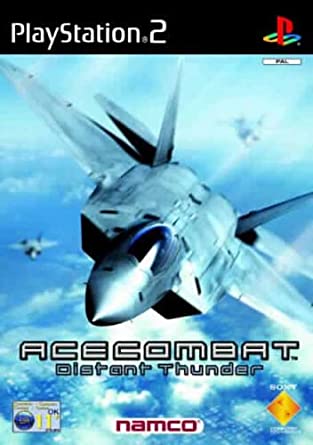
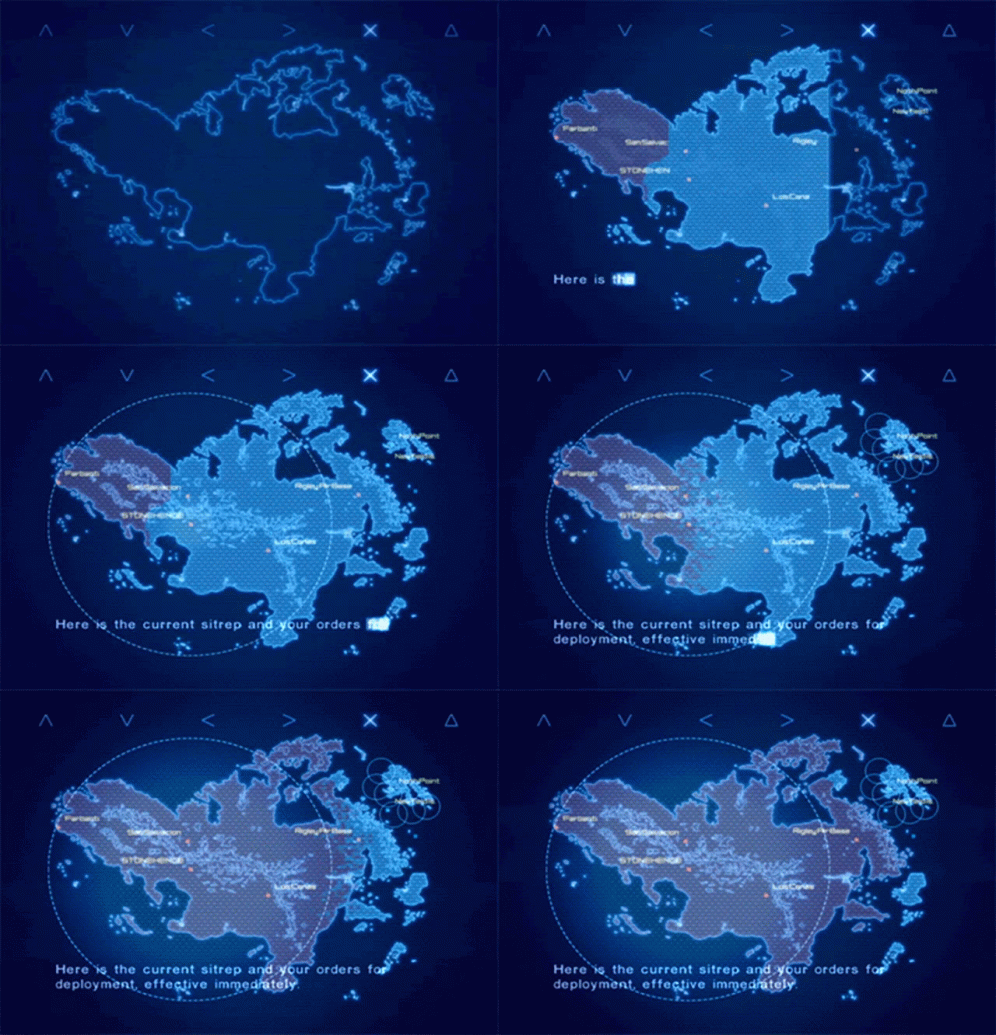
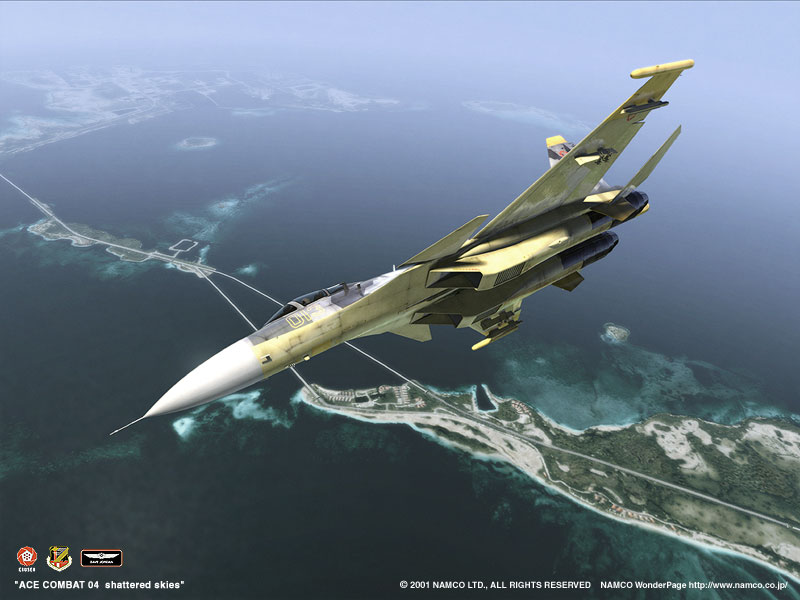
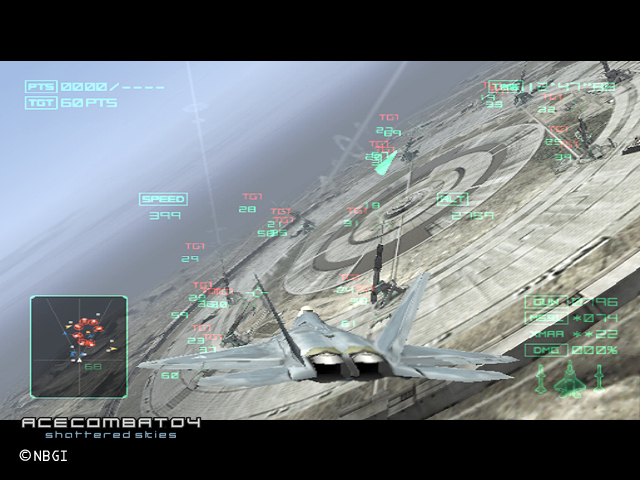
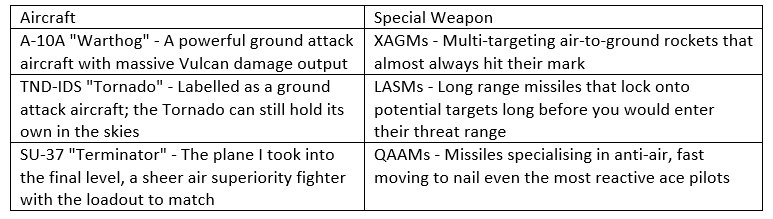
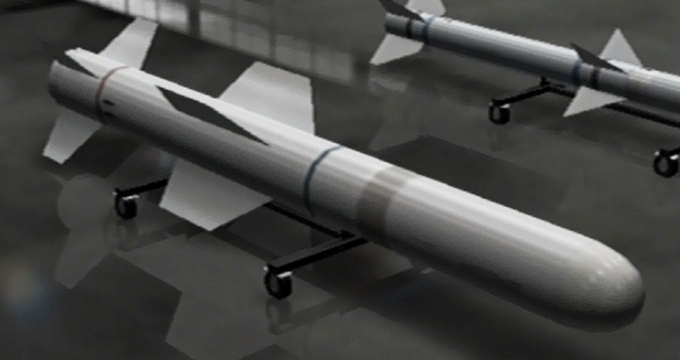
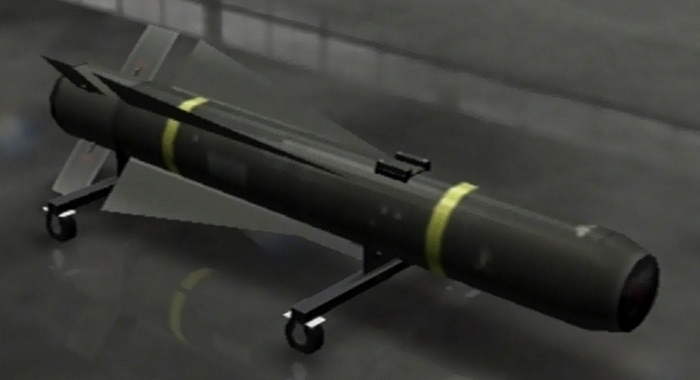
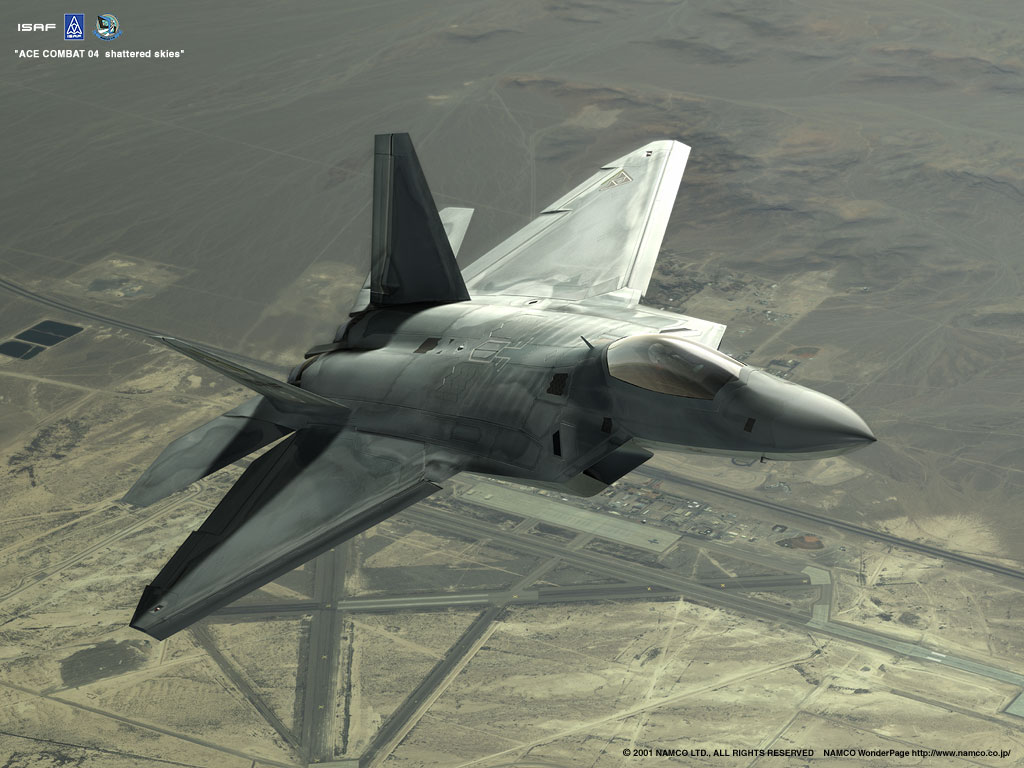
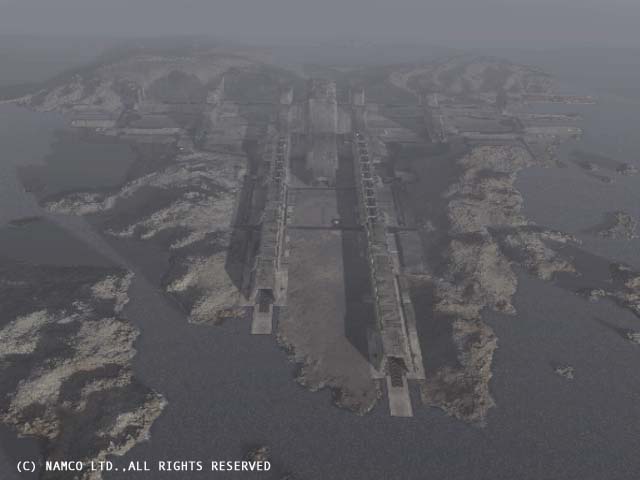

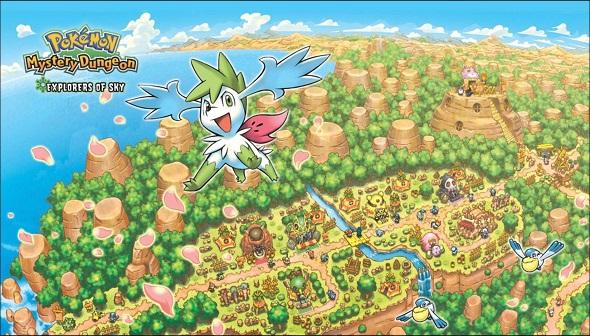
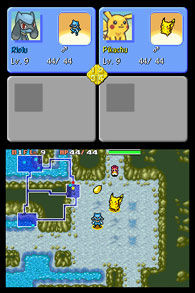
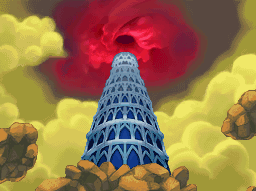

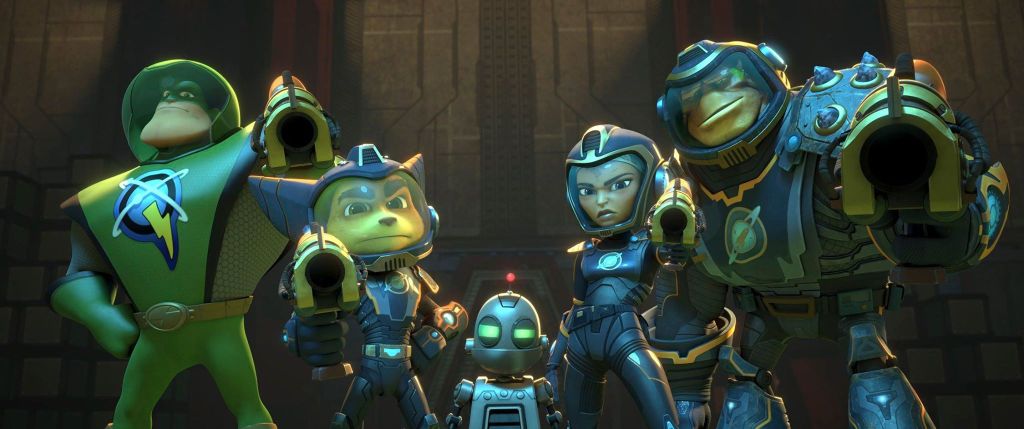
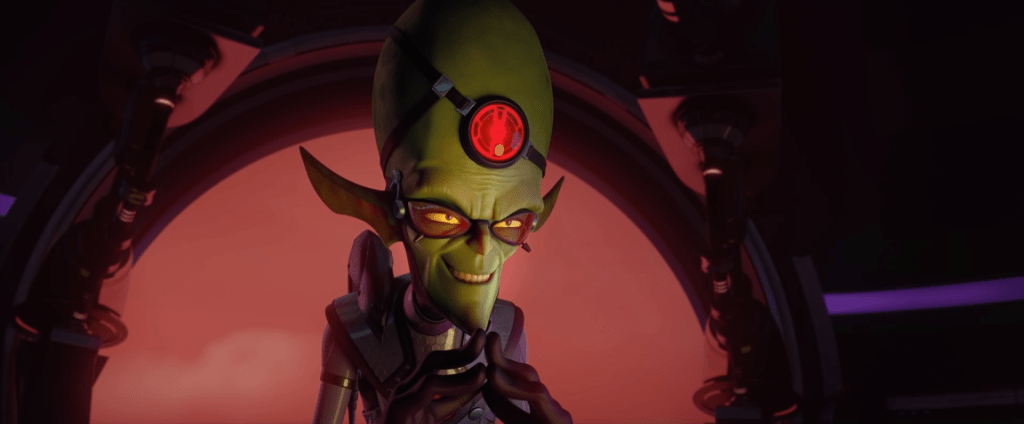
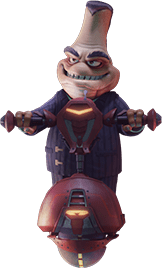
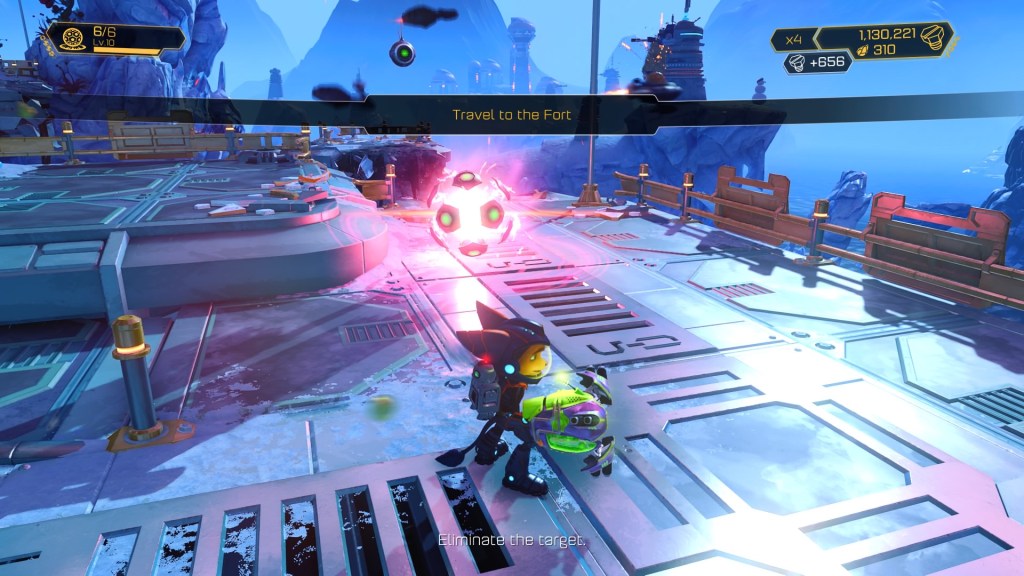
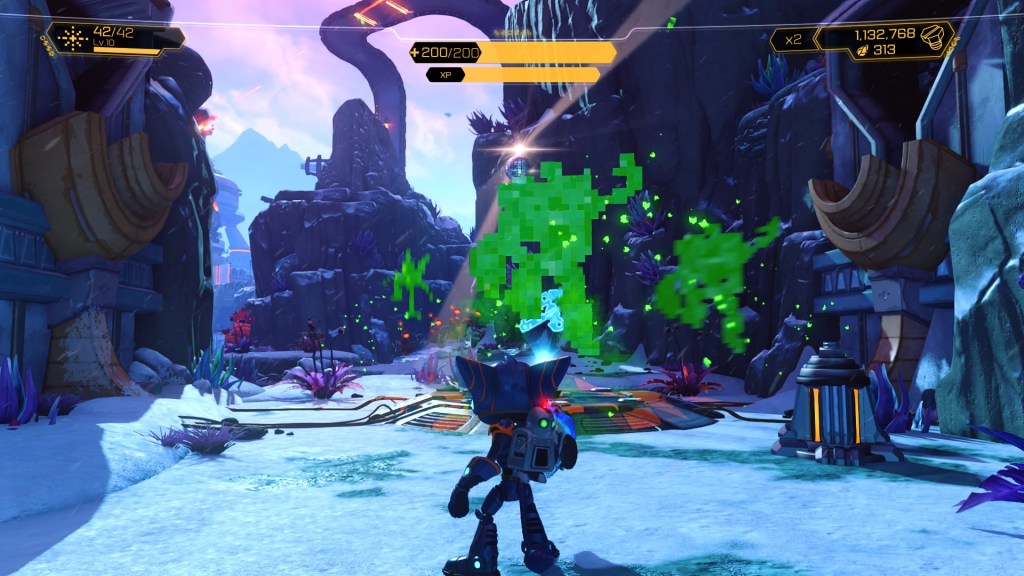
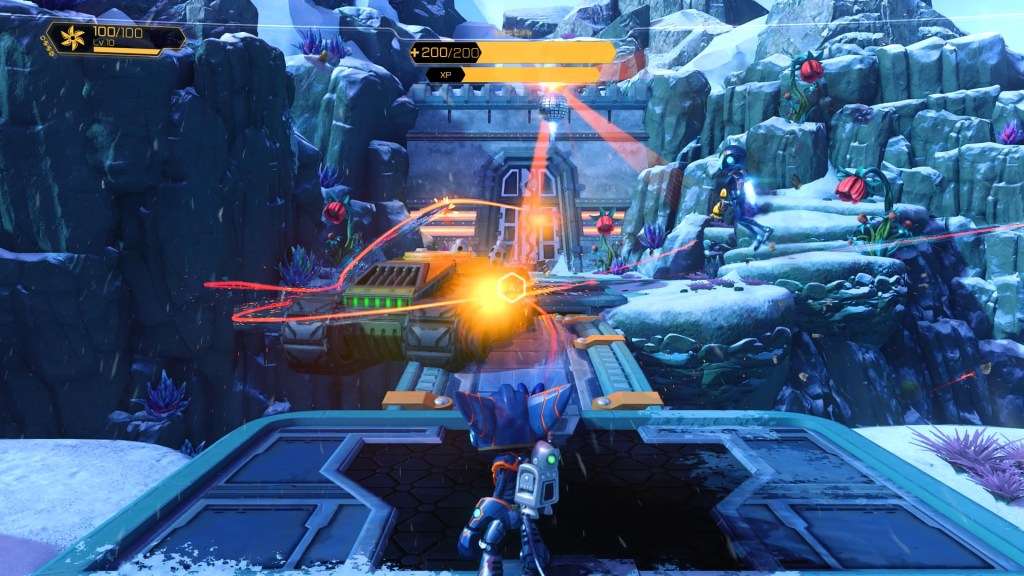
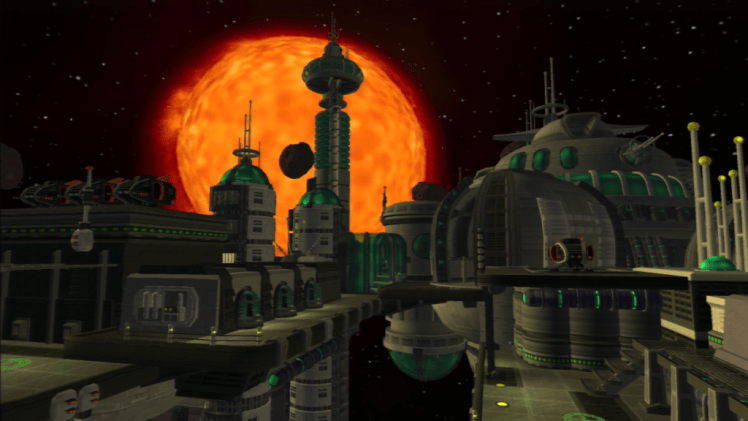
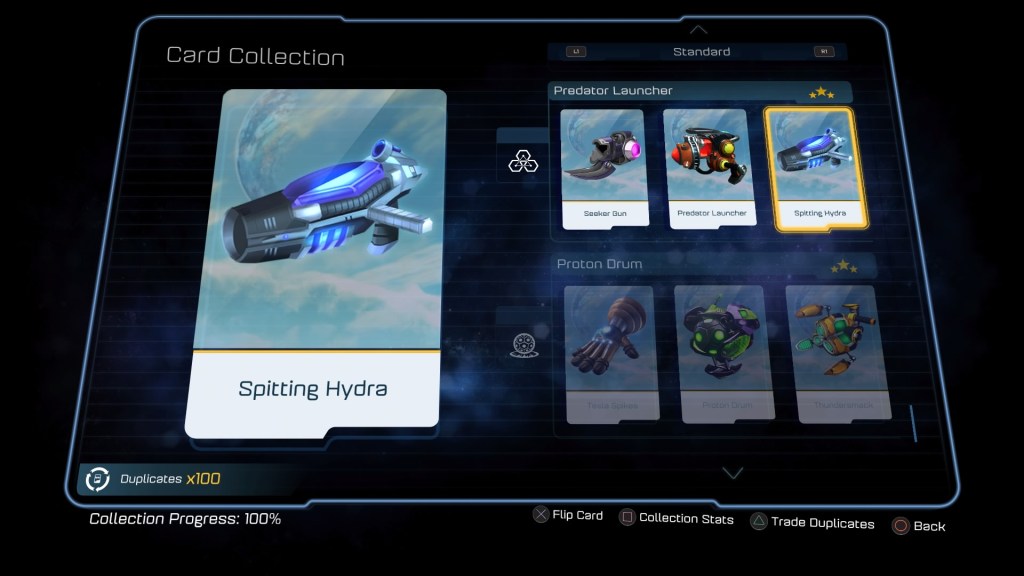
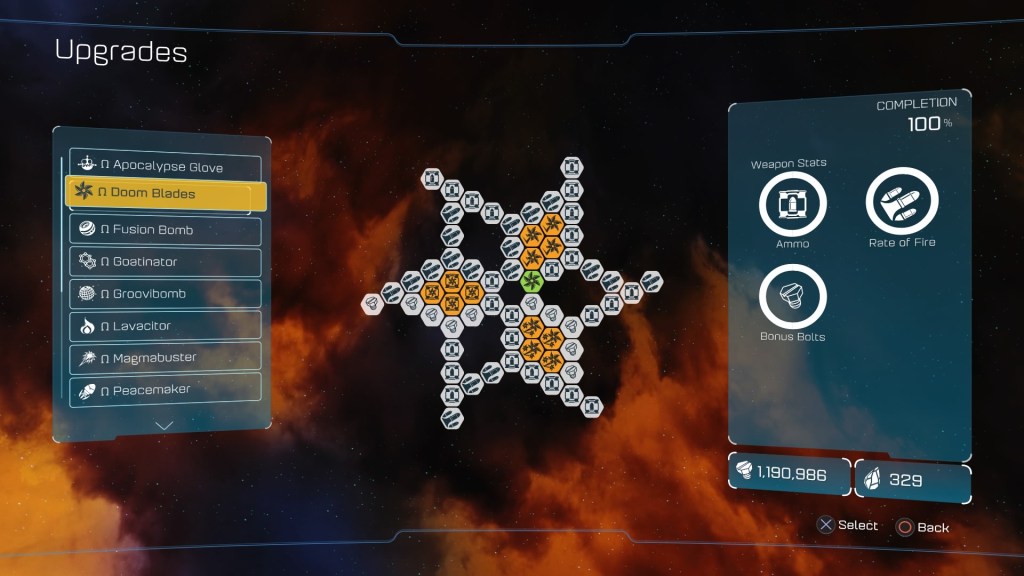
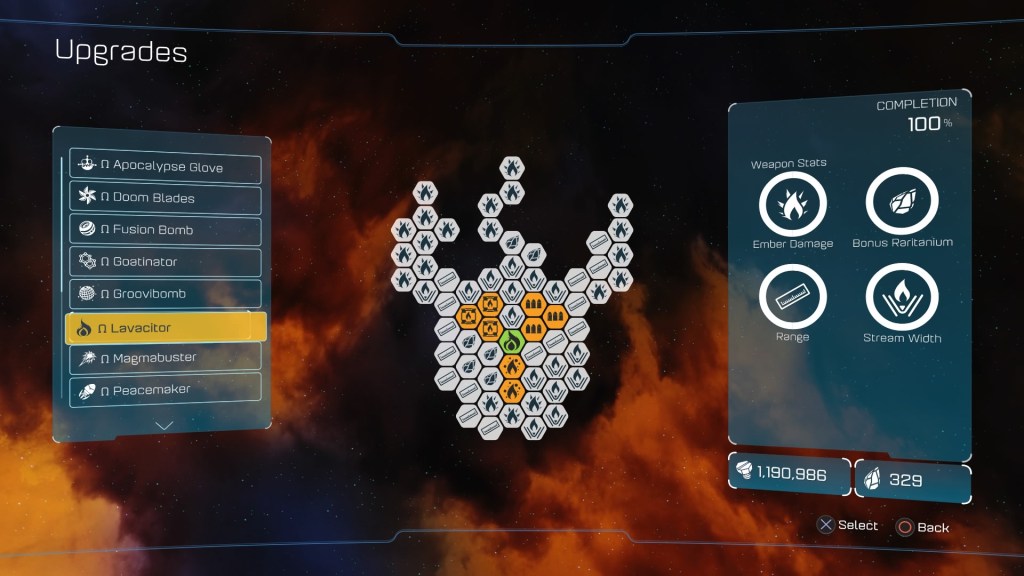
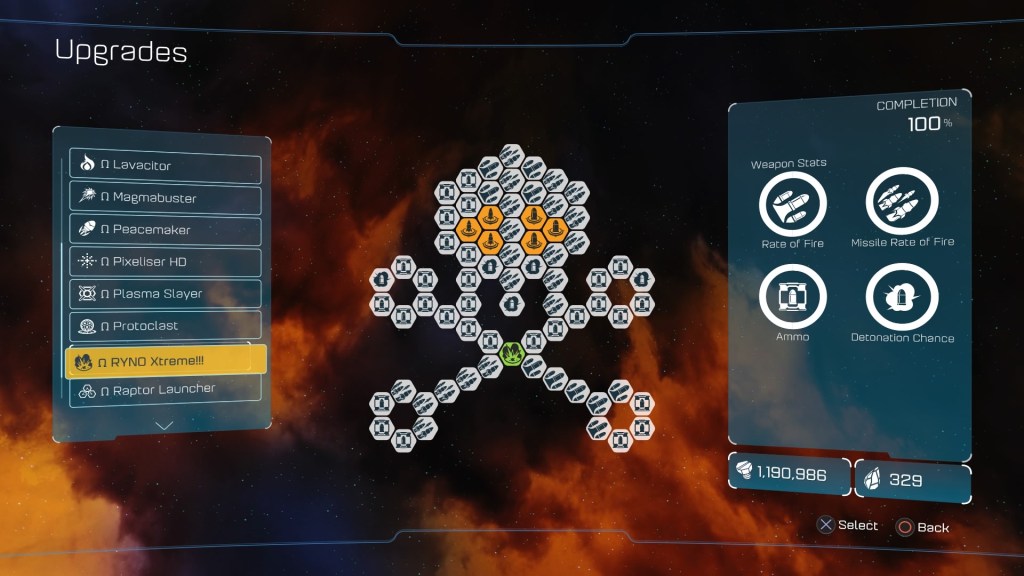

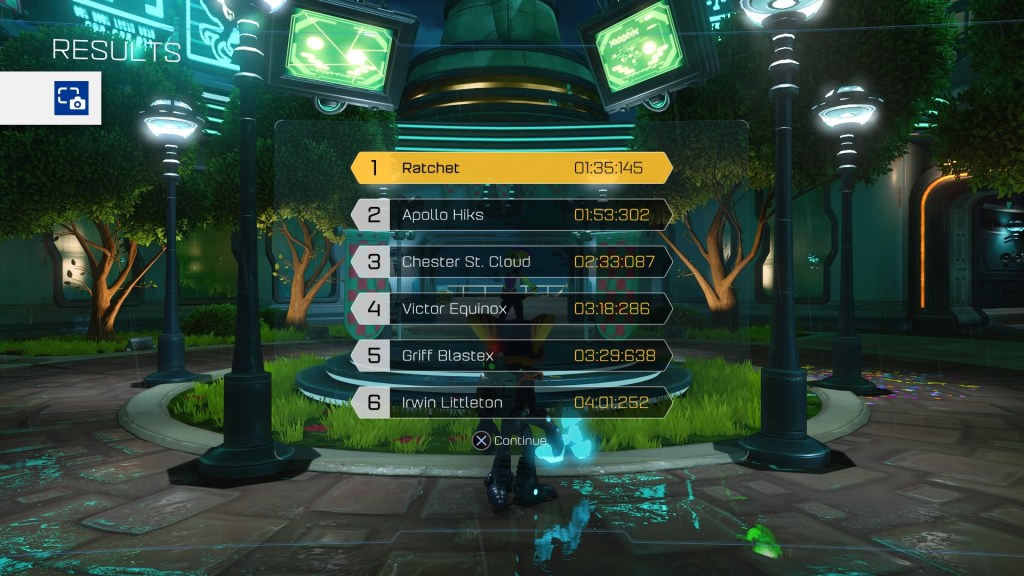
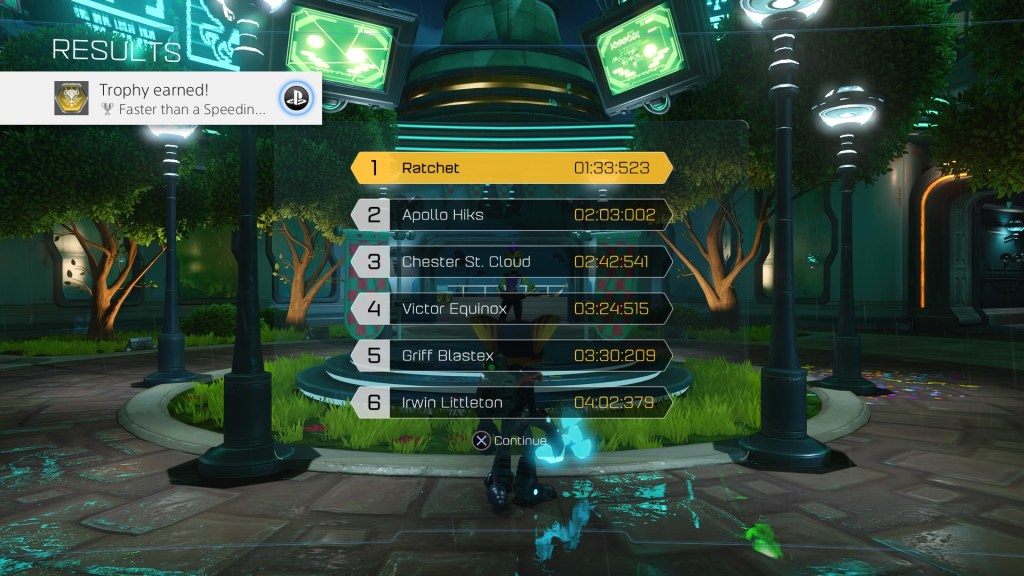
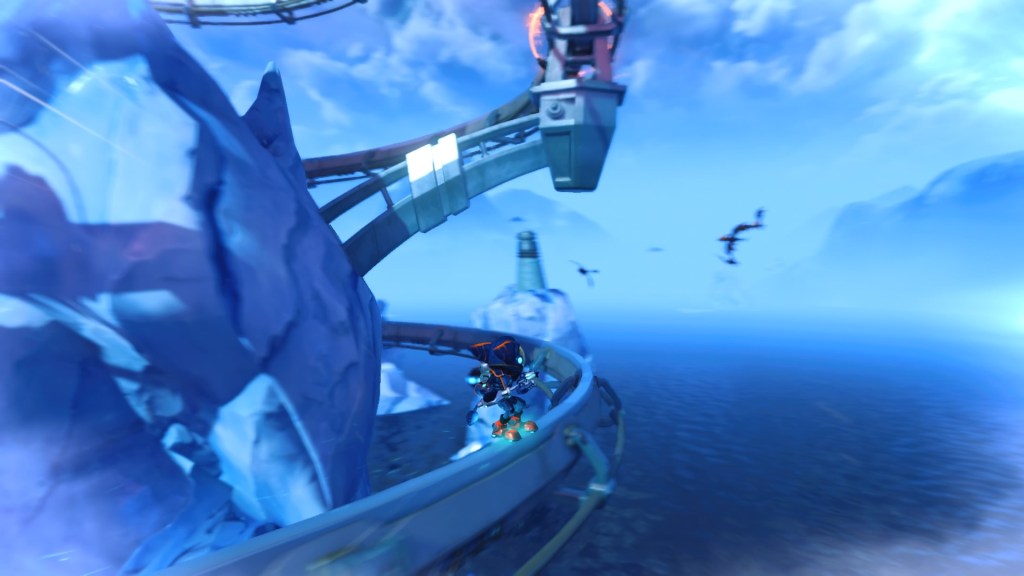
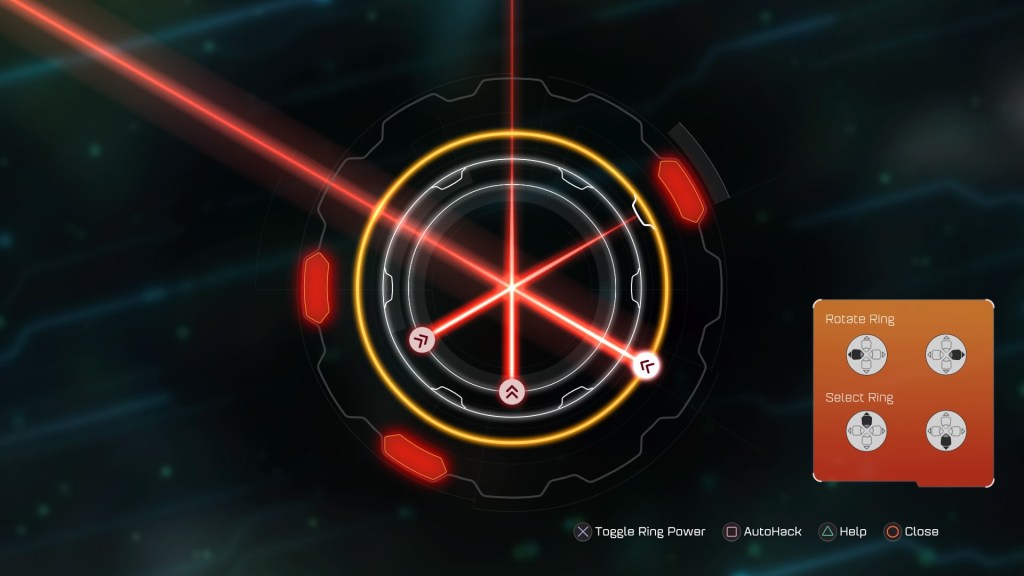
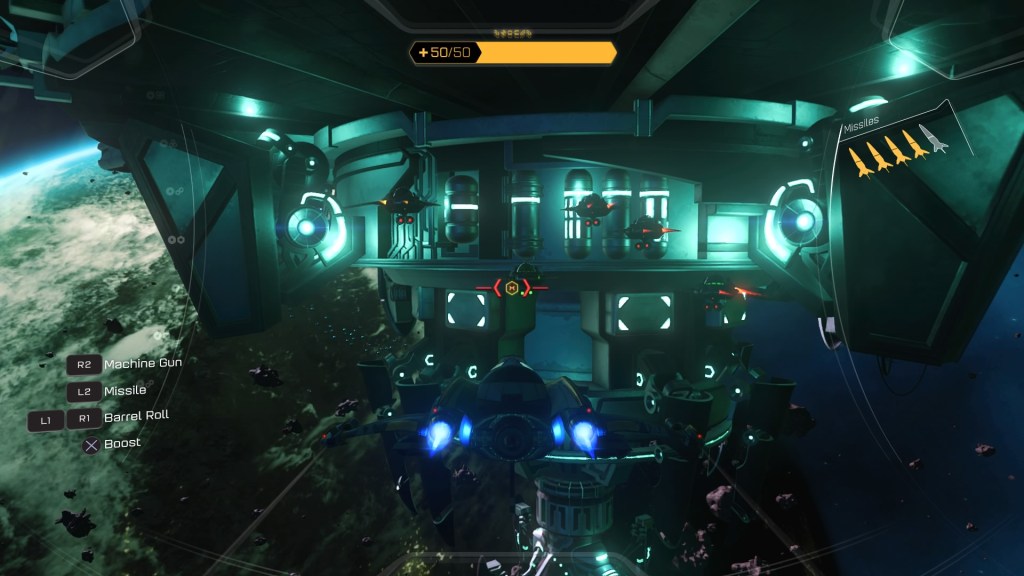
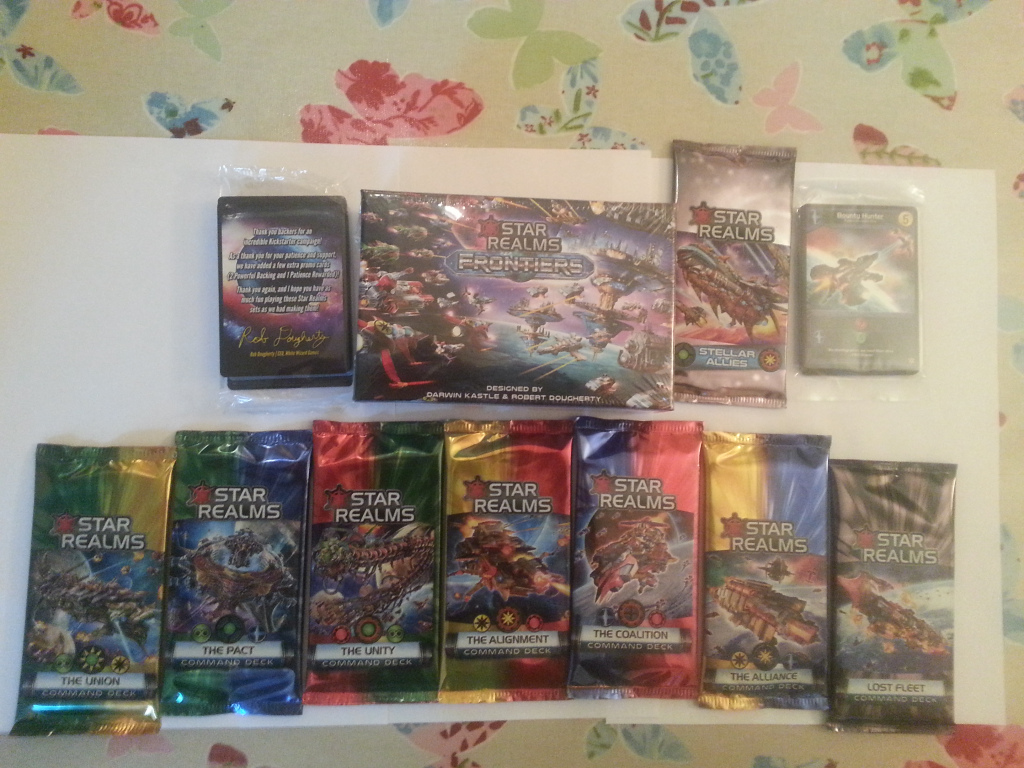
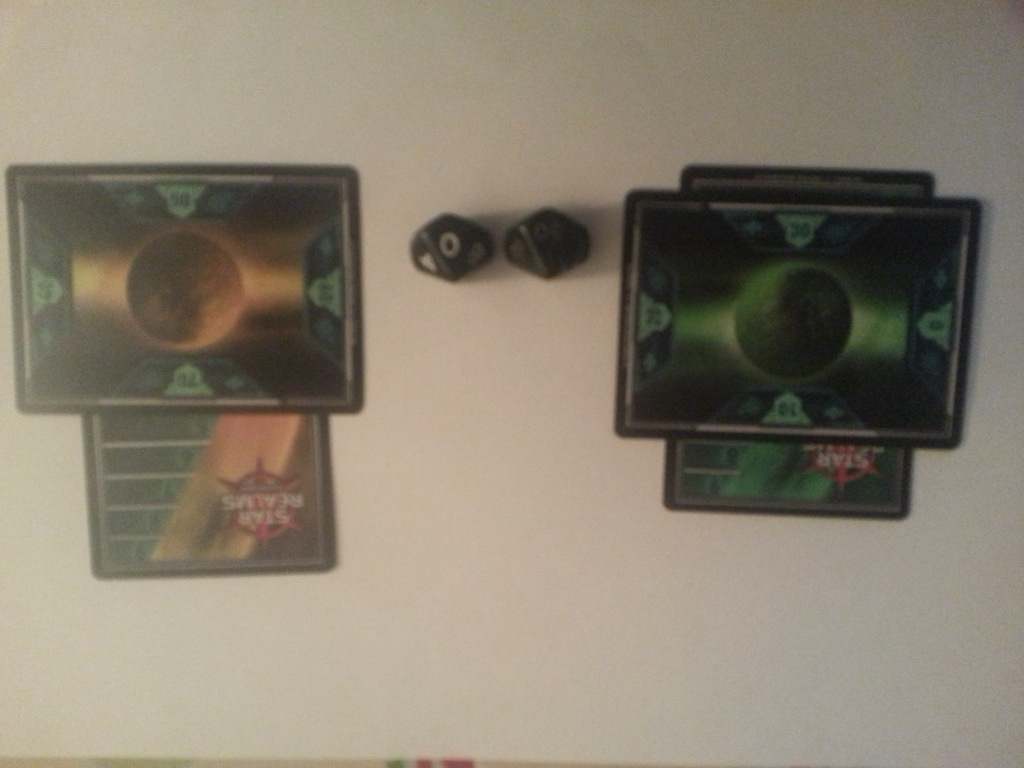
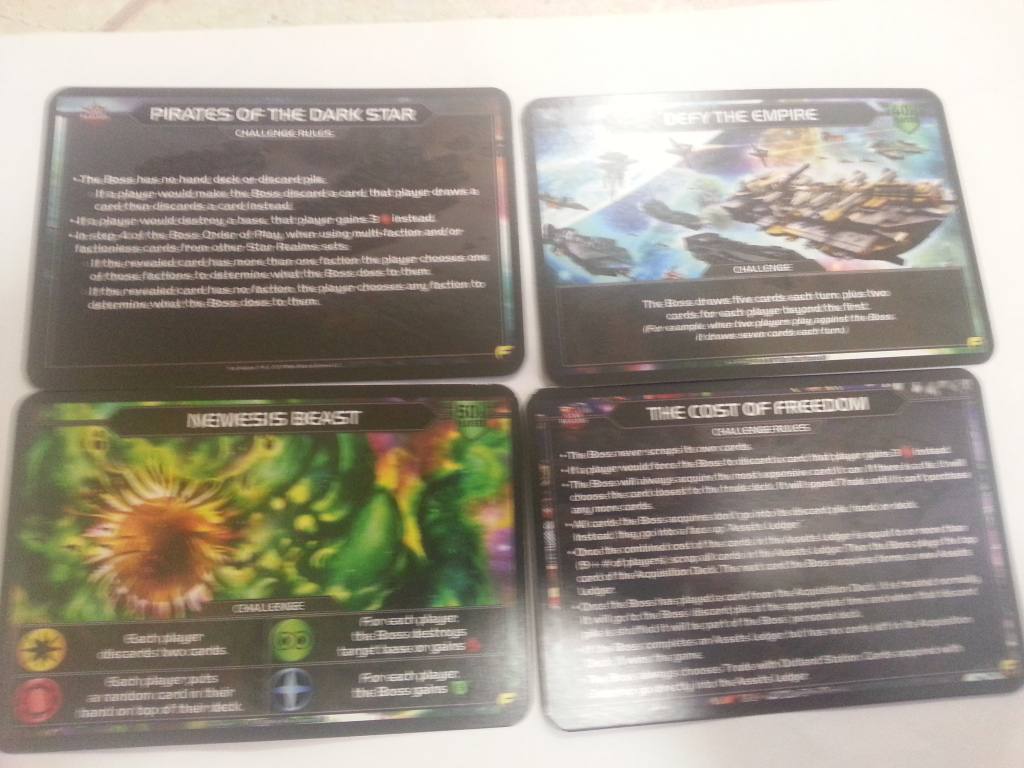
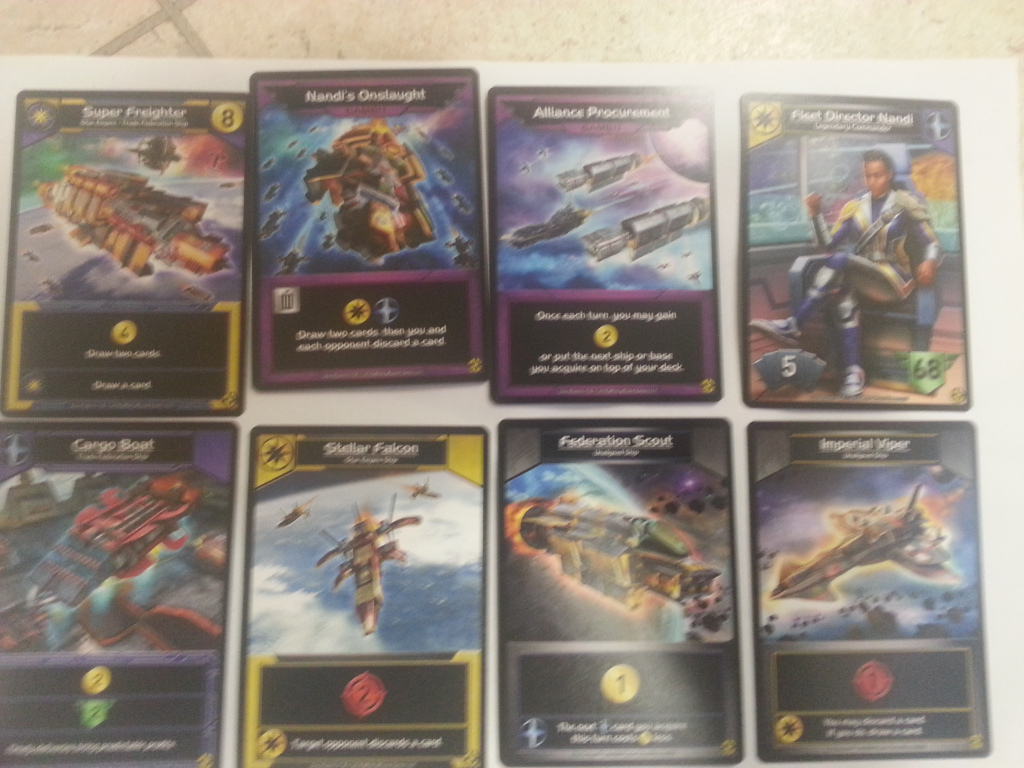


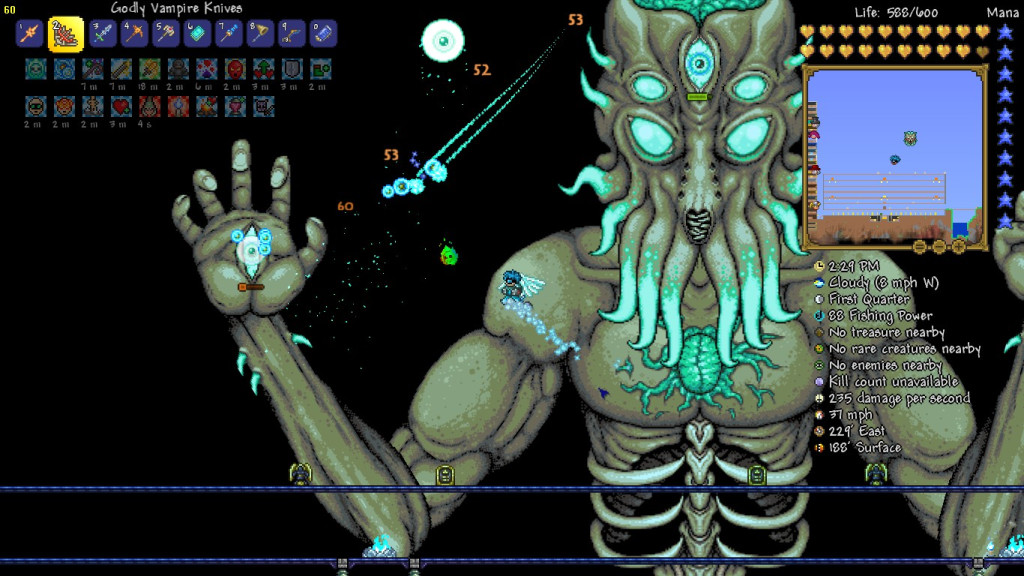
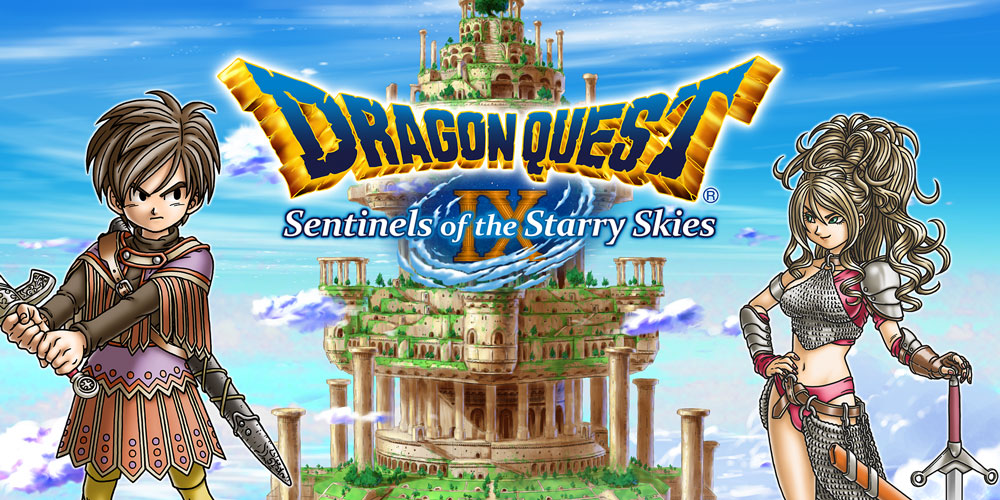

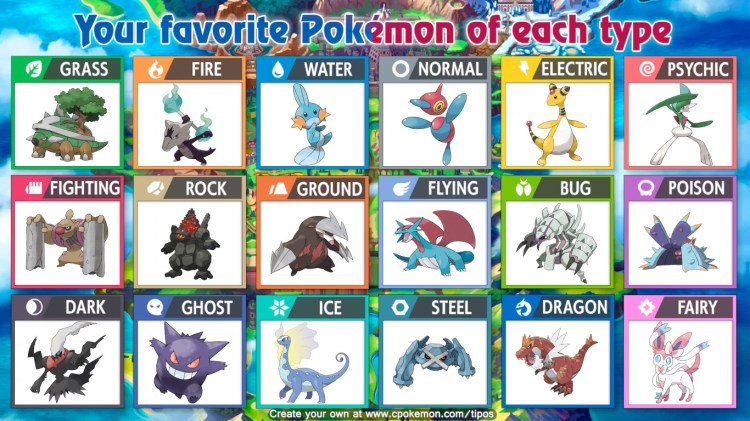
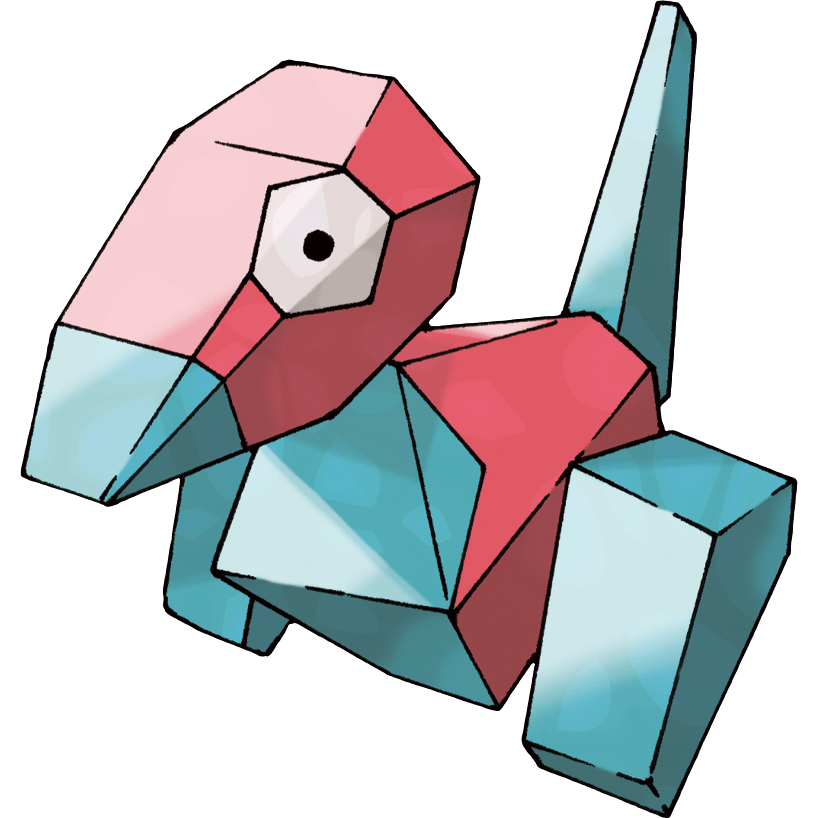





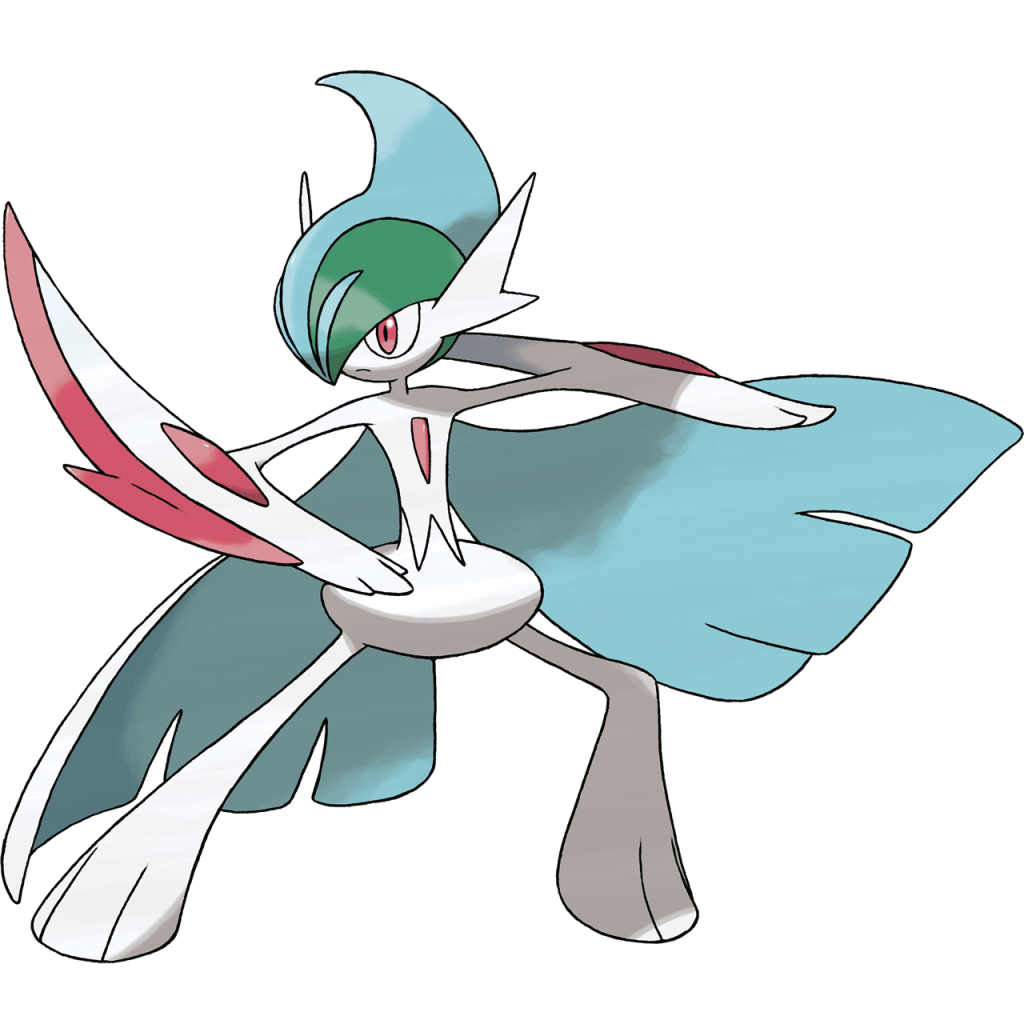
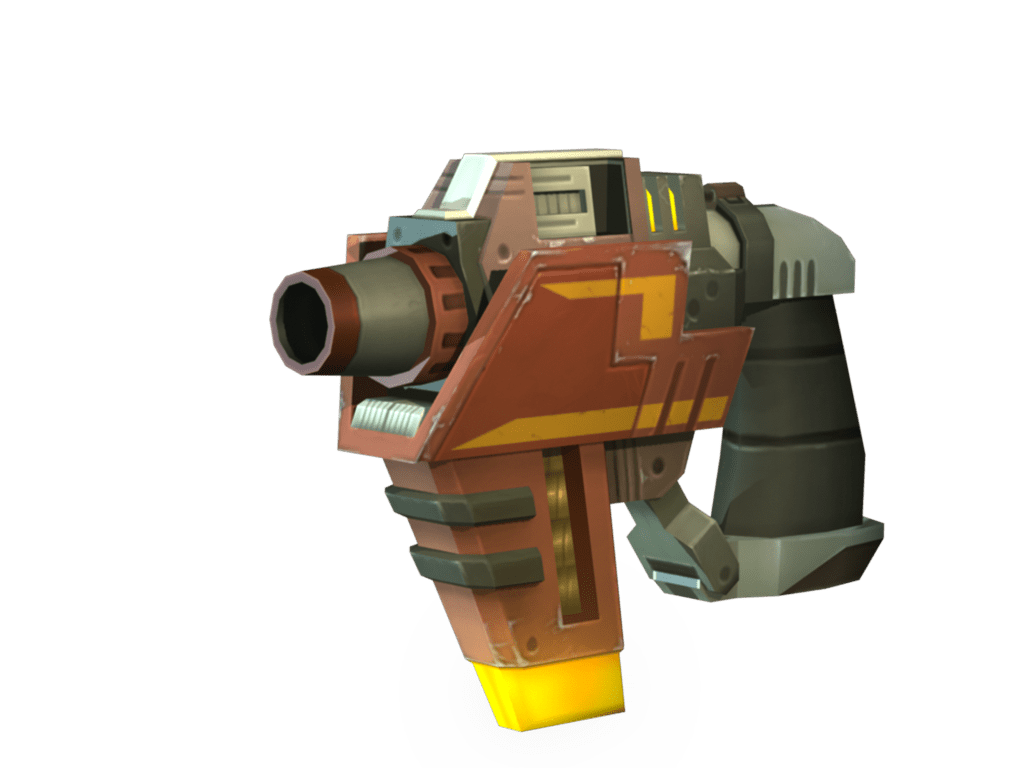
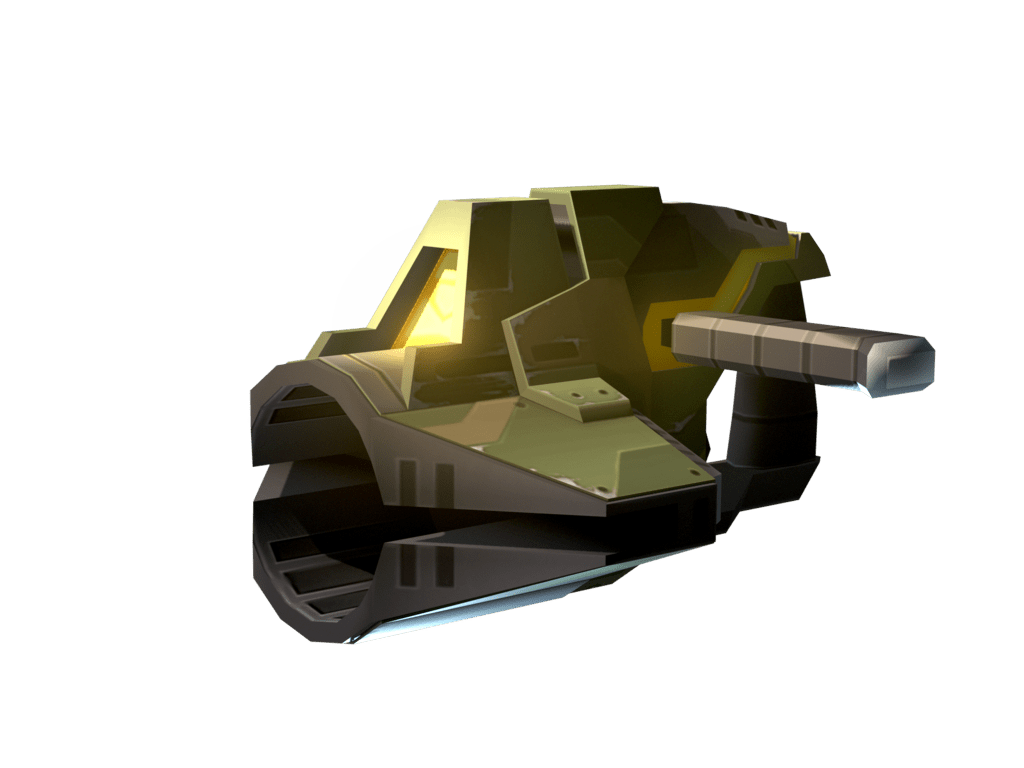
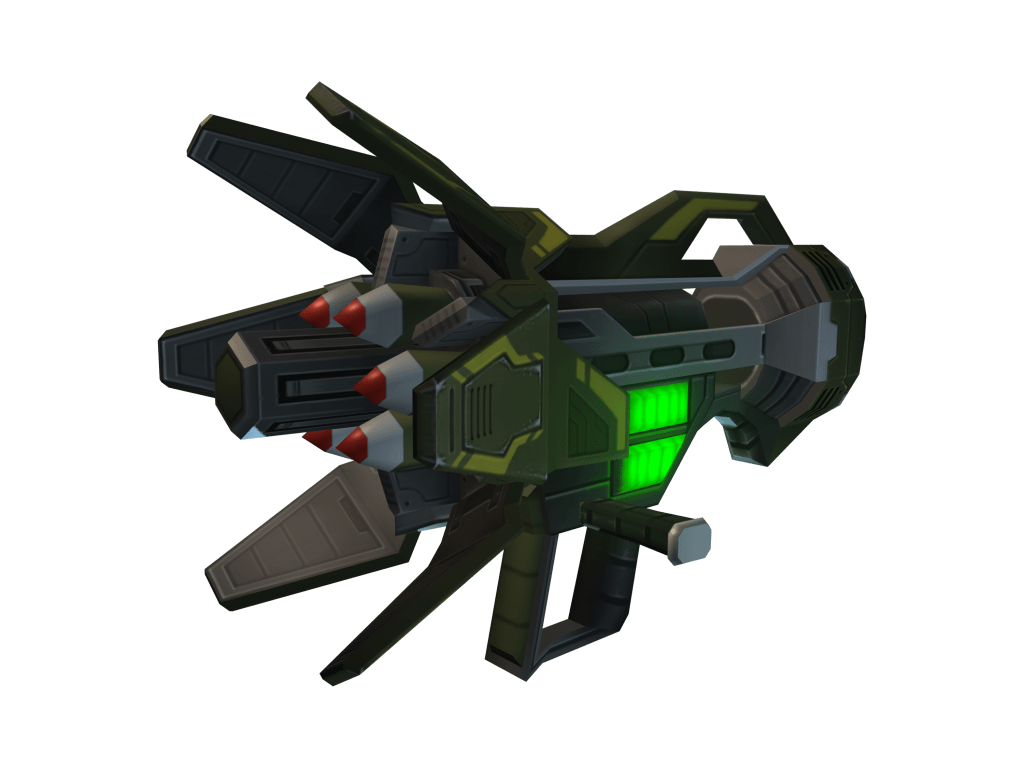
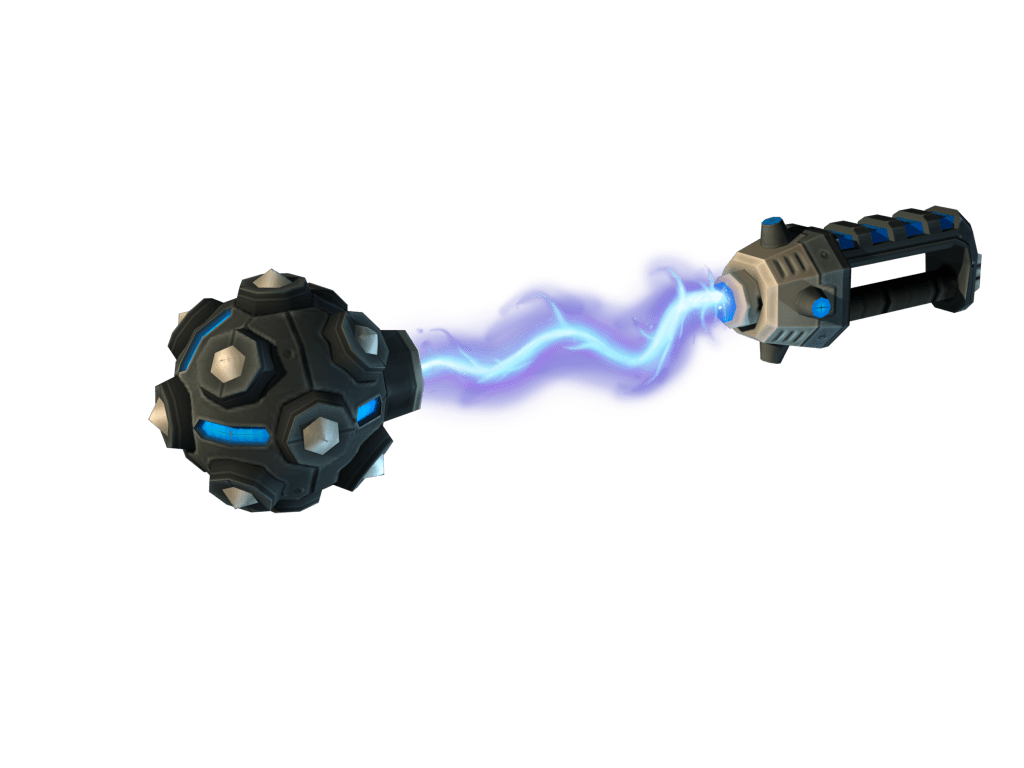
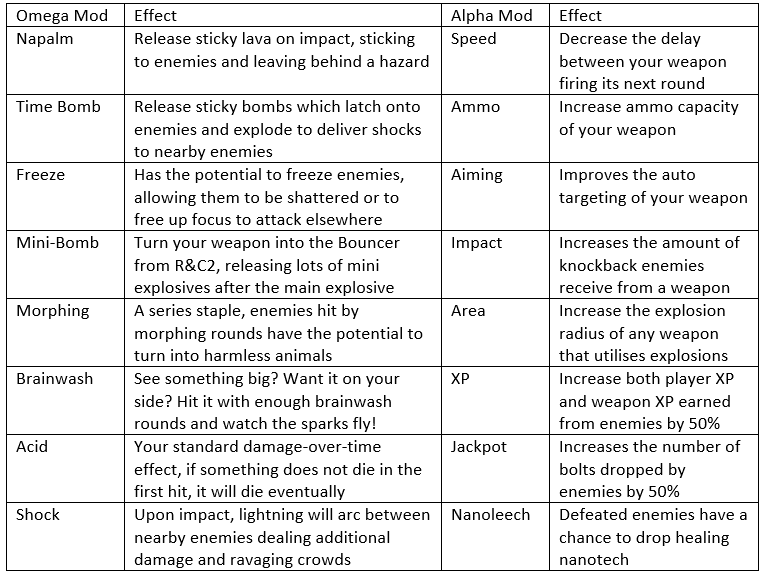
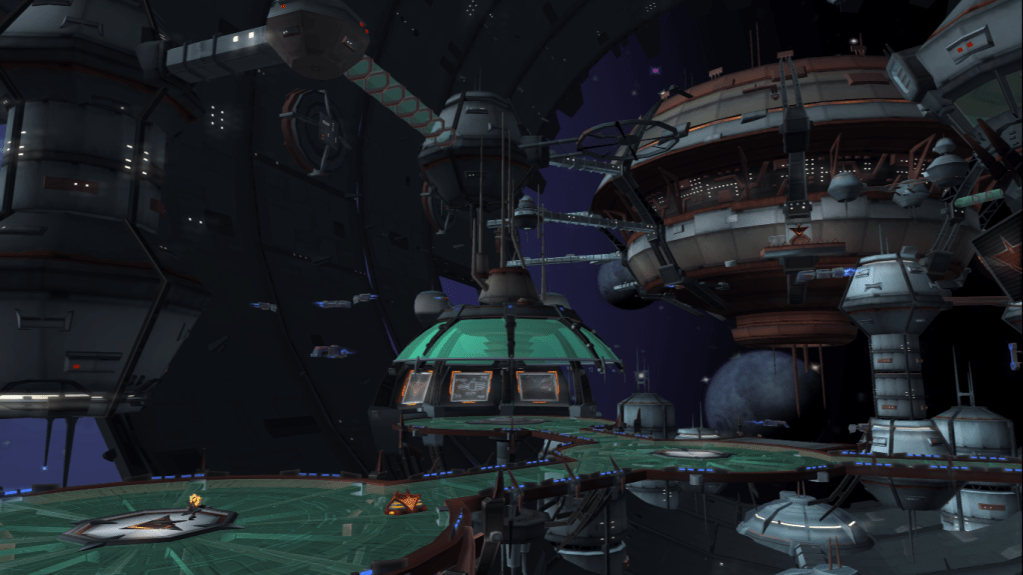
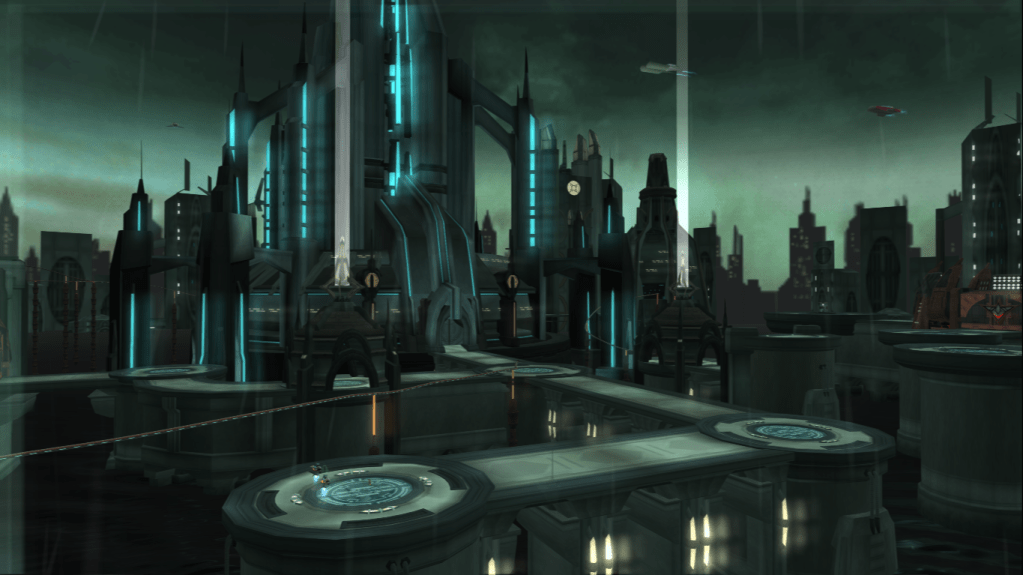
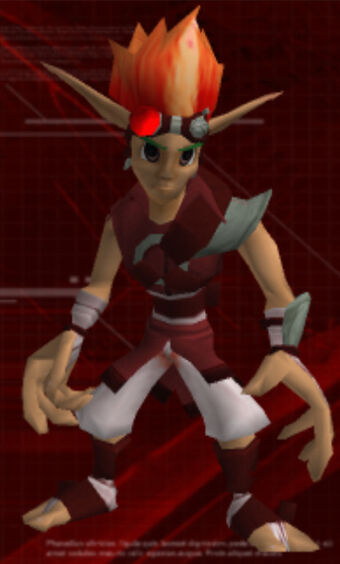
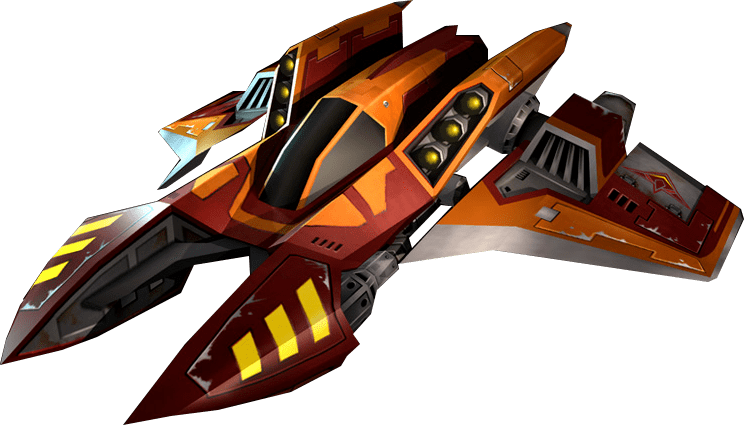
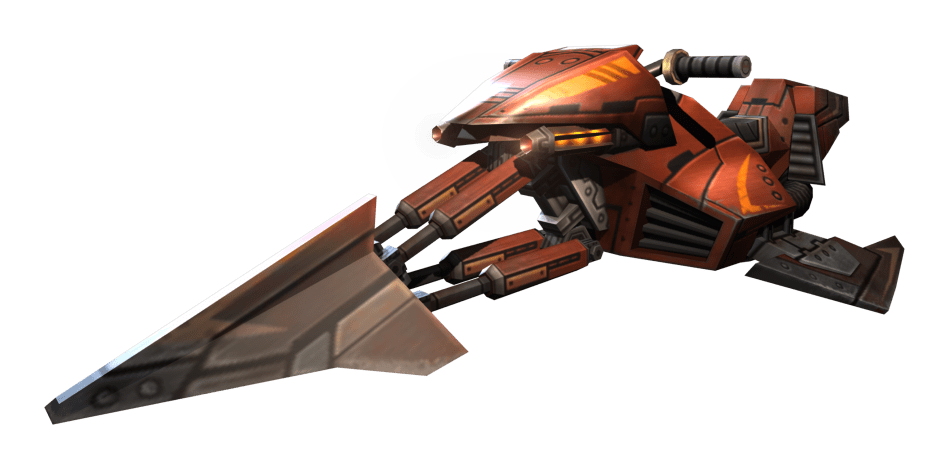
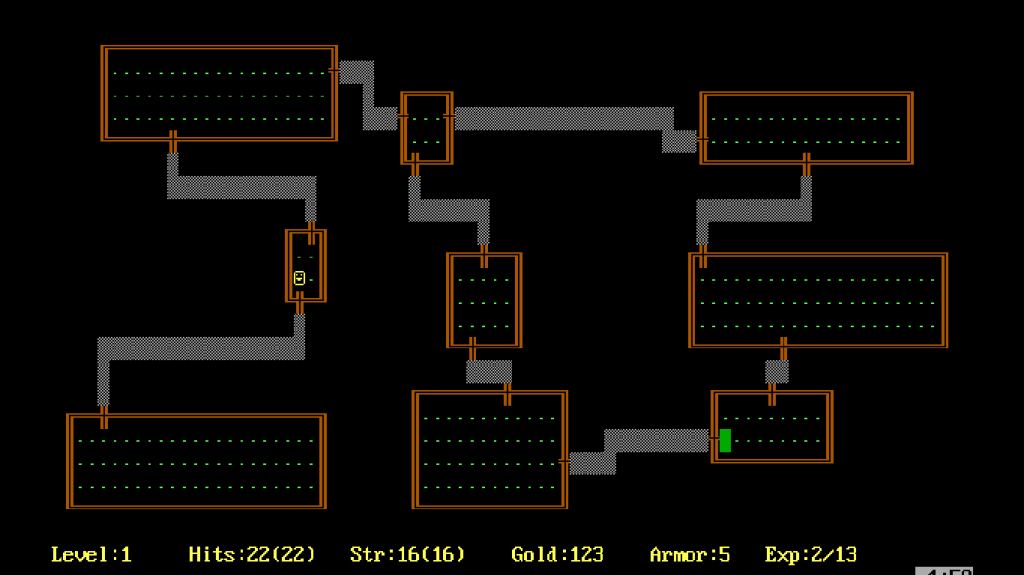

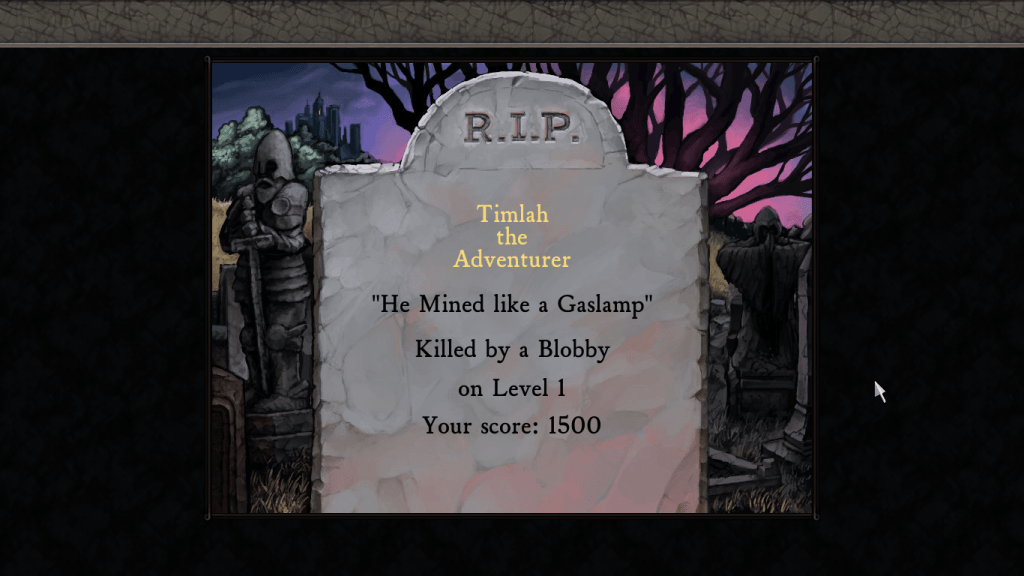
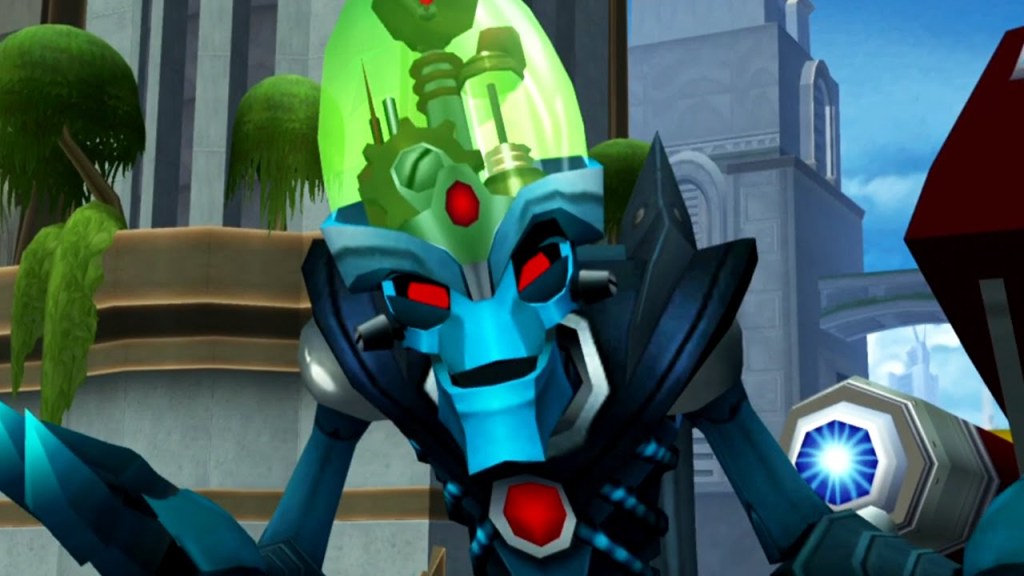
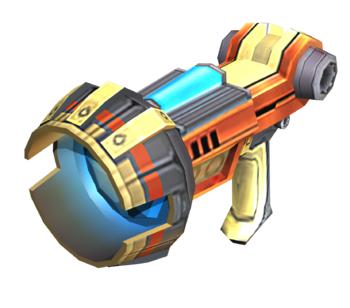


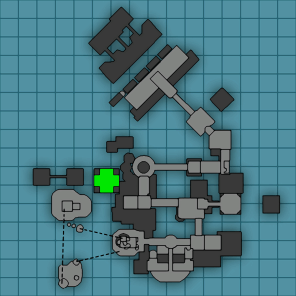
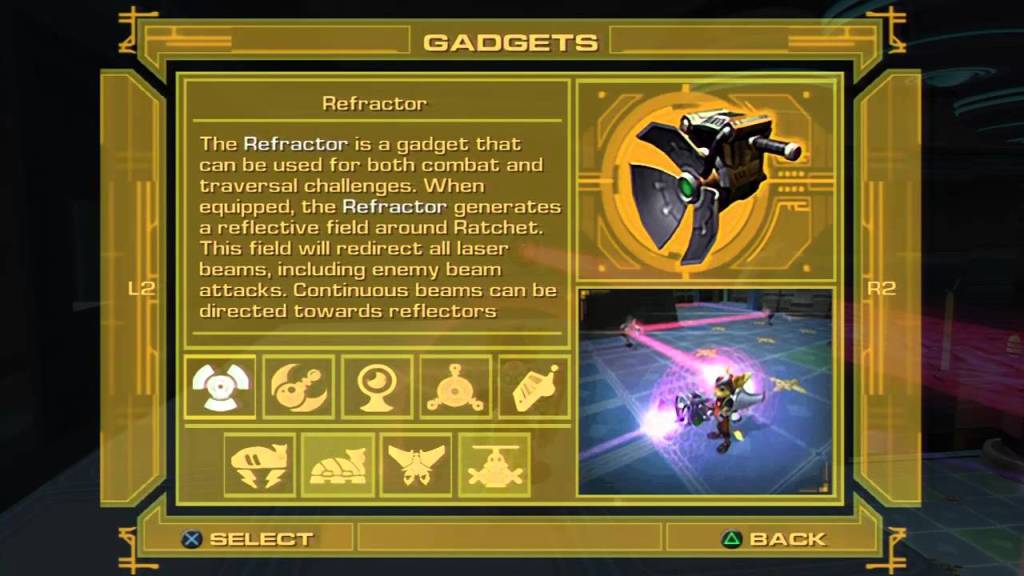


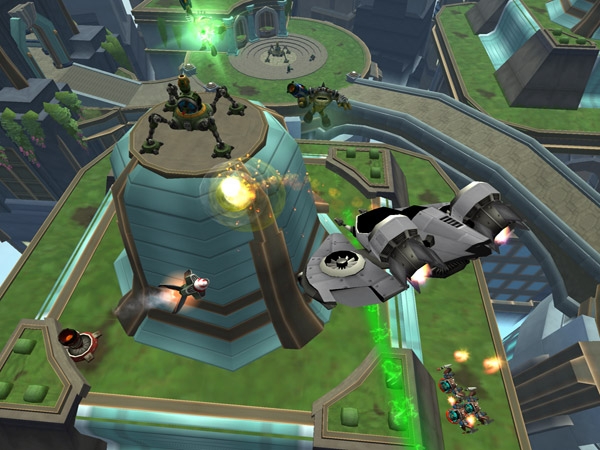
 Rosalia Rambles