Category: Gaming

  • Ratchet and Clank Original Trilogy Retrospective Part 2

    (NB: Originally posted to https://geekoutuk.com/2019/09/02/ratchet-and-clank-original-trilogy-retrospective-part-2/)

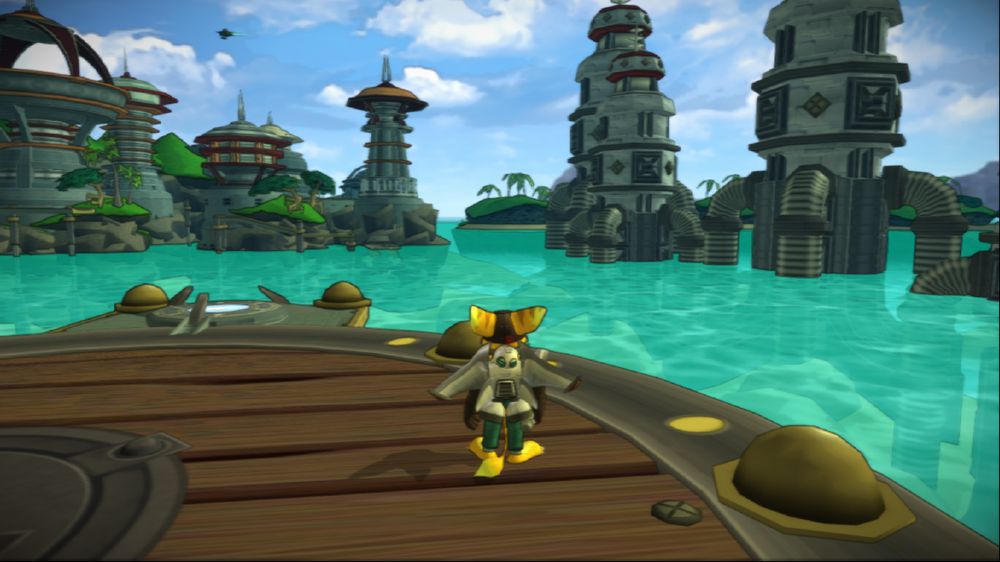
    Ratchet & Clank 2: Locked and Loaded, (or Going Commando in parts of the world where innuendo can be in game titles), was released in 2003 on the PS2, one year after the first game. The game begins with the duo appearing on an interview, lamenting the fact that no one needs a hero nowadays.

    An individual in another galaxy sees this broadcast and teleports them to a ship, introducing themselves as Abercrombie Fizzwidget, CEO of Megacorp. Recently an experiment was stolen from Megacorp by a masked thief and he wants Ratchet to reclaim it, whilst offering Clank a high-ranking administration position at Megacorp.

    The thief evades Ratchet and escapes with the experiment, kidnapping Clank shortly afterwards as a warning to Ratchet. The two are reunited shortly afterwards and the adventure restarts in earnest.

    Unlike the first game where it carried themes of “two opposites working together”, this time the focus is more on the bond the two have developed. They are shown interacting as friends, with Ratchet not hesitating to jump to Clank’s defence and Clank doing what he can to assist Ratchet.

    Weapons

    A total of 24 weapons are in the game this time round, 19 original to the game and 5 returning from the first. The 5 returning weapons are free if you have a save from the game on your memory card, but, don’t expect to be using them much. Combined with enemy buffs and the weapons themselves being nerfed; they’re not going to carry you like they did in the past, especially since the new weapons can be upgraded. There’ll be more on that in gameplay.

    You start out with the Lancer and the Gravity Bomb, standard single-target and crowd-control weapons respectively. The more ridiculous weapon concepts have been toned down in favour of doing interesting things with conventional technology, with a few out-there weapons thrown in.
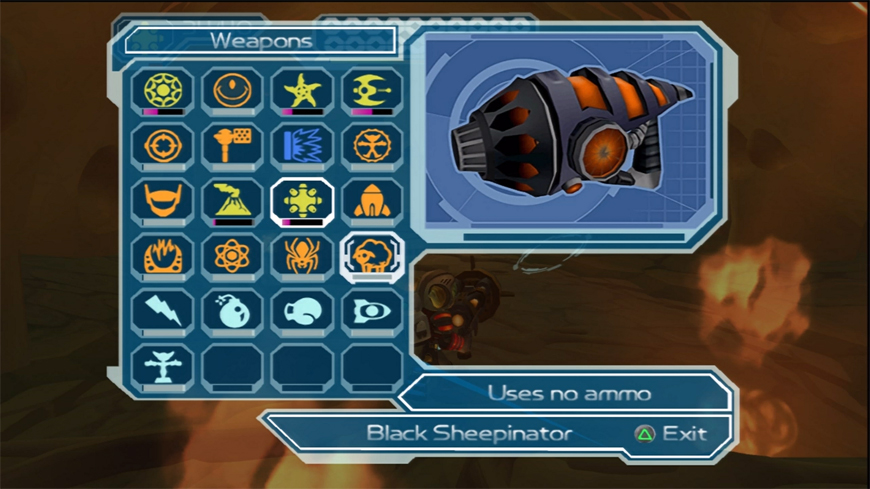
    An early game weapon I tend to rush for is the Blitz Gun. The games equivalent of a shotgun, it’s able to deal massive amount of damage within a cone, sometimes clearing through crowds of tough enemies up until the mid-game. Combine this with a high ammo capacity and you get a weapon that can easily last until the third act.

    Close to the start of the second act the Bouncer becomes available for purchase, at 100,000 bolts it’s a steep purchase at this point in the game, but if you’re willing to grind, it’ll become a mainstay in your arsenal. It fires out a large spherical projectile that will explode on contact or after coming to a complete stop, releasing lots of small bouncing explosives that gently home towards enemies, creating a weapon to handle crowds and bosses.

    For an endgame weapon that will handle both of those with a bit more accuracy and power, look no further than the Plasma Coil. The Coil will fire out a large bolt of charged plasma which will inflict heavy damage upon the intended target and arc out lightning to any nearby enemies, softening them up for another shot chain.

    Continuing with series tradition, the R.Y.N.O returns in the form of the R.Y.N.O II. Instead of being a multi-rocket launcher it now takes on the form of an 8-barrel gatling rocket launcher. The missiles retain their individual strength and homing ability but are now fired much more rapidly, with a 100% increase in ammo capacity from the first iteration the R.Y.N.O II. Much like its predecessor, it turns the game into cakewalk.

    Gameplay

    Progression remains unchanged from the first game; you go through a linear series of planets which usually have 2-3 paths for the player to explore. These routes will usually include one that will advance the plot and another that will provide access to a gadget. As usual returning to a world with newly acquired equipment can provide access to new areas.

    Returning from the first game are a series of 40 collectibles, this time called Platinum Bolts. Once again these normally require clever use of a gadget or searching all the hidden areas on a map, unlike the first game however they can be used earlier on.

    At a few points during the game, you can find a button that calls Slim Cognito down to modify your weapons in exchange for Platinum Bolts. Most weapons will have access to a Lock-On mod that makes it easier to move & shoot, and most will have either a Shock or Acid mod for additional damage.

    Skill Points make their return: 30 skill-based challenges ranging from fast completion times to destroying all breakables in a level. Earning skill points are now used for earning ship customisation options and unlocking toggle-controlled cheats, ranging from Big Head Mode to Mirrored Levels.
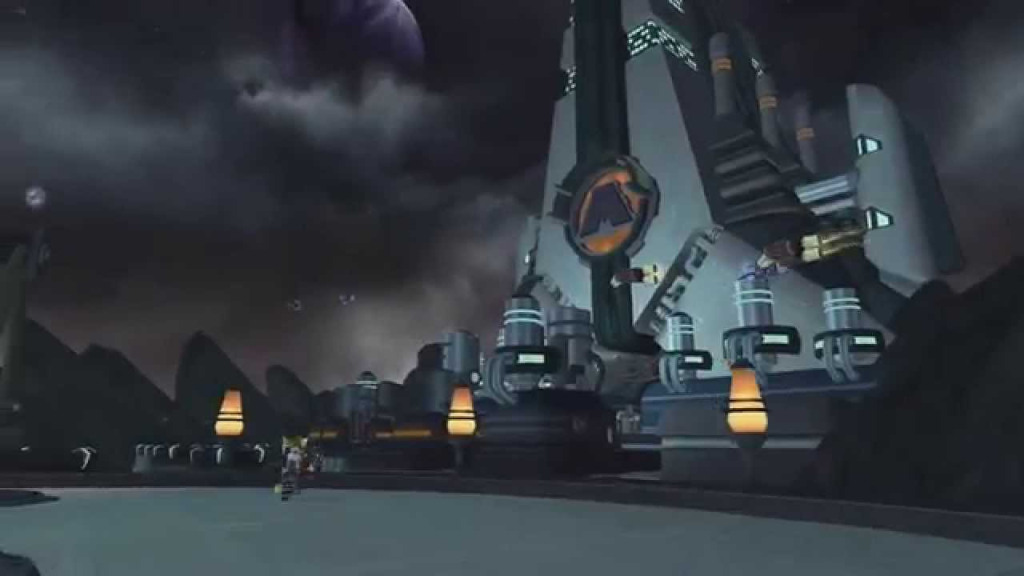
    The main feature of a level being presented to you through a set camera continues. With how much larger some of these levels are, it really gives an idea of the scale Insomniac could work with in the sequel. The game is still running at 60fps with some occasional slowdown when a lot of enemies or projectiles are on-screen.

    Bolts return as the primary currency, and the economy is so much better. Both enemies and crates drop a reasonable number of bolts in line with the game’s progression, which allow for buying new equipment at a steady pace. To aid this, other methods of earning bolts have been introduced, these will be covered in detail in a bit, but hover bike races, gladiator battles, crystals and space combat sections all reward bolts.

    The game has now introduced slight RPG elements. As mentioned earlier, weapons can now be upgraded through use. As enemies are defeated weapons will gain experience and once they have gained enough experience, they will upgrade. A weapon upgrade can grant a higher ammo capacity, increased damage, additional mechanics or all the above. Health can now be upgraded the same way, rather than a set number of units in the previous game.

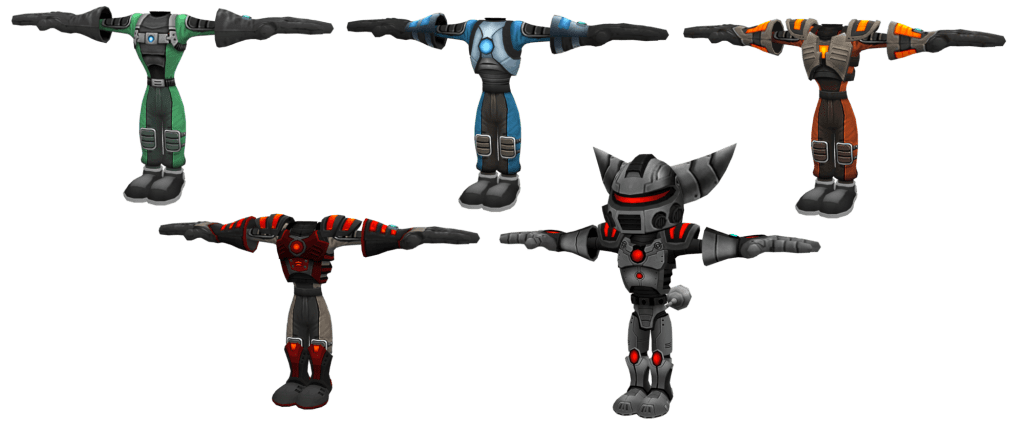
    Because of this change to health; players can now upgrade their armour as well. A new suit becomes available for purchase at 4 different points in the game, and each new set will give better damage reduction, up to 90% for the best suit.
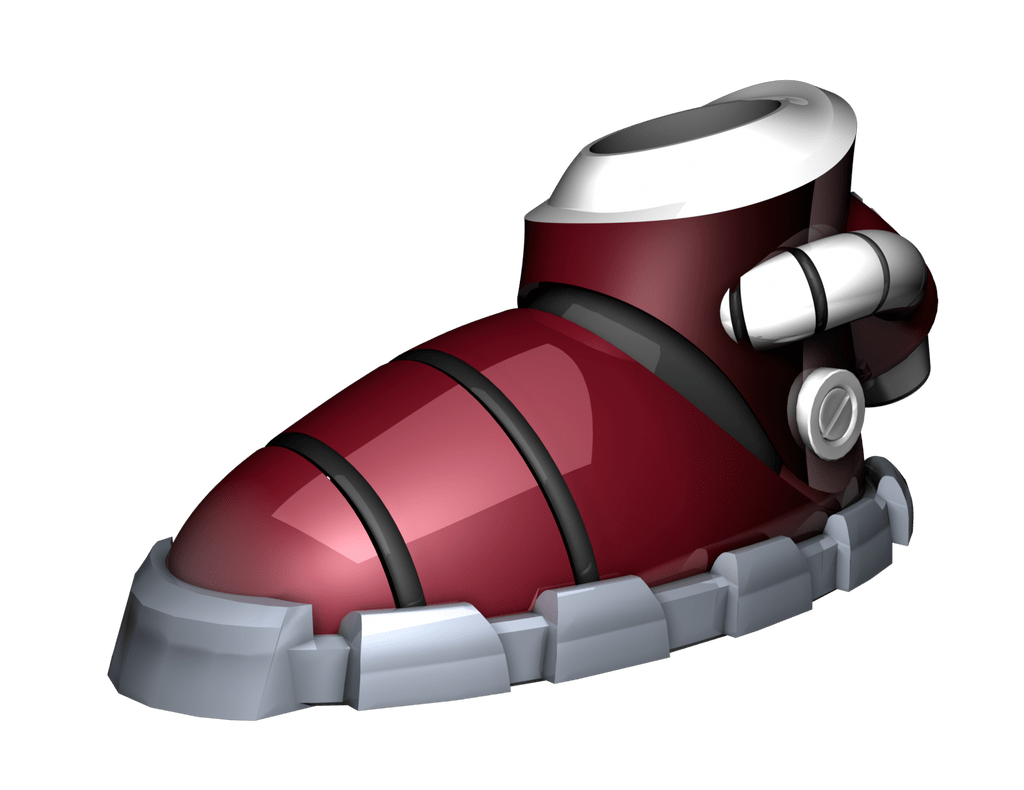
    Gadgets to aid in mobility and progression remain a feature. Returning from the first game are the Swingshot and Grind Boots, the latter remains mechanically identical whilst the former now gains the ability to pull objects towards you.

    New to the game are:

    • The Dynamo, which can be used to activate machinery to generate platforms or open doors.
    • The Gravity Boots are modified Magneboots, which now allow Ratchet to jump during these segments.
    • The Tractor Beam is used to move around platforms to block forcefields (actually managed to softlock the game once doing that), open the way or move bombs into positions.
    • The Thermanator which is used to freeze water or thaw ice to create paths through levels.
    • The Electrolyzer which allows you to play a reaction based minigame to complete a circuit,
    • And finally, near the end of the game you get the Hypnomatic which allows you to hijack robots to play through small shooter segments.

    I’ll also break off for a moment to focus on one particular gadget, the Charge Boots. With a double tap of R1 Ratchet is propelled forward with a continuous burst of kinetic energy that won’t stop until R1 is released, an object is collided into or, as has happened to me, falling off the edge of the world. These come midway into the game and make backtracking so much easier. (they’re also pretty stylish)
    There are also two gadgets used for traversing long distances at set points. First is the Levitator, an activated backpack for Clank, which uses a set amount of fuel but allows for unlimited flight during it. Second is the Momentum Glider, which I’ll talk about more in Controls.

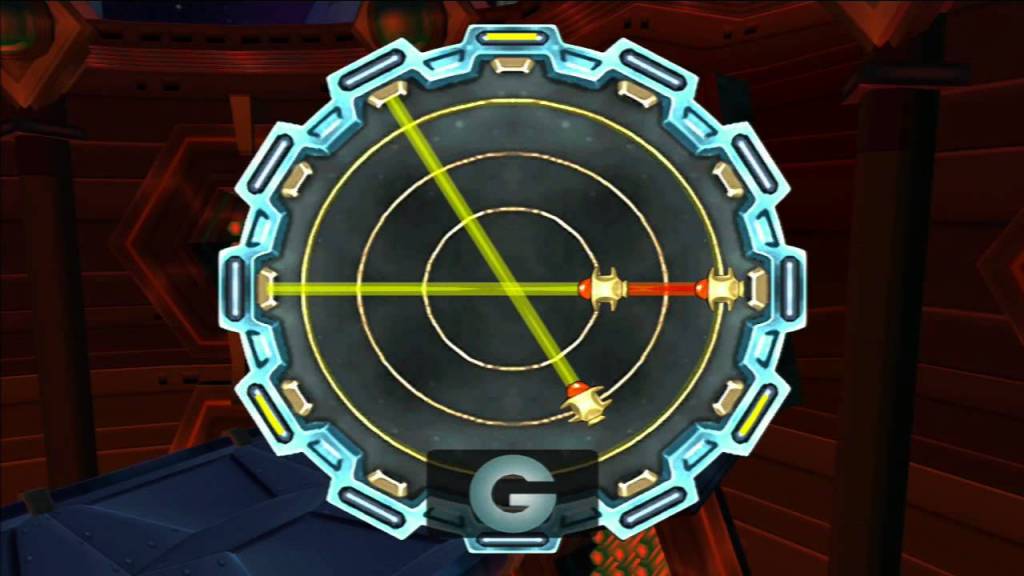
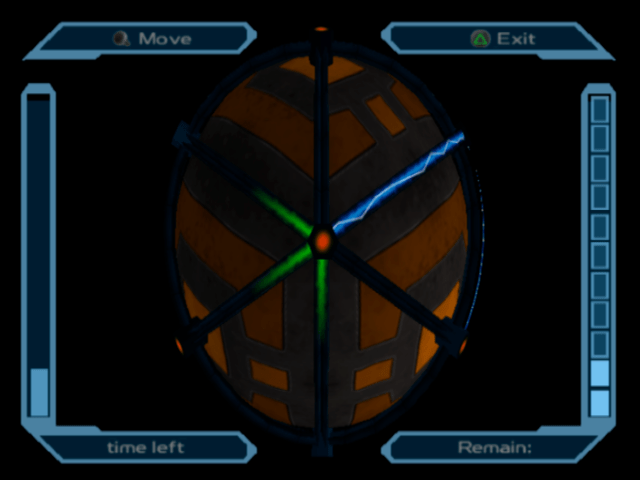
    The gadget diversity is strong, but once again there is a gadget that allows you to open doors. This time it is called the Infiltrator and presents the puzzle in the form of a sphere with an incomplete circuit. Your goal is to move around the sphere completing the circuit, with dead ends thrown in to impede your progress. This version of the entry gadget as a timer on it too, meaning you must exercise both your logic of where you’ve just been and how fast you can figure out where to go next. Aside from the puzzles to find optional collectibles, which are intentionally more difficult; none of the compulsory sections will stump a player for long.
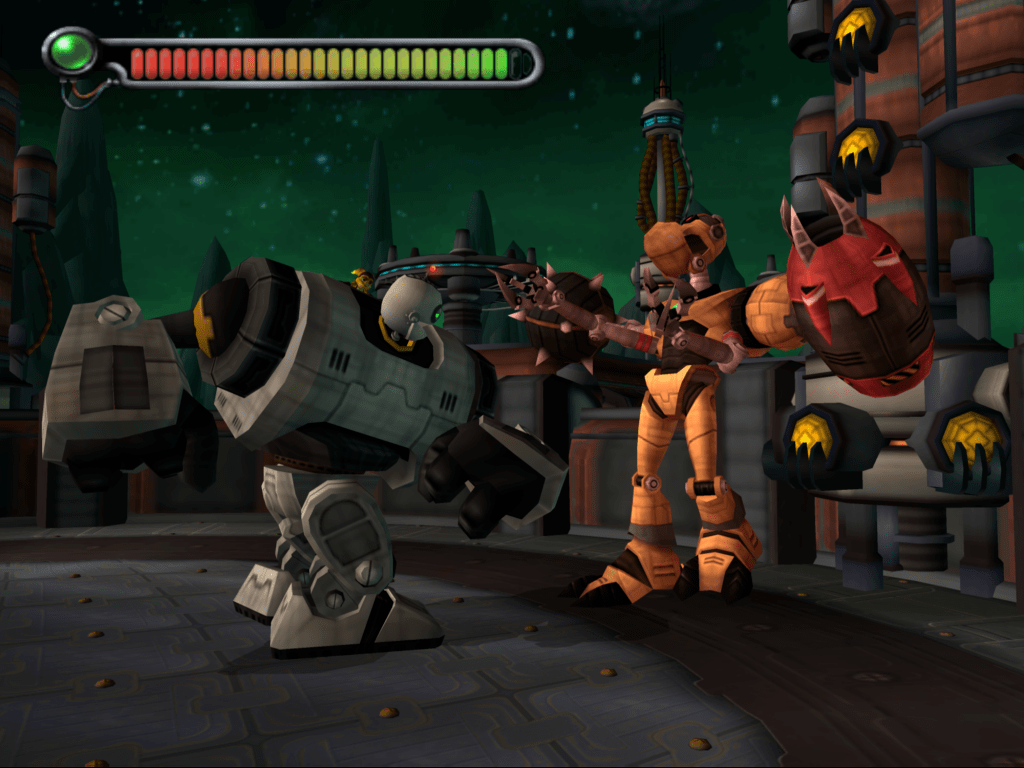
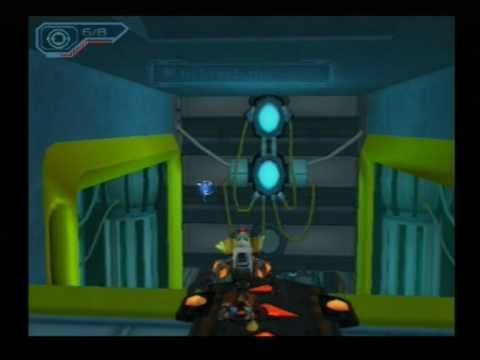
    Both Clank and Giant Clank return for the game. The latter is no different, he has missiles, bombs and his fists (though those do a lot more damage this time round). One segment is compulsory, one is for an optional item. The former has some changes with Gadgebots making their return but three types of unique bots appearing. A Bridge Bot for traversing gaps, a Hammer Bot for smashing obstacles and operating catapults, and a Lifter Bot which is used for one whole obstacle and is never seen again.

    As mentioned when discussing bolts, a lot of things now give bolts as a reward, and they form the side mechanics of this game.

    A change from the first game is that now Ratchet rides on a hoverbike, rather than a hoverboard. Small change I know but I much prefer this to the somewhat mediocre races of the previous iteration. Bikes are faster, weapons bring much needed diversity and the courses are well-designed. Once again one is compulsory for progression and another earns you the Charge Boots, with additional races afterwards to earn bolts.

    Two planets in the game play host to gladiator arenas. These are specific spots where all you will do is fight rounds of enemies to win bolts, allowing you to grind experience for weapons at the same time. Both arenas will present unique challenges to play through, such as using only one fully loaded weapon to defeat all enemies, defeating all enemies within the time limit, or clearing the challenge without taking damage. These arenas can be surprisingly addictive with a good pay-off to match.

    On two other planets, once the main objective is achieved, there is a wide open space to traverse filled with crystals, which can be retrieved and brought to someone who will give you bolts in exchange for them. Collecting all crystals on a planet earning you a skill point.
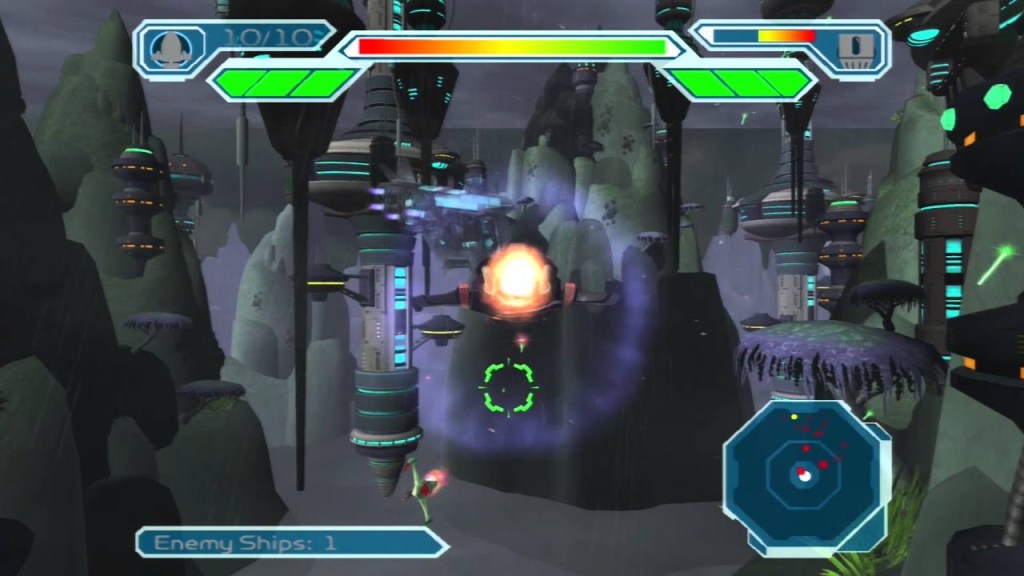
    Finally, the small ship combat sections from the first game have been expanded upon greatly. There’s now 3 dedicated areas which are exclusively ship combat, with the first mission being a straightforward “eliminate all the targets” and required for story progression. The subsequent missions being elimination missions or taking more of an objective focus. The last mission is always a checkpoint race through the level.

    During these segments, a collectible called “Raritanium” can be dropped by ships. This can be taken to Slim Cognito’s Ship Shack for various ship upgrades such as better lasers, new secondary weapons or upgraded engines. This is also where the unlockable ship paint jobs can be purchased.

    Controls

    Ratchet controls similarly to the first game, small tweaks to make platforming tighter and Clank’s Thruster and Heli pack upgrades are now mechanically identical with no new moves added, the choice now being just for player preference (Thruster Pack all the way).

    Ratchet can now strafe right out of the gate. This makes combat so much easier as you can now sidestep around enemies whilst targeting them properly, now able to jump if a large projectile is coming your way.

    The camera still feels off though, it gets stuck on things less but in tight areas it’s still awkward to angle right due to the rotation speed. It continues to be the perfectly workable camera for a 3D platformer, but it’s not until this game’s sequel that we’ll see the camera done right. (An aside, beating this game once unlocks a toggle-controlled first person mode, which is a full control method explored in the sequel)
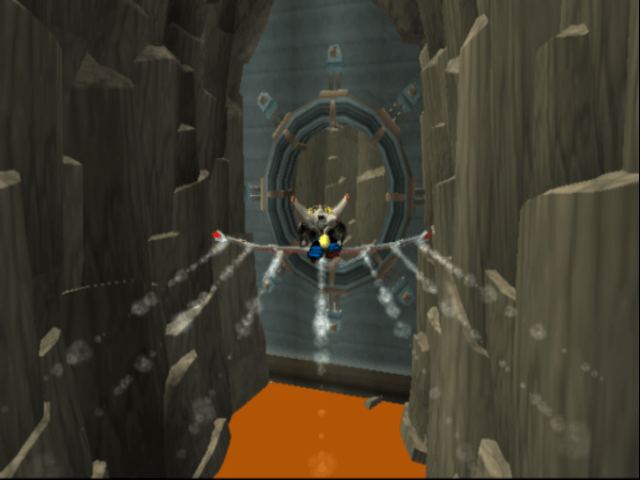
    And my issues with controls don’t stop here sadly, as when I was talking about gadgets, I briefly mentioned the Momentum Glider. It is used a grand total of three times in the game, two of which are for compulsory segments, with one of these segments holding one of the most awkwardly placed collectibles in the game. These three segments are not enough to get used to how the glider controls, with the controls being inverted even if you turn off camera inversion and the camera being right up Ratchet’s arse makes long sweeping turns difficult as you can’t see what’s around you.

    This ties into the awkwardly placed collectible. It’s placed in such a way that it’s impossible to pick up without doing one of two things. Either turning around at the end of the course in a long sweeping turn and travel all the way back to the start, or intentionally stalling the glider close to the start, quick turning around and then attempting to get it.

    Why am I bringing this up?
    Because it took me until this playthrough, 16 years after first playing the game, to finally get that collectible, through multiple playthroughs and years of attempts I finally did it.

    Finishing it today

    I did a perfectly fresh and clean playthrough this time round, and it turned out to be one of my best. I had so much fun using every single new weapon, getting to explore all the new worlds which still felt fresh and fun to me. I grabbed collectibles that have eluded me for 16 years and played through missions that were impossible to a younger me.

    I know it feels early to say with an article still to go, but this is the best game in the original trilogy for me. The worlds are diverse with so much content to explore, all the new weapons are incredibly well designed with utility up until the end game, and the replay value is insane, to the point one of the saves on my memory card which belongs to my dad has 11 playthroughs on it.

    This is also the game that introduced the “Insomniac Museum”, a side level dedicated to the game’s development and letting players mess around with the systems they developed for the game and showing off cut content from both this game and the previous game. To both a regular player and to the more technically minded this is a fascinating addition to the game.

    And as we move forward to Up Your Arsenal, more changes happen… though some are not for the best.

  • Ratchet & Clank Original Trilogy Retrospective: Part 1

    (NB: Originally posted on https://geekoutuk.com/2019/08/25/ratchet-clank-original-trilogy-retrospective-part-1/)

    Ratchet & Clank is a series of 3D platformer/action games developed by Insomniac Games, then known for developing Spyro the Dragon and known nowadays for developing Sunset Overdrive and Marvel’s Spider-Man.

    In this series of articles, I’m going to talk about the original 3 games, covering off their major features, plot, equipment, control, and how it felt finishing them today. I’m going to be upfront, these games were some of the first I played; I still adore them today 15/16/17 years later, so gushing may occur.

    With that out of the way, let’s get started.

    Introduction and Plot

    Ratchet & Clank was released in 2002 on the PlayStation 2. The game starts with Ratchet working on a ship he’s built from scratch, with the last step being a “Robotic Ignition System”, which he has no idea how to get.

    Meanwhile, on a production line of robots, the machine suddenly freaks out and out pops Clank; who as a defective model – who also just saw some very sensitive information on an Infobot – is targeted for destruction. He escapes, but in pursuit is shot down over Ratchet’s world of Veldin.

    The lombax (Ratchet’s race, admittedly not brought up much in the trilogy aside from a few mentions) goes to investigate the crash site and retrieves Clank, who after waking up shows the Infobot to Ratchet.

    Chairman Drek of the Blarg is building a new home world for his people after the previous one was polluted. How is he doing this? By finding other planets in the galaxy and removing the best chunks from them to add to his own. To try and stop this, Clank wishes to track down the greatest superhero the galaxy has ever known…

    CAPTAIN QWAAAAAAAAAAAAAAAAAAAAAAAAAAAAAAAAAAARRRRRRRRKKKKKK!!!

    *Ahem* Sorry.

    Ratchet agrees to this, as Clank is also able to act as the aforementioned Robotic Ignition System, which allows him to start his ship. This begins the duos adventure across the galaxy, taking them to unique planets with different problems to solve. As it progresses the plot almost seems to take on a “buddy film” kind of vibe, with these two very different personalities able to work together well, eventually forming a tight friendship.

    Weapons

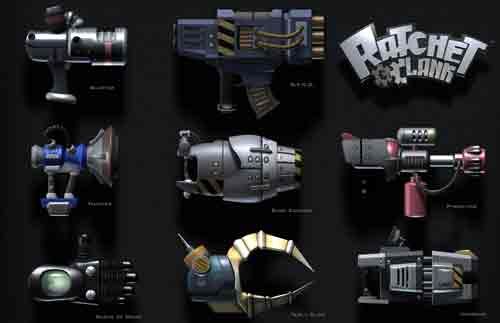
    Starting out, you only get Ratchet’s Omniwrench and a Bomb Glove to use for fighting enemies. As the game progresses, each new location gives a new weapon for the player to purchase, for a total of 14 – These weapons range from the conventional, the powerful, and the somewhat ridiculous.

    Personal favourites of mine include the Pyrocitor; On the surface it’s a bog-standard flamethrower for a decent Area-of-Effect attack. The refresh rate was changed in the PAL version, which makes it deal more damage per-frame. The joys of unintentional bugs.

    Another is the Tesla Claw, one of the more expensive weapons in the game and only unlocked at the third-to-last planet. This is a high ammo claw with shoots out a homing bolt of electricity, prioritising enemies closer to Rachet.

    Finally, we have the Visibomb Gun. A sniper rifle weapon only becomes a series mainstay in the sequel but the Visibomb does all the work and more. It’s a remote-controlled rocket launcher in which you see the Point of View of the rocket, and it will detonate on contact with a surface or can be remotely detonated to deal with a group of enemies.

    Although, I cannot write a Ratchet and Clank article without bringing mention to the R.Y.N.O (Rip You a New One). This weapon is not available in conventional vendors and must be brought from the Shady Salesman for a whopping 150,000 bolts (the in-game currency). Once purchased the game becomes a cakewalk, with a massive 50 ammo capacity and each shot having the potential to launch 9 heavy damage rockets, single targets and groups fall within seconds.

    Gameplay

    The game has linear progression through the plot. You go to a planet, solve the problem presented in the cutscene or by an individual you meet on landing, watch another cutscene and go to another planet.

    However, the levels themselves are designed in a very non-linear way, with most planets have 2-3 routes to traverse through, each giving a different reward – the only time this differs is for plot-centric planets, where the game will direct you through. There are also instances where a planet needs a revisit when new equipment has been acquired, leading to new areas being available for exploration.

    Hidden within levels are Gold Bolts, 40 of them total are scattered across the planets. Either hidden in hard to reach places, or behind longer platforming challenges, these collectibles only begin to serve their purpose after reaching the Gemlik Base level or finishing the game, as this allows you access to purchase Gold Weapons which are mechanically upgraded versions of 10 weapons in the game.

    The game, like previous Spyro the Dragon titles, hosts a Skill Point system. Achievements before achievements in a way, these rewarded the player with a point for performing a specific task, such as completing a platforming segment without touching the floor or beating a level with only one type of weapon. 15 points will earn you a Sketchbook full of concept art, and the full 30 points will earn you a “where are they now”-style Epilogue.

    Level presentation holds up insanely well after all these years. Each level begins with the camera being set to a specific angle to show the player what is ahead as the music swells. The soundtrack in this game is fantastic, with all the tracks matching the atmosphere of the level perfectly. The game running at 60fps is also a plus.

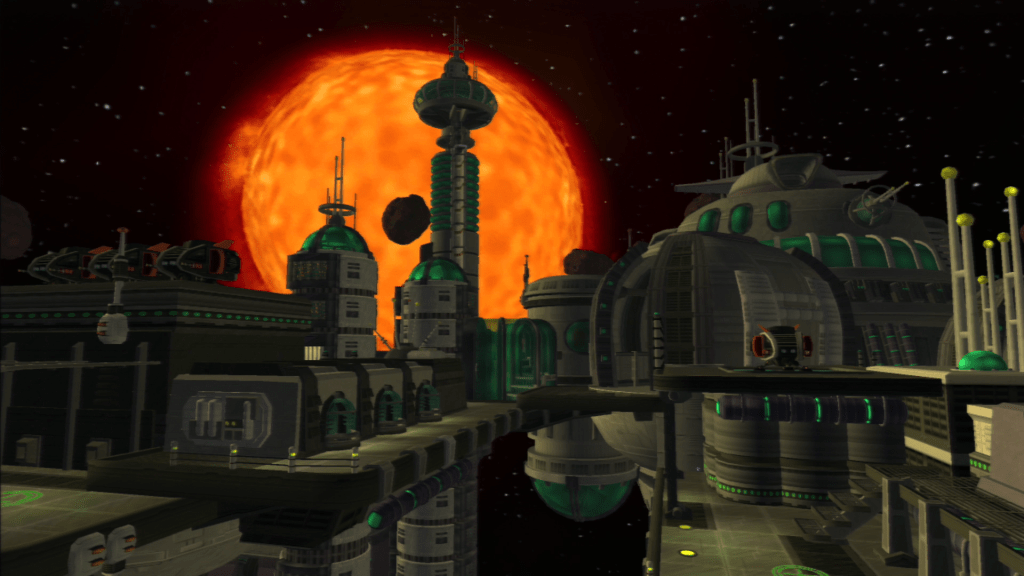
    Gemlik Base is probably the most atmospheric level in the game, and looks gorgeous even today

    As mentioned in Weapons, the primary currency of the game is bolts, acquired from destroying enemies or breaking crates. These are primarily used for weapons and ammo but are sometimes used to advance the plot.

    However, the game is terrible at giving players access to these bolts. It’s likely to take a few planets worth of grinding to be able to buy a single weapon, which is also only supplied to you at half ammo. Unless you put in a lot of time grinding, it’s likely to take repeat playthroughs to buy the R.Y.N.O. Repeat playthroughs go some way to fixing this issue, as all bolt drops are increased by an unspecified multiplier, making each planet more valuable to run through.

    Various gadgets become available to the player throughout the game’s progression, used for either advancing through a plot-mandatory route, or for accessing hidden secrets. A lot of them are used for mobility, Grind Boots for grinding rails, Swingshot for swinging on targets, Magneboots for magnetising yourself onto surfaces and a Hydrodisplacer to create areas to swim in.

    I’ll give particular focus to the Trespasser though. Each game in the trilogy has a gadget that lets you play a minigame to open a lock, and the Trespasser is this game’s version. It’s an untimed challenge which has you directing 3 rings of lasers into various ports by rotating them by set angles, focusing more on logic of how the lasers interact and block each other rather than reaction times.

    Scattered around the game are a few mechanics used for a handful of gameplay segments.

    At two points during the game you can enter a hoverboard race, one of these is optional for a side mission, the other is mandatory to get a gadget for progression. They function well enough, but they don’t really have any reason to replaying them, other than for bolts and an arbitrary score.

    There’s also points where, after obtaining a pilot’s helmet, Ratchet gets to pilot a fighter jet to secure the path, get a new item, and even a late game boss fight.

    Finally, the game features a two-name title, so you get to play as Clank every so often. His levels are more focused on slow platforming and using Gadgebots to handle your combat and puzzle solving, although that doesn’t mean he can’t see action. In two segments, Clank can become Giant Clank, a building-sized behemoth equipped with missiles, energy bombs and fists that can shred through enemies, these may be short segments compared to the rest of the game but my god, they are fantastic.

    Controls

    As a 3D platformer, Ratchet controls pretty good. His jumps have weight and the sound of the double jump still feels satisfying to me. His turning circle does feel a bit wide in sections, but he is able to change directions on a flick of the analogue stick incredibly well.

    To aid in platforming – and later swimming – segments, Clank obtains three backpack upgrades. The first of these is the Heli-Pack which opens the possibilities of slowing your descent in a glide, a high jump and a long jump.

    Later, you earn the Thruster Pack (my personal favourite to use going forward) which has mostly similar functions with faster movement due to the rocket propulsion. Two new moves unlocked are a power slam allowing you to break metal crates and operate switches, and a rudimentary strafe (more on that in a bit).

    This culminates in the Hydro Pack, a backpack that is automatically equipped when underwater. With a click of the R1 button it activates, automatically propelling Ratchet through the water, where you only need to control depth and direction. This is needed to access some hidden areas for both Gold Bolts and upgrade items, as the normal swimming speed is nowhere near fast enough.

    However, there are two main areas where I have criticisms, one of them is a product of its time and the other was rectified in the sequel.

    The former is the third-person camera, it’s workable and won’t cause many problems during gameplay but it suffers from the sins of early 2000s game design, as it got stuck in scenery in tight spaces. Even on its fastest setting, the camera doesn’t rotate fast enough to face an enemy behind you, combined with a patchy-at-best targeting system, this can result in a fair bit of damage.

    After playing through the game, the main conclusion I came to is that the camera is a perfectly good camera for a 3D platformer. It is what you’d expect from the people who made Spyro, but it would take a few years before it became good for a 3D action shooter.

    The other issue is the ability to strafe (moving in cardinal directions to aim/avoid attacks). This is mostly unimplemented in the game, with the only option being the Thruster Pack which only allows for better aiming as you cannot jump in this strafing mode. It does make later combat segments easier to navigate due to this refined movement but the lack of a flip for quick dodging leads to more enemy attacks connecting than they should.

    Finishing it today

    Despite my grievances with how the bolt economy works and some of my issues with the controls, I still really enjoyed getting to experience this game again. Slight confession here, I did my full playthrough of the game for this article on a second playthrough. I briefly attempted a normal run, but the bolt problems just got a bit much.

    Having the unspecified multiplier and the bolt pickup range upgrade brought the gameplay more in line with a first playthrough of either of the sequels, which built on the underlying gameplay in each instalment. This made the grind towards Gold Weapons and the R.Y.N.O not feel like a slog.

    This game started off a franchise that lasts to even today, when this game was re-imagined in 2016 alongside a feature film. However, that’s a topic for another day.

    And the franchise is only going to grow in the sequel, Going Commando.

  • Rosalia’s Favourite Pokemon – Water/Grass/Fire Edition

    Introduction

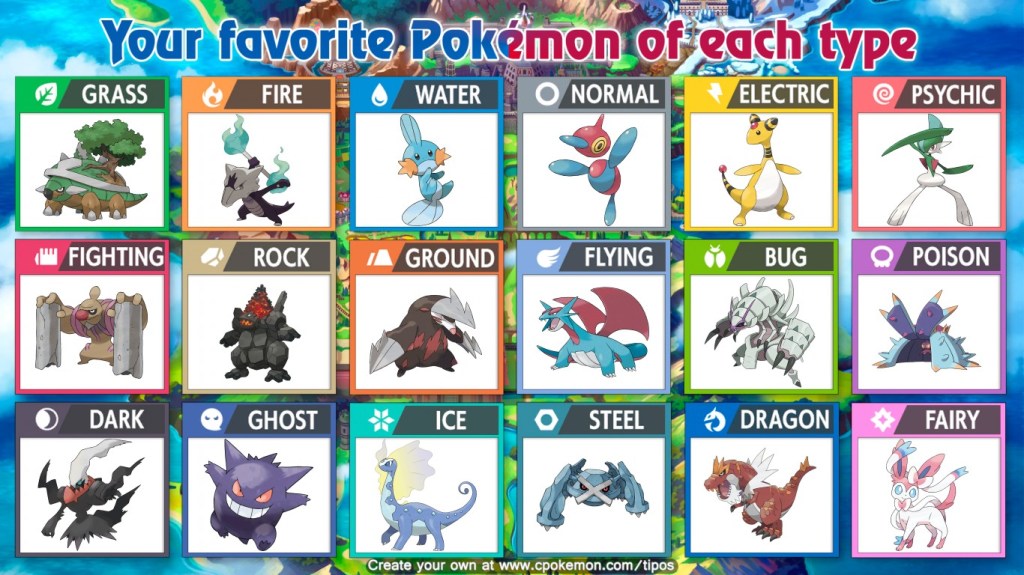
    So, whilst this is semi-obvious, some of the Pokémon listed in the graphic above are not going to be my absolute favourites, for some types it was hard to pick one representative that communicates my love and affection for what that type embodies. And conversely, for some of choices I have made, they are my favourite, no questions asked. Why I have made certain choices will be explained in the respective section for each Pokémon.

    With that small disclaimer out of the way, let us move onto covering the trio of types that encompass the starter Pokémon.

    Water – Mudkip, #258

    I am a girl who practically always goes for the Water-type starter (more on that in the next section), from Squirtle to Sobble, each generation’s offering has managed to capture my heart in unique ways. So what elevates Mudkip to standing out amongst the rest?

    First off, the design. Whilst it is more possible that the design was inspired more by mudpuppies and mudskippers; there are also some hints of axolotl within there, with the gills on the side of its cheeks mimicking an axolotl’s gills. This instantly elevates my opinion of Mudkip, as axolotls are my personal favourite amphibians with their charming smile and docile personalities. This is not to say that Mudkip is not cute on its own, sharing the common trait amongst all starter Pokémon of looking incredibly huggable.

    With this being the first Pokémon in an evolutionary line (the only such entry on my list), discussing what Mudkip evolves into seems appropriate.

    At Level 16 it evolves into Marshtomp, gaining Ground-type as a secondary type, this eliminate its weakness to Electric-type, but that comes with the caveat of a four-times weakness to Grass-type. Whilst quad weaknesses can be perceived as liabilities to some trainers; I consider them almost a point of charm, since additional types can also bring additional resistances.

    At Level 36, it evolves into the final form of the line, Swampert.

    The two defining stats of Swampert are their HP (100) and Attack (110), leaving them as a bulky physical attacker, with the very powerful advantage of gaining Same Type Attack Bonus (STAB) on Earthquake, probably the best move in their arsenal. Physical Water-type moves are a bit lacking for a physical Water-type attacker, but with a Sp. Attack base of 85, having a move like Muddy Water or Surf would not go amiss.

    Also, try sort out an Ice-type move ASAP, Grass-type is the only weakness here so having the type coverage to deal with them would be valuable.

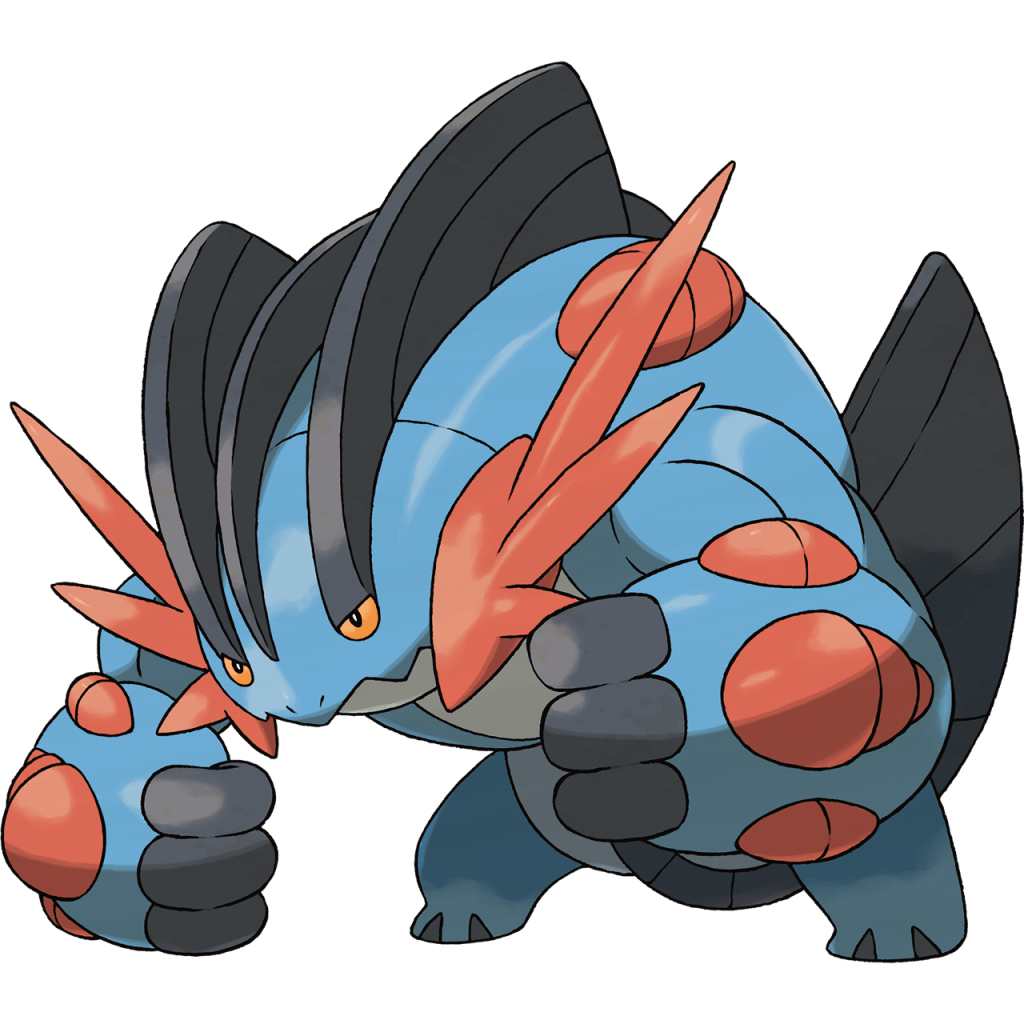
    Swampert is also the first of several Pokémon on this list to have a Mega Evolution. Introduced in Generation 6 as a way to try spice up battles; Mega Evolution allows certain Pokémon holding Mega Stones (or knowing a certain move, in one broken case) to unlock a pseudo-evolution in the middle of a battle, changing their form, stats, and abilities. This was only allowed once per battle.

    Mega Swampert has clearly been hitting the gym, with those massive arms providing a huge boost in Attack to 150, with minor buffs to both Defense stats and Sp. Attack. Speed only goes up by 10 points, but in the right hands this should be no issue, as this Mega Evolution gains the ability “Swift Swim”, doubling speed when the weather condition of the battle is rain.

    Mudkip was my choice when Ruby and Sapphire first released, and when Omega Ruby and Alpha Sapphire came around, the choice continued to be a no-brainer.

    Grass – Torterra, #389

    So… about what I said about being someone who always took Water-type starters…

    Yeah, there has been one exception on a first playthrough of any main series game, and that is the Turtwig line.

    And even today, I consider this quite a break away from what I’ve always known, especially considering Generation 4 is when the Water-type starter line was designed after penguins, one of my all-time favourite animals. But… something about this cute, grassy tortoise spoke to me.

    Since I’m specifically saying that Torterra is my favourite here, I’ll give some condensed thoughts:

    • Turtwig Cute
    • Grotle Meh

    Now, onto the main show, the tortoise carrying a world on their back.

    Meaning of course The Great A’Tuin.

    Nah, we’re still talking about Torterra here, but A’Tuin is admittedly one of the nicknames I’ve used in the past for this Pokémon, along with various ground-based puns, and when I first got Pokémon Diamond at the age of 8…

    “Tree King”

    I wasn’t wrong, they do have a pretty formidable tree growing out of them. Formidable is also pretty accurate word to describe the offensive capabilities of Torterra, carrying a base Attack stat of 109 and learning the powerful STAB Ground-type move of Earthquake upon evolution at Level 32, with the ever-versatile move of Crunch being learned at Level 45 providing valuable type coverage in a reliable way, and, with a Move Reminder, Wood Hammer unlocks true STAB Grass-type potential at the cost of some recoil damage.

    However, the recoil doesn’t necessarily have to be an issue, as the utility moveset of Torterra allows for limited recoil mitigation in the form of Synthesis, potentially combining with a Sunny Day user to fully maximise recovery, or Leech Seed to give more gradual recovery across multiple turns whilst maintaining damage output.

    And like Swampert beforehand, a favourite Pokémon of mine has a four-times weakness, this time in the form of Ice-type moves. And again, this just adds to the charm for me, especially with the raw amount of power Torterra is able to put out.

    Fire – Marowak (Alolan), #105

    Of all the new experimental designs to come out of The Pokémon Company in recent years, the idea of regions having specific forms of different Pokémon has to rank highly for me, as it’s a way of creating diversity within a region whilst utilizing existing designs in creative ways (though admittedly, Galar does this better than Alola did).

    Out of all the Alolan forms added in Generation 7, one stands out to me, the ghostly fire dancer form of Marowak.

    Fire dancing is a worldwide spectacle at this stage, but it is theorised that Alolan Marowak draws inspiration from multiple Pacific civilisations, with the Samoan fire dancers inspiring the bone club with flames on each end, mimicking the design of a fire staff. The second half of the typing (Ghost) potentially has routes in the Polynesian culture with the concept of “mana”.

    Mana is a wide-ranging term, but it usually comes down to the concept of people possessing different forms of spiritual energy that exists in people, places, and objects. Ancient Hawaiian culture teaches that in nature, everything has a counterpart, and so both positive and negative possessions of mana are possible. If we compare this to Alolan Marowak’s Pokédex entries, it can be theorised that the mana possessed by this Pokémon is one of sorrow, regret, and vengeance, manifesting as the fire imbued within them.

    Brief culture lesson over and wild theories postulated, let’s get into the finer details of why I love this alternate form.

    I had made up my mind pretty early on that I wanted one of these on my Pokémon Sun team, as when I saw it in previews I almost instantly fell in love with the design and typing and, with the knowledge I’d be choosing Popplio as my starter, gave diversity to my team composition.

    When using the Thick Club (the only correct item for any sort of Marowak in my opinion), an aggressive moveset is ideal, and the Fire/Ghost typing of Alolan Marowak opens many possible avenues for powerful STAB and type coverage moves:

    • Flare Blitz, when combined with the Hidden Ability of Rock Head (nullify recoil damage from moves), is a 120 power, 100% accuracy STAB Fire-type move with no downside whatsoever. Use. It.
    • Shadow Bone, the signature move of Alolan Marowak, a good power STAB Ghost-type move with the added benefit of potentially reducing the target’s Defense stat
    • Brick Break, learnt via TM, gives utility to remove Light Screen and Reflect effects, whilst also granting type coverage to deal with the new weakness to Dark-types
    • And finally, depending on your preferences, you can either go for Swords Dance to make sure attacks sweep foes away, or you can go with the unintentional theme of this article, and teach it Earthquake to round out the moveset more

    Part 1: Completed

    So ends the Water/Grass/Fire edition of my favourite Pokémon, it’d be nice to hear what you think of my choices in specific types, or what your favourites are within the types of the edition. Next time, I’ll be covering the Normal, Electric, and Psychic entries of my list.

  • Melody’s Escape

    (NB: Originally posted to https://geekoutuk.com/2019/09/22/melodys-escape/)

    Throughout my life, I haven’t been the best at rhythm games. I’m able to make a pretty good run at them when I’m in the right frame of mind but even then, my reactions to the on-screen prompts can be a bit off. Which, considering one of my favourite games of all time (The Binding of Isaac) has the potential to train lightning-fast reflexes into you, is a bit odd.

    Nonetheless, given a flash sale and some Steam Wallet funds laying around – Thanks Joel – I decided to pick up a game that had caught my eye on visuals alone: Melody’s Escape.

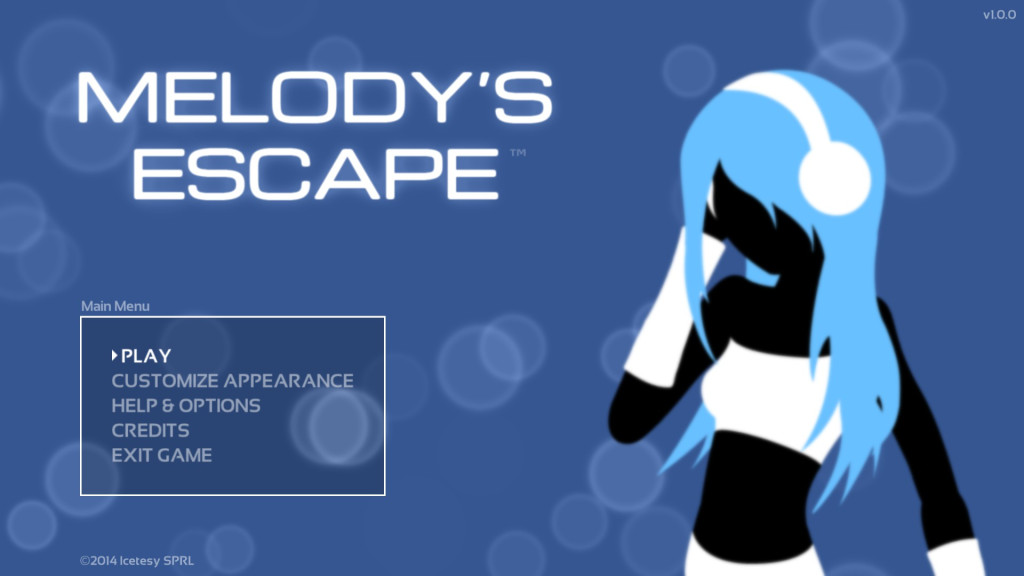
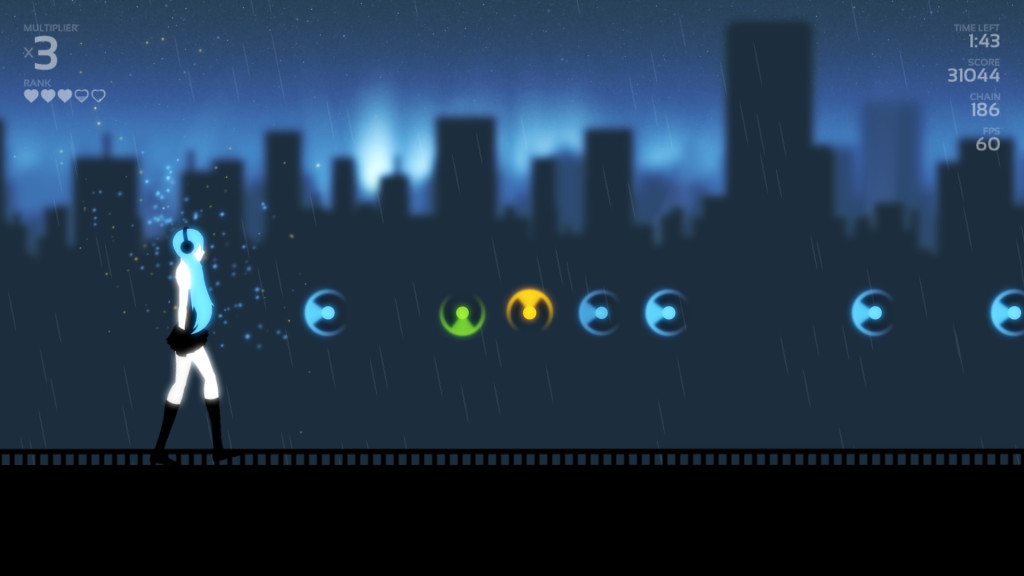
    The premise is simple. You play as a girl called Melody, with your goal being to avoid obstacles along a side-scrolling track. The obstacles and speed at which Melody travels is determined by the song playing in the background.

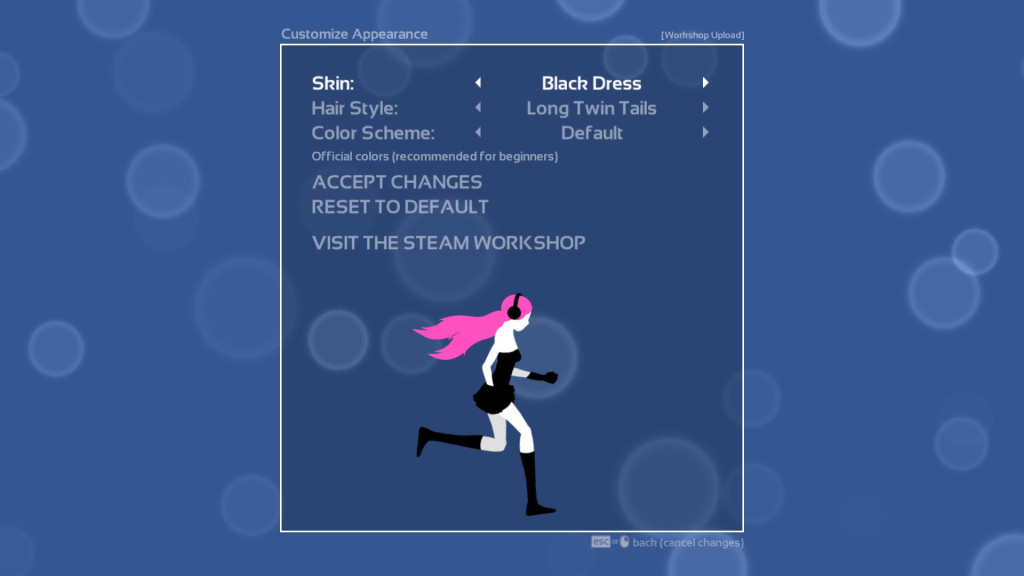
    Melody herself is customisable in one of the game’s menus. You can change her colour palette, her outfit and her hairstyle to create an avatar that reflects your personality. Of course, me being me I gave her a cute black dress and long anime-style twintails.

    What are you escaping? Well, nothing. There’s no monster chasing after you, no wall of infinitely approaching death behind you, just running along this course. Melody puts her headphones on before the start of each track, so she is listening along to the music you are playing.

    Perhaps, the music is an escape for her as much as the game is an escape for you.

    I’ll let the store page on Steam preface the gameplay:

    Very accurate and fast music analysis: Melody’s Escape features extremely accurate beat-matching algorithms and is optimized to analyse a song in its entirety within a few seconds.

    The game comes with 6 preloaded songs, which are obviously what the algorithm has been optimised towards. On these songs, note detection is spot-on perfect with held notes syncing perfectly to the audio. Obstacles appear in the form of slopes to grind down, walls to kick down, tunnels to duck/slide under and when songs get faster, Melody will make great leaps or, if she’s flying, glide through areas.

    There are various difficulty modes, allowing players to choose how they want to enjoy the game.

    • “Relaxing” features minimal obstacles and orbs, with only a single direction needing to be pressed per intensity level
    • “Medium” has all 4 directions for prompts but both orbs and obstacles can be collected with either WASD/arrow keys for keyboard or D-pad/face buttons for controller
    • “Intense” is the true rhythm game experience. Orbs are more frequent and closer together requiring precise button presses and orb collection is now unpaired from obstacle traversal
    • “Overload” will act as a true challenge. Even more orbs and obstacles now require both buttons to be traversed successfully
    • “Autoplay” can be used to see how a song is going to play in terms of intensity, or if you just want to appreciate the game’s visuals to your favourite music
    I super dig the minimalist art style in this game, it’s gorgeous

    Speaking of favourite music, I did a fair few courses using some of the music I have on my PC. Both to experience the game with the music I enjoy listening to, and to test how well the algorithm handles different genres of music.

    As advertised the algorithm can analyse a song incredibly quickly and accurately determine the tempo and intensity of sections. Only a few songs out of the ones played before writing this article had the prompt “no stable 4/4 tempo detected”, but the course still played perfectly fine.

    There are moments where the game’s input will be slightly off with how the song is actually going, but in my opinion it’s not massively noticeable. The game has a standard audio/video latency calibration system, so you can adjust inputs as you grow used to the game.

    Black dress? Pink twintails? This is just a style I’d wear normally!

    To conclude, Melody’s Escape is incredibly addictive and tonnes of fun. I’d have loaded up the game to check a fact I’d written down in the article and go “one song won’t hurt”, then I’d play more songs after that one to see how I could do on them.

    The game is cheap on Steam at £6.99 (or local equivalent price) and when I bought it on sale it was 50% off making it even more value for money. Those who are into rhythm games will enjoy the harder difficulties as it quickly becomes a Dance Dance Revolution sidescroller, and those who are enthralled by the visuals will find Medium and Relaxing both their speed but with a good amount of challenge.

  • Ampharos VS Luxray: A Strangely In-Depth Comparison


    (NB: Originally uploaded to https://geekoutuk.com/2019/10/07/ampharos-vs-luxray-a-strangely-in-depth-comparison/)

    Due to a close friend of mine having done a playthrough of Pokémon Heart Gold, I decided to pick up my old copy of Pokémon Diamond to do my revisit of the fourth generation of these games… and then I did a playthrough of Soul Silver anyway, partially to see if any of the complaints I had lodged towards it actually stood up. (That’s a topic for another time)

    When planning out my teams for both games, I decided to carry an Electric-type to deal with both Water- and Flying-types, especially as in both games I was using a starter Pokémon that is vulnerable to those (Cyndaquil and Turtwig respectively). Thankfully, both games have an Electric-type found in the wild very early on.

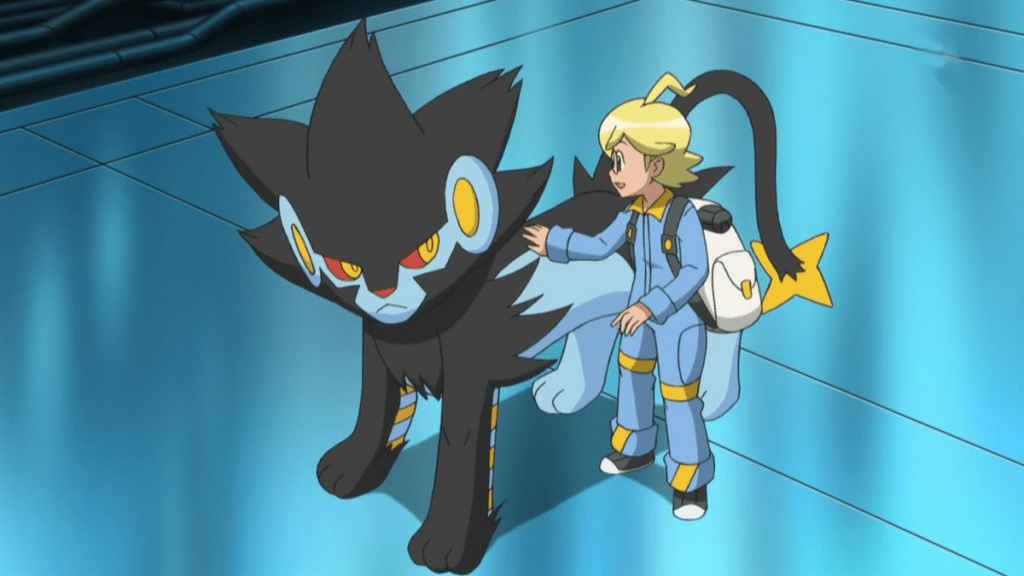
    Shinx, which evolves into Luxio and then Luxray, for Diamond. Mareep, which evolves into Flaaffy and Ampharos, for Soul Silver. How do these two evolutionary lines compare?

    A note before I start: I’ll be basing my comparison off their Generation IV movesets and stats, with a section at the end to talk about how they developed as the games go on.

    Stats and Abilities

    Stat/PokémonLuxrayAmpharos
    HP8090
    Attack12075
    Defence7975
    Sp. Attack95115
    Sp. Defence7990
    Speed7050
    The base stat totals of each Pokémon

    Right away we can see that the offensive capabilities of these Pokémon are complete opposites. Luxray is designed be a physical attacker that can still hold its own with special attacks whereas Ampharos is more geared towards special attacks with less of a focus on physical attacks.

    An interesting point to note is the surprisingly low speed stats on both Pokémon. Electric-types are traditionally faster to reflect the speed at which lightning moves in real life. Jolteon, accessible in HeartGold/SoulSilver (HG/SS) and Platinum, has a whopping 130 base speed stat with offensive capabilities to boot. Raichu (the next best option in Diamond and Pearl) has 100 base speed with offensive capabilities balanced between physical and special attack.

    About abilities, Ampharos only comes with one, “Static”. Static confers a 30% chance for an attacker to be afflicted with the status effect of “Paralysis”, provided the attack is physical in nature. Paralysis reduces the speed of the afflicted Pokémon and gives a chance for their turn to be skipped. During gameplay I noticed a fairly good proc rate on Static triggering, and Paralysis can be a boon in fights that will be drawn out over multiple turns (such as Whitney’s Miltank).

    Luxray has the potential for two abilities: Rivalry and Intimidate. In my experience, you’re going to want the latter.

    Rivalry increases offensive stats by 25% if the opposing Pokémon is of the same gender and reduces them by the same margin for the opposite gender (no modifier on genderless Pokémon). This can turn battles into a problem because, unless you use an external guide, you aren’t able to know the gender of your opponent’s Pokémon until you’re in the battle.

    Intimidate has more utility behind it. Upon entering battle the opposing Pokémon will have their Attack stat lowered by one level, with both Pokémon in a Double Battle being affected. This is incredibly potent on Luxray, as being a pure Electric-type means it’s only weakness is Ground-type moves, the majority of which are physical moves dependant on the Attack stat.

    It also has an outside of battle effect. When in the first slot of the party; a Pokémon with Intimidate gives a pseudo-Repel effect of preventing wild encounters if the encounter would be at a lower level, making back-tracking through earlier areas smoother.

    Movesets

    Luxray has a natural disadvantage when discussing moves, Electric-type moves tend to come as special moves and out of the four physical moves available, Luxray only learns two.

    And it doesn’t even matter because Spark and Thunder Fang are mechanically identical moves with Thunder Fang being strictly worse than Spark. Both have 65 power and a chance at Paralysis, but whilst Thunder Fang has 95% accuracy and a 10% chance to induce Paralysis; Spark has 100% accuracy and a 30% chance to induce Paralysis. Thunder Fang does have the slight benefit of also giving a chance to make a Pokémon flinch (making it miss it’s turn if the attacker moves before it) but, due to it’s usefulness, I’d prefer the higher chance of paralysis.

    The only other physical move of note learned on level up is Crunch, a Dark-type move with great power and a 20% chance to lower the defence of the opposing Pokémon. Dark-type is surprisingly useful on a physical attacker; it’s super-effective against Psychic- and Ghost-type which tend to favour Special Defence, leaving them more vulnerable to this move.

    Technical Machines (TMs) and Hidden Machines (HMs) go some way to alleviating the poor level up moveset. Iron Tail is a high power, medium accuracy Steel-type move that helps round out type coverage. Strength is essentially a super-powered version of Tackle, but still goes some way to round out offensive capabilities (and provides some usage outside of battle). And Thunder Wave is a highly accurate move that is non-damaging, but is guaranteed to inflict Paralysis.

    On the other hand, Ampharos has a much more diverse moveset both through level up and TMs.

    I may be slightly biased here in the fact that Ampharos is an adorable loaf who must be protected at all costs

    For a start, Thunder Wave is learnt by level up rather than needing a TM and is learnt by the first stage of the line (Mareep) early on, meaning it gets to see usage throughout the game at crucial points such as the aforementioned Miltank and for capturing the cover legendary Pokémon.

    Both Discharge and Thunder are learnt on level up, but the TM for Thunder comes early in the game so it’s probably easier to teach it then, it’s inaccurate but can deal massive damage. Discharge on the other hand is learnt at level 34 which should come near the end of the mid-game and will be your go-to Electric-type move for the foreseeable future.

    In terms of type coverage, the Bug-type move Signal Beam comes at level 42 and the Rock-type move Power Gem comes at level 59. Neither of these moves help to fight against Ground-type Pokémon but do provide more utility beyond Electric-type moves.

    Finally, Ampharos has a lot of options presented when looking at TMs. Thunderbolt is less powerful than Thunder, but carries a much higher accuracy percentage. Focus Blast is a high power Fighting-type move with the same accuracy as Thunder, but can provide some utility against Ground-type Pokémon who often carry a type weak to Fighting. If you want to field Ampharos as a disruption strategy; Toxic lets it induce the “Badly Poisoned” status effect on other Pokémon, a slowly increasing damage-over-time effect.

    Generation V onwards

    Nothing much changes for Luxray, it’s moveset improves somewhat through the addition of Wild Charge and Volt Switch in Generation V, the former being a level up move and the latter being a TM move. Wild Charge is a high power physical move that inflicts recoil damage onto the attacker in proportion to the damage dealt and Volt Switch is a special move with decent power which allows the attacker to switch out from battle, potentially in anticipation of a super-effective move.

    Hidden abilities being introduced as a mechanic gives Luxray access to the Guts ability. Guts increases the Attack stat by 50% whenever the Pokémon is inflicted with a status effect. Whilst this does give utility against users of such moves; the moveset remains a pressing issue here and I maintain that Intimidate is the best ability.

    Meanwhile, Ampharos has unlocked the power of Super Saiyan 3.

    Mega Ampharos is introduced in Generation VI, along with the mechanic of Mega Evolution itself. Like all Mega Evolutions, the stats are changed:

    • Attack goes up to 95
    • Defence goes up to 105
    • Sp. Attack goes all the way up to 165
    • Sp. Defence goes up to 110
    • Speed goes down to 45

    And the ability is changed to “Mold Breaker”, which allows moves to hit, even if an ability on the field would prevent it doing so. Ampharos was slow before Mega Evolution, so a slight reduction in speed in exchange for vastly increased offensive capabilities and slightly improved bulk is a fair trade-off. Dragon-type is also gained in the process, which does open up weaknesses towards Ice, Dragon, and Fairy-types, but grants resistance towards Fire- and Water-types.

    Ampharos’s moveset also gains more diversity as Generations go on. Like Luxray it gains access to Wild Charge and Volt Switch, the special nature of Volt Switch makes it a good utility move but due to the slowness of Ampharos it’s less likely to be an evasion tactic.

    The addition of Dragon-type for Mega Ampharos gives access to Dragon Pulse in it’s level up moves; this move has decent power and provides type coverage against the popular endgame Dragon-type. With the usage of a Heart Scale from Generation VI onwards, Ampharos can relearn Zap Cannon, a move with the same power as Thunder with lower accuracy, however, a successful Zap Cannon is guaranteed to induce Paralysis.

    Conclusion

    Despite railing against Luxray a fair bit in this article, Sparkplug (my Luxray) was an incredibly valuable member of my team. It having physical Electric-type moves proved invaluable against Cynthia’s Milotic.

    However, Wilhelm (my Ampharos) proved to be way more versatile, having access to Thunder Wave made potentially difficult gym leader encounters more manageable, with Focus Blast learned from a TM making battles against Steel, Ice, and Rock-types end quickly (if it connected).

    Both Pokémon have upsides and downsides, but in my opinion Ampharos comes out on top. It has a better moveset and utility in the game I was focusing on and it obviously gets a massive buff when Mega Evolution comes around, with decent new moves being added to round it all off.

    At the end of it all, everyone has their own preference towards what Pokémon they want to use on their team. Some prefer pure power, some will take what comes along first, and some will make their decision way in advance. Whatever you choose, your Pokémon grow along with you on your journey and not only become valued team members, they can become like friends.