Category: Pokemon

  • Rosalia’s Favourite Pokemon – Normal/Electric/Psychic Edition

    Normal – Porygon Z, #474

    Choosing a Normal-type to represent on this list actually ended up being quite difficult for me, as there’s a lot of good Pokémon to choose from, but none exactly stand out massively to me:
    • Do I pick one of the Starly line for being my personal favourite of the “three stage” bird lines in the series?
    • Do I pick Wooloo because the idea of rolling away from life’s problems seems appealing?
    • Do I pick Regigigas because I’m a memelord who wanted a shiny one to make a “MyBodyIsRegi” nickname joke?

    In the end, I decided on one where the background and design has always brought a smile to my face.

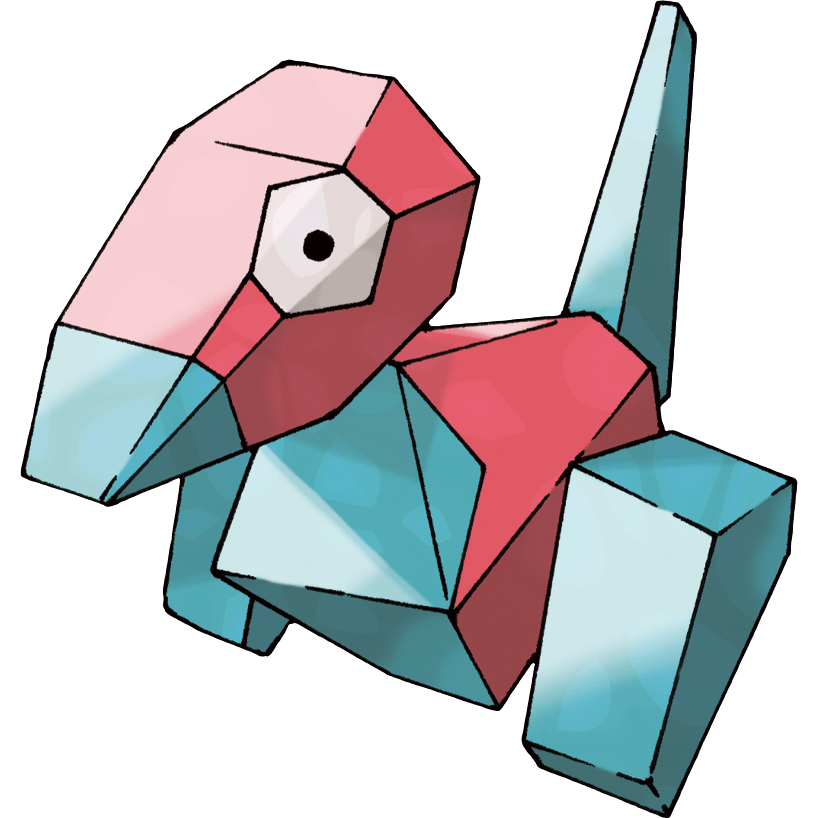
    The Porygon line in Pokémon derives from the core concept that it is a Pokémon that exists purely as computer code, giving it potential to operate in a near limitless amount of environments (though the Pokédex entry in Ultra Sun/Moon of most of the original Porygon being “obsolete” is quite entertaining).

    This artificial quality is reflected in how evolutions work along this evolutionary line. Trading a base Porygon with “Upgrade” turns it into Porygon 2, an upgraded version with better graphics hardware, as evidenced by the rough edges of the polygons behind smoothed out. You can then evolve Porygon 2 again by trading it with a “Dubious Disc” which does not upgrade the graphics hardware, in fact, no one is sure what it did.

    What exactly happens with this evolution can be left to interpretation, but two common ones persist:

    • The Dubious Disc infected Porygon 2 with a virus, not advertised on the disc, and this caused them to go haywire
    • The Dubious Disc was supposed to be what was advertised on the disc (interdimensional travel), but the programmers never finished the software, so it is full of bugs

    Porygon Z being a buggy mess is what appeals to me personally, because then that way I can have the concept of spaghetti code as a Pokémon!
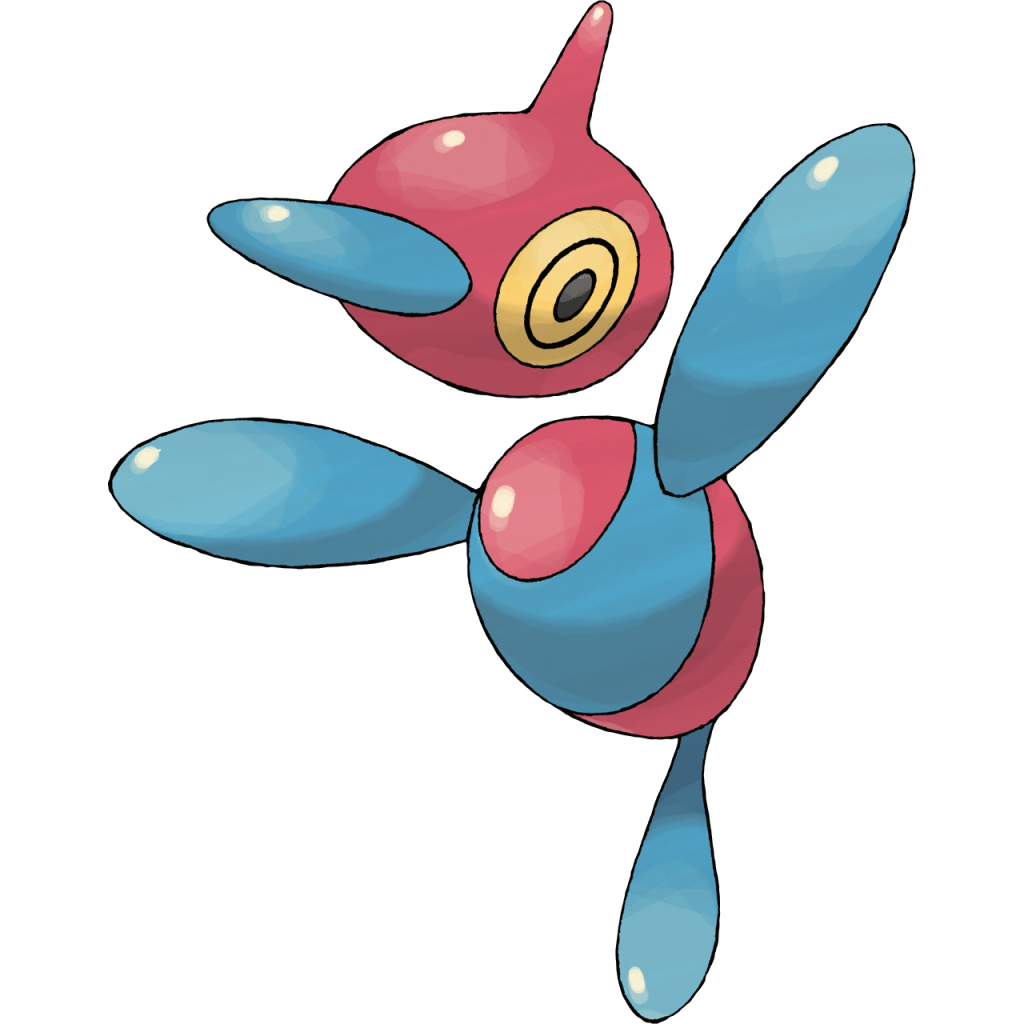
    In terms of offensive capabilities, Porygon Z is primarily a special attacker, with a good range of Electric, Normal, and Psychic moves to choose from. With 90 base Speed it’s not exactly a slow Pokemon, but it most definitely benefits from a Speed-enhancing nature such as Timid, there is also some potential for working with a Choice Scarf build, but the lack of Same Type Attack Bonus (STAB) on the more powerful moves of the arsenal holds things back.

    Honestly, I am just happy to keep this as my fun glitchy mess.

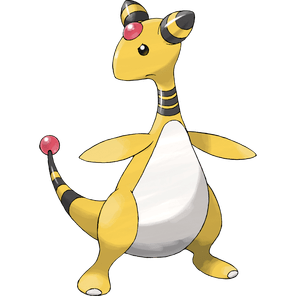
    Electric – Ampharos, #181

    If the positive praise I heaped on Ampharos in one of my previous works is evidence enough, I love this little electric loaf.
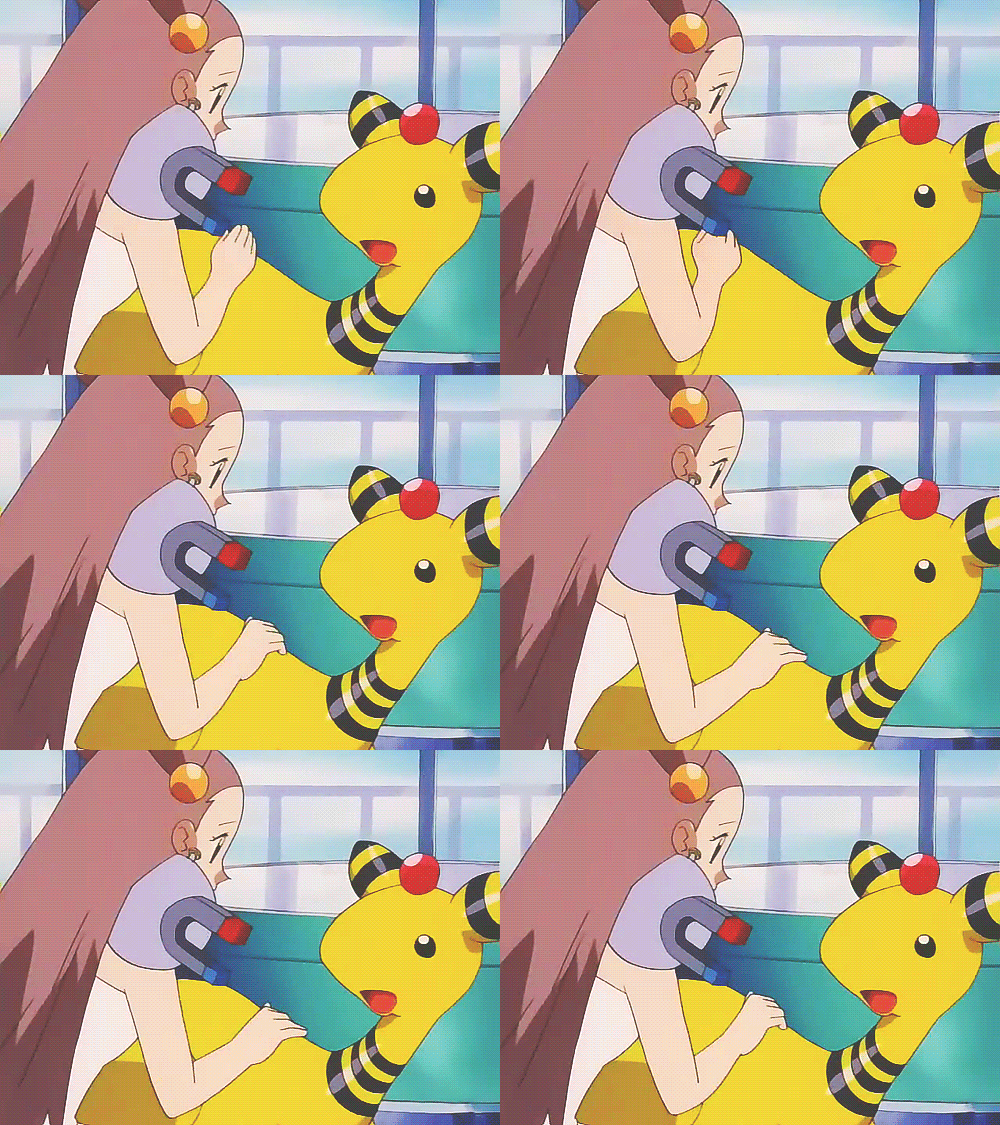
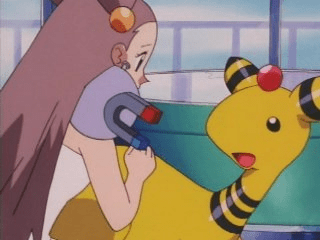
    Their name also has a cute tie in to where you find a named Ampharos in the Gold/Silver/Crystal storyline. “Amphy”, belonging to Olivine City gym leader Jasmine, powers the city’s lighthouse. The second part of Ampharos’s name is derived from the Greek word “fáros”, meaning lighthouse, whilst “amp” is a unit of measurement for electrical current. It would be entertaining if the name came from the design scenario of needing an Electric-type Pokémon to rest on top of the lighthouse.

    Whenever I play through a game where Ampharos is in the regional Pokédex, it is always in high contention to join my team even when I am playing an entirely new region with new potential Electric-types to choose from, despite its low speed providing a potential disadvantage compared to faster Pokémon who may not hit as hard.

    One of its main boons is the fact that Thunder Wave, a fairly accurate Paralysis status-inducing move, is learnt on level up in the base stage of the evolutionary line Mareep. Having a move like this is valuable for difficult gym battles, working to make roaming legendary Pokémon easier to catch, and providing the same utility to static legendary Pokémon.
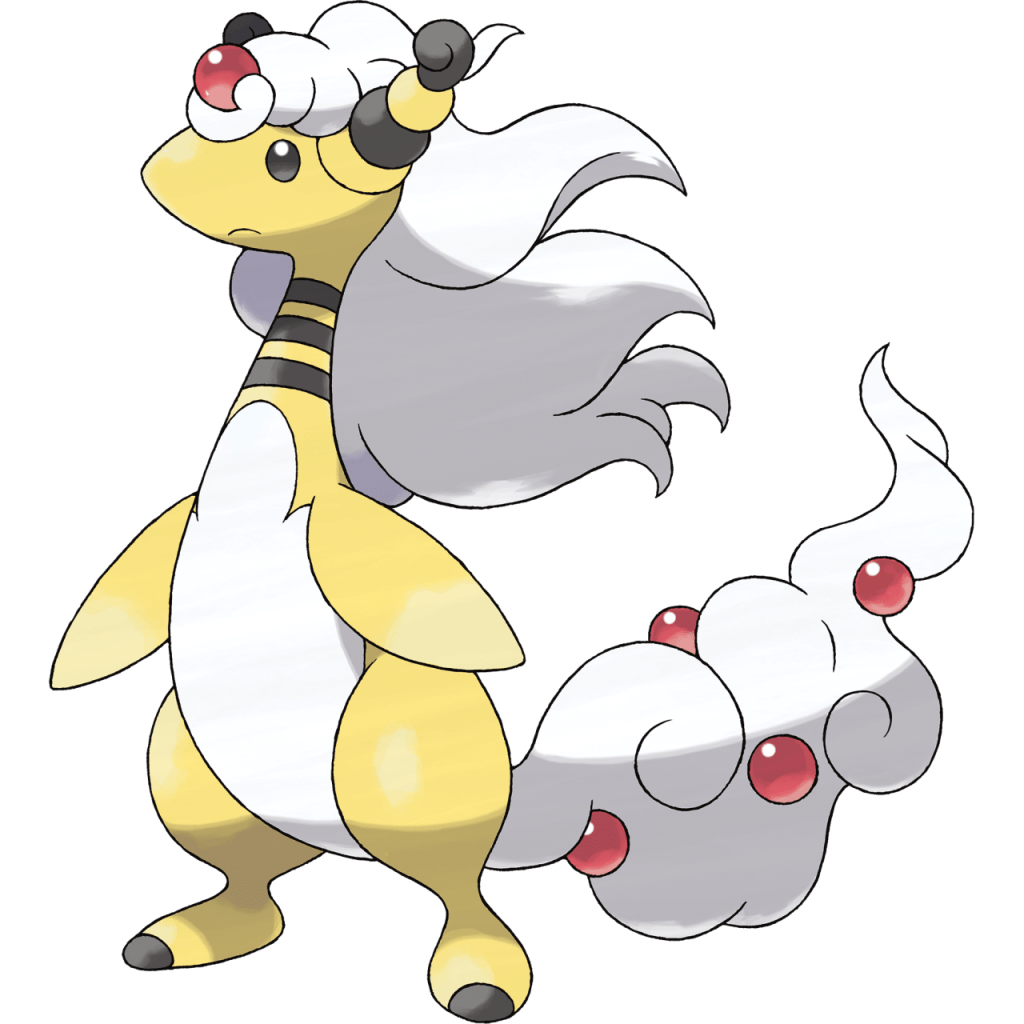
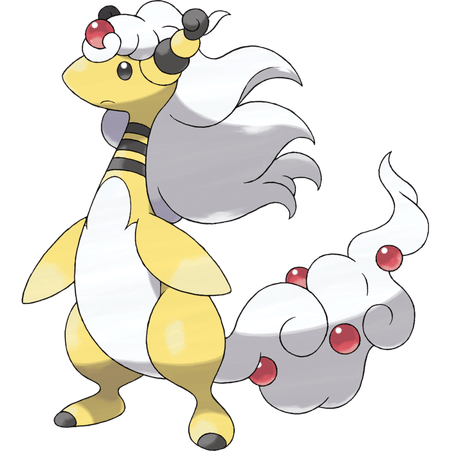
    Ampharos is also one of the Pokémon to have gained a Mega Evolution in Generation VI, becoming even more of a slow but impactful special sweeper. The ability of Mold Breaker allows Electric-type moves to bypass any shenanigans with Pokemon using Lightning Rod, and the addition of Dragon-type allows for STAB with the potential for Ampharos to learn Dragon Pulse starting in this generation.

    It has also clearly been using L’Oréal for its hair – got to respect its commitment to self-care.

    With a diverse move pool from both level up and TMs providing endless utility, this yellow loaf will always be special to me.

    Psychic – Gallade, #475

    A gallant knight, a wandering warrior, or a ferocious gladiator? Whilst the head of a Gallade has the appearance similar to the latter’s helmet; it is a much more honourable Pokémon than that. It utilises its Psychic/Fighting type combo appropriately, being attuned to the needs of others in dire straits and having the ability to telepathically predict the attacks of potential foes, allowing them to deliver devastating attacks.

    Gallade was introduced in Generation IV alongside many other previous generation Pokémon to get additional evolutions (one of many favourite features from the Sinnoh Pokédex in my opinion), this time being an alternate option if you didn’t want your male Kirlia growing up and just living with the gender role it was given, instead using a Dawn Stone to achieve the life he wants to live.

    Despite appearances and expectations, Gallade is not all that fast of an offensive Fighting-type, with a base Speed stat of 80. However, this is made up for with a great Special Defence stat of 115, which allows him to tank at least one hit from a super-effective Ghost-type or Fairy-type move, potentially two if a build utilising an Assault Vest is deployed.

    An all out offensive build with said item can have a decent chance of success, though as with a fair few Pokémon utilising a choice item (either a Choice Band or Choice Scarf here) can offer just as much damage output for Gallade, though the lack of a swapping move (such as U-Turn or Baton Pass) can reduce the versatility of the build.
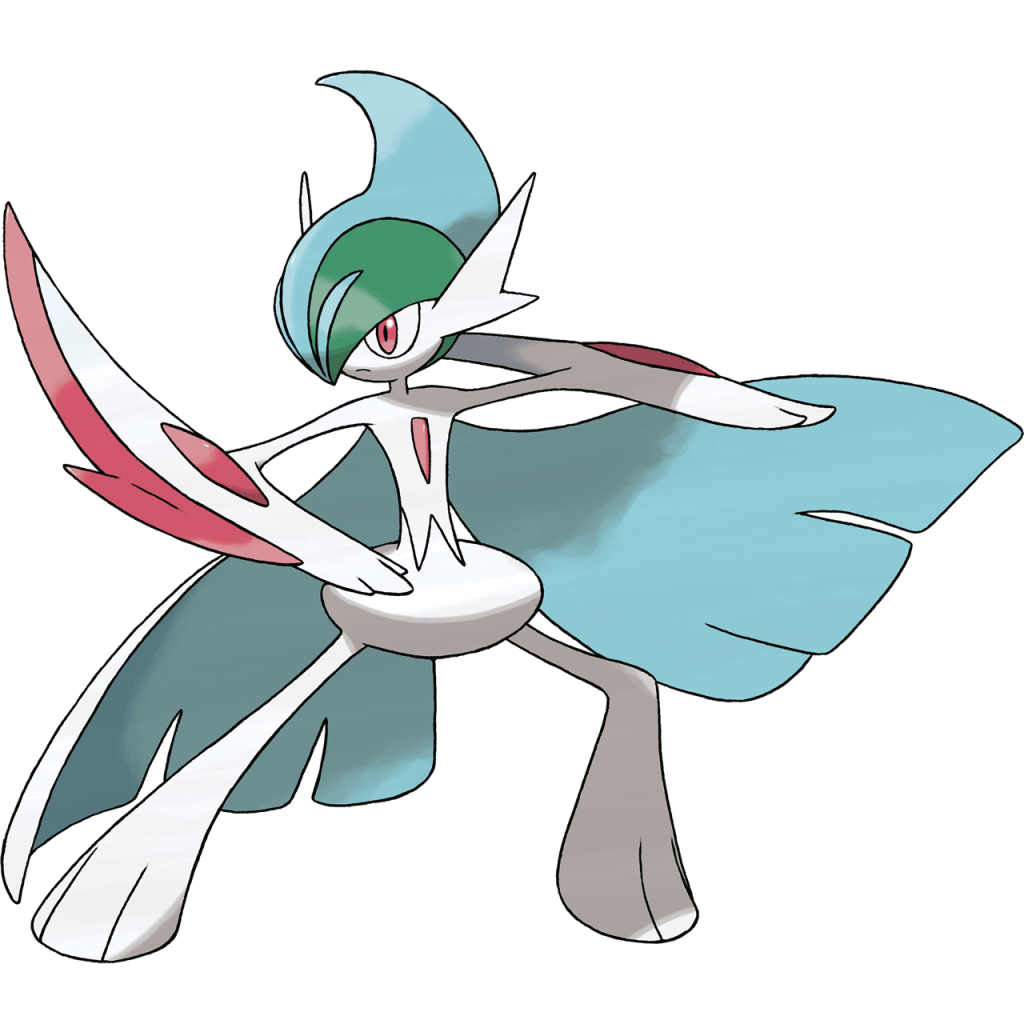
    Like with Ampharos, Gallade also has a Mega Evolution. The size of the crest on his helmet increases, the blades on his arms become red and gain a sharper edge, and, mostly importantly, he gets a cape, giving him the appearance of a mighty duellist, looking to prove his worth against opponents near and far.

    With this change comes a speed more befitting the power of Gallade, going up 30 points to 110 base. Special Defence remains at its high level of 115, Defence itself goes up to 95 from 65 indicating the close quarters skill of Gallade has enhanced, but the true power lies in his Attack stat, going all the way up to 165 base, placing it above other Mega Evolutions and even some legendary Pokémon.

    Gallade has always been a pet favourite of mine when it comes to competitive play, I know there’s better choices out there, but he always has a spot in my roster for both design and power.

    Part 2: Completed

    Normal/Electric/Psychic edition of this series completed. Once again, it’d be nice to hear your feedback on my choices and what your potential choices may be, next time I’ll be covering my picks for the most synergistic three types, Rock/Steel/Ground.

  • Rosalia’s Favourite Pokemon – Water/Grass/Fire Edition

    Introduction

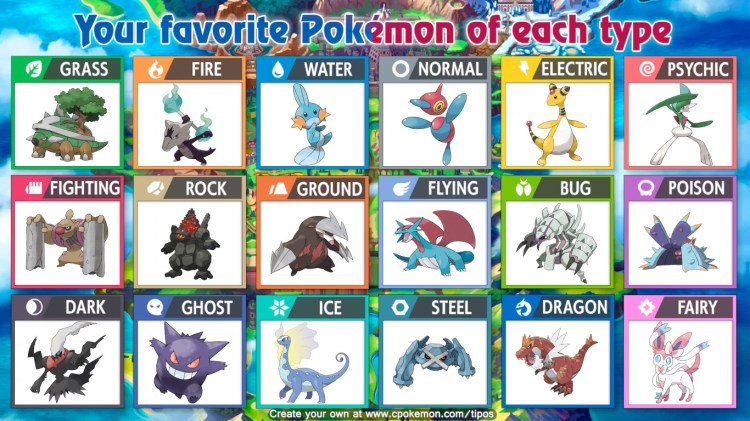
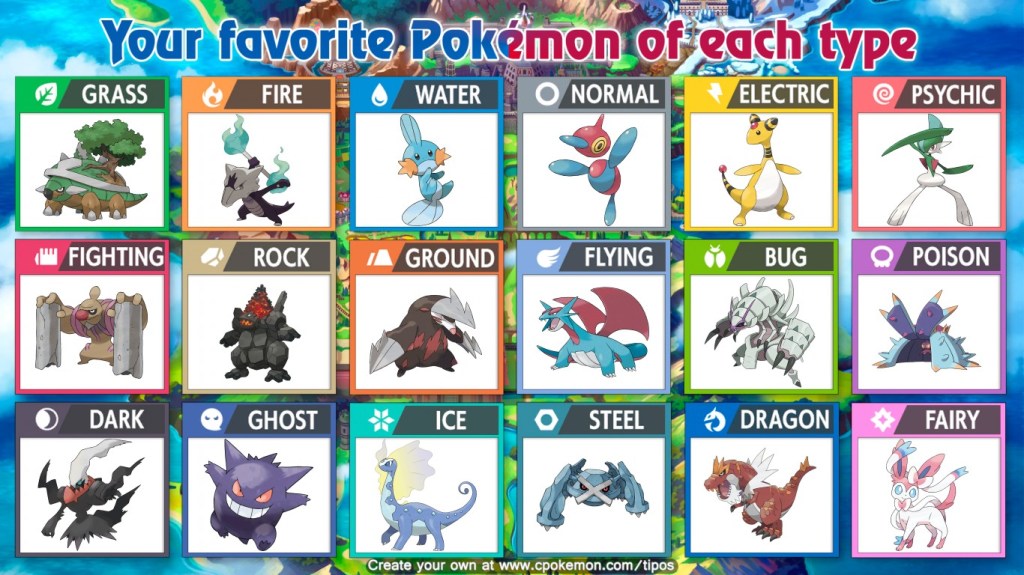
    So, whilst this is semi-obvious, some of the Pokémon listed in the graphic above are not going to be my absolute favourites, for some types it was hard to pick one representative that communicates my love and affection for what that type embodies. And conversely, for some of choices I have made, they are my favourite, no questions asked. Why I have made certain choices will be explained in the respective section for each Pokémon.

    With that small disclaimer out of the way, let us move onto covering the trio of types that encompass the starter Pokémon.

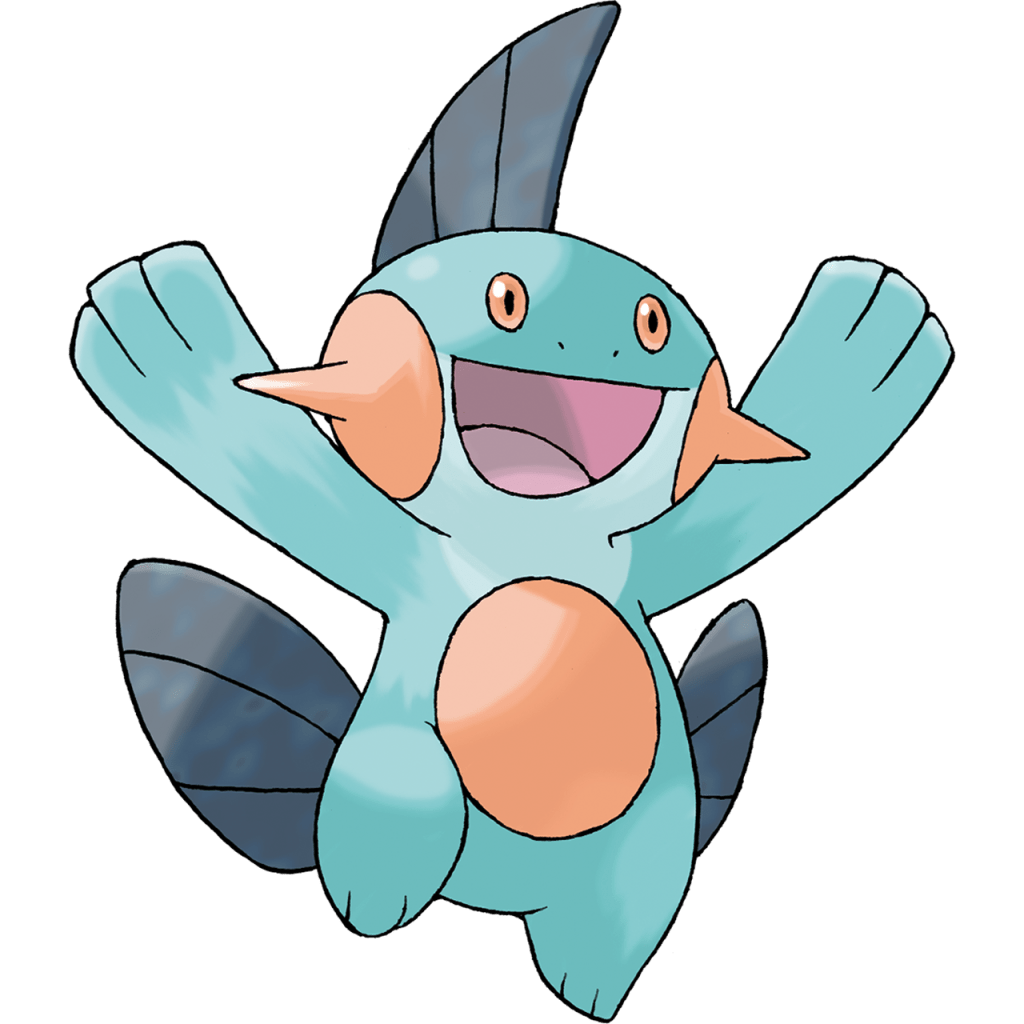
    Water – Mudkip, #258

    I am a girl who practically always goes for the Water-type starter (more on that in the next section), from Squirtle to Sobble, each generation’s offering has managed to capture my heart in unique ways. So what elevates Mudkip to standing out amongst the rest?

    First off, the design. Whilst it is more possible that the design was inspired more by mudpuppies and mudskippers; there are also some hints of axolotl within there, with the gills on the side of its cheeks mimicking an axolotl’s gills. This instantly elevates my opinion of Mudkip, as axolotls are my personal favourite amphibians with their charming smile and docile personalities. This is not to say that Mudkip is not cute on its own, sharing the common trait amongst all starter Pokémon of looking incredibly huggable.

    With this being the first Pokémon in an evolutionary line (the only such entry on my list), discussing what Mudkip evolves into seems appropriate.

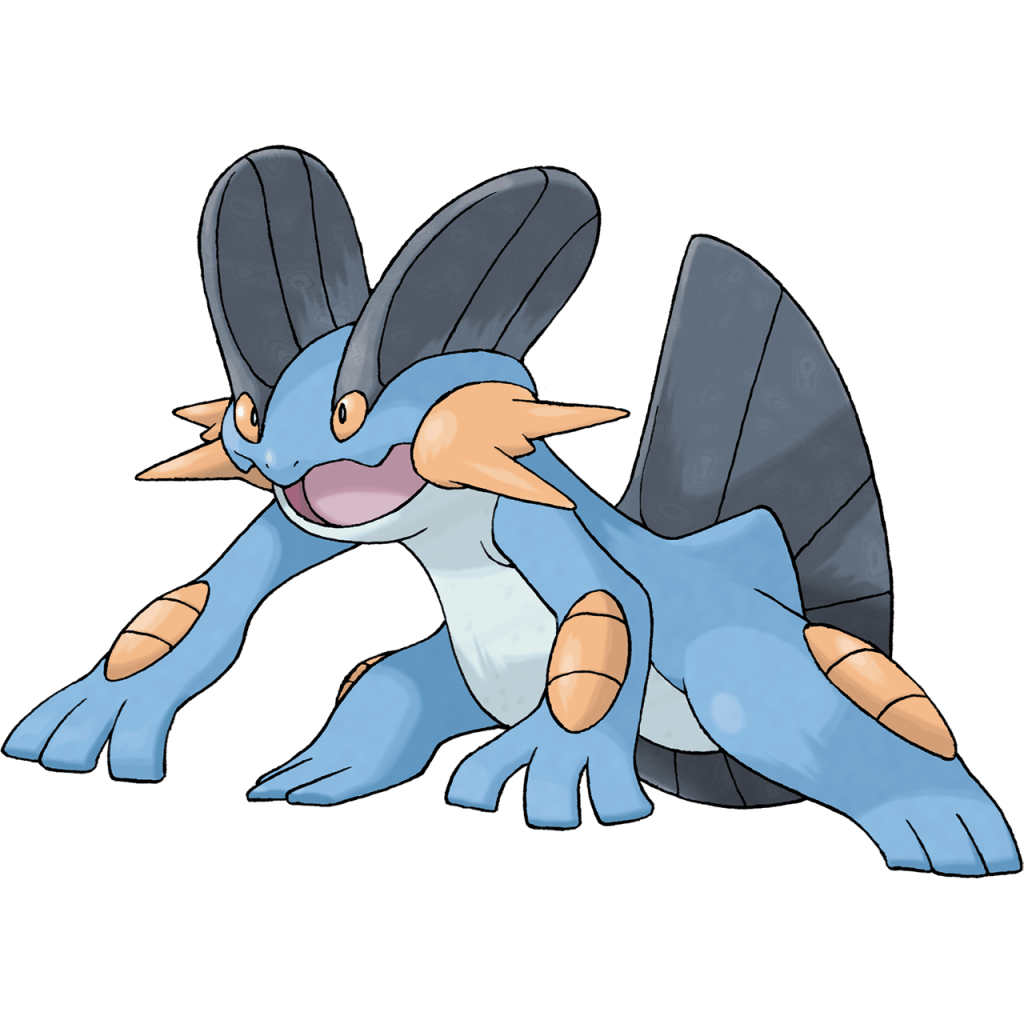
    At Level 16 it evolves into Marshtomp, gaining Ground-type as a secondary type, this eliminate its weakness to Electric-type, but that comes with the caveat of a four-times weakness to Grass-type. Whilst quad weaknesses can be perceived as liabilities to some trainers; I consider them almost a point of charm, since additional types can also bring additional resistances.

    At Level 36, it evolves into the final form of the line, Swampert.

    The two defining stats of Swampert are their HP (100) and Attack (110), leaving them as a bulky physical attacker, with the very powerful advantage of gaining Same Type Attack Bonus (STAB) on Earthquake, probably the best move in their arsenal. Physical Water-type moves are a bit lacking for a physical Water-type attacker, but with a Sp. Attack base of 85, having a move like Muddy Water or Surf would not go amiss.

    Also, try sort out an Ice-type move ASAP, Grass-type is the only weakness here so having the type coverage to deal with them would be valuable.

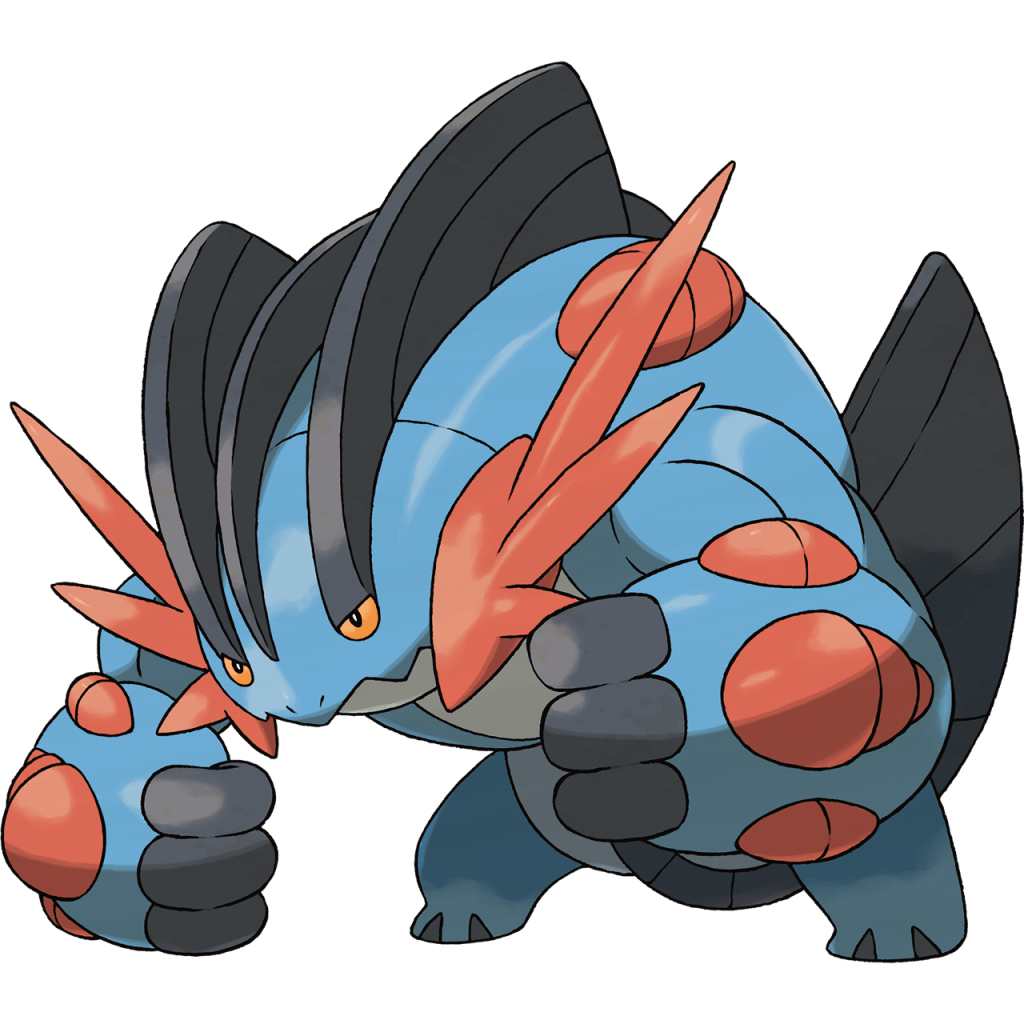
    Swampert is also the first of several Pokémon on this list to have a Mega Evolution. Introduced in Generation 6 as a way to try spice up battles; Mega Evolution allows certain Pokémon holding Mega Stones (or knowing a certain move, in one broken case) to unlock a pseudo-evolution in the middle of a battle, changing their form, stats, and abilities. This was only allowed once per battle.

    Mega Swampert has clearly been hitting the gym, with those massive arms providing a huge boost in Attack to 150, with minor buffs to both Defense stats and Sp. Attack. Speed only goes up by 10 points, but in the right hands this should be no issue, as this Mega Evolution gains the ability “Swift Swim”, doubling speed when the weather condition of the battle is rain.

    Mudkip was my choice when Ruby and Sapphire first released, and when Omega Ruby and Alpha Sapphire came around, the choice continued to be a no-brainer.

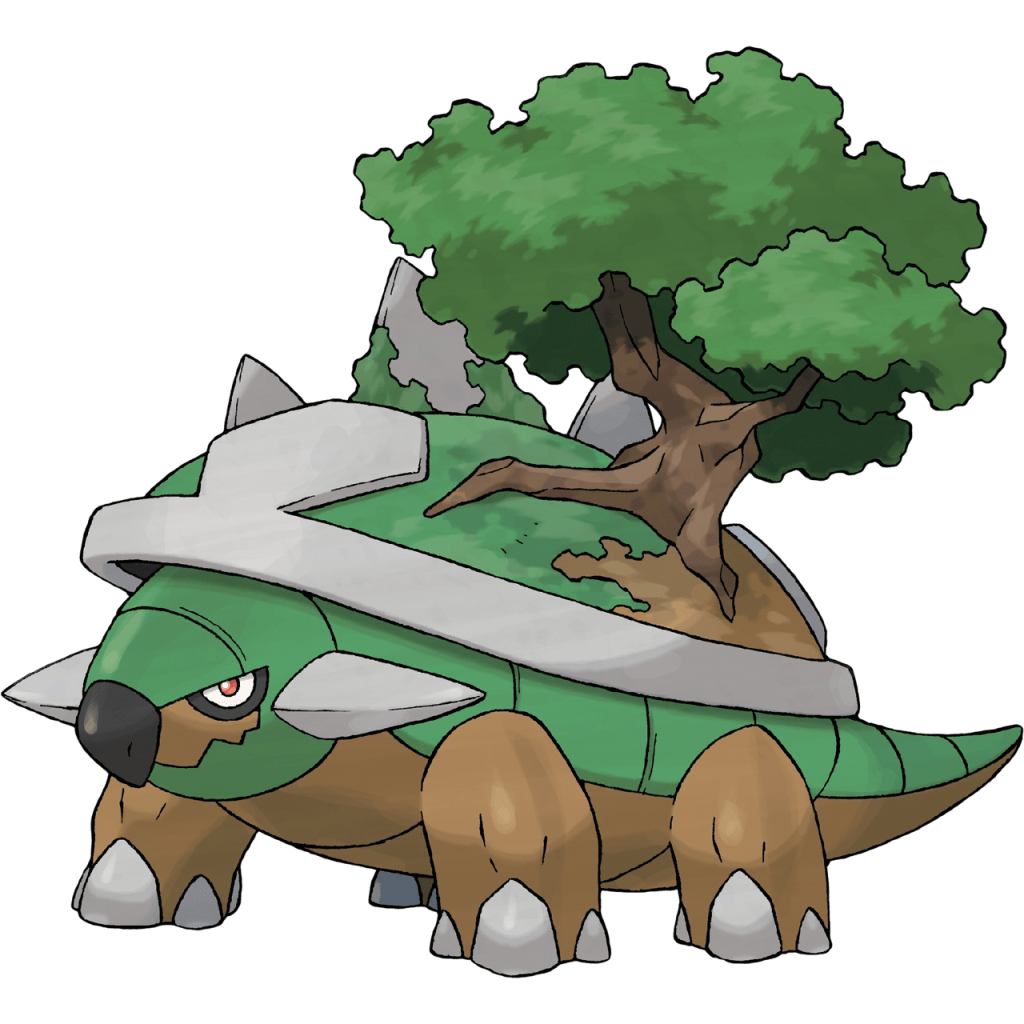
    Grass – Torterra, #389

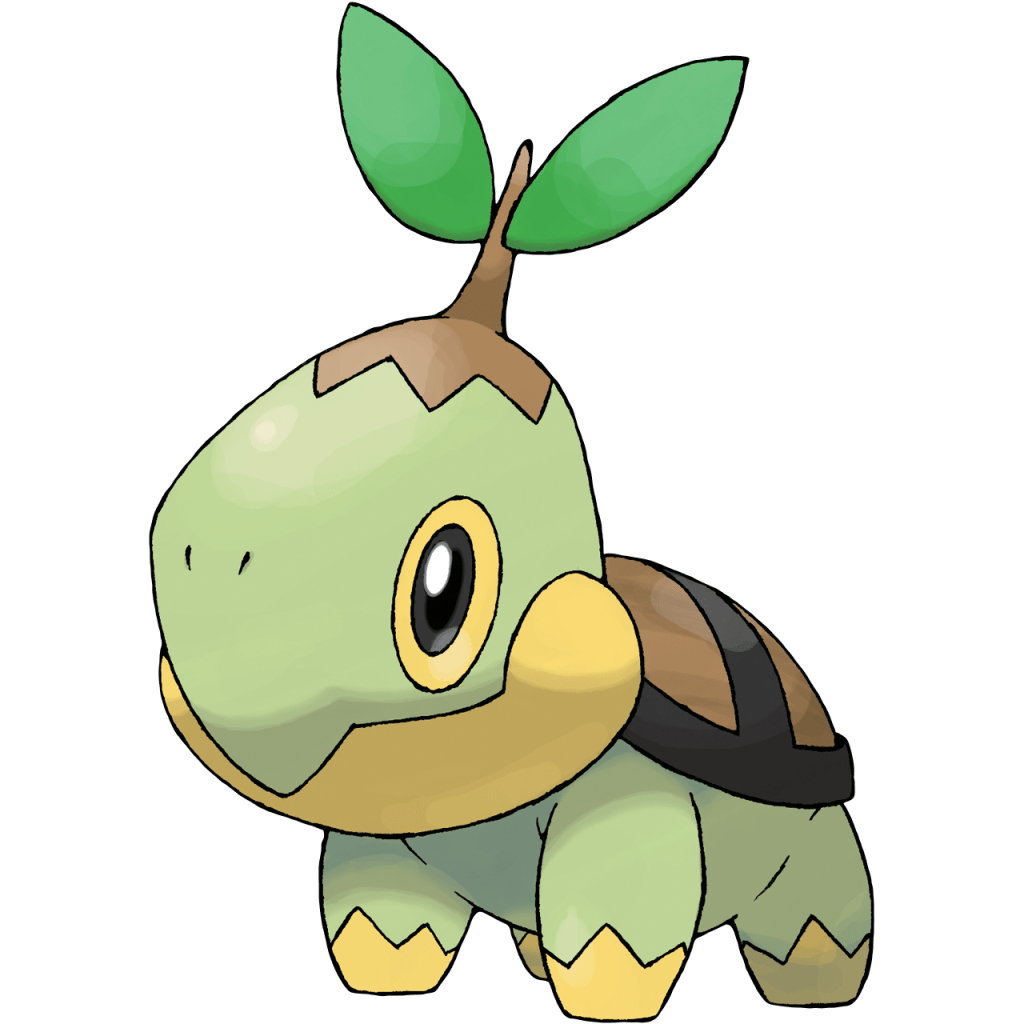
    So… about what I said about being someone who always took Water-type starters…

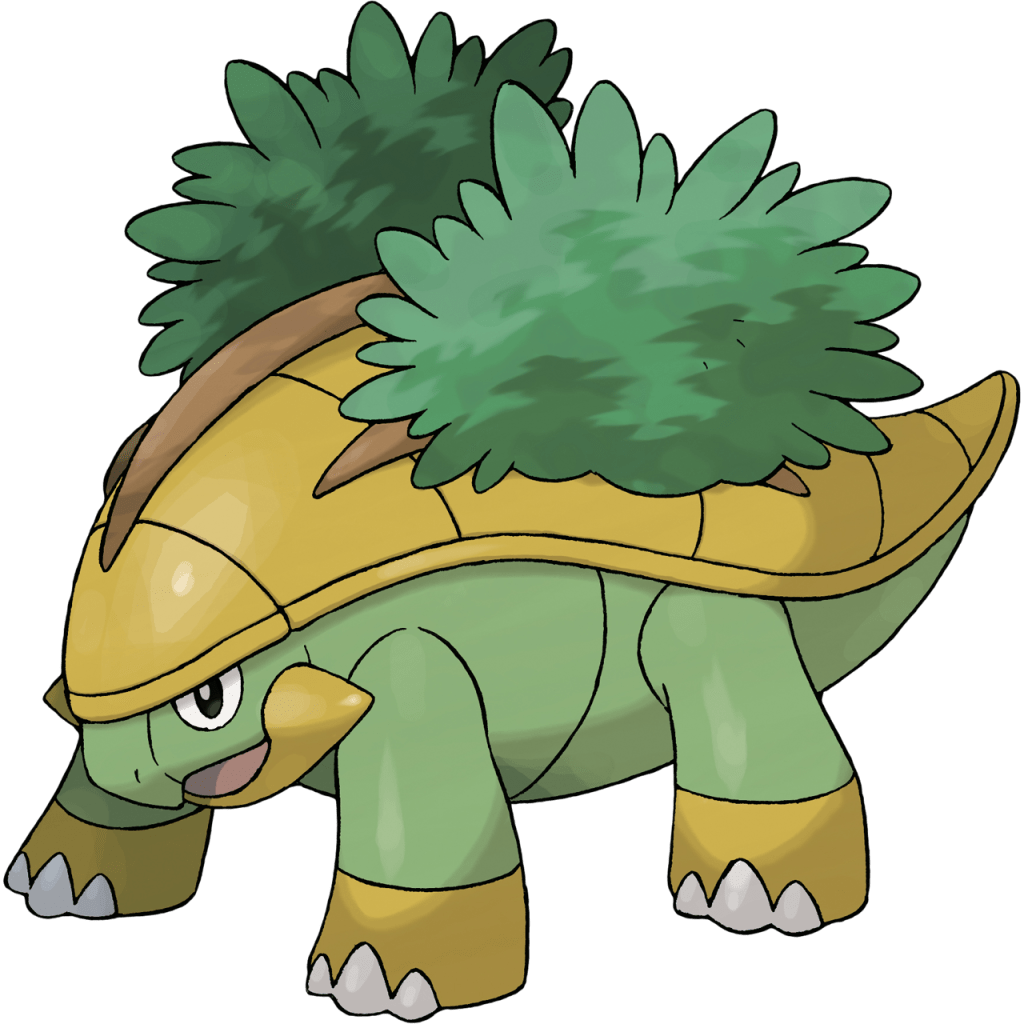
    Yeah, there has been one exception on a first playthrough of any main series game, and that is the Turtwig line.

    And even today, I consider this quite a break away from what I’ve always known, especially considering Generation 4 is when the Water-type starter line was designed after penguins, one of my all-time favourite animals. But… something about this cute, grassy tortoise spoke to me.

    Since I’m specifically saying that Torterra is my favourite here, I’ll give some condensed thoughts:

    • Turtwig Cute
    • Grotle Meh

    Now, onto the main show, the tortoise carrying a world on their back.

    Meaning of course The Great A’Tuin.

    Nah, we’re still talking about Torterra here, but A’Tuin is admittedly one of the nicknames I’ve used in the past for this Pokémon, along with various ground-based puns, and when I first got Pokémon Diamond at the age of 8…

    “Tree King”

    I wasn’t wrong, they do have a pretty formidable tree growing out of them. Formidable is also pretty accurate word to describe the offensive capabilities of Torterra, carrying a base Attack stat of 109 and learning the powerful STAB Ground-type move of Earthquake upon evolution at Level 32, with the ever-versatile move of Crunch being learned at Level 45 providing valuable type coverage in a reliable way, and, with a Move Reminder, Wood Hammer unlocks true STAB Grass-type potential at the cost of some recoil damage.

    However, the recoil doesn’t necessarily have to be an issue, as the utility moveset of Torterra allows for limited recoil mitigation in the form of Synthesis, potentially combining with a Sunny Day user to fully maximise recovery, or Leech Seed to give more gradual recovery across multiple turns whilst maintaining damage output.

    And like Swampert beforehand, a favourite Pokémon of mine has a four-times weakness, this time in the form of Ice-type moves. And again, this just adds to the charm for me, especially with the raw amount of power Torterra is able to put out.

    Fire – Marowak (Alolan), #105

    Of all the new experimental designs to come out of The Pokémon Company in recent years, the idea of regions having specific forms of different Pokémon has to rank highly for me, as it’s a way of creating diversity within a region whilst utilizing existing designs in creative ways (though admittedly, Galar does this better than Alola did).

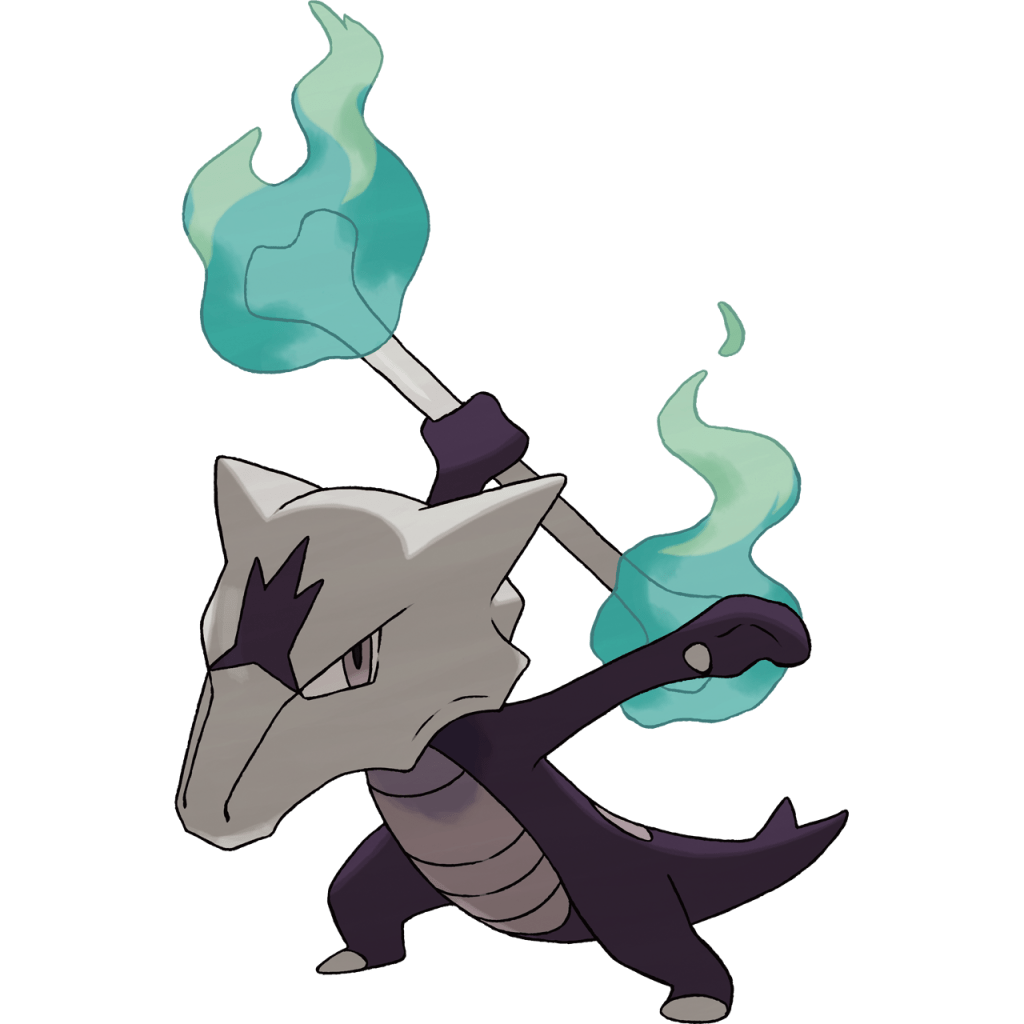
    Out of all the Alolan forms added in Generation 7, one stands out to me, the ghostly fire dancer form of Marowak.

    Fire dancing is a worldwide spectacle at this stage, but it is theorised that Alolan Marowak draws inspiration from multiple Pacific civilisations, with the Samoan fire dancers inspiring the bone club with flames on each end, mimicking the design of a fire staff. The second half of the typing (Ghost) potentially has routes in the Polynesian culture with the concept of “mana”.

    Mana is a wide-ranging term, but it usually comes down to the concept of people possessing different forms of spiritual energy that exists in people, places, and objects. Ancient Hawaiian culture teaches that in nature, everything has a counterpart, and so both positive and negative possessions of mana are possible. If we compare this to Alolan Marowak’s Pokédex entries, it can be theorised that the mana possessed by this Pokémon is one of sorrow, regret, and vengeance, manifesting as the fire imbued within them.

    Brief culture lesson over and wild theories postulated, let’s get into the finer details of why I love this alternate form.

    I had made up my mind pretty early on that I wanted one of these on my Pokémon Sun team, as when I saw it in previews I almost instantly fell in love with the design and typing and, with the knowledge I’d be choosing Popplio as my starter, gave diversity to my team composition.

    When using the Thick Club (the only correct item for any sort of Marowak in my opinion), an aggressive moveset is ideal, and the Fire/Ghost typing of Alolan Marowak opens many possible avenues for powerful STAB and type coverage moves:

    • Flare Blitz, when combined with the Hidden Ability of Rock Head (nullify recoil damage from moves), is a 120 power, 100% accuracy STAB Fire-type move with no downside whatsoever. Use. It.
    • Shadow Bone, the signature move of Alolan Marowak, a good power STAB Ghost-type move with the added benefit of potentially reducing the target’s Defense stat
    • Brick Break, learnt via TM, gives utility to remove Light Screen and Reflect effects, whilst also granting type coverage to deal with the new weakness to Dark-types
    • And finally, depending on your preferences, you can either go for Swords Dance to make sure attacks sweep foes away, or you can go with the unintentional theme of this article, and teach it Earthquake to round out the moveset more

    Part 1: Completed

    So ends the Water/Grass/Fire edition of my favourite Pokémon, it’d be nice to hear what you think of my choices in specific types, or what your favourites are within the types of the edition. Next time, I’ll be covering the Normal, Electric, and Psychic entries of my list.

  • Ampharos VS Luxray: A Strangely In-Depth Comparison


    (NB: Originally uploaded to https://geekoutuk.com/2019/10/07/ampharos-vs-luxray-a-strangely-in-depth-comparison/)

    Due to a close friend of mine having done a playthrough of Pokémon Heart Gold, I decided to pick up my old copy of Pokémon Diamond to do my revisit of the fourth generation of these games… and then I did a playthrough of Soul Silver anyway, partially to see if any of the complaints I had lodged towards it actually stood up. (That’s a topic for another time)

    When planning out my teams for both games, I decided to carry an Electric-type to deal with both Water- and Flying-types, especially as in both games I was using a starter Pokémon that is vulnerable to those (Cyndaquil and Turtwig respectively). Thankfully, both games have an Electric-type found in the wild very early on.

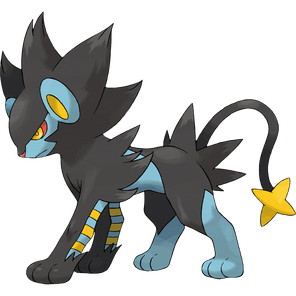
    Shinx, which evolves into Luxio and then Luxray, for Diamond. Mareep, which evolves into Flaaffy and Ampharos, for Soul Silver. How do these two evolutionary lines compare?

    A note before I start: I’ll be basing my comparison off their Generation IV movesets and stats, with a section at the end to talk about how they developed as the games go on.

    Stats and Abilities

    Stat/PokémonLuxrayAmpharos
    HP8090
    Attack12075
    Defence7975
    Sp. Attack95115
    Sp. Defence7990
    Speed7050
    The base stat totals of each Pokémon

    Right away we can see that the offensive capabilities of these Pokémon are complete opposites. Luxray is designed be a physical attacker that can still hold its own with special attacks whereas Ampharos is more geared towards special attacks with less of a focus on physical attacks.

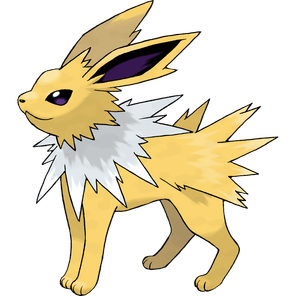
    An interesting point to note is the surprisingly low speed stats on both Pokémon. Electric-types are traditionally faster to reflect the speed at which lightning moves in real life. Jolteon, accessible in HeartGold/SoulSilver (HG/SS) and Platinum, has a whopping 130 base speed stat with offensive capabilities to boot. Raichu (the next best option in Diamond and Pearl) has 100 base speed with offensive capabilities balanced between physical and special attack.

    About abilities, Ampharos only comes with one, “Static”. Static confers a 30% chance for an attacker to be afflicted with the status effect of “Paralysis”, provided the attack is physical in nature. Paralysis reduces the speed of the afflicted Pokémon and gives a chance for their turn to be skipped. During gameplay I noticed a fairly good proc rate on Static triggering, and Paralysis can be a boon in fights that will be drawn out over multiple turns (such as Whitney’s Miltank).

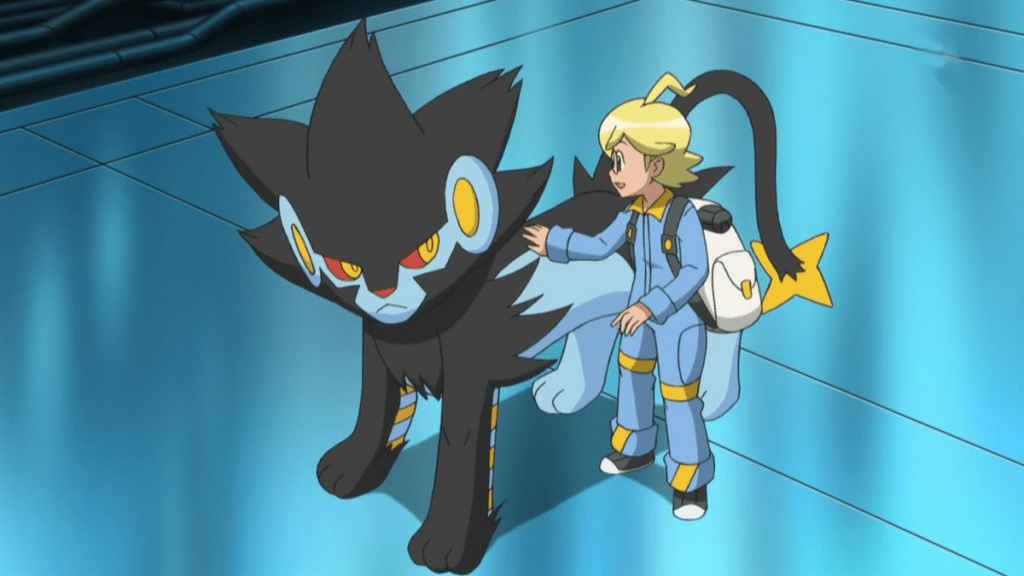
    Luxray has the potential for two abilities: Rivalry and Intimidate. In my experience, you’re going to want the latter.

    Rivalry increases offensive stats by 25% if the opposing Pokémon is of the same gender and reduces them by the same margin for the opposite gender (no modifier on genderless Pokémon). This can turn battles into a problem because, unless you use an external guide, you aren’t able to know the gender of your opponent’s Pokémon until you’re in the battle.

    Intimidate has more utility behind it. Upon entering battle the opposing Pokémon will have their Attack stat lowered by one level, with both Pokémon in a Double Battle being affected. This is incredibly potent on Luxray, as being a pure Electric-type means it’s only weakness is Ground-type moves, the majority of which are physical moves dependant on the Attack stat.

    It also has an outside of battle effect. When in the first slot of the party; a Pokémon with Intimidate gives a pseudo-Repel effect of preventing wild encounters if the encounter would be at a lower level, making back-tracking through earlier areas smoother.

    Movesets

    Luxray has a natural disadvantage when discussing moves, Electric-type moves tend to come as special moves and out of the four physical moves available, Luxray only learns two.

    And it doesn’t even matter because Spark and Thunder Fang are mechanically identical moves with Thunder Fang being strictly worse than Spark. Both have 65 power and a chance at Paralysis, but whilst Thunder Fang has 95% accuracy and a 10% chance to induce Paralysis; Spark has 100% accuracy and a 30% chance to induce Paralysis. Thunder Fang does have the slight benefit of also giving a chance to make a Pokémon flinch (making it miss it’s turn if the attacker moves before it) but, due to it’s usefulness, I’d prefer the higher chance of paralysis.

    The only other physical move of note learned on level up is Crunch, a Dark-type move with great power and a 20% chance to lower the defence of the opposing Pokémon. Dark-type is surprisingly useful on a physical attacker; it’s super-effective against Psychic- and Ghost-type which tend to favour Special Defence, leaving them more vulnerable to this move.

    Technical Machines (TMs) and Hidden Machines (HMs) go some way to alleviating the poor level up moveset. Iron Tail is a high power, medium accuracy Steel-type move that helps round out type coverage. Strength is essentially a super-powered version of Tackle, but still goes some way to round out offensive capabilities (and provides some usage outside of battle). And Thunder Wave is a highly accurate move that is non-damaging, but is guaranteed to inflict Paralysis.

    On the other hand, Ampharos has a much more diverse moveset both through level up and TMs.

    I may be slightly biased here in the fact that Ampharos is an adorable loaf who must be protected at all costs

    For a start, Thunder Wave is learnt by level up rather than needing a TM and is learnt by the first stage of the line (Mareep) early on, meaning it gets to see usage throughout the game at crucial points such as the aforementioned Miltank and for capturing the cover legendary Pokémon.

    Both Discharge and Thunder are learnt on level up, but the TM for Thunder comes early in the game so it’s probably easier to teach it then, it’s inaccurate but can deal massive damage. Discharge on the other hand is learnt at level 34 which should come near the end of the mid-game and will be your go-to Electric-type move for the foreseeable future.

    In terms of type coverage, the Bug-type move Signal Beam comes at level 42 and the Rock-type move Power Gem comes at level 59. Neither of these moves help to fight against Ground-type Pokémon but do provide more utility beyond Electric-type moves.

    Finally, Ampharos has a lot of options presented when looking at TMs. Thunderbolt is less powerful than Thunder, but carries a much higher accuracy percentage. Focus Blast is a high power Fighting-type move with the same accuracy as Thunder, but can provide some utility against Ground-type Pokémon who often carry a type weak to Fighting. If you want to field Ampharos as a disruption strategy; Toxic lets it induce the “Badly Poisoned” status effect on other Pokémon, a slowly increasing damage-over-time effect.

    Generation V onwards

    Nothing much changes for Luxray, it’s moveset improves somewhat through the addition of Wild Charge and Volt Switch in Generation V, the former being a level up move and the latter being a TM move. Wild Charge is a high power physical move that inflicts recoil damage onto the attacker in proportion to the damage dealt and Volt Switch is a special move with decent power which allows the attacker to switch out from battle, potentially in anticipation of a super-effective move.

    Hidden abilities being introduced as a mechanic gives Luxray access to the Guts ability. Guts increases the Attack stat by 50% whenever the Pokémon is inflicted with a status effect. Whilst this does give utility against users of such moves; the moveset remains a pressing issue here and I maintain that Intimidate is the best ability.

    Meanwhile, Ampharos has unlocked the power of Super Saiyan 3.

    Mega Ampharos is introduced in Generation VI, along with the mechanic of Mega Evolution itself. Like all Mega Evolutions, the stats are changed:

    • Attack goes up to 95
    • Defence goes up to 105
    • Sp. Attack goes all the way up to 165
    • Sp. Defence goes up to 110
    • Speed goes down to 45

    And the ability is changed to “Mold Breaker”, which allows moves to hit, even if an ability on the field would prevent it doing so. Ampharos was slow before Mega Evolution, so a slight reduction in speed in exchange for vastly increased offensive capabilities and slightly improved bulk is a fair trade-off. Dragon-type is also gained in the process, which does open up weaknesses towards Ice, Dragon, and Fairy-types, but grants resistance towards Fire- and Water-types.

    Ampharos’s moveset also gains more diversity as Generations go on. Like Luxray it gains access to Wild Charge and Volt Switch, the special nature of Volt Switch makes it a good utility move but due to the slowness of Ampharos it’s less likely to be an evasion tactic.

    The addition of Dragon-type for Mega Ampharos gives access to Dragon Pulse in it’s level up moves; this move has decent power and provides type coverage against the popular endgame Dragon-type. With the usage of a Heart Scale from Generation VI onwards, Ampharos can relearn Zap Cannon, a move with the same power as Thunder with lower accuracy, however, a successful Zap Cannon is guaranteed to induce Paralysis.

    Conclusion

    Despite railing against Luxray a fair bit in this article, Sparkplug (my Luxray) was an incredibly valuable member of my team. It having physical Electric-type moves proved invaluable against Cynthia’s Milotic.

    However, Wilhelm (my Ampharos) proved to be way more versatile, having access to Thunder Wave made potentially difficult gym leader encounters more manageable, with Focus Blast learned from a TM making battles against Steel, Ice, and Rock-types end quickly (if it connected).

    Both Pokémon have upsides and downsides, but in my opinion Ampharos comes out on top. It has a better moveset and utility in the game I was focusing on and it obviously gets a massive buff when Mega Evolution comes around, with decent new moves being added to round it all off.

    At the end of it all, everyone has their own preference towards what Pokémon they want to use on their team. Some prefer pure power, some will take what comes along first, and some will make their decision way in advance. Whatever you choose, your Pokémon grow along with you on your journey and not only become valued team members, they can become like friends.